
Person · 29 November 1874 – 13 December 1955
Egas Moniz
Portuguese neurologist and politician (1874–1955) who pioneered cerebral angiography, introduced prefrontal leucotomy in 1935, and won a 1949 Nobel Prize that some still want withdrawn.
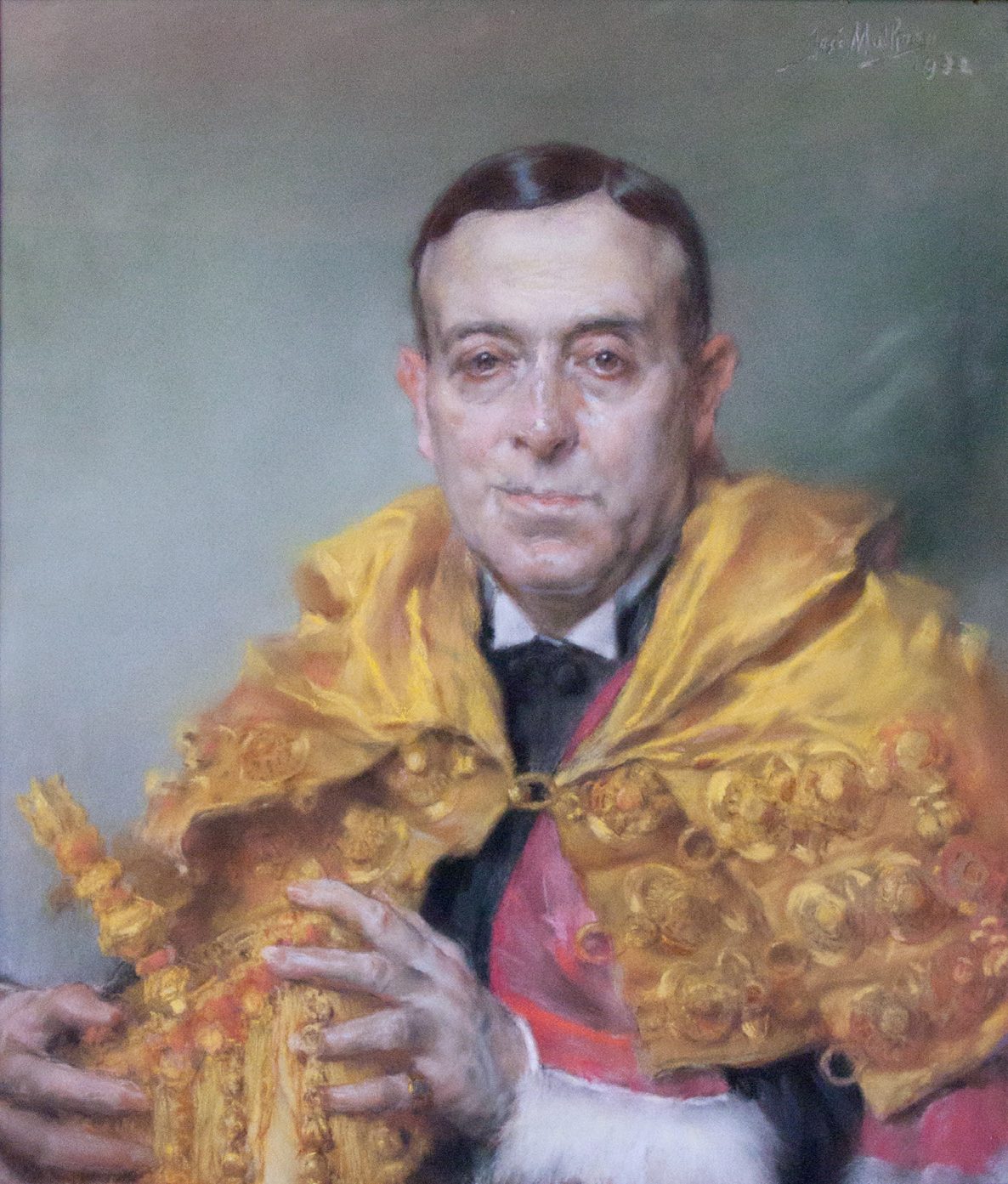
Egas Moniz is one of only a handful of people to have won a Nobel Prize for a treatment in psychiatry, and the only one whose prize is regularly cited as a mistake. He was also a cabinet minister, a diplomat, a prolific writer and the inventor of a method of imaging the brain's blood vessels that was used for half a century. Most of his life had nothing to do with the operation for which he is remembered.
Coimbra, Lisbon and politics
He was born António Caetano de Abreu Freire on 29 November 1874 at Avanca in northern Portugal; his godfather, an uncle, had the family adopt the name Egas Moniz after a medieval nobleman from whom he believed they descended5,7. He graduated in medicine at Coimbra in 1899, trained in neurology in Bordeaux and Paris, and in 1911 took the new chair of neurology in Lisbon3,5. He was a republican politician as well as a doctor: a deputy from 1903, ambassador to Spain and then foreign minister in 1917, and head of Portugal's delegation at the Paris Peace Conference in 19183. After he left politics he returned to medicine full-time5,7.
Making the brain's arteries visible
In the mid-1920s Moniz set out to locate brain tumours by making the arteries of the brain show on X-rays. He tried several contrast solutions on animals and corpses before using them in patients; in one early attempt a patient died of a stroke hours after the injection5. On 28 June 1927, using sodium iodide, he obtained an image that showed a tumour by the way it displaced the arteries, and he presented cerebral angiography in Paris that year5. Refined by others, it remained until the arrival of computed tomography in the mid-1970s the only reliable way to see many disorders inside the skull5. He was nominated for a Nobel Prize for it in 1928, 1932 and 1937, without success5.
Leucotomy
By 1935 Moniz had come to believe that some mental illnesses were caused by abnormally fixed connections between nerve cells in the frontal lobes, which might be broken by cutting the white matter beneath them. He attended a neurology congress in London that year at which John Fulton and Carlyle Jacobsen described calmer behaviour in chimpanzees after frontal lobe surgery4. On 12 November 1935, at the Santa Marta Hospital in Lisbon, the neurosurgeon Pedro Almeida Lima carried out the first operation under his direction; Moniz, who had no surgical training and whose hands were affected by gout, never operated himself4,7. In 1936 he reported twenty patients, most of whom he counted as cured or improved, and he described the operation as simple and "always safe"4,7. The history of what followed, under Walter Freeman in the United States and in British and Scandinavian hospitals, is told under lobotomy.
The theory was never demonstrated. The Board of Control's survey of the first thousand English and Welsh cases put it plainly in 1947:
as yet the operation rests on an empirical rather than on a strictly anatomical basis.1
Quotation checked against the 1947 text
In 1949 Moniz shared the Nobel Prize in Physiology or Medicine with the Swiss physiologist Walter Hess, "for his discovery of the therapeutic value of leucotomy in certain psychoses"2.
Later life
In 1939 Moniz was shot several times in his consulting room by one of his patients and seriously wounded; he nevertheless kept up a private practice until shortly before his death on 13 December 19555,7. In Portugal he is still honoured, on banknotes, stamps and a statue at Lisbon's Faculty of Medicine, and his house at Avanca is a museum7.
Key dates
- 1911 Egas Moniz takes the new chair of neurology at the University of Lisbon.
- 1918 As Portugal's foreign minister, Moniz leads its delegation to the Paris Peace Conference.
- 28 June 1927 Moniz obtains his first successful cerebral angiogram, showing a tumour by the displacement of the brain's arteries.
- 12 November 1935 At Moniz's direction, Pedro Almeida Lima performs the first prefrontal leucotomy in Lisbon.
- 1949 Moniz shares the Nobel Prize in Physiology or Medicine for the therapeutic value of leucotomy.
- 2005 Relatives of lobotomy patients petition the Nobel Foundation to withdraw Moniz's prize; the Foundation declines.
Moniz on this site
Sources
- Primary source Board of Control (England and Wales), Pre-frontal Leucotomy in 1,000 Cases, London: HMSO (1947). Quotations checked against this text.
- Reference Egas Moniz: Facts, NobelPrize.org.
- Reference Egas Moniz: Biographical, NobelPrize.org (from Nobel Lectures, Physiology or Medicine 1942–1962).
- Scholarship Bengt Jansson, Controversial Psychosurgery Resulted in a Nobel Prize, NobelPrize.org (1998-10-29).
- Scholarship Marco Artico and others, Egas Moniz: 90 Years (1927–2017) from Cerebral Angiography, Frontiers in Neuroanatomy 11 (2017).
- Reference Eric Weiner, Nobel Panel Urged To Rescind Prize For Lobotomies, NPR (via WUSF) (2005-08-10).
- Wikipedia António Egas Moniz, Wikipedia.
Cross-checked with Wikidata Q273219 and the English Wikipedia article.
Read next
 1935–1960s · Abandoned
Lobotomy
Brain surgery to cut the frontal lobes' connections, begun in Lisbon in 1935 and rewarded with a Nobel Prize in 1949. Tens of thousands were operated on before drugs and evidence of harm ended it.
 1845–1990
The biological turn
From Griesinger's claim in the 1840s that mental illness is brain disease, through the microscope, the shock therapies and the drug revolution, to DSM-III in 1980: how psychiatry repeatedly turned to the body.
1933–1960s · Abandoned
Insulin coma therapy
From the mid-1930s to the late 1950s, people diagnosed with schizophrenia were put into deep comas with insulin, day after day. A trial in 1957 found the insulin itself did nothing special.
 1934–1950s · Abandoned
Metrazol convulsive therapy
In 1934 Ladislas Meduna began causing seizures with drugs to treat schizophrenia, first camphor and then cardiazol (Metrazol). Patients dreaded it, and within a decade electricity had replaced the drug.
 1952–present · Transformed
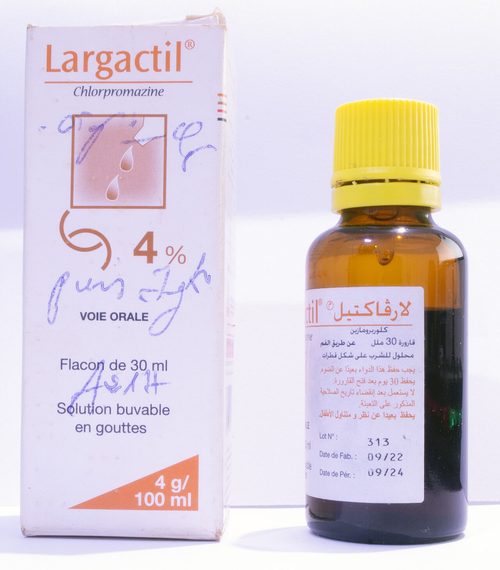
Chlorpromazine
A French drug tried on psychiatric patients in Paris in 1952. Chlorpromazine calmed psychosis without stupor, emptied wards and began the age of psychiatric drugs, with lasting side-effects.