
Treatment · 1934–1950s
Metrazol convulsive therapy
In 1934 Ladislas Meduna began causing seizures with drugs to treat schizophrenia, first camphor and then cardiazol (Metrazol). Patients dreaded it, and within a decade electricity had replaced the drug.
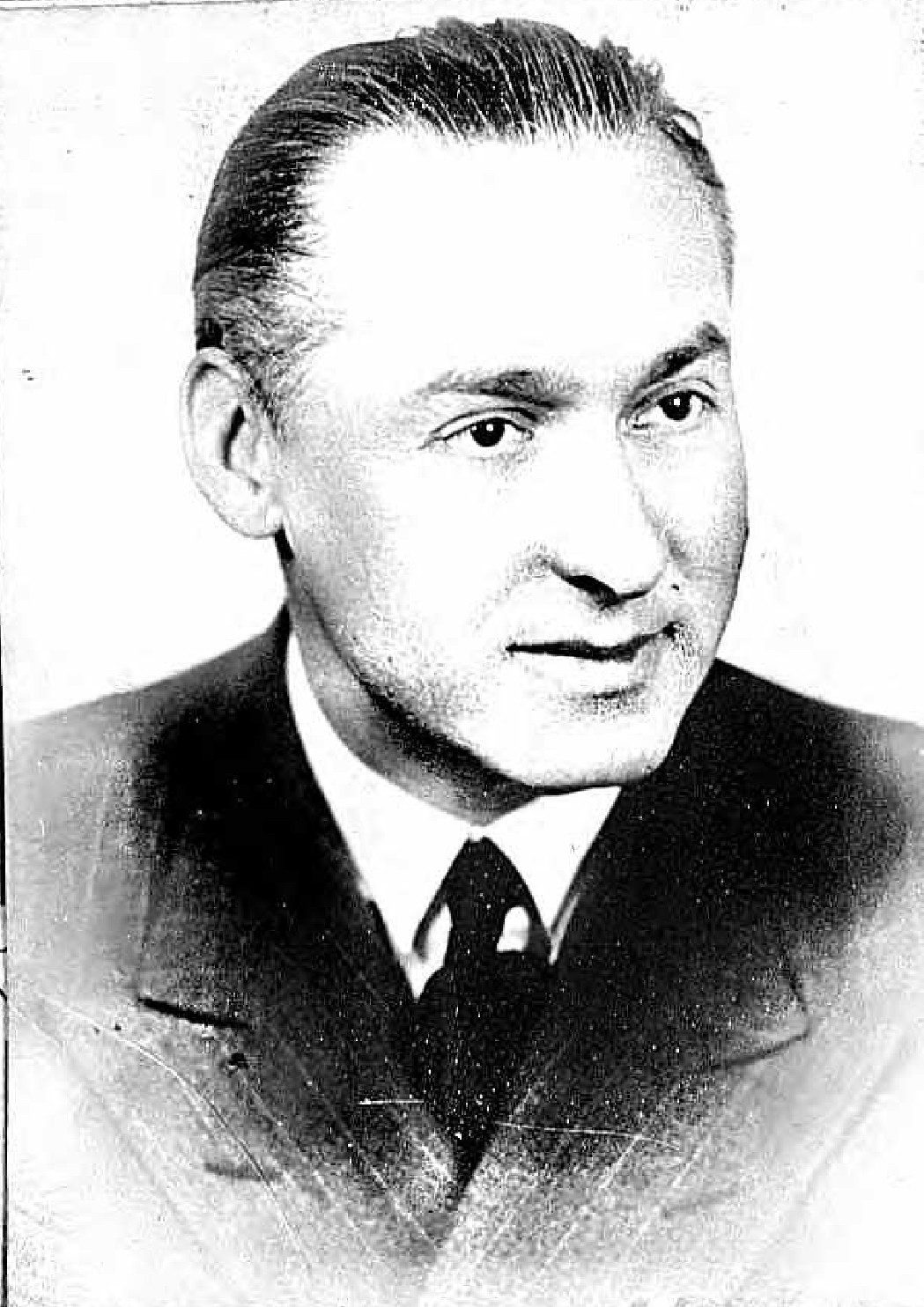
The convulsive treatments of the 1930s began with a mistaken idea and an awkward drug, and ended by producing one of the few physical treatments of that decade still in use. The idea was Ladislas (László) Meduna's; the drug, after a few months with camphor, was cardiazol, sold in the United States as Metrazol; the survivor is electroconvulsive therapy, then and now3,6.
An idea from the microscope
Meduna, a Budapest neuropathologist born in 1896, had studied the brain's supporting glial cells. He came to believe that brains from people with epilepsy showed an excess of glia and those from people with schizophrenia a shortage, and he noted reports that the two conditions seldom occurred together. From this he proposed a biological antagonism between them: if a seizure could be induced, it might work against schizophrenia5,6.
In November 1933 he tested convulsant substances on animals and chose camphor. On 2 January 1934, at the state asylum at Lipótmező outside Budapest, he began injecting it into patients; the first doses produced no seizures, so he doubled them3. Most of his early patients were catatonic, some so withdrawn that they had to be fed by tube3. In hindsight this mattered: Catatonia, then classed as a form of schizophrenia, is unusually responsive to induced seizures6.
Cardiazol
Camphor was slow and unreliable, so Meduna turned to pentylenetetrazol, a heart and breathing stimulant marketed as Cardiazol, which worked within moments of injection5,6. In 1935 he reported 26 patients, ten of whom he said had recovered and three improved; his 1937 monograph claimed remission in 54 of 1103,5.
The case notes tell a more modest story. Studying the records of his first patients, Gábor Gazdag and colleagues found only three of the first eleven improved, and that four early patients were left out of the 1935 paper. The man whose recovery Meduna made famous in his memoirs, a patient who had been in catatonic stupor for four years, did come out of his stupor after the first course, but relapsed within months, was treated again until 1937, never became free of symptoms and died in the institution in 19454,5. The files contain no evidence that anyone consented3.
Spread
Taken at face value, the 1935 report travelled fast. By 1941 more than a thousand papers on convulsive therapy had been published3. The ground had been prepared by malaria therapy and insulin coma therapy, which had already made deliberate, dangerous physical treatment respectable in psychiatry3. In 1937 the Board of Control sent two of its medical commissioners to study cardiazol in Budapest, Vienna and Frankfurt, and judged the new treatments worth trying even if their results were not yet proven:
Even if it be true, as some contend, that some of the recoveries claimed for the new methods might have been effected by older forms of treatment, the speeding up of recovery which these new treatments secure is, in itself, a substantial advantage.1
Quotation checked against the 1938 text
A survey the next year found cardiazol given in 2,875 of 3,531 completed cases of shock treatment in English and Welsh hospitals, far more than insulin2. In Denmark, the first hospital used it in November 1937, and by mid-1938 it had reached every mental hospital in the country5.
What patients felt
Cardiazol had a cruel feature that electricity later removed. Between the injection and the seizure, patients were fully conscious, and many experienced overwhelming fear; one Danish woman described a sensation of fire spreading through her body5,6. The psychiatrist Villars Lunn recalled that some had to be held down against their will5. Some doctors, including Meduna, wondered whether the terror itself was part of the effect6.
The seizures were violent enough to break bones. Some Danish studies found fractures of the spine in about one patient in ten, and a Danish committee in 1941 also noted fractures of the upper arm and other bones, and complications of the heart and lungs. At Vordingborg hospital the first death during treatment came in 1939, the last in 19515.
From drug to electricity
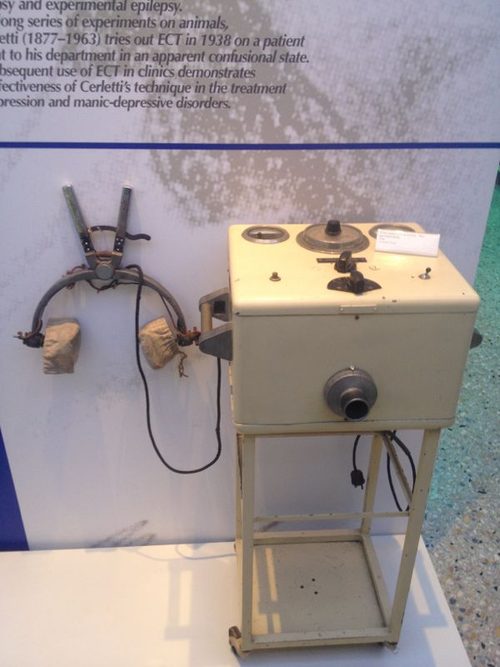
In April 1938 Ugo Cerletti and Lucio Bini in Rome induced a seizure with an electric current instead of a drug. Electroconvulsive therapy was cheaper, more reliable, and spared patients the waiting dread, because they lost consciousness at once and usually remembered nothing; it "rapidly became the dominant method" over the next few years3,6. Cardiazol lingered: in Denmark most state hospitals phased it out in the late 1940s and early 1950s, and a few still used it later in that decade5.
Meduna himself moved to the United States at the end of the 1930s and worked in Chicago until his death in 19646. His theory of antagonism did not survive, but the practice he started did: modern ECT descends directly from his camphor injections of January 19343,6.
Key dates
- 2 January 1934 At the Lipótmező asylum near Budapest, Ladislas Meduna gives the first camphor injections to induce seizures in patients diagnosed with schizophrenia.
- 1935 Meduna reports his first 26 patients, claiming recovery in ten.
- 1937 Meduna's monograph Die Konvulsionstherapie der Schizophrenie reports 54 remissions among 110 patients.
- 1937 The Board of Control sends two commissioners to study cardiazol treatment in Budapest, Vienna and Frankfurt.
- 1938 In England and Wales, about four in five patients given the new shock treatments receive cardiazol.
- April 1938 Ugo Cerletti and Lucio Bini in Rome first induce a seizure with electricity in a patient.
Sources
- Primary source Board of Control (England and Wales), Twenty-fourth Annual Report of the Board of Control for the year 1937, London: HMSO (1938). Quotations checked against this text.
- Primary source Board of Control (England and Wales), Twenty-fifth Annual Report of the Board of Control for the year 1938, London: HMSO (1939). Quotations checked against this text.
- Scholarship Gábor Gazdag, István Bitter, Gabor S. Ungvari, Brigitta Baran, Convulsive therapy turns 75, The British Journal of Psychiatry 194(5) (2009).
- Scholarship Brigitta Baran, István Bitter, Gabor S. Ungvari, Zoltán Nagy, Gábor Gazdag, Lessons from an early account of convulsive therapy, Archives of Clinical Psychiatry (São Paulo) 35(4) (2008).
- Scholarship Jesper Vaczy Kragh, Shock Therapy in Danish Psychiatry, Medical History 54(3) (2010).
- Wikipedia Ladislas J. Meduna, Wikipedia.
Cross-checked with Wikidata Q2248475 and the English Wikipedia article.
Read next
 1938–present · Transformed
Electroconvulsive therapy, then and now
Ugo Cerletti and Lucio Bini first induced a seizure with electricity in Rome in April 1938. Unmodified ECT injured and frightened many; anaesthesia and muscle relaxants made it a treatment still used today.
1933–1960s · Abandoned
Insulin coma therapy
From the mid-1930s to the late 1950s, people diagnosed with schizophrenia were put into deep comas with insulin, day after day. A trial in 1957 found the insulin itself did nothing special.
 1917–1950s · Abandoned
Malaria therapy
From 1917 doctors deliberately infected people with general paralysis with malaria, hoping the fever would halt the disease. It won a Nobel Prize in 1927 and was used until penicillin replaced it.
 1874–present
Catatonia
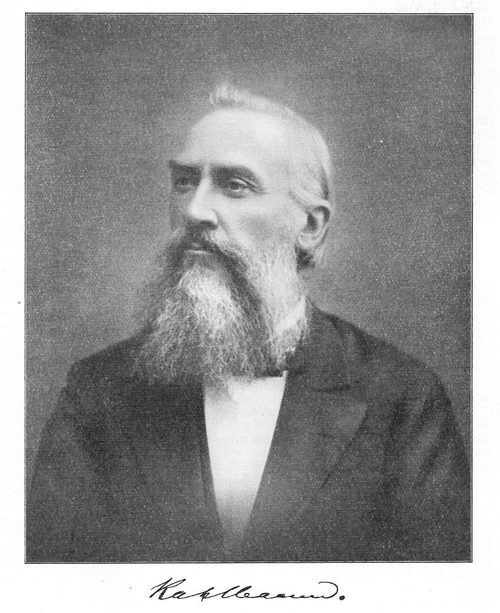
Named by Karl Kahlbaum in 1874 as a disease of tension and stupor, catatonia was absorbed into dementia praecox and schizophrenia, then rediscovered as a syndrome that crosses many illnesses.
 1890s–1950s
Dementia praecox
Emil Kraepelin's 'early dementia' of the 1890s: a psychosis of youth he thought led to lasting decline. Contested from the start, it was renamed schizophrenia and reshaped twentieth-century psychiatry.
 1845–1990
The biological turn
From Griesinger's claim in the 1840s that mental illness is brain disease, through the microscope, the shock therapies and the drug revolution, to DSM-III in 1980: how psychiatry repeatedly turned to the body.