
Person · 14 November 1895 – 31 May 1972
Walter Freeman
American neurologist (1895–1972) who brought lobotomy to the United States in 1936, devised the quicker transorbital operation in 1946, and personally lobotomised thousands of patients across the country.
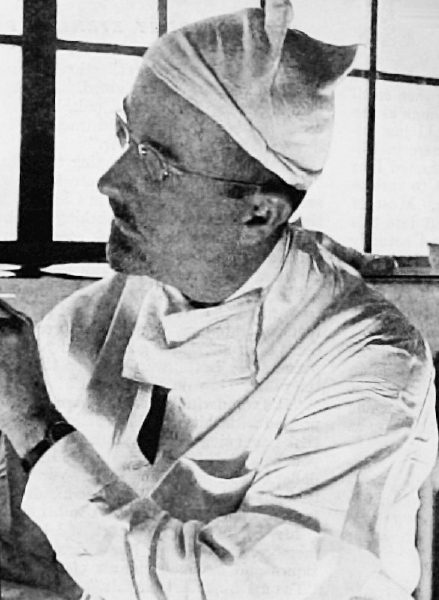
Walter Freeman did not invent lobotomy, and he was not a surgeon. What he did was turn an experimental Portuguese operation into an American routine, carried from hospital to hospital by one tireless, self-publicising man. Few doctors of the twentieth century did more to shape how the public came to see psychiatry, and his name has become shorthand for the harm a confident doctor can do.
A neurologist in Washington
Freeman was born in Philadelphia on 14 November 1895 into a medical family; his grandfather William Williams Keen was a celebrated surgeon5. He studied at Yale and the University of Pennsylvania, and in 1924, aged 28, moved to Washington to run the laboratories of St Elizabeths, one of the largest public mental hospitals in the country2,5. According to his biographer Jack El-Hai, he was appalled by the thousands of patients there whose lives seemed to be going nowhere, and set out to find a physical cause for their illness2. He became professor of neurology at George Washington University and, in 1946–47, president of the American Board of Psychiatry and Neurology5.
Lobotomy, 1936–1946
In 1936 Freeman read Egas Moniz's report of twenty leucotomies in Lisbon. With the neurosurgeon James Watts he performed the first American operation on 14 September 1936, renamed it "lobotomy" and modified the cuts2,4. In 1942 they reported on 200 patients, of whom they counted 63 per cent improved, 23 per cent unchanged and 14 per cent worse or dead3. In 1941 they operated on Rosemary Kennedy, who was left permanently disabled5. Freeman also promoted the operation for intractable pain, as the Board of Control noted in its 1947 report on British cases:
Freeman has stated recently that the operation can also be used to lessen the mental distress from intractable physical pain1
Quotation checked against the 1947 text
The transorbital operation
The standard operation needed a neurosurgeon, an operating theatre and drilling through the skull, and state hospitals had few of any. In 1946 Freeman adapted an Italian method, Amarro Fiamberti's approach through the eye socket, into the so-called "ice-pick" lobotomy, often using an electric shock in place of an anaesthetic3,5. Watts objected to what he saw as a serious operation turned into an office procedure, and their partnership ended in 19475. Freeman believed any hospital psychiatrist could learn the method in an afternoon. He drove from state hospital to state hospital to demonstrate it, sometimes operating on patient after patient in front of the press, on trips he himself called "head hunting"2. The number of lobotomies in the United States rose from about 150 in 1945 to some 5,000 in 19492. By the end of his career he had personally operated, by the PBS count, on more than 2,900 people in 23 states, among them nineteen children2.
The end
Chlorpromazine and the drugs that followed it took away lobotomy's main market in the 1950s3,4. Freeman moved to California and kept operating. In 1967 a patient died of a brain haemorrhage after her third lobotomy at his hands, at Herrick Memorial Hospital in Berkeley, and he lost his operating privileges5. He kept in touch with many former patients, visiting them on his travels, and as late as 1972 argued in print that lobotomy had done more than drugs to reduce some patients' antisocial behaviour5. He died on 31 May 1972, after an operation for cancer5.
Reputation
In his lifetime Freeman was celebrated in the popular press, which reported lobotomy as a surgery that plucked madness from the brain2. Within a decade of his death he had become a byword for medical arrogance; the PBS documentary describes him being "decried as a moral monster"2. The PBS film, drawing on interviews with historians such as Andrew Scull, presents him as an ambitious man whom a medical establishment embraced, at a time of overcrowded state hospitals and desperate families2. The best-known story about him, that he lobotomised the actress Frances Farmer, is almost certainly untrue; it is discussed under lobotomy.
Key dates
- 1924 Walter Freeman moves to Washington to direct the laboratories of St Elizabeths Hospital.
- 14 September 1936 Freeman and the neurosurgeon James Watts perform the first prefrontal lobotomy in the United States.
- 1941 Freeman and Watts lobotomise Rosemary Kennedy, then 23.
- 1946 Freeman begins transorbital lobotomy, an operation through the eye socket that needed no surgeon or operating theatre.
- 1947 James Watts ends his partnership with Freeman in protest at the transorbital operation.
- 1967 A patient dies after Freeman's last lobotomy in Berkeley, California, and he loses his operating privileges.
II on this site
Sources
- Primary source Board of Control (England and Wales), Pre-frontal Leucotomy in 1,000 Cases, London: HMSO (1947). Quotations checked against this text.
- Reference Barak Goodman and John Maggio (producers), The Lobotomist (American Experience), PBS (2008-01-21).
- Scholarship Miguel A. Faria Jr, Violence, mental illness, and the brain – A brief history of psychosurgery: Part 1 – From trephination to lobotomy, Surgical Neurology International 4 (2013).
- Scholarship Bengt Jansson, Controversial Psychosurgery Resulted in a Nobel Prize, NobelPrize.org (1998-10-29).
- Wikipedia Walter Jackson Freeman II, Wikipedia.
Cross-checked with Wikidata Q1669113 and the English Wikipedia article.
Read next
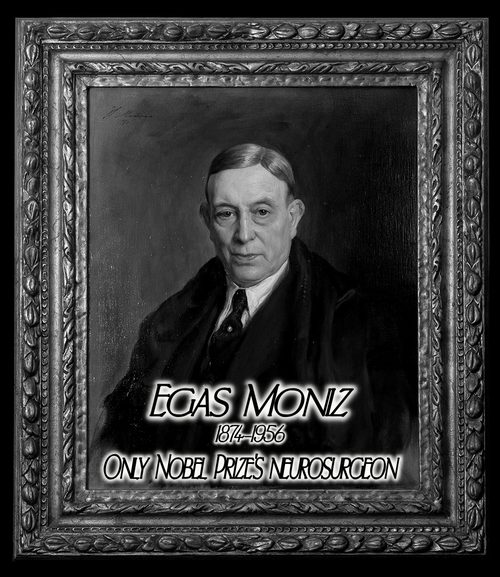 1935–1960s · Abandoned
Lobotomy
Brain surgery to cut the frontal lobes' connections, begun in Lisbon in 1935 and rewarded with a Nobel Prize in 1949. Tens of thousands were operated on before drugs and evidence of harm ended it.
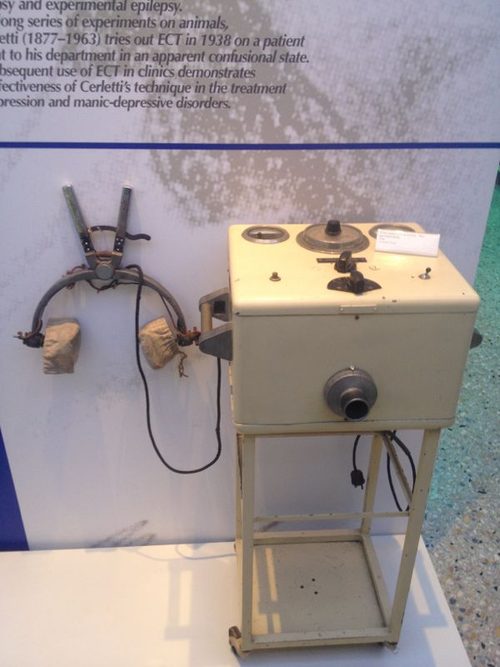 1938–present · Transformed
Electroconvulsive therapy, then and now
Ugo Cerletti and Lucio Bini first induced a seizure with electricity in Rome in April 1938. Unmodified ECT injured and frightened many; anaesthesia and muscle relaxants made it a treatment still used today.
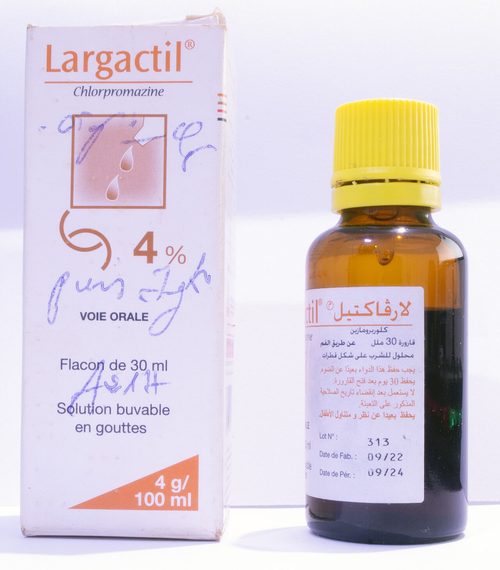 1952–present · Transformed
Chlorpromazine
A French drug tried on psychiatric patients in Paris in 1952. Chlorpromazine calmed psychosis without stupor, emptied wards and began the age of psychiatric drugs, with lasting side-effects.
 1955–2000 · Transformed
Deinstitutionalisation
From the mid-1950s Western countries emptied their great mental hospitals: US public hospitals fell from about 559,000 patients to under 72,000 in forty years. Whether patients were freed or abandoned is still argued.
 1845–1990
The biological turn
From Griesinger's claim in the 1840s that mental illness is brain disease, through the microscope, the shock therapies and the drug revolution, to DSM-III in 1980: how psychiatry repeatedly turned to the body.