
Places
Hospitals, asylums, a tower and a whole town: the places where people with mental illness were held, cared for, studied and sometimes harmed, from medieval Bethlem to Willowbrook.
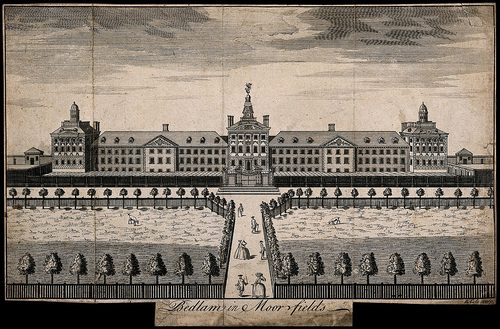 United Kingdom · 1247
Bethlem Hospital ("Bedlam")
London's hospital for the mentally ill since the Middle Ages: a priory of 1247, a palace at Moorfields, a parliamentary scandal in 1815, and a working hospital and museum at Beckenham today.
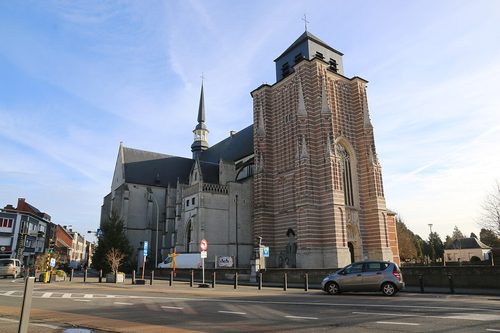 Belgium · 1349
Geel and family care
In the Flemish town of Geel, people with mental illness have lived as boarders with local families since the Middle Ages. The state took the system over in the 1850s, and it still runs today.
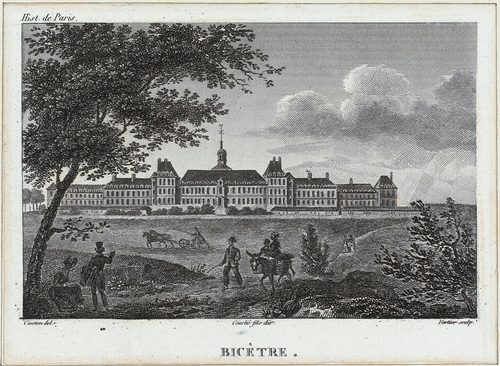 France · 1656
Bicêtre and the unchaining
The hospice south of Paris where Jean-Baptiste Pussin ran the ward for insane men, Philippe Pinel learned his trade in 1793–95, and chains were replaced by strait-waistcoats in 1797, a change later told as a legend.
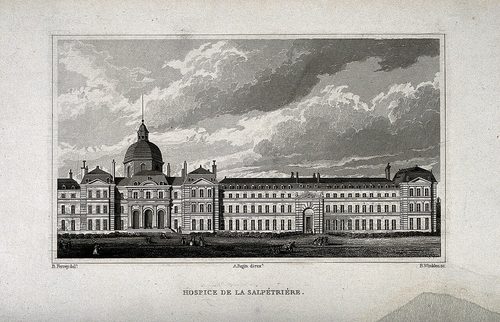 France · 1656
The Salpêtrière
A former gunpowder works in Paris that became a vast hospice for poor women, then the place where Pinel, Pussin and Esquirol remade asylum care and Charcot built modern neurology and staged his studies of hysteria.
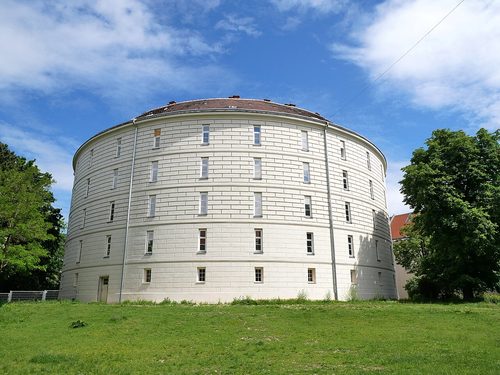 Austria · 1784
The Narrenturm, Vienna
A five-storey round tower built in 1784 under Joseph II to hold Vienna's mentally ill, used as an asylum until 1869 and since 1971 the home of a museum of pathology.
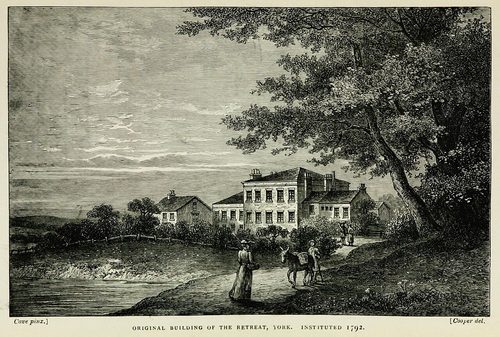 United Kingdom · 1796
The York Retreat
A small Quaker house outside York, opened in 1796 after a Friend died in the city asylum, whose mild regime, described by Samuel Tuke in 1813, made 'moral treatment' famous across Britain and America.
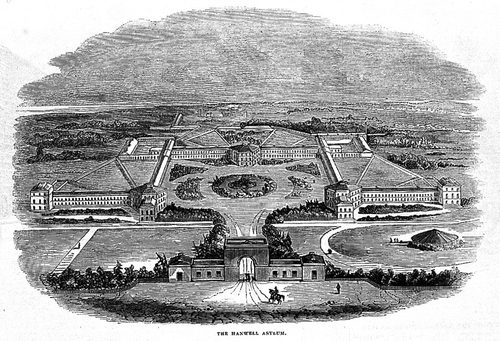 United Kingdom · 1831
Hanwell Asylum
The Middlesex county asylum west of London, opened in 1831 for poor patients, where William Ellis made work a therapy and John Conolly abolished mechanical restraint among some 800 patients in 1839.
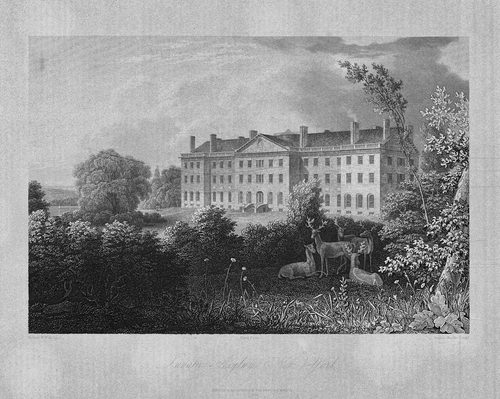 United States · 1839
The asylum on Blackwell's Island
New York City's first public asylum, opened in 1839 on an East River island beside a prison and workhouse; Dickens found it painful in 1842 and Nellie Bly exposed it in 1887. Its Octagon tower survives.
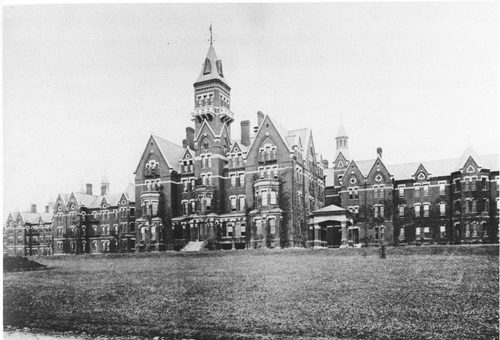 United States · 1848
The Kirkbride asylums
About seventy American state asylums built from 1848 to about 1910 to Thomas Kirkbride's plan of a central block with staggered wings, meant to heal by light, air and order. Many are demolished; some reused.
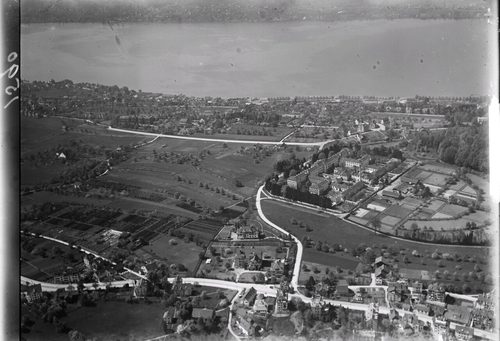 Switzerland · 1870
The Burghölzli, Zurich
Zurich's cantonal asylum, opened in 1870 and now the Psychiatric University Hospital. Under Forel and Bleuler it led European psychiatry: schizophrenia was named there and Jung tested Freud's ideas on patients.
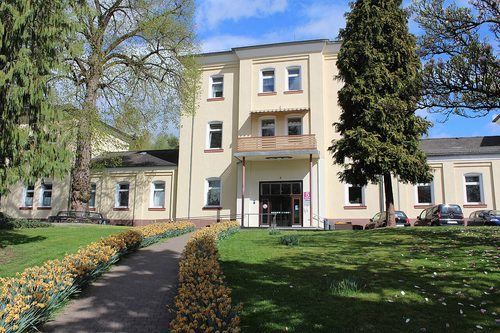 Germany · 1941
Hadamar and the Nazi killing of patients
A psychiatric hospital in Hesse that became one of six Nazi killing centres. About 10,000 patients were gassed there in 1941 and some 4,400 killed by drugs and starvation in 1942–45. It is now a memorial.
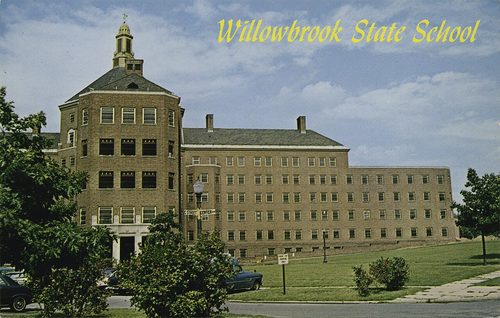 United States · 1947
Willowbrook State School
A New York state institution on Staten Island for people with intellectual disabilities, 1947–1987. Overcrowding, neglect and hepatitis experiments made it a national scandal and a turning point for disability rights.