
Person · 18 January 1912 – 16 November 1980
John Cade
Australian psychiatrist (1912–1980), a prisoner of war in Changi, whose 1949 paper from a Melbourne veterans' hospital first reported that lithium salts calmed mania.
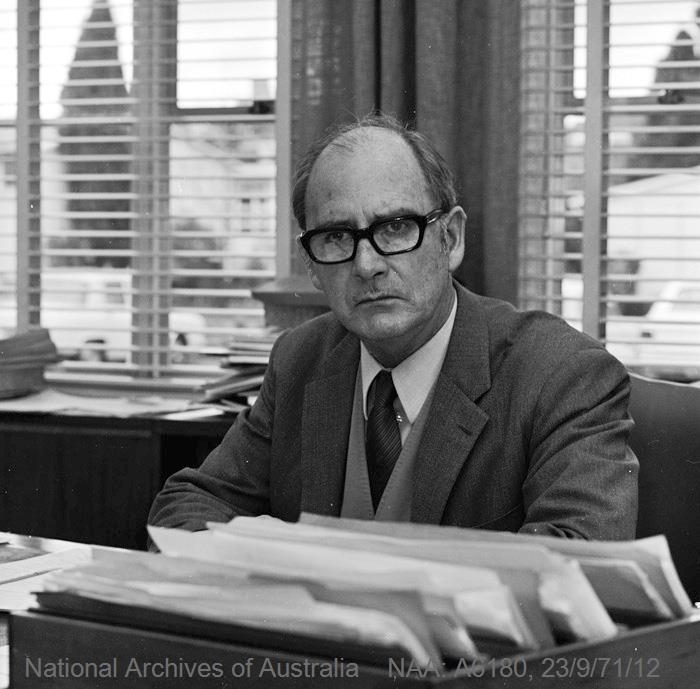
The most important drug discovery in Australian psychiatry was made in a disused pantry at a veterans' hospital, by a doctor who had spent three and a half years as a prisoner of war. John Cade's 1949 paper on lithium ran to a few pages and had no control group. It still opened the way to the first medicine that could prevent relapses of a major mental illness3,4.
Growing up in asylums
Cade was born on 18 January 1912 in the Wimmera district of western Victoria; most sources give Murtoa as his birthplace, while his biographers give Horsham2,3. His father, a country doctor, came back from Gallipoli and France worn out and took a post in the state's mental hospitals, rising to superintendent; the family lived in the grounds of the asylums at Beechworth, Sunbury and Mont Park3,4. Cade studied medicine at the University of Melbourne, graduating in 1934, worked at St Vincent's and the Royal Children's Hospital, and in 1936 joined the Victorian mental hospital service2,3.
Changi
On 1 July 1940 he was commissioned as a captain in the Australian Army Medical Corps and posted to the 2/9th Field Ambulance; he sailed for Singapore in 19414. He was captured at the fall of Singapore and held in Changi from February 1942 to September 19452,4. As well as general medical work he ran a small secure ward for Australian and British prisoners with psychiatric illness3. His biographers suggest that this experience may have convinced him that much mental illness had a physical, chemical cause3.
Bundoora
In 1946 Cade took up a post at the Repatriation Mental Hospital at Bundoora, north of Melbourne, which cared for ex-servicemen3. Reasoning that mania might be caused by an excess of some substance that the body excreted, he had staff collect patients' urine, which he kept in the family refrigerator, and injected extracts into guinea pigs3. To dissolve uric acid he used its lithium salt, and noticed that the animals became calm and docile; he then found the same with lithium carbonate alone3,4. After taking lithium himself for some weeks to test its safety, he gave it in March 1948 to a 51-year-old veteran who had been continuously ill for thirty years, then to nine more men with mania3.
The first patient improved so quickly that within three months he could leave hospital3. Cade's paper, "Lithium salts in the treatment of psychotic excitement", appeared in the Medical Journal of Australia in September 19491,3. Its details, and how Mogens Schou's controlled trials in Denmark confirmed it, are told under lithium.
But the doses that worked were close to those that poisoned, and no one could yet measure lithium in the blood. Several patients died, among them Cade's first, about two years after his treatment began3. Cade became wary of the drug and, his biographers found, barred its use at the hospital he went on to run3.
Royal Park
In 1950 Cade became superintendent at Bundoora, and in 1952 superintendent of Royal Park, then the most important psychiatric hospital in Melbourne, where he stayed until he retired in January 19772,3. He modernised the hospital, encouraged voluntary admission and took a less authoritarian approach to patients4. In 1951 he gave public lectures in Melbourne that attacked Freudian psychology and offended many colleagues3. Recognition for lithium came late: the Kittay award with Schou in 1974, appointment as an Officer of the Order of Australia in 1976, and the presidency of the Royal Australian and New Zealand College of Psychiatrists in 1969–702. He died at Fitzroy, Melbourne, on 16 November 19802.
Key dates
- February 1942 John Cade, an Australian army medical officer, is captured at the fall of Singapore and held in Changi until 1945.
- 1946 Cade takes up a post at the Repatriation Mental Hospital at Bundoora, outside Melbourne.
- March 1948 Cade gives lithium to his first manic patient, a veteran who had been ill for thirty years.
- September 1949 Cade's paper 'Lithium salts in the treatment of psychotic excitement' appears in the Medical Journal of Australia.
- 1952 Cade becomes superintendent of Royal Park Hospital in Melbourne, where he stays until 1977.
- 1974 Cade and Mogens Schou share the Kittay award for the introduction of lithium.
Cade on this site
Sources
- Primary source John F. J. Cade, Lithium salts in the treatment of psychotic excitement (1949; reprinted 1999), Medical Journal of Australia 2 (1949); reprinted in Australian and New Zealand Journal of Psychiatry 33 (1949-09).
- Reference Cade, John Frederick Joseph (1912–1980), Encyclopedia of Australian Science and Innovation.
- Scholarship Janet Wilson, Finding Sanity: John Cade, lithium and the taming of bipolar disorder (review of Greg de Moore and Ann Westmore), Honest History (2016-11-03).
- Wikipedia John Cade, Wikipedia.
Cross-checked with Wikidata Q3181170 and the English Wikipedia article.
Read next
 1949–present · Still in use
Lithium
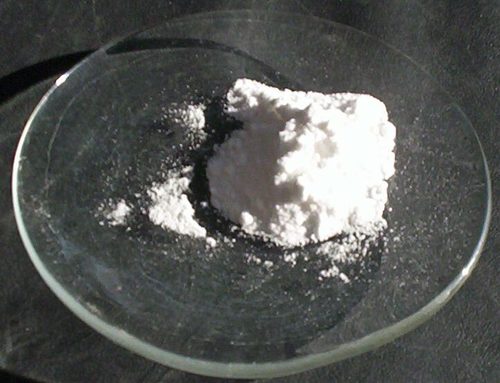
John Cade's 1949 report that lithium calmed mania was nearly buried by fear of poisoning. Mogens Schou's trials, and a bitter dispute with London critics, made it the first drug shown to prevent relapse.
 c. 100 CE–1980
Mania
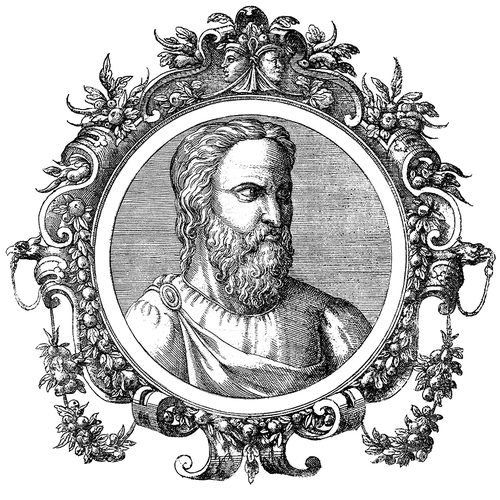
Mania once meant madness itself: raving, sleepless, sometimes joyful. How the word narrowed from Aretaeus to Kraepelin, and how it became one pole of manic-depressive illness.
 1952–present · Transformed
Chlorpromazine
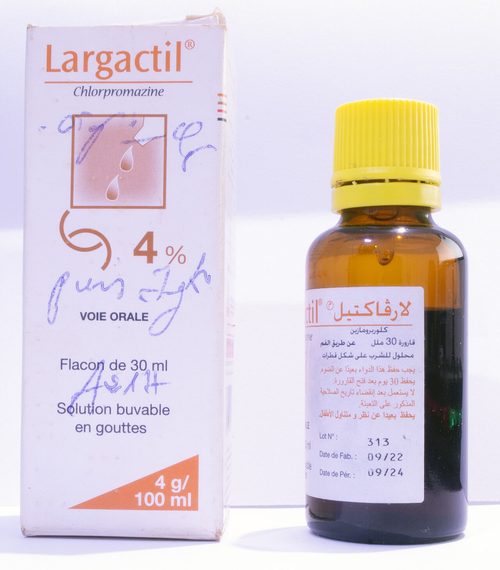
A French drug tried on psychiatric patients in Paris in 1952. Chlorpromazine calmed psychosis without stupor, emptied wards and began the age of psychiatric drugs, with lasting side-effects.
 1845–1990
The biological turn
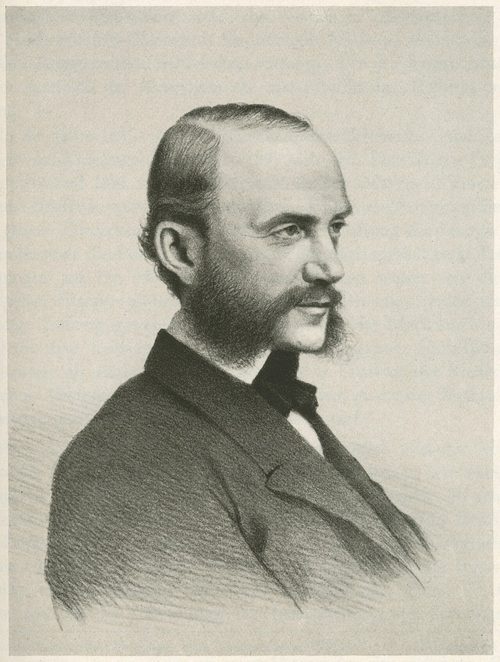
From Griesinger's claim in the 1840s that mental illness is brain disease, through the microscope, the shock therapies and the drug revolution, to DSM-III in 1980: how psychiatry repeatedly turned to the body.
 1952–1970s · Transformed
The first antidepressants
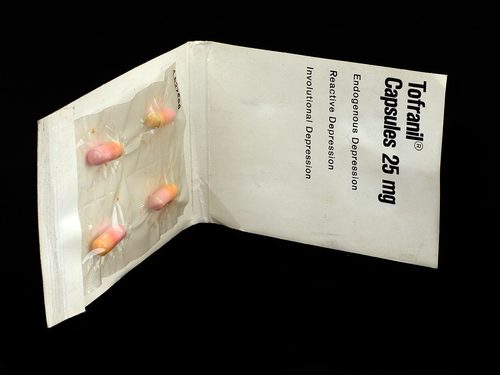
Two chance findings of the 1950s, a tuberculosis drug that lifted patients' spirits and a failed antipsychotic tested in a Swiss asylum, gave psychiatry its first antidepressants and a disputed chemical theory.