
Essay · 1832–present
Can we diagnose the dead?
Why this site never diagnoses historical figures, and hedges every modern equivalent it gives: the evidence was made for other purposes, diseases change their identities, and each age's diagnoses of the dead reflect its own medicine.
Nearly every page on this site that describes an old diagnosis ends with the same uneasy question, of what these patients would be diagnosed with today. The answers on those pages are always hedged, "some of these patients", "many historians think", "the mapping is uncertain", and the site never offers a diagnosis of any named person from the past. This essay explains why.
The short answer is that diagnosing the dead is harder than it looks and tells us less than it seems to. The evidence was produced by people asking different questions; the diseases themselves have changed their identities; and the history of retrospective diagnosis shows each generation finding in the past the illnesses that preoccupied its own medicine. Retrospective diagnosis can sometimes be done with care, mostly for groups of patients rather than for individuals. As a way of explaining what happened to a named person, it usually obscures more than it reveals.
An old habit
Psychiatrists have diagnosed the dead for as long as there have been psychiatrists. In the nineteenth century Charcot and his contemporaries read the demonically possessed of earlier centuries as hysterics, and admirers of Johann Weyer made him a pioneer for having called accused witches melancholic (Demonic possession and its critics). The medieval outbreaks of compulsive dancing became "dancing mania" only in 1832, when the German physician J. F. C. Hecker gathered the chronicles into a medical study3. His English translator, introducing Hecker's companion study of the Black Death in 1844, was candid about why such histories appealed:
I was prompted to undertake its translation, from a belief that it would prove interesting at a moment when another fearful epidemic, the Cholera, with which it admitted of comparison in several particulars, was fresh in the memory of men.3
Quotation checked against the 1844 text
The past was read through the present, openly. The historian of medicine Jon Arrizabalaga has argued that this is a general pattern: the labels historians and doctors propose for past epidemics tend to sit remarkably close to the medical preoccupations of their own time2.
Three problems
The first problem is the evidence. A modern diagnosis rests on questions a clinician chooses to ask, on examination and often on tests. The dead cannot be asked anything. What survives are chronicles, letters, court papers and case notes written to answer other questions: whether a man could manage his estate, whether a woman should be admitted, whether a saint had sent a curse. Philippe Pinel, who had attended thirty-six dissections at Bicêtre, warned his readers in 1801 against drawing confident conclusions even from a brain on the table:
what an additional motive for circumspection and reserve in deciding upon the physical causes of mental alienation?11
Quotation checked against the 1806 text
The second problem is that diagnostic categories are not fixed. Andrew Cunningham, a historian of medicine at Cambridge, argues that a disease's identity is given by the act of diagnosis itself: by the particular questions doctors in a given time and place ask about a patient1. On this view, the plague diagnosed by a seventeenth-century physician and the plague identified in a laboratory after the discovery of its bacillus are not simply the same thing seen with better instruments; the laboratory changed what "plague" meant1. Cunningham's position is deliberately radical and has been much debated. It still makes a point that matters for psychiatry, where there is rarely any laboratory test at all: a diagnosis such as melancholia or hysteria was a way of organising observations, and the observations cannot be separated from it.
The third problem is the patient. Roy Porter, in an influential essay of 1985, urged historians to write medical history "from below", from the sufferer's point of view rather than the doctor's12. Retrospective diagnosis pulls the other way. It turns a person's recorded experience back into a doctor's case, and usually into the case of a doctor who never met them.
When it works, and when it does not
There are cases where a modern identification is well grounded. General paralysis, the most feared diagnosis of the Victorian asylum, was shown in 1913 to be a late form of syphilis when Hideyo Noguchi and J. W. Moore found the organism in the brains of patients who had died of it10. Here the past diagnosis was linked to the present one by physical evidence from the patients themselves. Even so, historians caution that the nineteenth-century label also caught some people with other brain diseases, so not every patient called "GPI" had syphilis.
Most cases are less tractable. The dancing plagues have been attributed to ergot poisoning, to deliberate religious ritual and to mass psychogenic illness. The historian John Waller argues for the last, a trance state produced by fear and hunger in communities that believed in curses, and doubts that ergot could cause days of dancing; the chronicles cannot settle the matter7. Historical hysteria is often said to correspond to what clinicians now call functional neurological disorder, in which real symptoms such as weakness or seizures occur without structural disease of the nervous system8. But patients given such labels were sometimes later found to have tumours, epilepsy or vascular disease8, and the dramatic hysteria of the Salpêtrière was shaped, as Hippolyte Bernheim argued at the time, by suggestion and by the hospital's own expectations. A single modern equivalent would flatten all of that.
A king and a theory
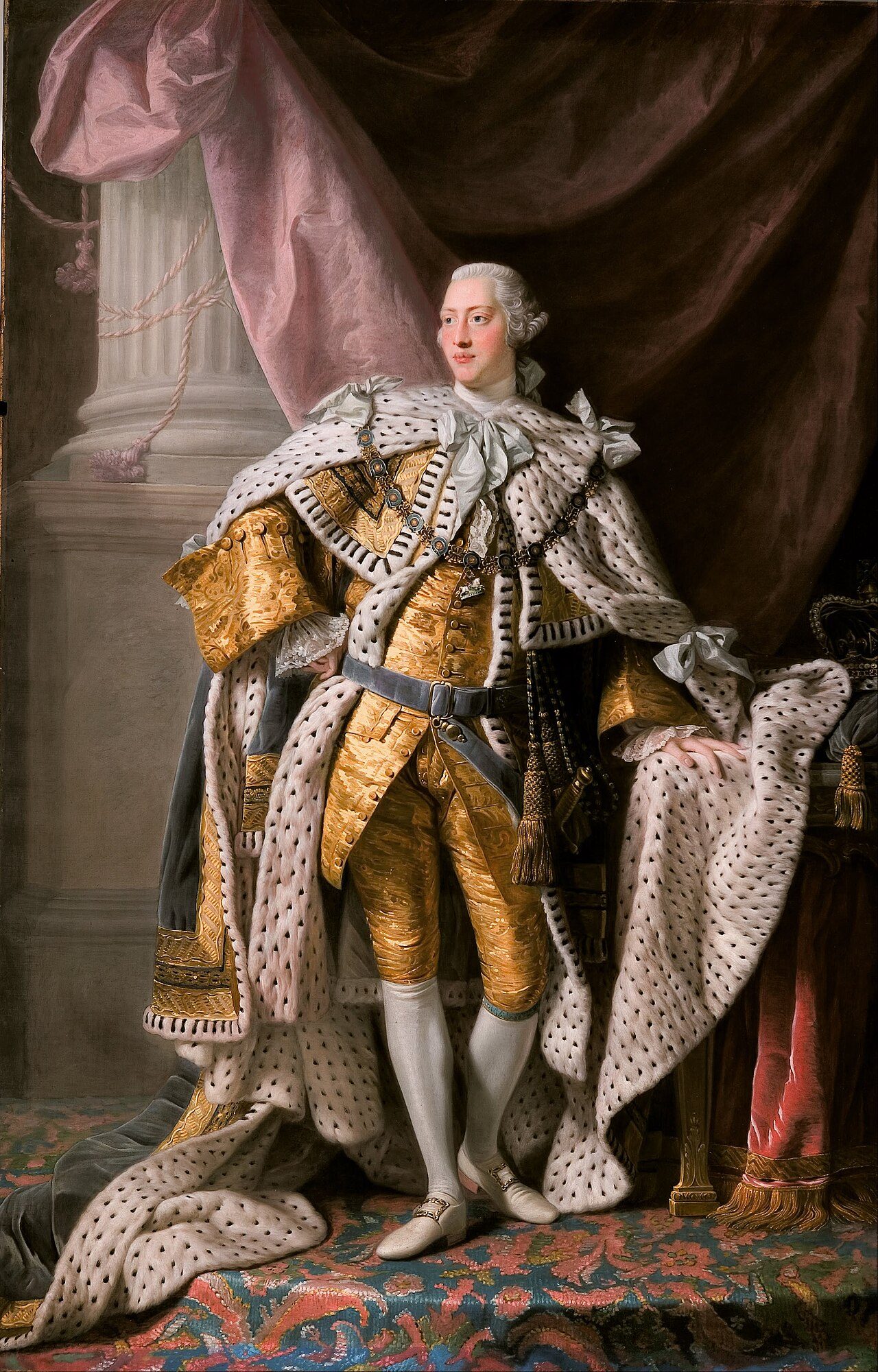
The case of George III shows how a retrospective diagnosis can be widely accepted and then unravel. The king had a long illness in 1788–89, brief relapses in 1801 and 1804, and a permanent one from 18106. Once psychiatry became a medical discipline, these episodes were read as manic-depressive illness4. In 1966 the psychiatrists Ida Macalpine and Richard Hunter argued instead that he had suffered from acute porphyria, an inherited metabolic disorder that can cause attacks of physical and mental disturbance. The theory gained wide acceptance among doctors, historians and the public4.
There is a further twist. Macalpine and Hunter were among the most patient-minded psychiatrist-historians of their generation: they had translated Daniel Paul Schreber's memoir of his illness into English in 1955 (The patients who wrote back)13. Careful, sympathetic readers of the past can still find in it the disease their own medicine was looking for.
The crowd of rival diagnoses gets thicker for famous people with large archives of letters. For the painter Vincent van Gogh, proposed diagnoses have ranged from schizophrenia, bipolar disorder and epilepsy to lead poisoning, porphyria and sunstroke; at a recent psychiatric teaching session, 15 of 22 participants concluded that no single diagnosis could explain his symptoms9. The length of such lists is itself the best evidence of how little the records can decide.
This site's policy
For these reasons the site follows a few simple rules. It does not diagnose named historical people, patients or doctors, and where others have proposed diagnoses it reports who proposed them and on what evidence. When a page on an old diagnosis says what it "maps to now", it speaks of groups ("some of these patients"), names the modern conditions that historians and clinicians have suggested, and says why the match is uncertain: different concepts, missing records, a different social context. It keeps the old names in quotation marks, as the names of past ways of seeing (How words for madness changed).
None of this means the modern questions are worthless. Asking what killed the patients of the general paralysis wards, or what the women at the Salpêtrière might be told today, can make the past less strange and the suffering more recognisable. The point is to hold the answers loosely, and to remember that the people in these pages were diagnosed once already, by doctors who were also sure they knew what they were seeing.
Key dates
- 1832 J. F. C. Hecker publishes his study of the medieval dancing plagues, making them a medical category.
- 1 February 1913 Hideyo Noguchi and J. W. Moore report finding the syphilis organism in the brains of patients who died of general paralysis.
- 1966 Ida Macalpine and Richard Hunter propose that George III's illness was porphyria, a theory that wins wide acceptance.
- 1980 The American diagnostic manual drops 'hysteria', dividing its territory among conversion, dissociative and other disorders.
- 2002 Andrew Cunningham and Jon Arrizabalaga publish critiques of retrospective diagnosis in the journal Asclepio.
- 22 March 2017 A computational study of George III's letters finds language changes consistent with acute mania during his illness of 1788–89.
Sources
- Scholarship Andrew Cunningham, Identifying disease in the past: cutting the Gordian knot, Asclepio 54(1): 13–34 (2002).
- Scholarship Jon Arrizabalaga, Problematizing retrospective diagnosis in the history of disease, Asclepio 54(1): 51–70 (2002).
- Primary source J. F. C. Hecker, The Epidemics of the Middle Ages (trans. B. G. Babington), London: Sydenham Society (1844). Quotations checked against this text.
- Scholarship Vassiliki Rentoumi, Timothy Peters, Jonathan Conlin and Peter Garrard, The acute mania of King George III: a computational linguistic analysis, PLOS ONE 12(3): e0171626 (2017-03-22).
- Scholarship Timothy Peters, FitzPatrick Lecture: King George III and the porphyria myth, Clinical Medicine 15(2): 168–172 (2015).
- Wikipedia George III, Wikipedia.
- Scholarship John Waller, Dancing plagues and mass hysteria, The Psychologist (British Psychological Society) (2009-07-16).
- Wikipedia Functional neurologic disorder, Wikipedia.
- Scholarship Nimesh Naran and Robert Howard, Can we diagnose Van Gogh?, BJPsych Bulletin 50(1): 101–102 (2026).
- Primary source Hideyo Noguchi and J. W. Moore, A demonstration of Treponema pallidum in the brain in cases of general paralysis, Journal of Experimental Medicine 17(2): 232–238 (1913-02-01).
- Primary source Philippe Pinel, A Treatise on Insanity (trans. D. D. Davis), Sheffield: W. Todd (1806). Quotations checked against this text.
- Scholarship Roy Porter, The patient's view: doing medical history from below, Theory and Society 14(2): 175–198 (1985).
- Primary source Daniel Paul Schreber, Memoirs of My Nervous Illness (trans. and ed. Ida Macalpine and Richard A. Hunter), London: W. Dawson, 1955; reissued Harvard University Press, 1988 (1955).
Read next
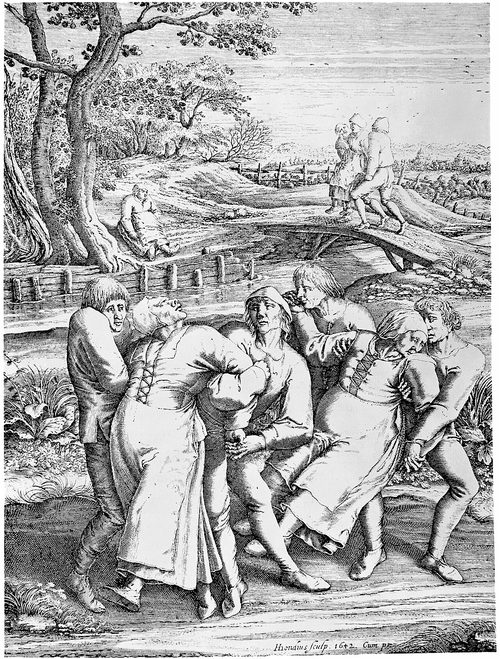 1374–1600s
Dancing mania
Outbreaks of compulsive dancing along the Rhine and Moselle between 1374 and the 1500s, blamed on saints and demons, later named a 'mania' by doctors. Their cause is still argued over.
 1680s–1980
Hysteria
Named for the womb, hysteria became medicine's catch-all for symptoms it could not explain. Its history from Greek texts to Sydenham, Charcot and Freud, and why it was dropped in 1980.
 1820s–1940s
General paralysis of the insane
The deadliest diagnosis in the Victorian asylum: grandiose delusions, failing speech and paralysis, usually fatal within a few years. In 1913 it was proved to be a late form of syphilis.
 c. 400 BCE–1900s
Melancholia
For two thousand years melancholia meant fear and sorrow without cause, blamed on black bile. How physicians from Aretaeus to Kraepelin defined it, and how it became 'depression'.
 Antiquity–19th century
Demonic possession and its critics
Many cultures have explained fits, voices and despair as the work of spirits. How Europeans argued over possession from Hippocrates to Charcot, and why the story that medicine simply defeated superstition is too simple.
Essay · 6 min
How words for madness changed
From the Latin insania and furor to 'lunatic', 'alienist', 'mental hospital' and 'schizophrenia': why the words for madness kept changing, and why the change usually came from law and institutions rather than discovery.
Pages that mention Can we diagnose the dead?
- Diagnosis Catatonia
- Diagnosis Dancing mania
- Diagnosis Dementia praecox
- Diagnosis Drapetomania
- Diagnosis Folie à deux
- Diagnosis Melancholia
- Diagnosis Puerperal insanity
- Diagnosis Shell shock
- Essay "On being sane in insane places": Rosenhan's study and its challengers
- Essay How words for madness changed
- Essay War and the mind: from nostalgia to PTSD
- Essay Who got locked up, and why
- Person Bertha Pappenheim ("Anna O.")
- Person Daniel Paul Schreber
- Person Eugen Bleuler
- Person Jean-Martin Charcot
- Person Johann Weyer
- Person Robert Burton
- Theory Demonic possession and its critics
- Treatment Malaria therapy
- Treatment Trepanation