
Diagnosis · c. 100 CE–1980
Mania
Mania once meant madness itself: raving, sleepless, sometimes joyful. How the word narrowed from Aretaeus to Kraepelin, and how it became one pole of manic-depressive illness.
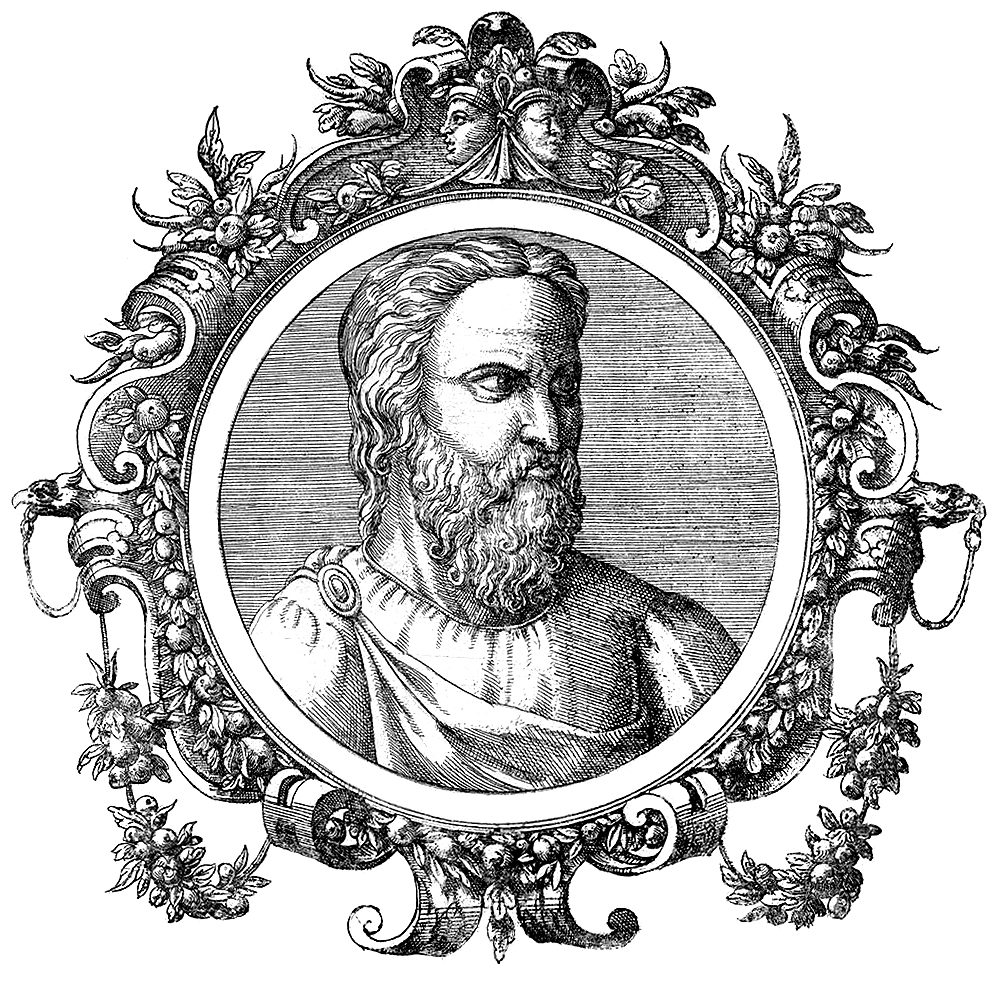
In Greek, mania could mean madness of almost any kind. Medicine gave it a narrower sense early on, and then spent nearly two thousand years arguing over how narrow that sense should be. The arguments ended, for a while, in a single great diagnostic compound, "manic-depressive insanity", in which mania was no longer a disease of its own but one face of another4,6.
Aretaeus and the two faces of madness
The ancient source cited most often is Aretaeus of Cappadocia, writing perhaps in the first or second century CE. For him mania was "altogether a chronic derangement of the mind, without fever", distinct from the passing delirium of drink or drugs and from the decline of old age; it could remit, and "with care ceases altogether"1. He described its forms with a novelist's eye:
And they with whose madness joy is associated, laugh, play, dance night and day, and sometimes go openly to the market crowned, as if victors in some contest of skill1
Quotation checked against the 1856 text
Others, he wrote, were driven by anger and became dangerous to those around them. And he made the observation that later psychiatry would treat as prophetic:
it appears to me that melancholy is the commencement and a part of mania. For in those who are mad, the understanding is turned sometimes to anger and sometimes to joy, but in the melancholics to sorrow and despondency only1
Quotation checked against the 1856 text
Not everyone agreed. Soranus of Ephesus, a near contemporary, treated mania and melancholia as separate diseases while noting that "many others" thought melancholia a form of mania7. The question of whether they were one illness or two would not be settled for another seventeen centuries.
Universal insanity
For most of that time "mania" stayed broad. In the eighteenth century the Edinburgh physician William Cullen used it for "universal insanity", madness affecting the whole mind, as against the "partial insanity" of melancholia, though he admitted the line was hard to draw5.
Philippe Pinel, working at Bicêtre in Paris in the 1790s, kept mania as one of his four main classes but complicated it. In his treatise of 1801 (English translation 1806) he described "mania without delirium": patients gripped by fits of rage whose reasoning seemed untouched2,8. That category, taken up by others, fed the later diagnoses of monomania and moral insanity.
Circular insanity
The modern idea began in Paris in 1854, in an unseemly race. On 31 January Jules Baillarger described folie à double forme, an insanity in which mania and melancholia succeeded one another as phases of a single attack; on 14 February Jean-Pierre Falret presented folie circulaire, a cycle of excitement and depression separated by a lucid interval. Historians date Falret's first account of the idea to 1851, and the two men disputed priority4,7.
Kraepelin's synthesis
Emil Kraepelin, professor at Heidelberg, gathered these threads. In the sixth edition of his textbook (1899) he set "manic-depressive insanity" apart from dementia praecox, and he came to see all its forms, however different on the surface, as "manifestations of a single morbid process"3,4,5. The definition in the English translation of 1921 shows how much it swallowed:
Manic-depressive insanity, as it is to be described in this section, includes on the one hand the whole domain of so-called periodic and circular insanity, on the other hand simple mania, the greater part of the morbid states termed melancholia and also a not inconsiderable number of cases of amentia.3
Quotation checked against the 1921 text
Kraepelin's unitary concept was widely accepted. From the 1950s it was divided again: Karl Leonhard, in 1957, separated "bipolar" illness, with episodes of mania, from "unipolar" depression, and later work by Jules Angst, Carlo Perris and George Winokur supported the split4,7. "Manic-depressive illness" remained the official term in the ICD-8 and DSM-II classifications of 1968; "bipolar disorder" became the standard name from 19807.
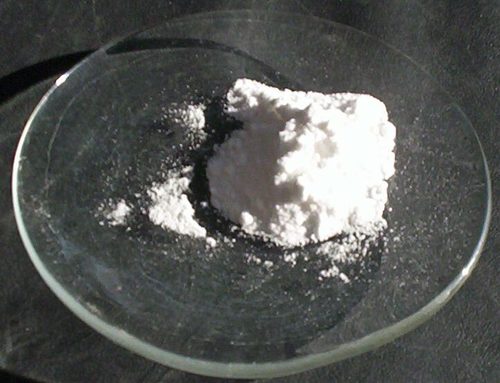
The treatment story changed in the same years. In 1949 the Australian psychiatrist John Cade reported that lithium salts calmed manic patients, and in 1954 Mogens Schou in Denmark organised a controlled trial; lithium was not approved in the United States until 19707.
What it maps to now, and why that is uncertain
The patients most often read as having bipolar disorder in today's sense are those Kraepelin grouped under periodic and circular insanity, whose attacks of excitement and depression recurred with intervals of recovery3,4. But the older category was much wider. As Aretaeus's and Cullen's definitions show, "mania" covered almost any excited, sleepless or violent state without fever, which would have included conditions now traced to infection, to alcohol, or to general paralysis, and others now diagnosed as schizophrenia1,5. Illness after childbirth had its own label, puerperal insanity. Retrospective diagnoses of famous writers and painters with bipolar disorder, common in popular books, rest on letters and memoirs rather than clinical records and are best treated as speculation. The word itself survives: "mania" and "manic episode" are still clinical terms, now meaning one phase of a longer illness rather than madness as a whole.
Key dates
- 1801 Pinel's treatise on mental alienation separates mania with delirium from 'mania without delirium'.
- 31 January 1854 Jules Baillarger describes 'folie à double forme', alternating mania and melancholia.
- 14 February 1854 Jean-Pierre Falret presents 'folie circulaire', a cycle of mania and depression.
- 1899 Kraepelin's sixth edition unites periodic and circular insanity as 'manic-depressive insanity'.
- September 1949 John Cade reports lithium salts as a treatment for mania.
- 1957 Karl Leonhard introduces the terms 'bipolar' and 'unipolar'.
Sources
- Primary source Aretaeus of Cappadocia, The Extant Works of Aretaeus, the Cappadocian (trans. Francis Adams), London: Sydenham Society (1856). Quotations checked against this text.
- Primary source Philippe Pinel, A Treatise on Insanity (trans. D. D. Davis), Sheffield: W. Todd (1806). Quotations checked against this text.
- Primary source Emil Kraepelin, Manic-Depressive Insanity and Paranoia (trans. R. Mary Barclay), Edinburgh: E. & S. Livingstone (1921). Quotations checked against this text.
- Scholarship José Alberto Del-Porto and Kátia Oddone Del-Porto, History of the nosologic characterization of bipolar disorder, Archives of Clinical Psychiatry (São Paulo) 32, suppl. 1 (2005).
- Scholarship Diogo Telles-Correia and João Gama Marques, Melancholia before the twentieth century: fear and sorrow or partial insanity?, Frontiers in Psychology 6:81 (2015).
- Reference Review of David Healy, Mania: A Short History of Bipolar Disorder (Johns Hopkins University Press, 2008), Times Higher Education (2008-10-09).
- Wikipedia History of bipolar disorder, Wikipedia (2026).
- Scholarship David W. Jones, Moral insanity and psychological disorder: the hybrid roots of psychiatry, History of Psychiatry 28(3) (2017).
Cross-checked with Wikidata Q185935 and the English Wikipedia article.
Read next
 c. 400 BCE–1900s
Melancholia
For two thousand years melancholia meant fear and sorrow without cause, blamed on black bile. How physicians from Aretaeus to Kraepelin defined it, and how it became 'depression'.
 1949–present · Still in use
Lithium
John Cade's 1949 report that lithium calmed mania was nearly buried by fear of poisoning. Mogens Schou's trials, and a bitter dispute with London critics, made it the first drug shown to prevent relapse.
 1820s–1920s
Puerperal insanity
The nineteenth century's name for madness after childbirth: common in asylum admissions, thought highly curable, and central to infanticide trials, until doctors decided it was no special disease at all.
 1890s–1950s
Dementia praecox
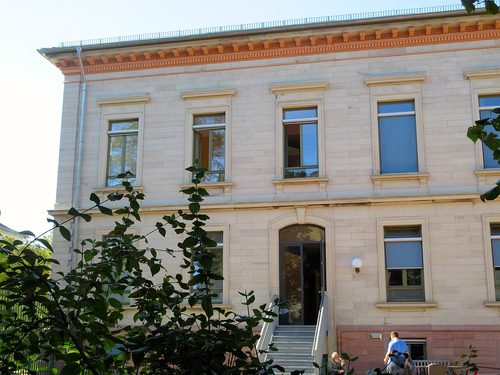
Emil Kraepelin's 'early dementia' of the 1890s: a psychosis of youth he thought led to lasting decline. Contested from the start, it was renamed schizophrenia and reshaped twentieth-century psychiatry.
 1810s–1870s
Monomania
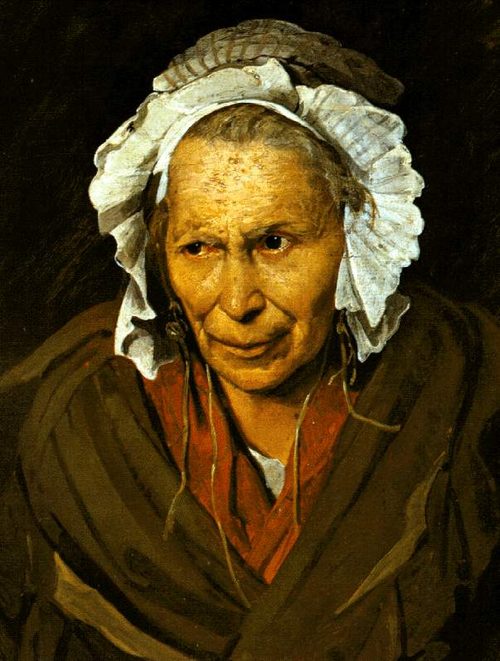
Esquirol's monomania described a mind sound in every way but one: a single fixed idea or irresistible impulse. It made alienists expert witnesses, then fell apart under criticism after 1854.
 1835–1910s
Moral insanity
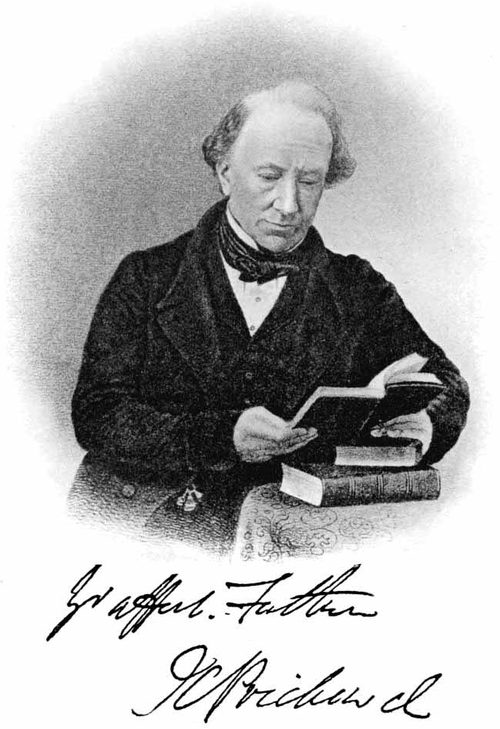
In 1835 J. C. Prichard named a madness of feeling and conduct with reason intact. Moral insanity reached the Old Bailey, provoked a backlash, and fed the later ideas of 'moral imbecility' and psychopathy.
Pages that mention Mania
- Diagnosis Catatonia
- Diagnosis Melancholia
- Diagnosis Monomania
- Diagnosis Moral insanity
- Diagnosis Puerperal insanity
- Essay How words for madness changed
- Person Clifford Beers
- Person Emil Kraepelin
- Person Jean-Baptiste Pussin
- Person Jean-Étienne Esquirol
- Person John Cade
- Person Philippe Pinel
- Place Bicêtre and the unchaining
- Theory The four humours
- Treatment Bloodletting, purging and emetics
- Treatment Lithium