
Person · 27 February 1859 – 28 May 1936
Bertha Pappenheim ("Anna O.")
Viennese woman (1859–1936) who, as Breuer's patient 'Anna O.', named the 'talking cure', and who later became a pioneer of Jewish social work and founder of the Jüdischer Frauenbund.
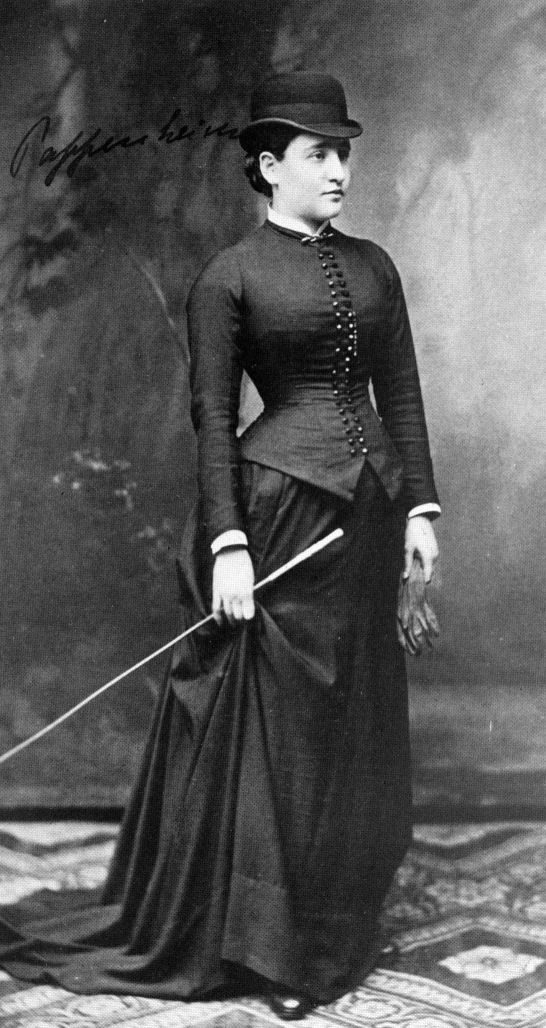
For more than half a century the world knew her only as "Anna O.", the young woman whose illness launched psychoanalysis. The people of Frankfurt knew her as Bertha Pappenheim, a formidable organiser of Jewish social work and a campaigner for women. When the two were publicly connected in 1953, many of her friends were outraged5.
A Viennese daughter
Bertha Pappenheim was born in Vienna on 27 February 1859 into a wealthy Orthodox Jewish family; her father Siegmund was a grain merchant, her mother Recha came from an old Frankfurt family2,5. She received the narrow education thought proper for a daughter of her class, and later wrote bitterly about it2.
In mid-1880 her father fell seriously ill, and she nursed him at night. She developed a cough, then paralyses, disturbances of sight and speech and states of "absence"1,2. From late November 1880 the family's physician, Josef Breuer, visited her almost daily. He found that she grew calmer when she told him, in these altered states, the stories she had been imagining; at one stage she could understand and speak only English. Freud, who learned of the case from Breuer, described it in 1909 to an American audience:
The patient herself, who at this time of her illness strangely enough understood and spoke only English, gave this new kind of treatment the name "talking cure," or jokingly designated it as "chimney sweeping."1
Quotation checked against the 1910 text
Her father died on 5 April 1881, and she grew much worse; in June she was taken, against her will, to a sanatorium at Inzersdorf near Vienna2,5. Breuer went on treating her, tracing symptoms back to their first occurrence until, in June 1882, he ended the treatment2,5. In 1895 he published the case, under the name "Anna O.", in Studies on Hysteria, written with Freud, and stated that she had since enjoyed complete health2. The case became a founding story of psychoanalysis and of the twentieth-century understanding of hysteria.
What the records show
Frankfurt
In November 1888 she moved with her mother to Frankfurt3,5. She worked in a soup kitchen and read to the girls of a Jewish orphanage, and from 1895 ran it, steering its girls towards training for paid work rather than only towards marriage2,5. She published stories, first anonymously and then as "Paul Berthold", and in 1899 translated Mary Wollstonecraft's A Vindication of the Rights of Woman into German3,5.
In 1904 she helped found the Jüdischer Frauenbund (League of Jewish Women), with Sidonie Werner, and led it for twenty years; it set out to unite Jewish women's organisations and to give girls a religious and practical education3,4. She travelled repeatedly to Galicia and further east, investigating the poverty of Jewish women there and campaigning against the trafficking of women and girls3,5. The Leo Baeck Institute notes that her writing about eastern European Jews could be condescending, a view common in the German-Jewish middle class of her day3.
She regarded her life's work as the home she opened at Neu-Isenburg, near Frankfurt, on 25 November 1907, for Jewish girls at risk, unmarried mothers and their children4,5. Orthodox critics at first called it a scandal5. She did not allow psychoanalytic treatment for its residents5.
Last years and memory
In April 1936, after a denunciation by an employee of the home, she was questioned by the state police; she was already gravely ill, and died on 28 May 19365. Two years later, on 10 November 1938, the home was attacked and set on fire; in 1942 it was dissolved and its remaining residents were deported to Theresienstadt3,5.
When Ernest Jones named her as "Anna O." in his biography of Freud in 1953, her admirers responded with biographies of the social worker they had known5. In 1954 West Germany put her portrait on a postage stamp in its series "Benefactors of Mankind"5. The Jewish Museum Berlin now presents her as the most important representative of the Jewish women's movement4.
Key dates
- November 1880 The Viennese physician Josef Breuer begins treating 21-year-old Bertha Pappenheim, who had fallen ill while nursing her dying father.
- July 1882 Breuer ends his treatment and Pappenheim is admitted to the Bellevue sanatorium at Kreuzlingen, still unwell.
- 1895 Breuer and Freud's Studies on Hysteria tells her story as the case of 'Anna O.'
- 1904 Pappenheim helps found the Jüdischer Frauenbund (League of Jewish Women) and becomes its first president.
- 25 November 1907 Pappenheim opens a home at Neu-Isenburg, near Frankfurt, for Jewish girls, unmarried mothers and their children.
- 28 May 1936 Bertha Pappenheim dies near Frankfurt, weeks after being questioned by the state police.
Pappenheim on this site
Sources
- Primary source Sigmund Freud, The Origin and Development of Psychoanalysis (trans. Harry W. Chase), American Journal of Psychology 21(2), American Journal of Psychology (1910). Quotations checked against this text.
- Scholarship Mikkel Borch-Jacobsen, Bertha Pappenheim (1859–1936), Psychology Today (Freud's Patients) (2012-01-29).
- Museum or archive Bertha Pappenheim, Leo Baeck Institute.
- Museum or archive Bertha Pappenheim in the Learning Center and in the Permanent Exhibition, Jewish Museum Berlin.
- Wikipedia Bertha Pappenheim, Wikipedia.
Cross-checked with Wikidata Q61178 and the English Wikipedia article.
Read next
 1680s–1980
Hysteria
Named for the womb, hysteria became medicine's catch-all for symptoms it could not explain. Its history from Greek texts to Sydenham, Charcot and Freud, and why it was dropped in 1980.
 1890s–1980
Psychoanalysis
Freud's theory of the unconscious began as a treatment for hysteria in 1890s Vienna and came to dominate American psychiatry after 1945. Its history, its place in psychiatry, and the long argument over whether it works.
 1770s–1850s
Animal magnetism and mesmerism
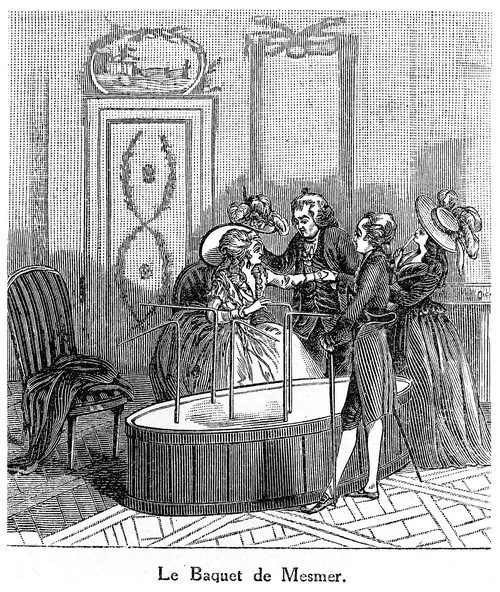
Franz Anton Mesmer claimed an invisible fluid linked all living things and could cure nervous disorders. A royal commission found only imagination at work, but his methods led to hypnotism and the psychology of suggestion.
 Essay · 8 min
The patients who wrote back
From John Perceval in the 1830s to Clifford Beers in 1908, former patients wrote against the asylum. Their first battle was to be believed at all, and what they won was mostly the right to be heard.
 Essay · 6 min
Can we diagnose the dead?
Why this site never diagnoses historical figures, and hedges every modern equivalent it gives: the evidence was made for other purposes, diseases change their identities, and each age's diagnoses of the dead reflect its own medicine.