
Diagnosis · 1680s–1980
Hysteria
Named for the womb, hysteria became medicine's catch-all for symptoms it could not explain. Its history from Greek texts to Sydenham, Charcot and Freud, and why it was dropped in 1980.
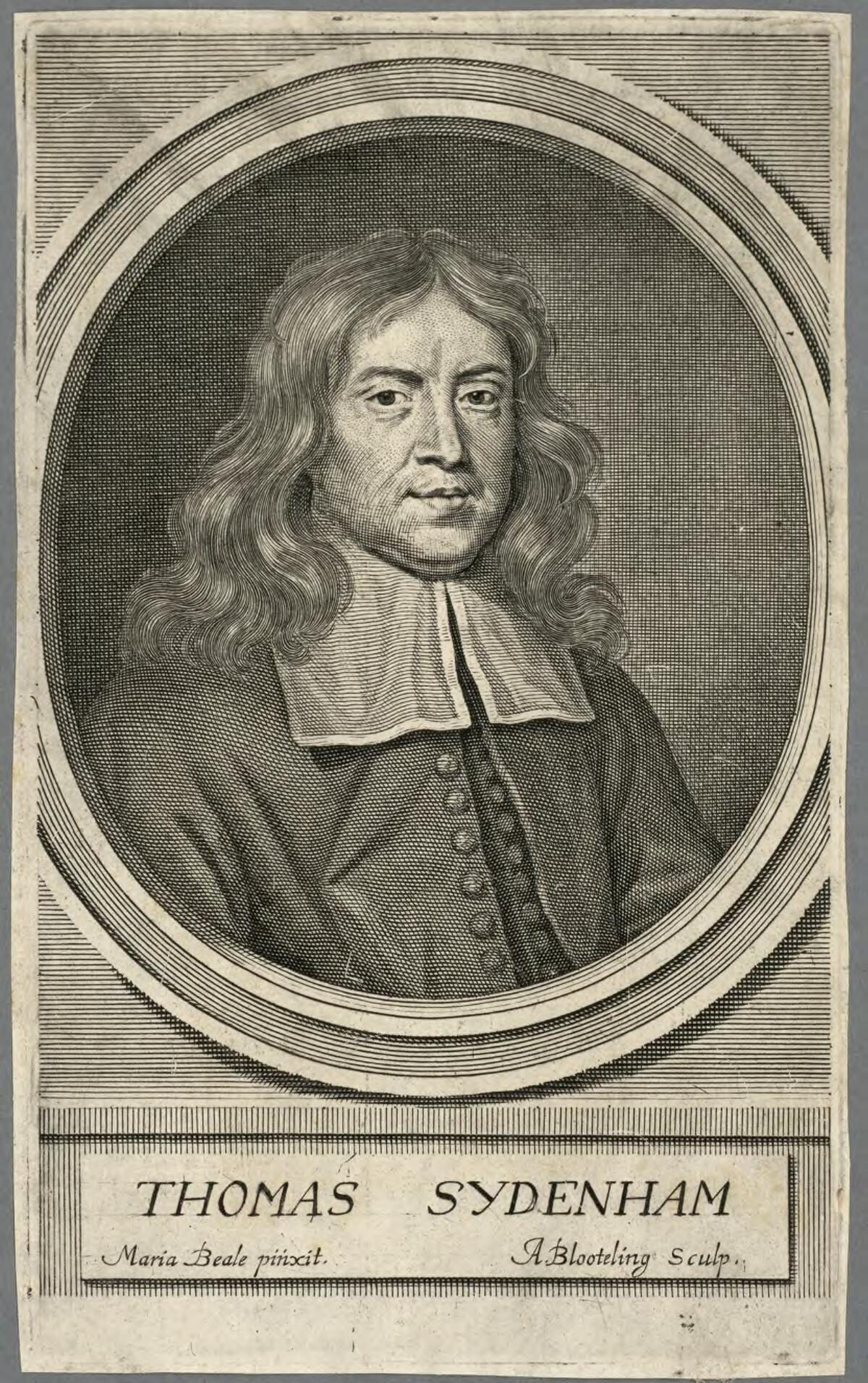
In the winter of 1681–82 the London physician Thomas Sydenham answered a letter from a Worcester colleague, William Cole, with a long essay on "the hysterical affection". His opening claim was startling: next to fevers, hysteria was the commonest of all chronic diseases, and hardly a woman was entirely free of it, except "those who lead a hard and hardy life"1. Sydenham's letter, dated 20 January 1682, is the best place to begin, because it shows hysteria already doing what it would do for the next three centuries: absorbing whatever medicine could not explain.
The womb and its critics
The word comes from Greek hystera, womb. Plato's Timaeus describes the womb as a living thing that wanders through the body when it long remains without bearing children, causing suffocation and disease, and Greek medical writers attributed a range of women's symptoms to its displacement3,8. Many modern accounts go further, tracing a single disease called hysteria back four thousand years to Egyptian papyri5.
What is clear is that early modern physicians began to move hysteria out of the womb. The English physician Thomas Willis located it in the brain and nerves, and Sydenham made it a disorder of the "animal spirits"1,5. Sydenham also insisted on two points with lasting consequences. First, men suffered too: studious men who "grow pale over their books and papers" had hypochondriasis, which was "as like it, as one egg is to another" (see hypochondria and the vapours)1. Second, hysteria could counterfeit almost anything:
Few of the maladies of miserable mortality are not imitated by it. Whatever part of the body it attacks, it will create the proper symptom of that part.1
Quotation checked against the 1848 text
A disease that imitated disease
That second point defined the diagnosis. In 1859 the Paris physician Paul Briquet published a study of 430 patients seen over ten years at the Hôpital de la Charité, describing hysteria as a chronic condition with many medically unexplained symptoms across the body's systems3. A century later his name was given to "Briquet's syndrome", the forerunner of somatisation disorder3.
The most famous hysteria was staged at the Salpêtrière in Paris. Jean-Martin Charcot, the leading neurologist of his day, studied young women held there, most of them poor, used hypnosis on them, and treated hysteria as a hereditary degenerative disorder of the nervous system. He also argued, against common opinion, that men could be hysterical, presenting cases among railway workers and soldiers after accidents3,7. Charcot's lessons drew crowds, and his critics, led by Hippolyte Bernheim of Nancy, argued that the spectacular fits his patients displayed were produced by suggestion7. His pupil Pierre Janet explained hysterical symptoms as splits in consciousness, which he called dissociation3.
In Vienna, Josef Breuer had treated a young woman, known in print as "Anna O." and later identified as Bertha Pappenheim, whose symptoms included paralysis, loss of voice, amnesia and visual hallucinations. With Sigmund Freud, who had studied under Charcot, he published Studies on Hysteria in 18953. Their preliminary statement put the new theory in one sentence:
the hysteric suffers mostly from reminiscences.2
Quotation checked against the 1912 text
Freud went on to argue that repressed memories and conflicts were "converted" into bodily symptoms, the origin of the term conversion, and psychoanalysis grew from that idea3. In the United States many women diagnosed as hysterical were sent for Silas Weir Mitchell's rest cure9; in the First World War, soldiers with paralyses and mutism were diagnosed with hysteria or shell shock8.
Dropped in 1980
By the mid-twentieth century the word carried heavy pejorative connotations, and its clinical territory had become very large3. The second edition of the American Diagnostic and Statistical Manual (DSM-II, 1968) still listed "hysterical neurosis", in conversion and dissociative types. The third edition (DSM-III, 1980), which set out to describe disorders without assuming their causes, removed the term. Its territory was divided: somatisation disorder (Briquet's syndrome renamed), conversion disorder, a separate group of dissociative disorders, and histrionic personality disorder3,8. Conversion disorder was kept in DSM-5 (2013) with the subtitle "functional neurological symptom disorder"3.
What it maps to now, and why that is uncertain
Many clinicians think that some patients once diagnosed with hysteria would today be diagnosed with functional neurological disorder, a dissociative disorder, or somatic symptom disorder3. The mapping is uncertain for three reasons. First, the label was applied so widely, and so much more readily to women, that it cannot be read as one consistent clinical picture3,9. Second, its territory overlapped with physical illness: conditions such as epilepsy were among those later separated from it8. Third, the dramatic forms seen at the Salpêtrière were shaped by the hospital itself, by hypnosis, and by the expectations of physicians and audiences, as Bernheim argued at the time7. The patients' own accounts of what the diagnosis meant to them survive only rarely, so the record is mostly the doctors' own.
Key dates
- 1682 Thomas Sydenham's Epistolary Dissertation calls hysteria the commonest chronic disease and finds its equivalent in men.
- 1859 Paul Briquet publishes his study of 430 cases of hysteria seen at the Hôpital de la Charité, Paris.
- 1882 Charcot presents his work on hypnotised hysterical patients; a neurology clinic is established for him at the Salpêtrière.
- 1895 Breuer and Freud publish Studies on Hysteria, including the case of 'Anna O.'
- 1968 DSM-II lists 'hysterical neurosis', conversion and dissociative types.
- 1980 DSM-III drops hysteria as a diagnostic term.
Sources
- Primary source Thomas Sydenham, Epistolary Dissertation to Dr William Cole, in The Works of Thomas Sydenham, vol. 2 (trans. R. G. Latham), London: Sydenham Society (1848). Quotations checked against this text.
- Primary source Sigmund Freud (with Josef Breuer), Selected Papers on Hysteria and Other Psychoneuroses (trans. A. A. Brill), 2nd ed., New York: Journal of Nervous and Mental Disease Publishing (1912). Quotations checked against this text.
- Scholarship Carol S. North, The classification of hysteria and related disorders: historical and phenomenological considerations, Behavioral Sciences 5(4) (2015).
- Scholarship Montserrat Cabré, Review of Helen King, Hippocrates' Woman: Reading the Female Body in Ancient Greece (Routledge, 1998), Bryn Mawr Classical Review 2000.07.20 (2000-07-20).
- Scholarship Cecilia Tasca, Mariangela Rapetti, Mauro Giovanni Carta and Bianca Fadda, Women and hysteria in the history of mental health, Clinical Practice and Epidemiology in Mental Health 8 (2012).
- Scholarship Hallie Lieberman and Eric Schatzberg, A Failure of Academic Quality Control, journal article, 4(2): 24–47; publication record at Georgia Tech, Ivan Allen College (2018).
- Wikipedia Jean-Martin Charcot, Wikipedia (2026).
- Wikipedia Hysteria, Wikipedia (2026).
- Scholarship Yeonsil Jung, 'Our one great national malady': neurasthenia and American imperial and masculine anxiety at the turn of the twentieth century, Korean Journal of Medical History (Uisahak) 30(3) (2021).
Cross-checked with Wikidata Q144119 and the English Wikipedia article.
Read next
 1600s–1800s
Hypochondria and the vapours
Before it meant fear of illness, hypochondria was a real disease of the gut and nerves, the male twin of hysteria and, with the vapours, the fashionable 'English malady' of the 1700s.
 1869–1920s
Neurasthenia
George Beard's 'nervous exhaustion' of 1869 blamed modern life for tired, anxious, aching patients. It became the fashionable diagnosis of the 1880s, faded by 1920, and lived on in China.
 1914–1922
Shell shock
A soldiers' phrase of 1914–15 that became a medical diagnosis, a pension category and a political scandal, before a War Office committee in 1922 called it 'a gross and costly misnomer'.
1870s–1920s · Abandoned
The rest cure
Silas Weir Mitchell's rest cure of the 1870s prescribed weeks in bed, isolation, rich feeding, massage and electricity, mostly for women with 'nervous' illness. Charlotte Perkins Gilman's account made it notorious.
 1890s–1980
Psychoanalysis
Freud's theory of the unconscious began as a treatment for hysteria in 1890s Vienna and came to dominate American psychiatry after 1945. Its history, its place in psychiatry, and the long argument over whether it works.
 Antiquity–19th century
Demonic possession and its critics
Many cultures have explained fits, voices and despair as the work of spirits. How Europeans argued over possession from Hippocrates to Charcot, and why the story that medicine simply defeated superstition is too simple.
Pages that mention Hysteria
- Diagnosis Dancing mania
- Diagnosis Folie à deux
- Diagnosis Hypochondria and the vapours
- Diagnosis Neurasthenia
- Diagnosis Puerperal insanity
- Diagnosis Shell shock
- Essay Can we diagnose the dead?
- Essay How words for madness changed
- Essay War and the mind: from nostalgia to PTSD
- Essay Who got locked up, and why
- Person Bertha Pappenheim ("Anna O.")
- Person Charlotte Perkins Gilman
- Person Jean-Martin Charcot
- Person Johann Weyer
- Person Sigmund Freud
- Person Silas Weir Mitchell
- Place The Salpêtrière
- Theory Animal magnetism and mesmerism
- Theory Degeneration theory
- Theory Demonic possession and its critics
- Theory Psychoanalysis
- Treatment The rest cure