
Theory · 1890s–1980
Psychoanalysis
Freud's theory of the unconscious began as a treatment for hysteria in 1890s Vienna and came to dominate American psychiatry after 1945. Its history, its place in psychiatry, and the long argument over whether it works.
In September 1909 a Viennese neurologist of fifty-three, still little known in America, rose at Clark University in Worcester, Massachusetts, to give five lectures in German at the university's twentieth-anniversary celebrations. He began by disclaiming the credit1:
Granted that it is a merit to have created psychoanalysis, it is not my merit.1
Quotation checked against the 1910 text
Sigmund Freud gave the credit instead to his older colleague Josef Breuer, and to a young woman Breuer had treated in Vienna between 1880 and 18821. Within forty years the ideas Freud outlined that week would be taught in almost every American department of psychiatry. Within eighty, they had been pushed to the margins of the profession they once led.
From hysteria to the unconscious
The patient, called "Anna O." in print and later identified as Bertha Pappenheim, had developed paralyses, disturbances of vision and speech, and states of altered consciousness while nursing her dying father1,7. Breuer found that when she talked, in a kind of self-induced trance, about the circumstances in which a symptom had first appeared, the symptom eased. She herself named the method1: she called it the "talking cure", or, joking, "chimney sweeping"1.
Freud had studied in Paris with Jean-Martin Charcot at the Salpêtrière in 1885–86 and used hypnosis in his own practice of hysterical and "nervous" patients6. In their "Preliminary Communication", which opened Studies on Hysteria (1895), he and Breuer reached a conclusion that became a slogan:
The hysteric suffers mostly from reminiscences2
Quotation checked against the 1912 text
Over the following years Freud gave up hypnosis for "free association", in which the patient says whatever comes to mind, and came to argue that the forgotten memories behind symptoms were bound up with conflicts over childhood wishes, especially sexual ones, which the mind keeps out of awareness by "repression"6. In The Interpretation of Dreams (1899) he argued that dreams are disguised fulfilments of such wishes and gave the method its charter3,6:
At any rate the interpretation of dreams is the via regia to a knowledge of the unconscious in the psychic life.3
Quotation checked against the 1913 text
A movement and its quarrels
From 1902 a small group met with Freud on Wednesday evenings; in 1908 it became the Vienna Psychoanalytic Society, and in 1910 the International Psychoanalytical Association was founded, with Carl Jung as its president6. Psychoanalysis entered academic psychiatry through Zurich, where Eugen Bleuler, who coined the word schizophrenia, and his assistant Carl Jung at the Burghölzli took up Freud's ideas in the treatment and study of patients with psychoses8; Freud himself analysed the published memoirs of Daniel Paul Schreber in 1911, without ever meeting him8. The movement was also a community of disciples, and quarrels became schisms: Alfred Adler and his supporters left in 1911, and Jung broke with Freud in 1913–14, each founding his own school6,8.
Psychoanalysis remained mostly an outpatient practice for neuroses, conducted in private consulting rooms rather than asylums. The First World War brought many doctors into contact with it, as British doctors such as W. H. R. Rivers drew on ideas of repression in treating shell shock9. After 1933 the Nazi regime drove Jewish and politically suspect analysts out of Germany and Austria. After the annexation of Austria in March 1938, Freud left Vienna for London, where he died on 23 September 19396,8. Many of his followers settled in Britain and, above all, in the United States.
The American century
In the United States psychodynamic ideas, from Freud and from the Swiss-born psychiatrist Adolf Meyer, rose to dominance after the Second World War, helped by the apparent success of psychological methods with soldiers suffering from war neuroses4. Psychoanalytic thinking shaped training and official classification: the American Psychiatric Association's first Diagnostic and Statistical Manual (1952) described many disorders as "reactions" to stress and divided them along psychodynamic lines, and the second edition (1968) still largely reflected that tradition4. Psychoanalytic ideas also spread far beyond medicine, into literature, art, advertising, child-rearing and everyday speech.
The decline was nearly as fast. From the 1950s new drugs, starting with chlorpromazine, offered treatments for the severe illnesses on which analysis had little purchase. By the 1970s federal research funding and insurers were questioning the cost and vagueness of psychodynamic practice, and a group of research psychiatrists sometimes called the neo-Kraepelinians pressed for diagnoses based on observable symptoms4. DSM-III (1980), chaired by Robert Spitzer, dropped "neurosis" as an organising concept, keeping it only in brackets after protests from psychoanalysts4. The biological turn had arrived.
Key dates
- 1880 Josef Breuer begins treating 'Anna O.' (Bertha Pappenheim), who calls the treatment her 'talking cure'.
- 1895 Breuer and Freud publish Studies on Hysteria.
- 1899 Freud publishes The Interpretation of Dreams.
- September 1909 Freud lectures at Clark University in Worcester, Massachusetts, his first public recognition in America.
- 1910 The International Psychoanalytical Association is founded at Nuremberg, with Carl Jung as president.
- 1952 The American Psychiatric Association's first Diagnostic and Statistical Manual reflects psychodynamic thinking.
- 1980 DSM-III drops 'neurosis' as an organising concept, marking the end of psychoanalytic dominance in American psychiatry.
Sources
- Primary source Sigmund Freud, The Origin and Development of Psychoanalysis (trans. Harry W. Chase), American Journal of Psychology 21(2): 181–218 (1910). Quotations checked against this text.
- Primary source Sigmund Freud (with Josef Breuer), Selected Papers on Hysteria and Other Psychoneuroses (trans. A. A. Brill), 2nd ed., New York: Journal of Nervous and Mental Disease Publishing (1912). Quotations checked against this text.
- Primary source Sigmund Freud, The Interpretation of Dreams (trans. A. A. Brill), London: George Allen; New York: Macmillan (1913). Quotations checked against this text.
- Scholarship Shadia Kawa and James Giordano, A brief historicity of the Diagnostic and Statistical Manual of Mental Disorders, Philosophy, Ethics, and Humanities in Medicine 7: 2 (2012).
- Scholarship Falk Leichsenring, Allan Abbass and others, The status of psychodynamic psychotherapy as an empirically supported treatment for common mental disorders: an umbrella review based on updated criteria, World Psychiatry 22(2): 286–304 (2023).
- Wikipedia Psychoanalysis, Wikipedia (2026).
- Wikipedia Bertha Pappenheim, Wikipedia (2026).
- Wikipedia Sigmund Freud; Carl Jung; Alfred Adler; Eugen Bleuler; Daniel Paul Schreber, Wikipedia (2026).
- Primary source W. H. R. Rivers, On the Repression of War Experience, The Lancet (1918). Quotations checked against this text.
Cross-checked with Wikidata Q41630 and the English Wikipedia article.
Read next
 1680s–1980
Hysteria
Named for the womb, hysteria became medicine's catch-all for symptoms it could not explain. Its history from Greek texts to Sydenham, Charcot and Freud, and why it was dropped in 1980.
 1770s–1850s
Animal magnetism and mesmerism
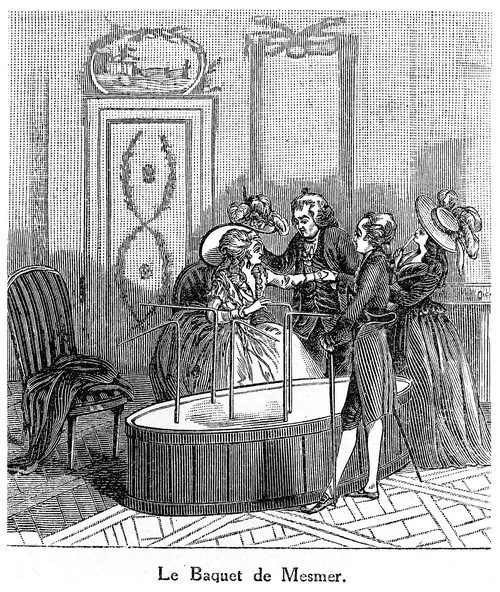
Franz Anton Mesmer claimed an invisible fluid linked all living things and could cure nervous disorders. A royal commission found only imagination at work, but his methods led to hypnotism and the psychology of suggestion.
 1914–1922
Shell shock
A soldiers' phrase of 1914–15 that became a medical diagnosis, a pension category and a political scandal, before a War Office committee in 1922 called it 'a gross and costly misnomer'.
 1869–1920s
Neurasthenia
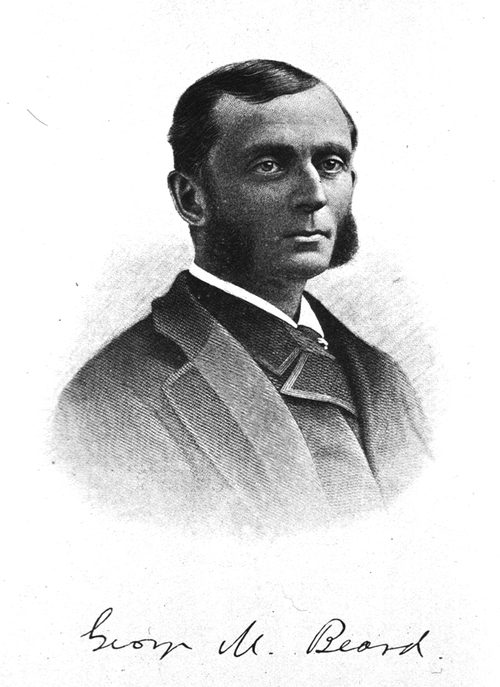
George Beard's 'nervous exhaustion' of 1869 blamed modern life for tired, anxious, aching patients. It became the fashionable diagnosis of the 1880s, faded by 1920, and lived on in China.
 1845–1990
The biological turn
From Griesinger's claim in the 1840s that mental illness is brain disease, through the microscope, the shock therapies and the drug revolution, to DSM-III in 1980: how psychiatry repeatedly turned to the body.
1870s–1920s · Abandoned
The rest cure
Silas Weir Mitchell's rest cure of the 1870s prescribed weeks in bed, isolation, rich feeding, massage and electricity, mostly for women with 'nervous' illness. Charlotte Perkins Gilman's account made it notorious.
Pages that mention Psychoanalysis
- Diagnosis Hysteria
- Diagnosis Shell shock
- Essay "On being sane in insane places": Rosenhan's study and its challengers
- Person Bertha Pappenheim ("Anna O.")
- Person Daniel Paul Schreber
- Person Emil Kraepelin
- Person Eugen Bleuler
- Person Jean-Martin Charcot
- Person Sigmund Freud
- Place The Burghölzli, Zurich
- Place The Salpêtrière
- Theory Animal magnetism and mesmerism
- Theory The biological turn
- Treatment The rest cure