
Person · 6 May 1856 – 23 September 1939
Sigmund Freud
Viennese neurologist (1856–1939) who founded psychoanalysis, a theory of unconscious conflict and a talking treatment that shaped much of twentieth-century psychiatry; its scientific standing is still disputed.
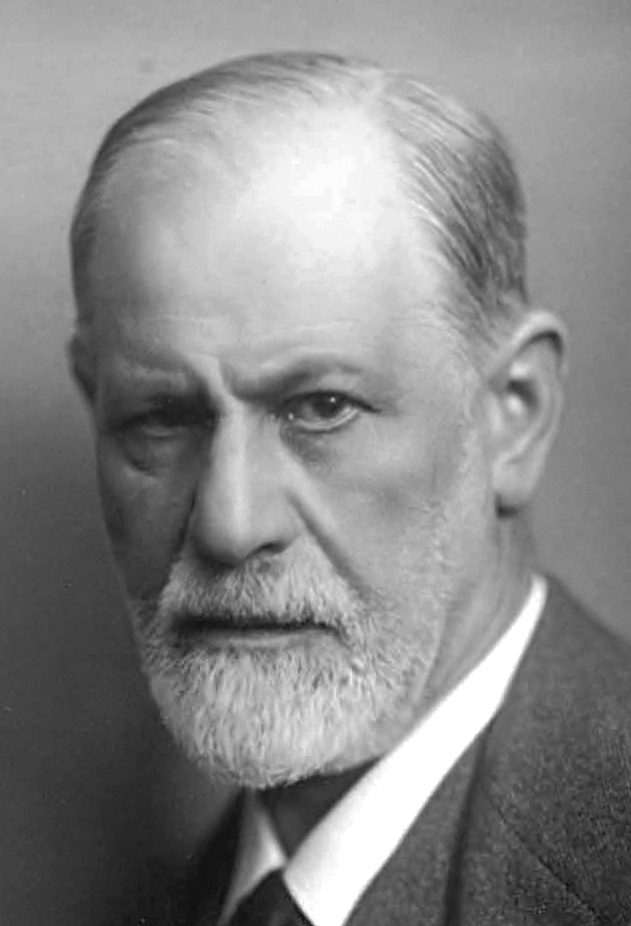
Few doctors have changed how ordinary people talk about themselves as much as Sigmund Freud. Words he made common, the unconscious, repression, denial, the ego, are used by people who have never read him; and the scene of his consulting room, a patient on a couch saying whatever comes to mind, became the twentieth century's picture of what it meant to be treated for a troubled mind3,4. Whether he discovered the laws of that mind or invented a persuasive story about it has been argued since he first published.
A neurologist in Vienna
Freud was born on 6 May 1856 in Freiberg, Moravia (now Příbor in the Czech Republic), the eldest child of a Jewish wool merchant's second family, and grew up in Vienna3,7. He trained as a physician and worked first on the anatomy of the nervous system. From October 1885 to February 1886 he studied in Paris with Jean-Martin Charcot at the Salpêtrière, watching hypnotism used on patients with hysteria, and in 1886 he opened a practice in Vienna for "nervous" patients, the people who were otherwise diagnosed with hysteria or neurasthenia7.
With the physician Josef Breuer he published Studies on Hysteria in 1895. Its first case, "Anna O.", later identified as Bertha Pappenheim, had called Breuer's treatment, in which she talked through the memories connected with each symptom, her "talking cure"1,7. Freud gave up hypnosis for "free association", in which the patient says everything that comes to mind, and built a theory on the obstacles he met7:
I called this hypothetical process "repression" (Verdrangung), and considered that it was proved by the undeniable existence of resistance.1
Quotation checked against the 1910 text
Psychoanalysis
In The Interpretation of Dreams (1899, dated 1900) he argued that dreams are disguised fulfilments of wishes, and that their interpretation is "the via regia to a knowledge of the unconscious"2. Over the next three decades he extended the theory to slips of the tongue, jokes, religion and civilisation; he gave the development of sexuality in childhood a central place in his account of the neuroses, the most contested of his claims7. A movement grew around him: a discussion circle in Vienna from 1902, an International Psychoanalytical Association from 1910, and a following in Zurich, where Eugen Bleuler's Burghölzli tested his ideas on patients with psychoses (Psychoanalysis)7. In September 1909 he lectured at Clark University in Massachusetts; those lectures, published in English the next year, introduced him to American readers1,7.
His influence on psychiatry came largely through his followers and through the psychodynamic school they built with others, such as the American psychiatrist Adolf Meyer. In the United States it became the leading school of thought after the Second World War and shaped the first two editions of the Diagnostic and Statistical Manual (1952 and 1968); it was already declining by the end of the 1960s, and the third edition of 1980 turned away from it (The biological turn)6.
Exile
From 1923 Freud lived with cancer of the jaw and underwent many operations7. After Nazi Germany annexed Austria in March 1938 his family's position became dangerous; with help from his followers, and after paying the regime heavily, he left Vienna and arrived in London on 6 June 19383,7. Four of his sisters, who could not obtain exit permits, were later murdered in Nazi camps7. He died in London on 23 September 1939, aged 833,7. His last home, in Hampstead, is now the Freud Museum3,7.
The arguments
The Library of Congress, introducing its exhibition on him, noted that it had attracted controversy before it opened4. That remains the best short description of his legacy: few figures in the history of psychiatry are so influential, and none is so persistently disputed.
Key dates
- October 1885 Freud goes to Paris to study with Jean-Martin Charcot at the Salpêtrière.
- 1886 Freud opens a private practice for nervous disorders in Vienna.
- 1895 Freud and Josef Breuer publish Studies on Hysteria.
- 1899 The Interpretation of Dreams is published, dated 1900.
- September 1909 Freud lectures at Clark University in Massachusetts, his only visit to the United States.
- 1923 Freud is diagnosed with cancer of the jaw, the first of many operations.
- 6 June 1938 After the Nazi annexation of Austria, Freud arrives in London as a refugee.
- 23 September 1939 Freud dies in London.
Freud on this site
Sources
- Primary source Sigmund Freud, The Origin and Development of Psychoanalysis (trans. Harry W. Chase), American Journal of Psychology 21(2), American Journal of Psychology (1910). Quotations checked against this text.
- Primary source Sigmund Freud, The Interpretation of Dreams (trans. A. A. Brill), London: George Allen (1913). Quotations checked against this text.
- Museum or archive Sarah Isherwood, Happy birthday Sigmund Freud!, Freud Museum London (2019-05-06).
- Museum or archive Sigmund Freud: Conflict & Culture, Library of Congress (exhibition).
- Scholarship Falk Leichsenring and others, The status of psychodynamic psychotherapy as an empirically supported treatment for common mental disorders: an umbrella review based on updated criteria, World Psychiatry 22(2) (2023).
- Scholarship Shadia Kawa and James Giordano, A brief historicity of the Diagnostic and Statistical Manual of Mental Disorders, Philosophy, Ethics, and Humanities in Medicine 7 (2012).
- Wikipedia Sigmund Freud, Wikipedia.
Cross-checked with Wikidata Q9215 and the English Wikipedia article.
Read next
 1890s–1980
Psychoanalysis
Freud's theory of the unconscious began as a treatment for hysteria in 1890s Vienna and came to dominate American psychiatry after 1945. Its history, its place in psychiatry, and the long argument over whether it works.
 1680s–1980
Hysteria
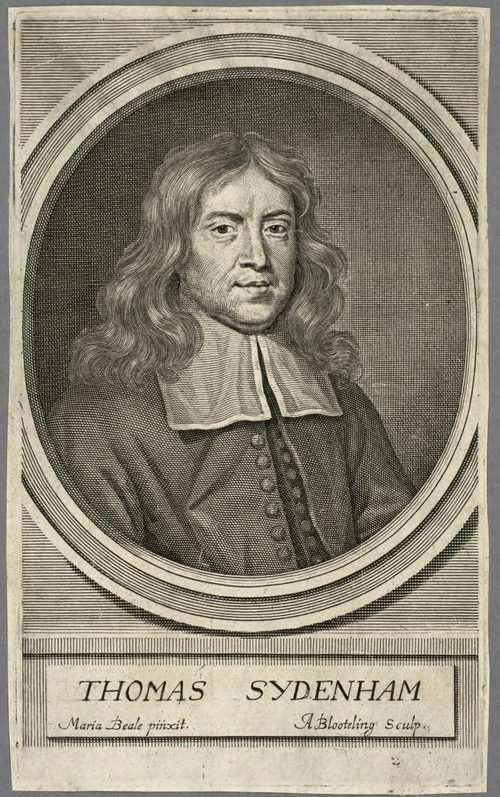
Named for the womb, hysteria became medicine's catch-all for symptoms it could not explain. Its history from Greek texts to Sydenham, Charcot and Freud, and why it was dropped in 1980.
 1869–1920s
Neurasthenia
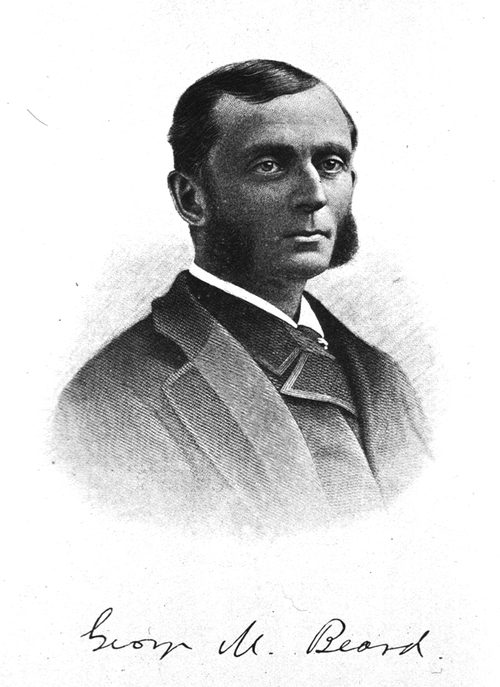
George Beard's 'nervous exhaustion' of 1869 blamed modern life for tired, anxious, aching patients. It became the fashionable diagnosis of the 1880s, faded by 1920, and lived on in China.
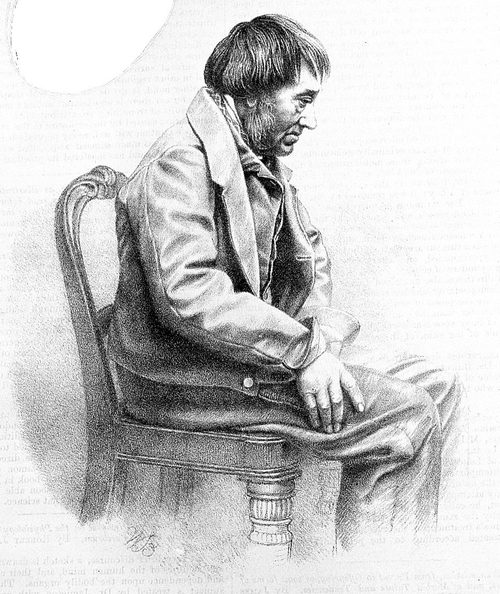 c. 400 BCE–1900s
Melancholia
For two thousand years melancholia meant fear and sorrow without cause, blamed on black bile. How physicians from Aretaeus to Kraepelin defined it, and how it became 'depression'.
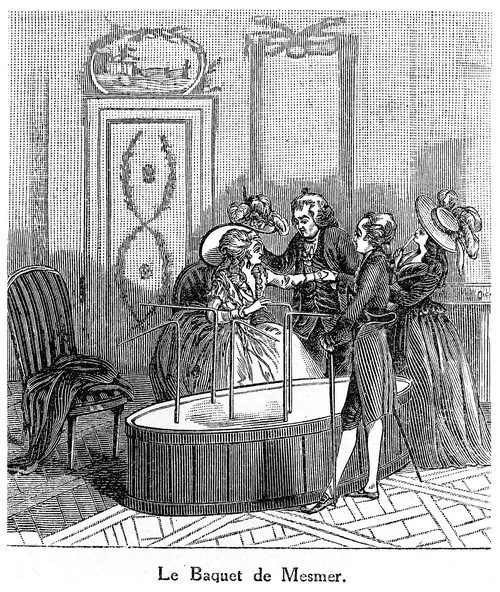 1770s–1850s
Animal magnetism and mesmerism
Franz Anton Mesmer claimed an invisible fluid linked all living things and could cure nervous disorders. A royal commission found only imagination at work, but his methods led to hypnotism and the psychology of suggestion.
 1914–1922
Shell shock
A soldiers' phrase of 1914–15 that became a medical diagnosis, a pension category and a political scandal, before a War Office committee in 1922 called it 'a gross and costly misnomer'.
Pages that mention Sigmund Freud
- Diagnosis Hysteria
- Diagnosis Melancholia
- Diagnosis Neurasthenia
- Essay The patients who wrote back
- Essay War and the mind: from nostalgia to PTSD
- Person Bertha Pappenheim ("Anna O.")
- Person Daniel Paul Schreber
- Person Emil Kraepelin
- Person Eugen Bleuler
- Person Jean-Martin Charcot
- Person Julius Wagner-Jauregg
- Place The Burghölzli, Zurich
- Place The Salpêtrière
- Theory Animal magnetism and mesmerism
- Theory Psychoanalysis