
Person · 26 September 1877 – 25 July 1963
Ugo Cerletti
Italian neuropathologist and psychiatrist (1877–1963) who, with Lucio Bini, first gave electroconvulsive therapy in Rome in 1938, and spent his last decades looking for a substance that could replace it.
Ugo Cerletti spent most of his working life looking down a microscope at brain tissue, and was sixty when he made the discovery that bears his name. Electroshock, as he called it, spread across the world within a few years. He then spent much of the rest of his life trying to find a way to give patients its benefits without the convulsion.
A pathologist's training
Cerletti was born on 26 September 1877 at Conegliano in the Veneto, where his father, an agronomist, had founded Italy's first school of viticulture and winemaking2. The family moved to Rome in 1886. He studied medicine at Turin and Rome and trained abroad in the leading laboratories of the day: with Franz Nissl in Heidelberg, and with Alois Alzheimer and Emil Kraepelin in Munich2,3. His early work was on the microscopic pathology of the nervous system: the cells that support nerve cells, the brain in old age, and the senile plaques that Alzheimer had described3.
With his friend Gaetano Perusini he studied the endemic goitre and the stunted growth and learning disability then called "cretinism" in Alpine valleys, and showed the importance of diet and environment rather than inherited "degeneration"; the thyroid remained one of his interests until his death2,3. In the First World War he volunteered for the Alpine troops as a medical officer, introduced white camouflage suits for soldiers in the snow, and designed a delayed-action artillery fuse, which according to his Italian biographer was held up by bureaucracy and never adopted2.
Genoa and Rome
After the war he directed the neurobiological institute of the Mombello psychiatric hospital near Milan, then taught at Bari, and from 1928 held the chair in Genoa2,5. Like many psychiatrists of the time he was interested in the supposed antagonism between epilepsy and schizophrenia, the idea behind Ladislas Meduna's convulsive therapy3. To study what repeated seizures did to the brain, in 1932 he began provoking them in dogs with electric current2. In 1935 he moved to the chair of nervous and mental diseases in Rome and gave the work to his assistant Lucio Bini2.
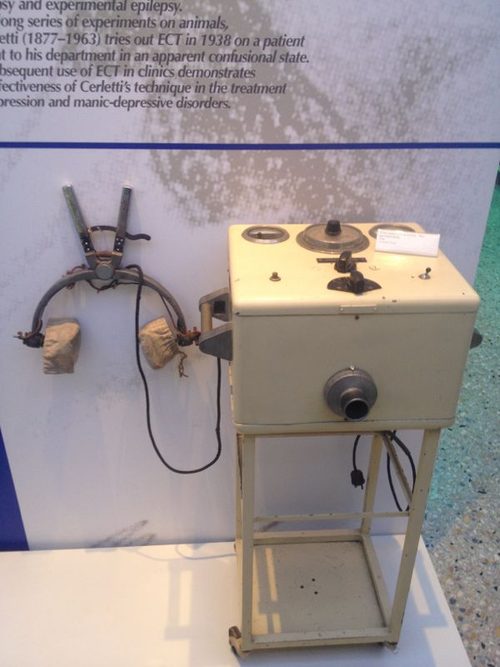
What convinced him that a current across the head need not kill was a visit to the Rome slaughterhouse, where pigs were stunned electrically before slaughter and survived the shock itself2,3. Bini built a device, and in April 1938 they used it on a patient with a diagnosis of schizophrenia; the course of treatment and the first patient's story are told under electroconvulsive therapy, then and now2,3,5. Cerletti presented the method to Rome's medical academy in May 1938, but then held back from wider publicity until his school had studied its effects on animal tissue and its uses in patients, gathered in a long monograph of 19402. Within a few years electroshock had largely replaced cardiazol and was used throughout Europe and the Americas3,4,5.
Acroagonines
Cerletti came to think that the benefit came not from the seizure itself but from substances the brain produced in response to it, which he named "acroagonines", substances of "extreme defence"2,5. He set out the idea for American readers in 1950, in an article titled "Old and new information about electroshock"1,3. With his pupils he gave patients injections of suspensions of brain tissue from electroshocked pigs, presented the results in Paris in 1950 and summed them up in 19522. The results never matched those of electroshock, and no such substance was ever isolated2. He went on defending the treatment he had introduced, while criticising its misuse and its prescription for the wrong patients3.
He was also a critic of the asylum. In Genoa he had removed the bars from the clinic's windows, and in 1949, twenty years before Franco Basaglia's campaigns, he asked in the journal Il Ponte whether it could make sense to treat people who had lost their reason by making them live among others in the same state3.
Reputation
Cerletti was twice a candidate for the Nobel Prize, received honorary degrees from Paris, São Paulo, Rio de Janeiro and Montreal, and remained active until his death in Rome, from a cerebral thrombosis, on 25 July 19632. His reputation followed that of electroshock. As drugs arrived in the 1950s and the treatment came under fierce criticism, his name fell with it; Patriarca and colleagues argue that this has obscured a long and varied scientific career3.
Key dates
- 1919 Ugo Cerletti becomes director of the neurobiological institute of the Mombello psychiatric hospital near Milan.
- 1932 Cerletti first uses an electric current to provoke convulsions in dogs, in order to study epilepsy's effects on the brain.
- 1935 Cerletti takes the chair of nervous and mental diseases at the University of Rome.
- April 1938 Cerletti and Lucio Bini give the first electrically induced convulsion to a patient in Rome.
- 1952 Cerletti publishes his conclusions on 'acroagonines', substances he hoped would give the benefits of electroshock without the seizure.
- 25 July 1963 Cerletti dies in Rome, aged 85.
Cerletti on this site
Sources
- Primary source Ugo Cerletti, Old and new information about electroshock, American Journal of Psychiatry 107(2) (1950).
- Reference Arnaldo Novelletto, Cerletti, Ugo, Dizionario Biografico degli Italiani, vol. 23 (Treccani) (1979).
- Scholarship Carlo Patriarca, Carlo Alfredo Clerici, Stefano Zannella, Carlo Fraticelli, Ugo Cerletti, Pathologica and electroconvulsive therapy, Pathologica 113(4) (2021).
- Scholarship Bengt Jansson, Controversial Psychosurgery Resulted in a Nobel Prize, NobelPrize.org (1998-10-29).
- Wikipedia Ugo Cerletti, Wikipedia.
Cross-checked with Wikidata Q2706353 and the English Wikipedia article.
Read next
 1938–present · Transformed
Electroconvulsive therapy, then and now
Ugo Cerletti and Lucio Bini first induced a seizure with electricity in Rome in April 1938. Unmodified ECT injured and frightened many; anaesthesia and muscle relaxants made it a treatment still used today.
 1934–1950s · Abandoned
Metrazol convulsive therapy
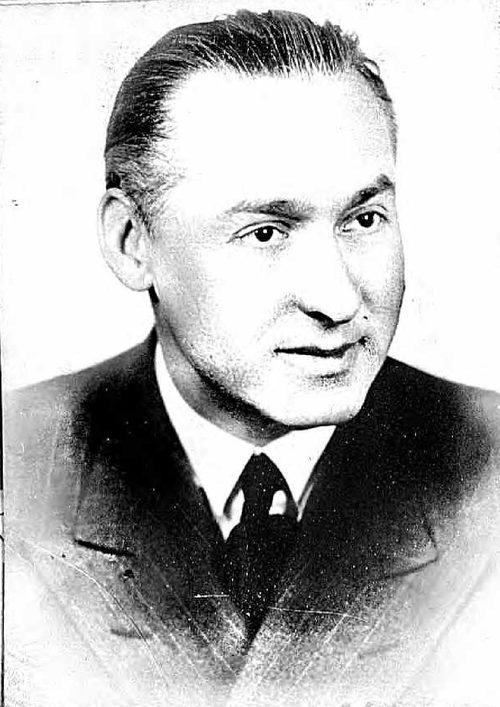
In 1934 Ladislas Meduna began causing seizures with drugs to treat schizophrenia, first camphor and then cardiazol (Metrazol). Patients dreaded it, and within a decade electricity had replaced the drug.
1933–1960s · Abandoned
Insulin coma therapy
From the mid-1930s to the late 1950s, people diagnosed with schizophrenia were put into deep comas with insulin, day after day. A trial in 1957 found the insulin itself did nothing special.
 1890s–1950s
Dementia praecox
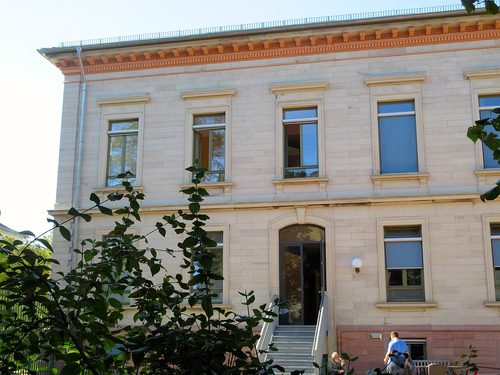
Emil Kraepelin's 'early dementia' of the 1890s: a psychosis of youth he thought led to lasting decline. Contested from the start, it was renamed schizophrenia and reshaped twentieth-century psychiatry.
 1845–1990
The biological turn
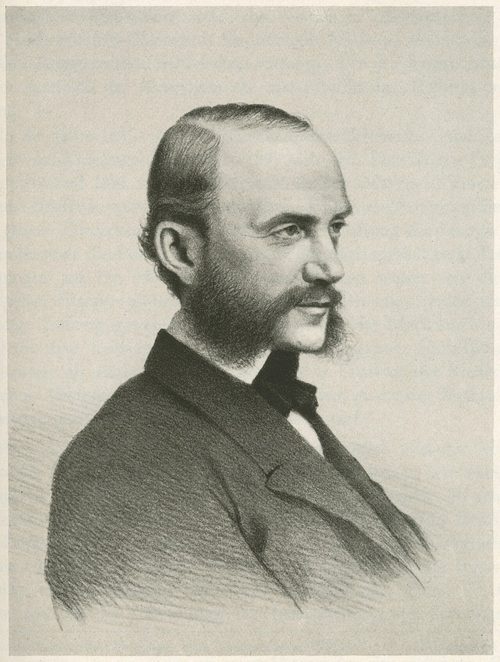
From Griesinger's claim in the 1840s that mental illness is brain disease, through the microscope, the shock therapies and the drug revolution, to DSM-III in 1980: how psychiatry repeatedly turned to the body.