
Person · 11 March 1924 – 29 August 1980
Franco Basaglia
Venetian psychiatrist (1924–1980) who opened the asylum at Gorizia, emptied Trieste's San Giovanni hospital, and gave his name to Italy's Law 180 of 1978, which ended new admissions to mental hospitals.
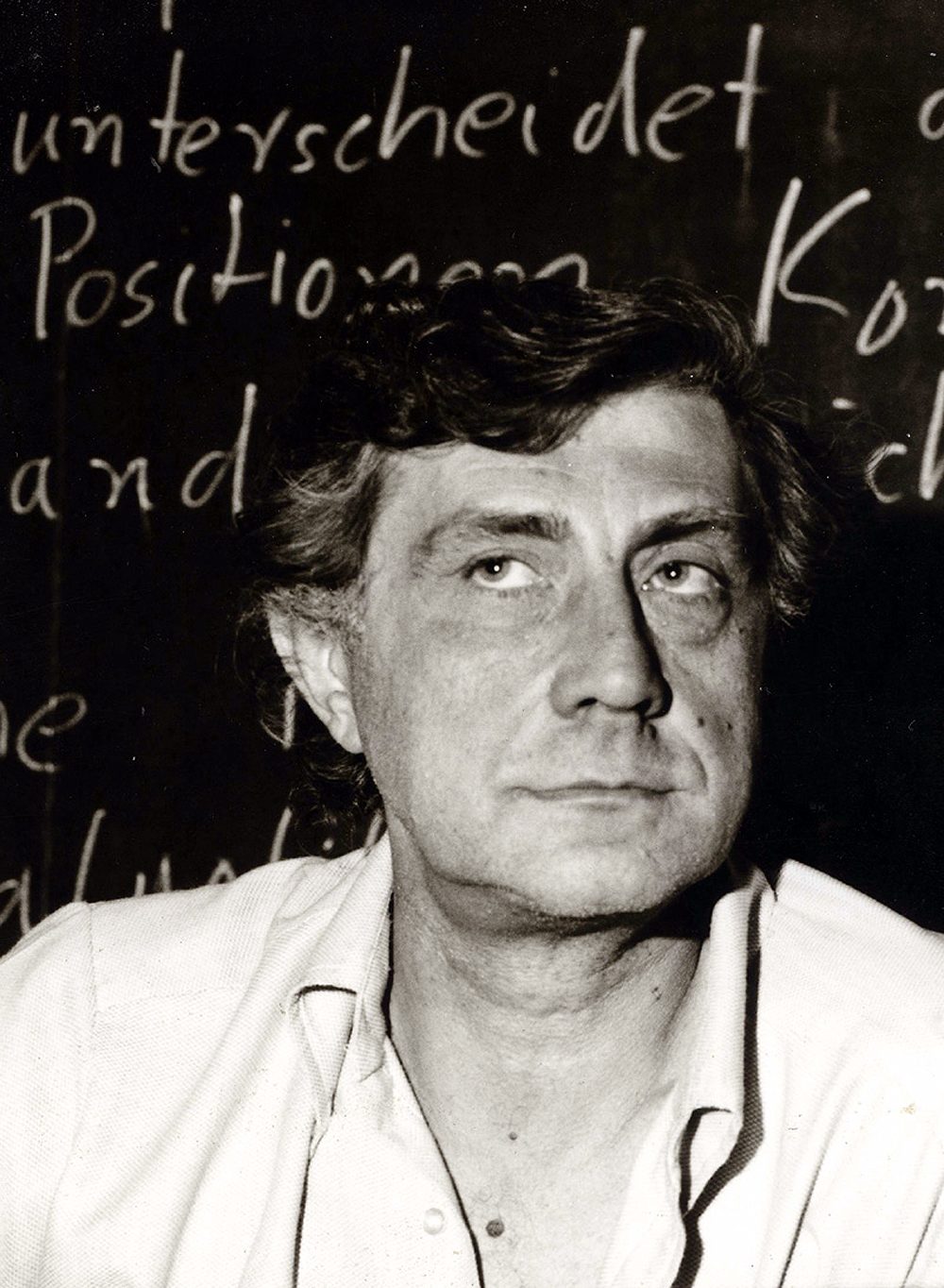
In 1961 a 37-year-old Venetian psychiatrist, passed over for a university career, accepted a post most of his colleagues considered a dead end: director of the provincial asylum at Gorizia, on Italy's border with Yugoslavia. Seventeen years later Italy passed a law, named after him, that stopped new admissions to every public mental hospital in the country3. Franco Basaglia is the most famous figure in the history of deinstitutionalisation, and one of the most argued over.
Resistance and the university
Basaglia was born in Venice on 11 March 1924 into a comfortable family3,4. As a young anti-fascist he was arrested in December 1944 and spent six months in the city's Santa Maria Maggiore prison, until the liberation of April 19453. He graduated in medicine at Padua in 1949 and worked for twelve years as an assistant in the university's psychiatric clinic, reading the phenomenologists and existentialists, Sartre above all, but he was told he would never be given a chair3.
Gorizia, 1961–1968
The Gorizia asylum held about 500 patients when he arrived3. He began with conditions: an end to physical restraint, less use of electroshock, unlocked wards, and the demolition of walls and fences3. He had read Erving Goffman's Asylums and Michel Foucault's history of madness, both published in 1961, and had studied the therapeutic communities of Maxwell Jones in Scotland3. From 1965 general meetings of patients and staff from the whole hospital became the most public part of the experiment3. His closest ally throughout was his wife, Franca Ongaro, translator of Goffman and co-author of many of his books3.
In 1968 the team published L'istituzione negata (The Institution Denied), a collection of essays, interviews with patients and transcripts of their meetings, which became a bestseller and, as Foot notes, one of the "bibles" of that year's student movement2,3. It was not translated into English until 20252. In September 1968 a patient on day release killed his wife, a crisis for the whole project; Basaglia effectively left Gorizia at the end of that year3. In January 1969 more than ten million Italians watched patients from Gorizia speak for themselves in a television documentary by Sergio Zavoli3.
Trieste, 1971–1979
After a short period running the asylum at Colorno, near Parma, and six months working in a psychiatric hospital in Brooklyn, Basaglia became director of Trieste's San Giovanni hospital in 19713. This time the aim was not to reform the asylum but to close it. Many patients were discharged and others were given the status of "guests" rather than inmates; the number of patients fell from 1,182 in 1971 to 87 in 19783. In January 1977 he announced that the hospital would close. It stopped taking patients in 1980, and Foot calls it the first asylum in the world closed for political reasons, because those who ran it believed it should not exist3.
Law 180 and after
On 13 May 1978 Parliament passed Law 180, on "voluntary and compulsory health assessments and treatments", published three days later1. It ended new admissions to the public mental hospitals and called for their closure3; its core articles were written to stay in force only until a law creating a national health service took them over1. Its effects are described under deinstitutionalisation. In 1979 Basaglia moved to Rome to coordinate mental health services in the Lazio region, but he was already ill, and he died of a brain tumour in Venice on 29 August 1980, aged 563,4. Franca Ongaro spent the following years campaigning for the law to be carried out, a process that took some twenty years3.
Basaglia believed that much of what was taken for madness was produced by the institution itself, and that as long as confinement remained possible, doctors and patients would rebuild the asylum wherever they went4. Admirers have compared him with Pinel4; the difference is that Basaglia set out to abolish the hospital rather than to reform it.
Key dates
- 1961 Franco Basaglia becomes director of the provincial asylum at Gorizia, on Italy's border with Yugoslavia, and begins to end restraint and open its wards.
- 1968 L'istituzione negata, the Gorizia team's account of their asylum, becomes a bestseller in Italy.
- 1971 Basaglia becomes director of the San Giovanni psychiatric hospital in Trieste, which then holds 1,182 patients.
- January 1977 Basaglia announces that the Trieste asylum is to close.
- 13 May 1978 Italy passes Law 180, the 'Basaglia law', ending new admissions to public mental hospitals.
- 29 August 1980 Basaglia dies of a brain tumour in Venice, aged 56.
Basaglia on this site
Sources
- Primary source Legge 13 maggio 1978, n. 180: Accertamenti e trattamenti sanitari volontari e obbligatori, Gazzetta Ufficiale della Repubblica Italiana, Serie Generale n. 133 (1978-05-16).
- Primary source Franco Basaglia (ed.), The Negated Institution: Report from a Psychiatric Hospital (ed. Franco Basaglia, trans. John Foot), punctum books (first published Turin: Einaudi, 1968) (2025).
- Scholarship John Foot, Franco Basaglia and the radical psychiatry movement in Italy, 1961–78, Critical and Radical Social Work 2(2) (2014).
- Wikipedia Franco Basaglia, Wikipedia.
Cross-checked with Wikidata Q929630 and the English Wikipedia article.
Read next
 1955–2000 · Transformed
Deinstitutionalisation
From the mid-1950s Western countries emptied their great mental hospitals: US public hospitals fell from about 559,000 patients to under 72,000 in forty years. Whether patients were freed or abandoned is still argued.
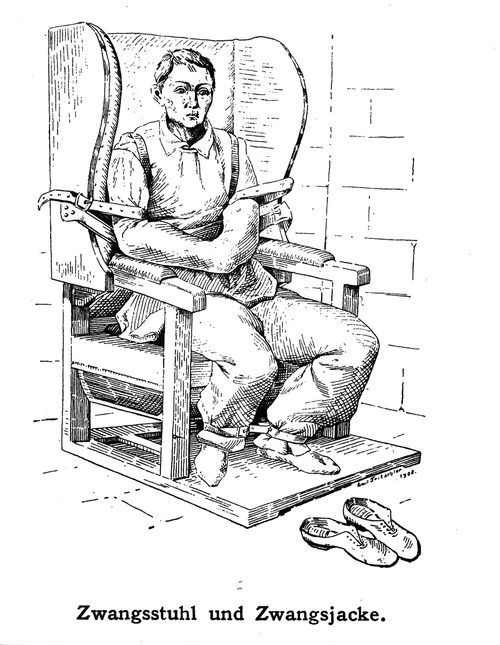 1700s–1890s · Transformed
Restraint and the non-restraint movement
Chains, strait-waistcoats and restraint chairs were the ordinary equipment of asylums until the late 1830s, when Lincoln and then Hanwell abolished them. Britain made non-restraint a doctrine; much of the world did not.
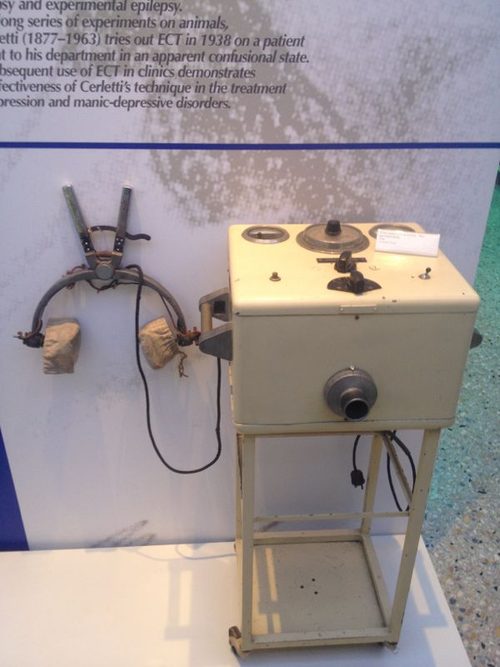 1938–present · Transformed
Electroconvulsive therapy, then and now
Ugo Cerletti and Lucio Bini first induced a seizure with electricity in Rome in April 1938. Unmodified ECT injured and frightened many; anaesthesia and muscle relaxants made it a treatment still used today.
 Essay · 7 min
The rise and fall of the asylum
How the public asylum grew from a few small madhouses into hospitals of thousands, and was then closed: an argument that its failures came from its success at taking in the people no other institution would hold.
 Essay · 7 min
Who got locked up, and why
Asylum populations were never a simple sample of the mentally ill. Poverty, family, the Poor Law, sex, migration, race, age and bodily disease all decided who was confined, and historians still argue over how much each counted.