
Diagnosis · 1890s–1950s
Dementia praecox
Emil Kraepelin's 'early dementia' of the 1890s: a psychosis of youth he thought led to lasting decline. Contested from the start, it was renamed schizophrenia and reshaped twentieth-century psychiatry.
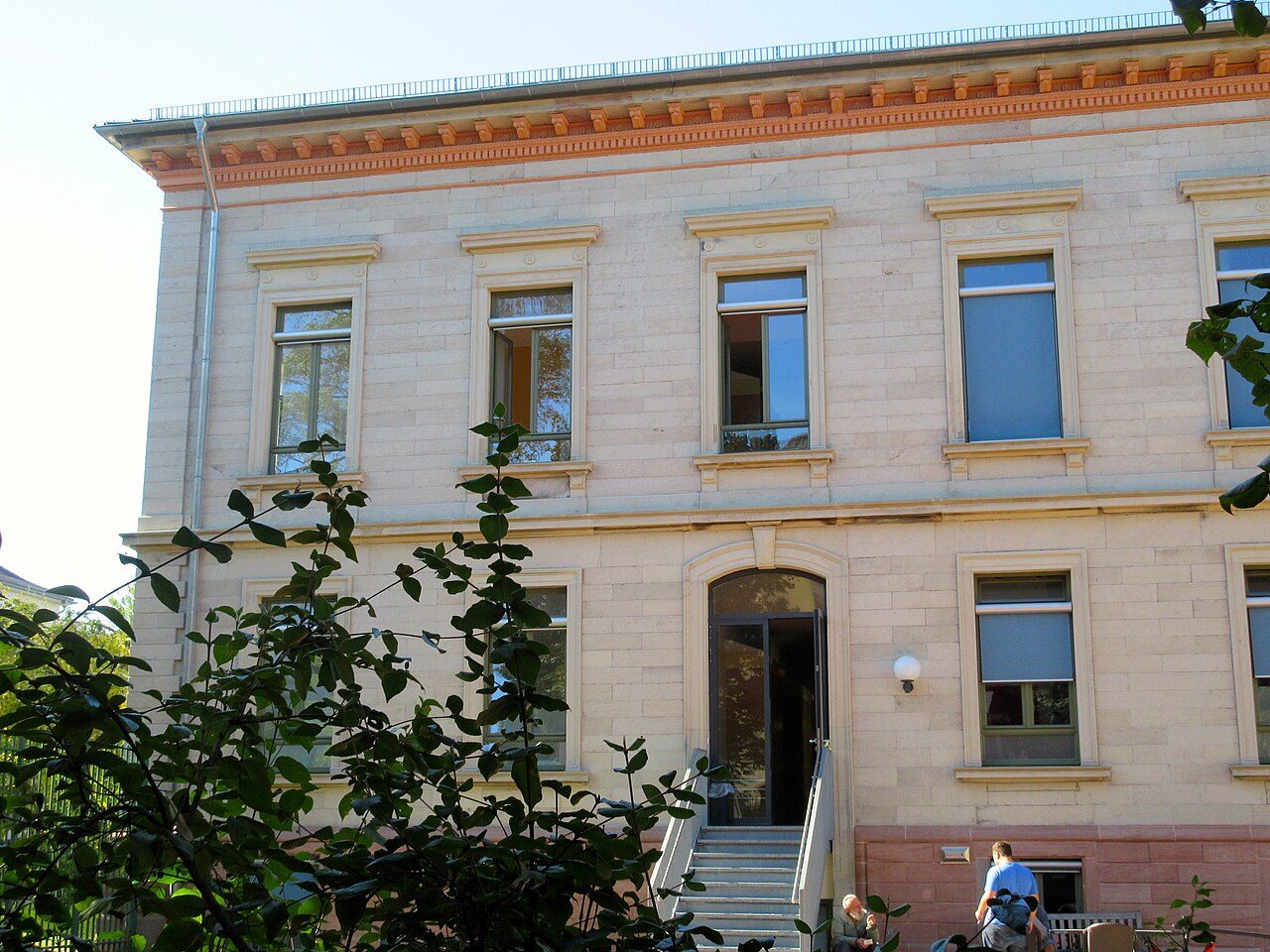
Few psychiatric labels have been so confident in their name, or so quickly embarrassed by it. Dementia praecox, "early" or "precocious" dementia, announced a prognosis in two words: an illness that struck the young and ended in lasting mental decline. For half a century it was one of the commonest diagnoses in European and American asylums1,6. Its inventor spent much of that time conceding that the name did not fit.
From a phrase to a disease
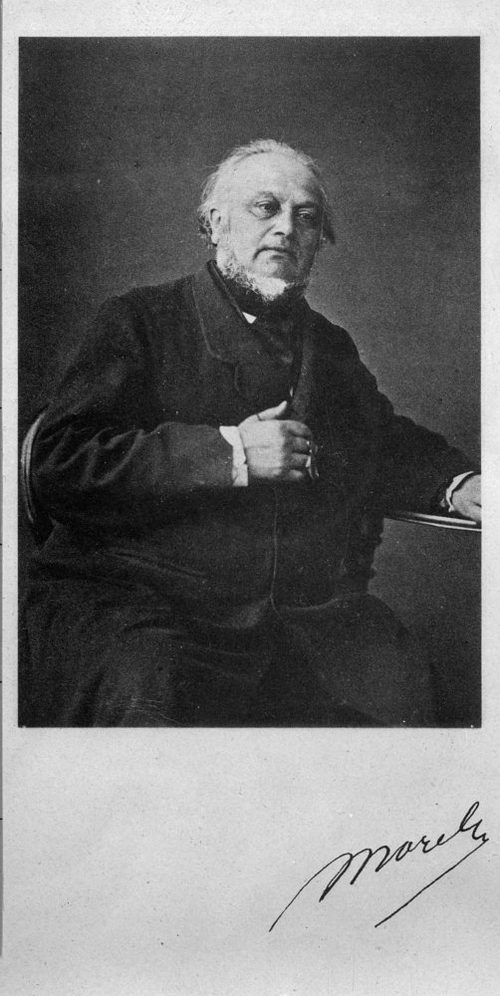
The words were not new. The French alienist Bénédict-Augustin Morel used démence précoce in the 1850s, most often in his Traité des maladies mentales of 1860, to describe young people who sank into torpor and apathy. Morel, best known for degeneration theory, was describing, not founding a disease, and he did not think the state necessarily permanent. Arnold Pick in Prague used the term again in 18916.
The disease was Emil Kraepelin's. At Heidelberg in the 1890s he recorded every new admission on index cards and followed patients over time, convinced that a disease should be defined by its course and outcome rather than by a snapshot of symptoms. He borrowed from Karl Kahlbaum and Ewald Hecker in Görlitz, who had described catatonia (1874) and hebephrenia (1871), and in the sixth edition of his textbook (1899) he joined these with a paranoid form into one disease. He set it against "manic-depressive insanity", which, unlike dementia praecox, was expected to remit. This two-part division shaped psychiatry for a century6,2,4.
Dementia praecox consists of a series of states, the common characteristic of which is a peculiar destruction of the internal connections of the psychic personality.1
Quotation checked against the 1919 text
What Kraepelin described
The 1919 English translation, made by R. Mary Barclay from his eighth German edition, lists hallucinations of hearing, delusions of being influenced or persecuted, emotional indifference, mannerisms, and the rigid postures and "waxy flexibility" of the catatonic form1. What united them, for Kraepelin, was a loss of inner coordination rather than any single symptom. He put it in a famous image, contrasting it with hysteria:
In dementia praecox that connection remains preserved, but the psychic faculties lose their mutual inner contact like an orchestra without a conductor.1
Quotation checked against the 1919 text
He thought the cause was bodily, probably a self-poisoning of the brain, perhaps from the sex glands, and he said plainly that it was unknown. His treatments were modest: prolonged baths, sedatives for distress, and occupation in the asylum. Experiments with glandular extracts failed6,2. In Munich, he estimated, roughly 10 per cent of admissions belonged to the disease1.
A name in dispute
Kraepelin's own figures undermined his title. In the eighth edition he recalled his finding that about 8 per cent of his hebephrenic and about 13 per cent of his catatonic patients appeared to recover, and he admitted in print that "the assumptions upon which the name chosen rested are at least doubtful": some patients recovered completely, and not all were young1. His last account, in 1921, allowed for episodic courses and possible recovery, and still called the causes "completely obscure"2.
In Zurich, at the Burghölzli, Eugen Bleuler reported in 1908 that many patients did not decline steadily6. In a lecture in Berlin on 24 April 1908 he proposed a new name, "schizophrenia", stressing the disturbed connections between mental functions, and his monograph of 1911 described a broader "group of schizophrenias"7,1. British psychiatry was slower still. George Robertson, editing the 1919 translation in Edinburgh, wrote that
In no country has there been less inclination to accept his doctrines without qualification than in this1
Quotation checked against the 1919 text
Who received it, and what followed
The diagnosis fell mostly on young adults, and Kraepelin noted that such patients filled the public asylums because they neither died quickly nor recovered1. In the United States the term entered official record-keeping in 1918 and survived, side by side with "schizophrenia", until the first Diagnostic and Statistical Manual of 1952 replaced it with "schizophrenic reaction"6.
The idea of a hereditary, incurable disease had consequences beyond the ward. Bleuler himself advocated eugenic sterilisation7, and Nazi Germany's law of 14 July 1933 made schizophrenia one of nine conditions for which people could be forcibly sterilised; an estimated 400,000 Germans were sterilised under it5.
What it maps to now, and why that is uncertain
Schizophrenia is the direct descendant of dementia praecox, and many historians and psychiatrists assume that a large share of Kraepelin's patients would receive that diagnosis today. The fit is loose. Kraepelin's concept was narrower than Bleuler's and far gloomier than modern knowledge of outcomes allows; the American psychiatrists who called themselves "neo-Kraepelinians" and shaped DSM-III (1980) revived his idea of discrete diseases, not his exact boundaries6. Catatonia, once his subtype, is now recognised as a syndrome that occurs most often in mood disorders and medical illness, so some of his catatonic patients may have had something else entirely3.
The records add their own uncertainty. Kraepelin's published cases are brief illustrations chosen for a textbook, and they cannot be re-examined for conditions unknown or untestable in 1900, from encephalitis to metabolic disease. Reading his patients as "schizophrenics" in the modern sense is a judgement about a concept, not a diagnosis of the people themselves (Can we diagnose the dead?).
Key dates
- 1860 Bénédict-Augustin Morel uses 'démence précoce' descriptively in his Traité des maladies mentales.
- 1874 Karl Kahlbaum publishes his monograph on catatonia, later folded into dementia praecox.
- 1893 Emil Kraepelin introduces dementia praecox in the fourth edition of his textbook.
- 1899 Kraepelin's sixth edition unites hebephrenia, catatonia and paranoid dementia as one disease, set against manic-depressive insanity.
- 24 April 1908 Eugen Bleuler proposes the name 'schizophrenia' in a lecture in Berlin.
- 1919 R. Mary Barclay's English translation of Kraepelin's Dementia Praecox and Paraphrenia is published in Edinburgh.
- 1952 DSM-I replaces dementia praecox with 'schizophrenic reaction' in American official usage.
Sources
- Primary source Emil Kraepelin, Dementia Praecox and Paraphrenia (trans. R. Mary Barclay, ed. George M. Robertson), Edinburgh: E. & S. Livingstone (1919). Quotations checked against this text.
- Scholarship Kenneth S. Kendler, Kraepelin's Final Views on Dementia Praecox, Schizophrenia Bulletin 47(3) (2021).
- Scholarship Levente Csihi, Gabor S. Ungvari, Stanley N. Caroff, Gábor Gazdag, First 150 years of catatonia: looking back at its complicated history and forward to the road ahead, World Journal of Psychiatry 14(5) (2024).
- Primary source Karl Kahlbaum, Die Katatonie oder das Spannungsirresein, Berlin: August Hirschwald (1874).
- Museum or archive United States Holocaust Memorial Museum, The Biological State: Nazi Racial Hygiene, 1933–1939, Holocaust Encyclopedia.
- Wikipedia Dementia praecox, Wikipedia.
- Wikipedia Eugen Bleuler, Wikipedia.
Cross-checked with Wikidata Q1185320 and the English Wikipedia article.
Read next
 1874–present
Catatonia
Named by Karl Kahlbaum in 1874 as a disease of tension and stupor, catatonia was absorbed into dementia praecox and schizophrenia, then rediscovered as a syndrome that crosses many illnesses.
 1820s–1940s
General paralysis of the insane
The deadliest diagnosis in the Victorian asylum: grandiose delusions, failing speech and paralysis, usually fatal within a few years. In 1913 it was proved to be a late form of syphilis.
 1857–1914
Degeneration theory
From the 1850s many psychiatrists believed that madness was the sign of a family in hereditary decline, worsening with each generation. How Morel's theory spread, what it explained for asylum doctors, and where it led.
 1883–1970s
Eugenics and psychiatry
Eugenics promised to reduce mental illness by preventing 'unfit' people from having children. How psychiatrists helped build sterilisation laws in the United States and Europe, Buck v. Bell, and the road to the Nazi killing of patients.
 1845–1990
The biological turn
From Griesinger's claim in the 1840s that mental illness is brain disease, through the microscope, the shock therapies and the drug revolution, to DSM-III in 1980: how psychiatry repeatedly turned to the body.
 Essay · 6 min
Can we diagnose the dead?
Why this site never diagnoses historical figures, and hedges every modern equivalent it gives: the evidence was made for other purposes, diseases change their identities, and each age's diagnoses of the dead reflect its own medicine.
Pages that mention Dementia praecox
- Diagnosis Catatonia
- Diagnosis General paralysis of the insane
- Diagnosis Mania
- Essay "On being sane in insane places": Rosenhan's study and its challengers
- Essay How words for madness changed
- Person Daniel Paul Schreber
- Person Emil Kraepelin
- Person Eugen Bleuler
- Person Ugo Cerletti
- Place The Burghölzli, Zurich
- Theory Degeneration theory
- Theory Eugenics and psychiatry
- Theory The biological turn
- Treatment Hydrotherapy
- Treatment Insulin coma therapy
- Treatment Lithium
- Treatment Metrazol convulsive therapy