
Treatment · 1938–present
Electroconvulsive therapy, then and now
Ugo Cerletti and Lucio Bini first induced a seizure with electricity in Rome in April 1938. Unmodified ECT injured and frightened many; anaesthesia and muscle relaxants made it a treatment still used today.
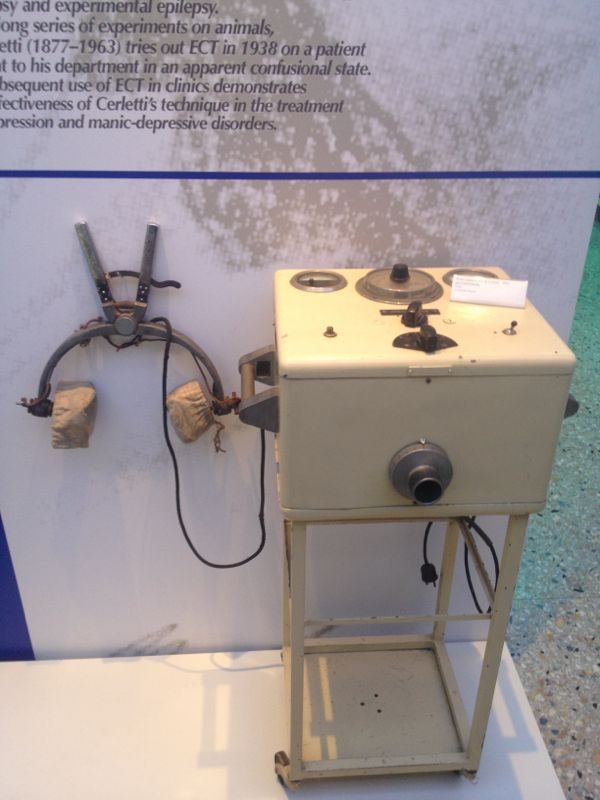
Electroconvulsive therapy is the only one of the great physical treatments of the 1930s that psychiatry still uses. Insulin coma, cardiazol shock and lobotomy were all abandoned; ECT survived, changed almost beyond recognition, and still carries its past with it3,4.
Rome, 1938
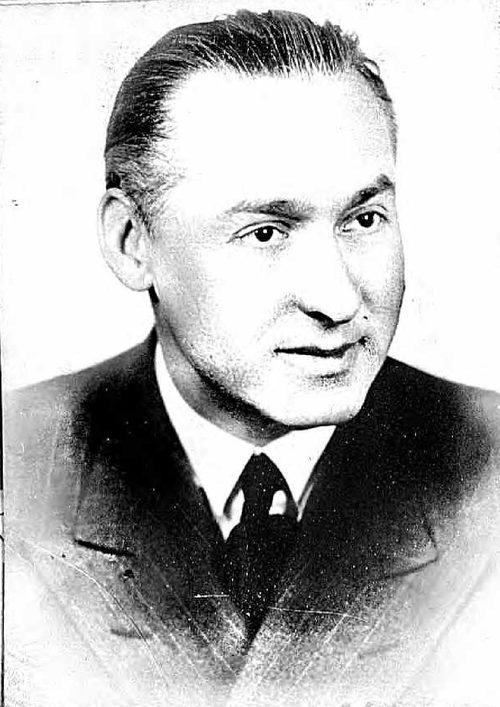
ECT began as a cheaper, more reliable way of doing what cardiazol therapy already did. In the mid-1930s Ladislas Meduna's belief that epilepsy and schizophrenia were biological opposites had made induced seizures a fashionable treatment, and drugs were the means. In Genoa and then Rome, the neuropathologist Ugo Cerletti had for several years been using electric currents to produce seizures in animals, so that he could study what epilepsy did to the brain. He found little lasting damage in their tissue, and visits to the Rome slaughterhouse, where pigs were stunned electrically before killing, persuaded him that a brief current across the head need not be fatal3.
In April 1938 Cerletti and his assistant Lucio Bini, who built the apparatus, tried it on a 39-year-old man who was confused and deluded; one account says he had been found at a Rome railway station, another that the police brought him to the clinic. He improved over a course of eleven treatments and was judged recovered, though it emerged later that he had been given cardiazol in another hospital three months before3,4,6. Cerletti called it "electroshock". He later proposed that the seizure destroyed only the brain's most recently formed, "morbid" connections, a theory no one could demonstrate3.
A treatment for everyone
Electricity replaced cardiazol almost everywhere within a few years. It was cheap, easily given, and it spared patients the minutes of terror that preceded a cardiazol seizure, because consciousness was lost at once3,5. Lothar Kalinowsky, who had watched the early treatments in Rome, demonstrated the method in England in 1939 on his way to the United States, where Renato Almansi and David Impastato began giving it in New York in 19404,6. By 1946 the Board of Control could report that some form of physical treatment was used in every mental hospital in England and Wales1.
It was given for almost anything. ECT was soon found to work best not in schizophrenia, the condition it had been invented for, but in severe depression; yet through the 1940s and 1950s it was also used for schizophrenia, neuroses, epilepsy and the after-effects of war, and the amount given varied twentyfold between British hospitals6. Studies of case records in Denmark and California show that shock treatment was also used to quieten patients described as noisy, destructive or "disturbed"5. A few psychiatrists gave it several times a day in "intensive" regimes meant to reduce patients to a helpless, childlike state; in Montreal Ewen Cameron's version of this "depatterning", later found to have been partly funded by the CIA, led decades afterwards to compensation for some of his former patients6.
Harms of the unmodified treatment
For its first fifteen years ECT was usually given "unmodified", without anaesthetic or muscle relaxant. The convulsion was a full one, strong enough at times to fracture the spine, hips and long bones, and most psychiatrists considered an anaesthetic unnecessary because the shock itself caused instant unconsciousness6. Patients woke confused, and memory loss, for the treatments themselves and sometimes for longer stretches of their lives, was the complaint that followed ECT through its history4,6.
Remedies came slowly. Abram Bennett in Nebraska first used curare, the South American arrow poison, to soften the convulsion in 1940; British psychiatrists were reporting trials of its purified form, d-tubocurarine, by 19472,5. The safer synthetic relaxant succinylcholine, introduced in 1951 and reported for ECT by Holmberg and Thesleff in 1952, made "modified" ECT practical, with a short anaesthetic to spare patients the sensation of paralysis5,6. Change was uneven. Mr Bolam, a voluntary patient at Friern Hospital in London, fractured both hip sockets during unmodified treatment; his claim for negligence failed in 1957 because many doctors then still opposed relaxants, and the case is now remembered for the "Bolam test" of medical negligence. It nevertheless helped end the routine use of unmodified ECT in British hospitals6,7.
Decline and return
The new drugs of the 1950s, chlorpromazine and the first antidepressants, cut the use of ECT, and so did its public image. Ken Kesey's novel One Flew Over the Cuckoo's Nest (1962) and the 1975 film showed it unmodified and used as punishment, and for many people that became what ECT was4. In Britain an estimated 50,000 courses a year in the early 1970s fell to about 24,000 by 1985; a Royal College of Psychiatrists survey of 1981 found many clinics ignoring its own guidelines, with obsolete machines and indifferent staff, and a few still occasionally giving unmodified treatment6.
The response was regulation rather than abolition. Brief-pulse machines and "unilateral" electrode placement were adopted to reduce memory effects; the Mental Health Act 1983 set out when ECT could be given to detained patients without consent; and in 2003 the National Institute for Clinical Excellence restricted its use in England and Wales6,9. Since 2008, people in England and Wales who are able to decide have had the right to refuse it, except in an emergency6.
Now
ECT today is given under general anaesthetic with a muscle relaxant. In the United States it is cleared for severe depressive episodes, usually after other treatments have not helped, and it is also used for catatonia and severe mania; NICE's guidance in England similarly limits it to severe, specified conditions8,9. Its mechanism is still not understood, and more than a hundred theories have been offered since 19384.
Key dates
- April 1938 In Rome, Ugo Cerletti and Lucio Bini induce a seizure with electricity in a patient for the first time.
- December 1939 Lothar Kalinowsky's account of electrically induced seizures appears in The Lancet; ECT spreads through British mental hospitals.
- 1940 ECT is introduced in the United States, at Columbus Hospital in New York; in Nebraska, Abram Bennett first uses curare to soften the convulsion.
- 1952 Holmberg and Thesleff report succinylcholine as a muscle relaxant for ECT, the basis of the modern 'modified' treatment.
- 1957 Bolam v Friern Hospital Management Committee: a patient injured during unmodified ECT loses his case, but the routine use of unmodified ECT in Britain ends soon after.
- April 2003 NICE in England issues guidance restricting ECT to severe, specified conditions after other treatments have been tried.
Sources
- Primary source Board of Control (England and Wales), The Thirty-third Annual Report of the Board of Control for the Year 1946, London: HMSO (1947).
- Primary source W. L. Milligan, d-Tubocurarine in electric convulsion therapy, British Medical Journal (1947).
- Scholarship Carlo Patriarca, Carlo Alfredo Clerici, Stefano Zannella, Carlo Fraticelli, Ugo Cerletti, Pathologica and electroconvulsive therapy, Pathologica 113(6) (2021).
- Scholarship Nancy A. Payne, Joan Prudic, Electroconvulsive Therapy Part I: A Perspective on the Evolution and Current Practice of ECT, Journal of Psychiatric Practice 15(5) (2009).
- Scholarship Jesper Vaczy Kragh, Shock Therapy in Danish Psychiatry, Medical History 54(3) (2010).
- Wikipedia History of electroconvulsive therapy in the United Kingdom, Wikipedia.
- Wikipedia Bolam v Friern Hospital Management Committee, Wikipedia.
- Official National Institute of Mental Health, Brain Stimulation Therapies, NIMH.
- Official National Institute for Health and Care Excellence, Guidance on the use of electroconvulsive therapy (TA59), NICE (2003-04-26).
Cross-checked with Wikidata Q131543 and the English Wikipedia article.
Read next
 1934–1950s · Abandoned
Metrazol convulsive therapy
In 1934 Ladislas Meduna began causing seizures with drugs to treat schizophrenia, first camphor and then cardiazol (Metrazol). Patients dreaded it, and within a decade electricity had replaced the drug.
1933–1960s · Abandoned
Insulin coma therapy
From the mid-1930s to the late 1950s, people diagnosed with schizophrenia were put into deep comas with insulin, day after day. A trial in 1957 found the insulin itself did nothing special.
 1935–1960s · Abandoned
Lobotomy
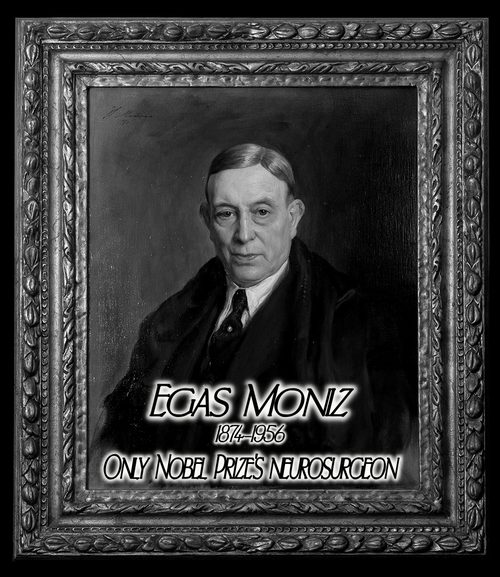
Brain surgery to cut the frontal lobes' connections, begun in Lisbon in 1935 and rewarded with a Nobel Prize in 1949. Tens of thousands were operated on before drugs and evidence of harm ended it.
 1952–present · Transformed
Chlorpromazine
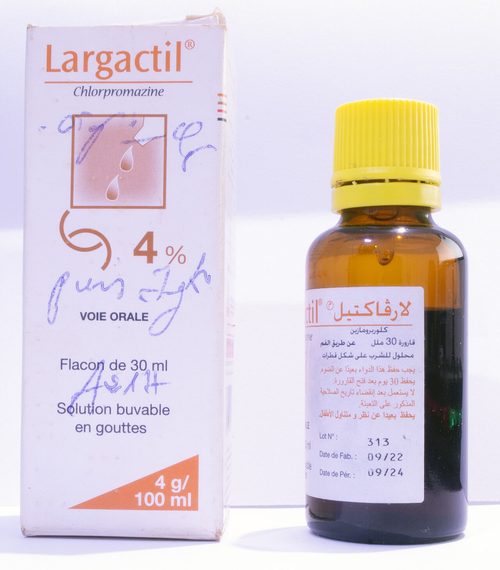
A French drug tried on psychiatric patients in Paris in 1952. Chlorpromazine calmed psychosis without stupor, emptied wards and began the age of psychiatric drugs, with lasting side-effects.
 1952–1970s · Transformed
The first antidepressants
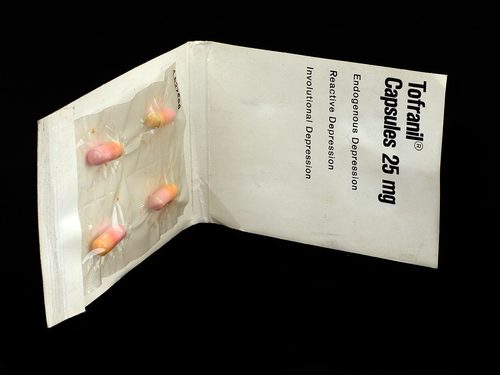
Two chance findings of the 1950s, a tuberculosis drug that lifted patients' spirits and a failed antipsychotic tested in a Swiss asylum, gave psychiatry its first antidepressants and a disputed chemical theory.
 1845–1990
The biological turn
From Griesinger's claim in the 1840s that mental illness is brain disease, through the microscope, the shock therapies and the drug revolution, to DSM-III in 1980: how psychiatry repeatedly turned to the body.