
Person · 15 February 1856 – 7 October 1926
Emil Kraepelin
German psychiatrist (1856–1926) whose division of the psychoses into dementia praecox and manic-depressive insanity shaped classification for a century; he also championed temperance and racial hygiene.
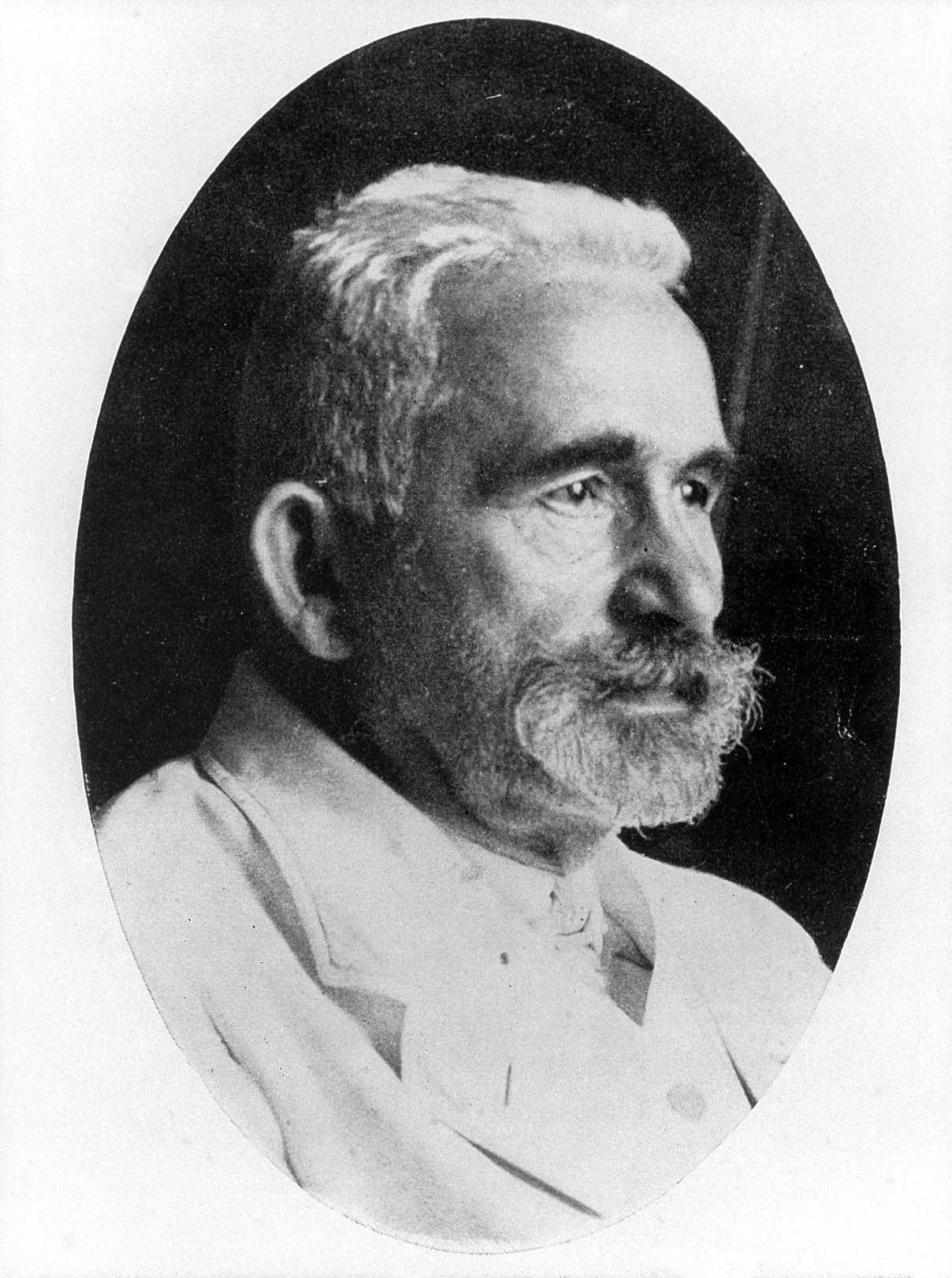
Every psychiatric diagnosis made today carries some trace of Emil Kraepelin's method, and most people who receive one have never heard of him. His idea was simple to state and laborious to carry out: a mental illness should be defined not by the symptoms a patient shows on one day but by the course the illness takes over years, and by how it ends3,7.
Course and outcome
Kraepelin was born on 15 February 1856 in Neustrelitz, in northern Germany7. As a medical student at Leipzig he worked with Wilhelm Wundt, the founder of experimental psychology, and he kept Wundt's laboratory methods all his life, testing the effects of alcohol, caffeine and other drugs on mental performance6,7. In 1883 he published a short Compendium of psychiatry, the first version of the textbook that he rewrote through nine editions, the last appearing just after his death7. He held chairs at Dorpat (now Tartu) from 1886, Heidelberg from 1891 and Munich from 19037.
At Heidelberg he followed patients over time and grouped them by outcome. In the sixth edition of his textbook (1899) he drew the line that organised psychiatry for the next century: on one side dementia praecox, which he expected to end in lasting deterioration; on the other "manic-depressive insanity", in which attacks of mania and melancholia came and went but the mind was not destroyed7. Into the first he put Karl Kahlbaum's catatonia and Ewald Hecker's hebephrenia; into the second almost every disorder of mood7. He believed these were bodily diseases, inherited in large part:
Hereditary Taint I could demonstrate in about 80 per cent. of the cases observed in Heidelberg.1
Quotation checked against the 1921 text
Within a decade Eugen Bleuler in Zurich was proposing to rename and widen the first group as schizophrenia, and Kraepelin himself admitted that some of his patients recovered and that the name dementia praecox rested on "doubtful" assumptions2.
Alcohol, degeneration and race
Kraepelin was also a public figure with a programme. He gave up alcohol entirely and campaigned for abstinence; Ebert and Bär suggest that his father's drinking may lie behind the strength of his feeling6. Like many contemporaries he took up degeneration theory, and from his move to Munich he wrote increasingly about crime, drink and the biological decline of the German people7. In 1904 he travelled to Java to compare the mental illnesses he found there with those of his European patients, a project he called comparative psychiatry4. His conclusions put his hierarchy of peoples on the page:
A comparison might be made between the behaviour of the Javanese patients and that of our youthful patients, a psychically undeveloped population with the immature European youth.1
Quotation checked against the 1921 text
Engstrom and Crozier argue that this research tells us less about Java than about Kraepelin: it was part of a neo-Lamarckian epidemiology in which race, alcohol and syphilis were all treated as influences on the health of a people4.
His last great project was the German Research Institute of Psychiatry in Munich, founded in 1917 after a long wartime campaign for funds and political support. Engstrom, Burgmair and Weber describe that campaign as "völkisch corporatism": an effort to mobilise a network of scientists, patrons and officials in the service of biological and hygienic ends for the nation5. Kraepelin promoted the hereditary research of his pupil and successor Ernst Rüdin, who became the leading figure of German psychiatric genetics and who later helped design and justify the Nazi sterilisation programme (Eugenics and psychiatry)7,8. Kraepelin died in Munich on 7 October 1926, years before the Nazis came to power; how much of what followed can be laid at his door is a question historians still argue over.
Icon and reality
In the 1970s American psychiatrists dissatisfied with psychoanalysis called themselves "neo-Kraepelinians" and rebuilt classification around discrete disease categories in the third Diagnostic and Statistical Manual (1980) (The biological turn)3.
Key dates
- 1883 Kraepelin publishes the first version of his textbook, a short Compendium of psychiatry.
- 1886 Kraepelin becomes professor of psychiatry at Dorpat (Tartu).
- 1891 Kraepelin moves to Heidelberg, where he follows patients' illnesses over time.
- 1899 The sixth edition of his textbook separates dementia praecox from manic-depressive insanity.
- 1903 Kraepelin takes the chair of psychiatry in Munich.
- 1904 Kraepelin studies patients in Java for his 'comparative psychiatry'.
- 1917 The German Research Institute of Psychiatry (Deutsche Forschungsanstalt für Psychiatrie) is founded in Munich on his initiative.
- 7 October 1926 Kraepelin dies in Munich.
Kraepelin on this site
- Diagnosis Melancholia
- Essay How words for madness changed
- Diagnosis Mania
- Treatment Hydrotherapy
- Diagnosis General paralysis of the insane
- Theory The biological turn
- Theory Degeneration theory
- Place The Burghölzli, Zurich
- Diagnosis Catatonia
- Theory Eugenics and psychiatry
- Diagnosis Dementia praecox
- Treatment Insulin coma therapy
- Essay "On being sane in insane places": Rosenhan's study and its challengers
Sources
- Primary source Emil Kraepelin, Manic-Depressive Insanity and Paranoia (trans. R. Mary Barclay, ed. George M. Robertson), Edinburgh: E. & S. Livingstone (1921). Quotations checked against this text.
- Primary source Emil Kraepelin, Dementia Praecox and Paraphrenia (trans. R. Mary Barclay, ed. George M. Robertson), Edinburgh: E. & S. Livingstone (1919). Quotations checked against this text.
- Scholarship Eric J. Engstrom and Kenneth S. Kendler, Emil Kraepelin: icon and reality, American Journal of Psychiatry 172(12) (2015).
- Scholarship Eric J. Engstrom and Ivan Crozier, Race, alcohol and general paralysis: Emil Kraepelin's comparative psychiatry and his trips to Java (1904) and North America (1925), History of Psychiatry 29(3) (2018).
- Scholarship Eric J. Engstrom, Wolfgang Burgmair and Matthias M. Weber, Psychiatric governance, völkisch corporatism, and the German Research Institute of Psychiatry in Munich (1912–26), part 1, History of Psychiatry 27(1) (2016).
- Scholarship Andreas Ebert and Karl-Jürgen Bär, Emil Kraepelin: a pioneer of scientific understanding of psychiatry and psychopharmacology, Indian Journal of Psychiatry 52(2) (2010).
- Wikipedia Emil Kraepelin, Wikipedia.
- Wikipedia Ernst Rüdin, Wikipedia.
Cross-checked with Wikidata Q76828 and the English Wikipedia article.
Read next
 1890s–1950s
Dementia praecox
Emil Kraepelin's 'early dementia' of the 1890s: a psychosis of youth he thought led to lasting decline. Contested from the start, it was renamed schizophrenia and reshaped twentieth-century psychiatry.
 c. 100 CE–1980
Mania
Mania once meant madness itself: raving, sleepless, sometimes joyful. How the word narrowed from Aretaeus to Kraepelin, and how it became one pole of manic-depressive illness.
 c. 400 BCE–1900s
Melancholia
For two thousand years melancholia meant fear and sorrow without cause, blamed on black bile. How physicians from Aretaeus to Kraepelin defined it, and how it became 'depression'.
 1874–present
Catatonia
Named by Karl Kahlbaum in 1874 as a disease of tension and stupor, catatonia was absorbed into dementia praecox and schizophrenia, then rediscovered as a syndrome that crosses many illnesses.
 1857–1914
Degeneration theory
From the 1850s many psychiatrists believed that madness was the sign of a family in hereditary decline, worsening with each generation. How Morel's theory spread, what it explained for asylum doctors, and where it led.
 1883–1970s
Eugenics and psychiatry
Eugenics promised to reduce mental illness by preventing 'unfit' people from having children. How psychiatrists helped build sterilisation laws in the United States and Europe, Buck v. Bell, and the road to the Nazi killing of patients.
 1845–1990
The biological turn
From Griesinger's claim in the 1840s that mental illness is brain disease, through the microscope, the shock therapies and the drug revolution, to DSM-III in 1980: how psychiatry repeatedly turned to the body.
Pages that mention Emil Kraepelin
- Diagnosis Catatonia
- Diagnosis Dementia praecox
- Diagnosis General paralysis of the insane
- Diagnosis Mania
- Diagnosis Melancholia
- Essay "On being sane in insane places": Rosenhan's study and its challengers
- Essay How words for madness changed
- Person Eugen Bleuler
- Person Sigmund Freud
- Person Ugo Cerletti
- Place The Burghölzli, Zurich
- Theory Degeneration theory
- Theory Eugenics and psychiatry
- Theory The biological turn
- Treatment Hydrotherapy
- Treatment Insulin coma therapy