
Person · 25 July 1842 – 14 April 1911
Daniel Paul Schreber
Saxon judge (1842–1911) whose 1903 Memoirs of a Nervous Illness described his psychosis from the inside, won his release from an asylum in court, and became the basis of Freud's 1911 case study.
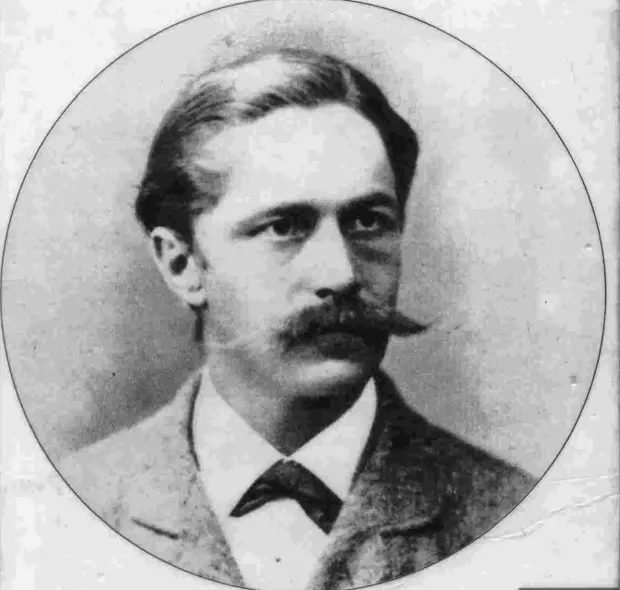
Daniel Paul Schreber is probably the most discussed psychiatric patient who was never seen by any of the people who discussed him. Freud, Jung, Bleuler, Elias Canetti and Jacques Lacan all wrote about him from a single book: the account of his illness that Schreber, a senior judge, wrote while still confined in an asylum, and published in 19032,5.
A judge's family
Schreber was born in Leipzig on 25 July 18424. His father, the physician Moritz Schreber (1808–1861), was a widely read writer on health, gymnastics and the strict upbringing of children; the allotment gardens called Schrebergärten were later named after him4. Paul's elder brother died by suicide in 18774,5. Paul studied law, became a judge in the Saxon service and in 1878 married Sabine Behr4.
Three illnesses
In 1884 he stood for the Reichstag as a National Liberal and lost, fell ill, and spent six months in the Leipzig university clinic of the brain anatomist Paul Flechsig, who recorded his illness as hypochondria and the vapours3,4. He recovered and returned to the bench5. In June 1893 he was appointed presiding judge of a senate of the Oberlandesgericht, Saxony's highest court, in Dresden. By the autumn he could not sleep and was deeply depressed, and in November 1893 he was back in Flechsig's clinic4. This second illness lasted nine years, most of it in the Sonnenstein asylum at Pirna, whose director Guido Weber diagnosed paranoia2,4.
During these years Schreber built an elaborate and internally consistent account of what was happening to him. In it the human soul and God were made of "nerves"; divine "rays" worked "miracles" on his body; Flechsig had committed "soul murder" against him; and God was transforming him for the sake of a renewed world order4,5. The psychoanalyst James Grotstein read the whole system as an attempt to save the world from a dreaded corruption, with Schreber as its chosen sacrifice3.
He was placed under guardianship, his civil rights curtailed. By 1897, Lothane argues, he had largely recovered his everyday competence, and he went to law to end the guardianship. He argued his own case, and in 1902 the Dresden appeal court lifted the guardianship: it held that he was still mentally ill but no danger to himself or others, and he left Sonnenstein in December 19022,4.
The Memoirs
In 1903 the Leipzig publisher Oswald Mutze issued his Denkwürdigkeiten eines Nervenkranken (Memoirs of a Nervous Illness)1,4. Its subtitle shows what he wanted from it: an appendix "on the question: under what conditions may a person considered insane be detained in an asylum against his declared will?" (our translation)1. It is rare among such books in describing a psychosis from inside while it was still going on, in clear and orderly prose4.
From 1902 Schreber lived with his wife in Dresden, wrote on law and chess, and adopted a girl2. In 1907, after his mother's death and his wife's stroke, he fell ill again and entered the asylum at Leipzig-Dösen, where he died on 14 April 19112,4.
Freud and the father
In 1911 Freud published his "Psycho-Analytic Notes on an Autobiographical Account of a Case of Paranoia", which used the Memoirs to argue that male paranoia arose from a repressed homosexual attachment, in Schreber's case to his father and brother4,5. Eugen Bleuler, the same year, treated him as a model case of schizophrenia2. Interest faded until the 1950s, when the psychoanalyst William Niederland began to study Moritz Schreber's books and the orthopaedic devices he designed to train children's posture2,3,4.
The book outlived all of its interpreters. The Saxon Psychiatric Museum in Leipzig keeps documents of Schreber's life, and his Memoirs are still read by psychiatrists, philosophers and lawyers, not least for their argument about a patient's right to his freedom4.
Key dates
- 1884 After losing an election to the Reichstag, the judge Daniel Paul Schreber falls ill and spends six months in Paul Flechsig's clinic in Leipzig.
- November 1893 Weeks after becoming a presiding judge of Saxony's highest court, Schreber is readmitted to Flechsig's clinic; he will be confined for nine years.
- December 1902 Having won a court case against his guardianship, Schreber is released from the Sonnenstein asylum.
- 1903 Schreber publishes Denkwürdigkeiten eines Nervenkranken (Memoirs of a Nervous Illness).
- 1911 Freud publishes his case study of Schreber's memoirs; Schreber dies in the Leipzig-Dösen asylum.
Schreber on this site
Sources
- Primary source Daniel Paul Schreber, Denkwürdigkeiten eines Nervenkranken, Leipzig: Oswald Mutze (1903).
- Scholarship Zvi Lothane, The legacies of Schreber and Freud, European Journal of Psychoanalysis 30 (2010).
- Scholarship James S. Grotstein, The Schreber case revisited: schizophrenia as a disorder of self-regulation and of interactional regulation, Yale Journal of Biology and Medicine 58(3) (1985).
- Wikipedia Daniel Paul Schreber, Wikipedia (German).
- Wikipedia Daniel Paul Schreber, Wikipedia.
Cross-checked with Wikidata Q62468 and the English Wikipedia article.
Read next
 1890s–1980
Psychoanalysis
Freud's theory of the unconscious began as a treatment for hysteria in 1890s Vienna and came to dominate American psychiatry after 1945. Its history, its place in psychiatry, and the long argument over whether it works.
 1890s–1950s
Dementia praecox
Emil Kraepelin's 'early dementia' of the 1890s: a psychosis of youth he thought led to lasting decline. Contested from the start, it was renamed schizophrenia and reshaped twentieth-century psychiatry.
 1600s–1800s
Hypochondria and the vapours
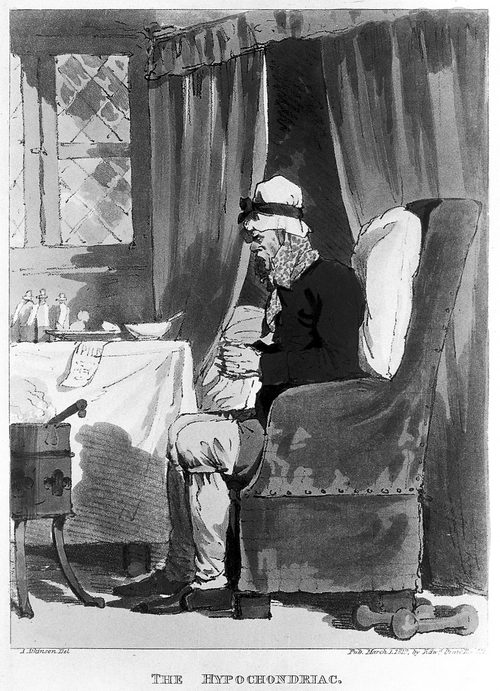
Before it meant fear of illness, hypochondria was a real disease of the gut and nerves, the male twin of hysteria and, with the vapours, the fashionable 'English malady' of the 1700s.
 Essay · 6 min
Can we diagnose the dead?
Why this site never diagnoses historical figures, and hedges every modern equivalent it gives: the evidence was made for other purposes, diseases change their identities, and each age's diagnoses of the dead reflect its own medicine.
 Essay · 8 min
The patients who wrote back
From John Perceval in the 1830s to Clifford Beers in 1908, former patients wrote against the asylum. Their first battle was to be believed at all, and what they won was mostly the right to be heard.