
Person · 30 April 1857 – 15 July 1939
Eugen Bleuler
Swiss psychiatrist (1857–1939) who ran the Burghölzli in Zurich, coined 'schizophrenia' in 1908, opened his clinic to Freud's ideas, and argued in his textbook for the eugenic sterilisation of patients.
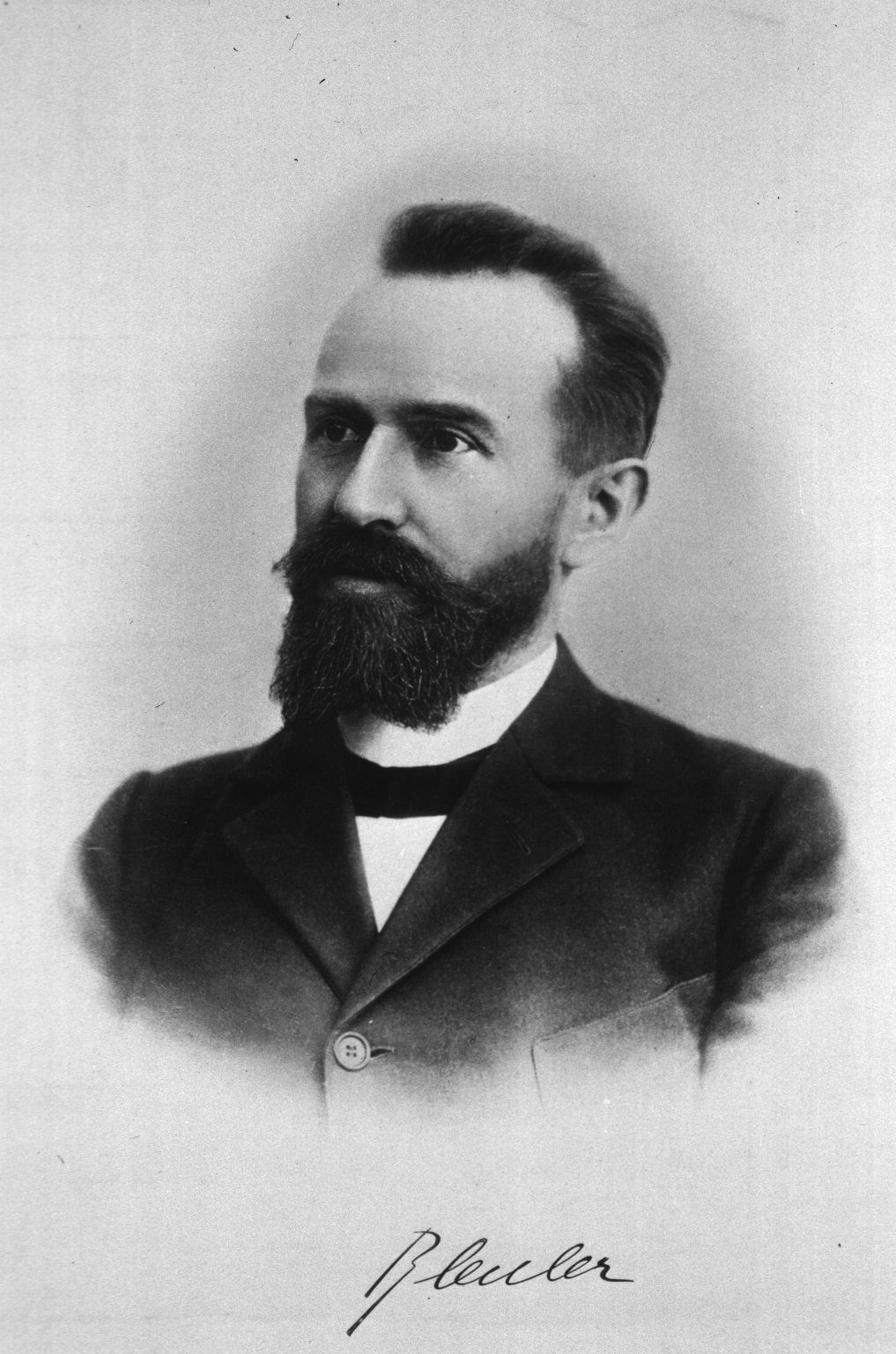
In 1886, aged 29, Eugen Bleuler took charge of the cantonal asylum at Rheinau, a former monastery on an island in the Rhine whose patients were mostly long-stay cases. He stayed twelve years, living among them and spending as much time as he could in conversation with them2,4. What he learned there, that many people with the gravest psychoses kept an inner life that could be understood and did not simply decay, was the basis of his reputation and of the word he gave to psychiatry2.
From Rheinau to the Burghölzli
Bleuler was born on 30 April 1857 at Zollikon near Zurich, and trained as a psychiatrist at the Burghölzli, the university's psychiatric hospital2,3. In 1898 he returned to it as director and professor of psychiatry, a post he held until 19272. Under him the Burghölzli became one of the most productive clinics in Europe. His assistants Carl Jung and Franz Riklin used word-association tests there to study unconscious mental processes, and Bleuler, unusually among academic psychiatrists, took Freud's ideas seriously, testing them on psychotic patients and even attempting a self-analysis by letter with Freud from 19054. He never became a disciple, and left the International Psychoanalytical Association in 1911, telling Freud that an "all or nothing" attitude might suit religious communities and political parties but harmed science4.
Schizophrenia
Emil Kraepelin had grouped a range of chronic psychoses as dementia praecox, a disease of the young that ended in deterioration. Bleuler accepted Kraepelin's grouping but not his name or his pessimism. On 24 April 1908, in a lecture to the German Psychiatric Association in Berlin, he proposed "schizophrenia", from the Greek for "split" and "mind", for a loosening of the connections between thinking, feeling and will2,3. His monograph of 1911 described "the group of schizophrenias", a family of conditions rather than a single disease, and his textbook gave his reasons plainly:
As the disease needs not progress as far as dementia and does not always appear praecociter, i.e. during puberty or soon after, I prefer the name schizophrenia.1
Quotation checked against the 1924 text
He distinguished basic symptoms, above all the disturbance of associations and of feeling, from "accessory" ones such as hallucinations and delusions, and he coined two further words that have outlived his system: "ambivalence", the simultaneous presence of contradictory feelings, and "autism", a withdrawal into an inner world2,4.
Eugenics
Bleuler was also a convinced eugenicist, like his predecessor at the Burghölzli, Auguste Forel4. His Textbook of Psychiatry (1916; English 1924) argued that "the more severely burdened should not propagate themselves". Others, he noted, objected to "the infringement upon human rights"; he did not share their fear that the practice would be extended, and set out a programme:
I would begin with compulsion in the case of incurable criminals and on the basis of consent in the case of other more serious psychopathies, and then gradually alter the general attitude and legislation in accordance with experience.1
Quotation checked against the 1924 text
If nothing were done, he warned, "our race must rapidly deteriorate"1. Under his direction the Burghölzli produced expert opinions recommending sterilisation on eugenic grounds, and the German editions of the textbook of 1937 and 1943, edited by his son Manfred Bleuler, added contributions by German racial hygienists, which were removed after the war4. (Eugenics and psychiatry)
Bleuler died at Zollikon on 15 July 19392,4. The word he invented in 1908 is still in every diagnostic manual, carrying both his insistence that the patients could be understood and the hereditary pessimism that led him to support their sterilisation1,2.
Key dates
- 1886 Bleuler becomes director of the asylum at Rheinau, where he lives among long-stay patients for twelve years.
- 1898 Bleuler returns to Zurich as director of the Burghölzli and professor of psychiatry.
- 24 April 1908 In a lecture in Berlin, Bleuler proposes the name 'schizophrenia' in place of dementia praecox.
- 1911 Bleuler publishes Dementia praecox, or the Group of Schizophrenias, and leaves the International Psychoanalytical Association.
- 1916 Bleuler's Textbook of Psychiatry appears, including his case for eugenic sterilisation.
- 1927 Bleuler retires from the Burghölzli.
- 15 July 1939 Bleuler dies in Zollikon.
Bleuler on this site
Sources
- Primary source Eugen Bleuler, Textbook of Psychiatry (trans. A. A. Brill), New York: Macmillan (1924). Quotations checked against this text.
- Scholarship Anke Maatz, Paul Hoff and Jules Angst, Eugen Bleuler's schizophrenia: a modern perspective, Dialogues in Clinical Neuroscience 17(1) (2015).
- Scholarship Abhishekh Hulegar Ashok, John Baugh and Vikram K. Yeragani, Paul Eugen Bleuler and the origin of the term schizophrenia (SCHIZOPRENIEGRUPPE), Indian Journal of Psychiatry 54(1) (2012).
- Wikipedia Eugen Bleuler, Wikipedia.
Cross-checked with Wikidata Q115506 and the English Wikipedia article.
Read next
 1890s–1950s
Dementia praecox
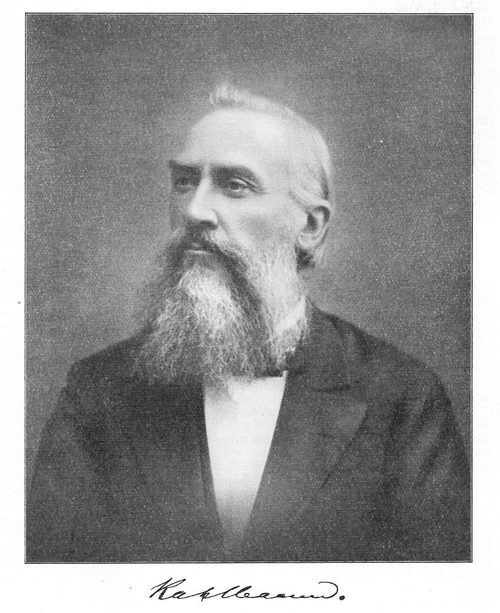
Emil Kraepelin's 'early dementia' of the 1890s: a psychosis of youth he thought led to lasting decline. Contested from the start, it was renamed schizophrenia and reshaped twentieth-century psychiatry.
 1874–present
Catatonia
Named by Karl Kahlbaum in 1874 as a disease of tension and stupor, catatonia was absorbed into dementia praecox and schizophrenia, then rediscovered as a syndrome that crosses many illnesses.
 1890s–1980
Psychoanalysis
Freud's theory of the unconscious began as a treatment for hysteria in 1890s Vienna and came to dominate American psychiatry after 1945. Its history, its place in psychiatry, and the long argument over whether it works.
 1883–1970s
Eugenics and psychiatry
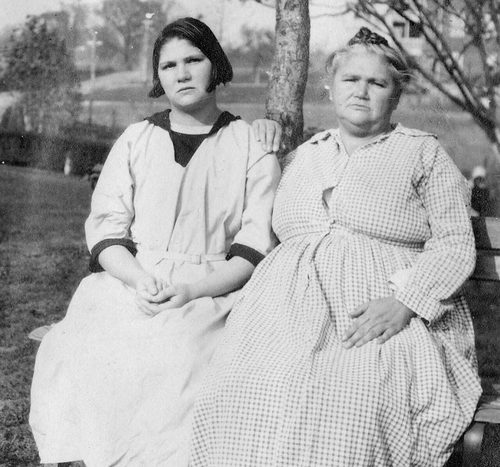
Eugenics promised to reduce mental illness by preventing 'unfit' people from having children. How psychiatrists helped build sterilisation laws in the United States and Europe, Buck v. Bell, and the road to the Nazi killing of patients.
 Essay · 6 min
Can we diagnose the dead?
Why this site never diagnoses historical figures, and hedges every modern equivalent it gives: the evidence was made for other purposes, diseases change their identities, and each age's diagnoses of the dead reflect its own medicine.