
Person · 20 April 1745 – 25 October 1826
Philippe Pinel
French physician (1745–1826) of Bicêtre and the Salpêtrière whose 1801 Treatise on Insanity made moral treatment a medical doctrine; the famous story of him striking off patients' chains is a later legend.
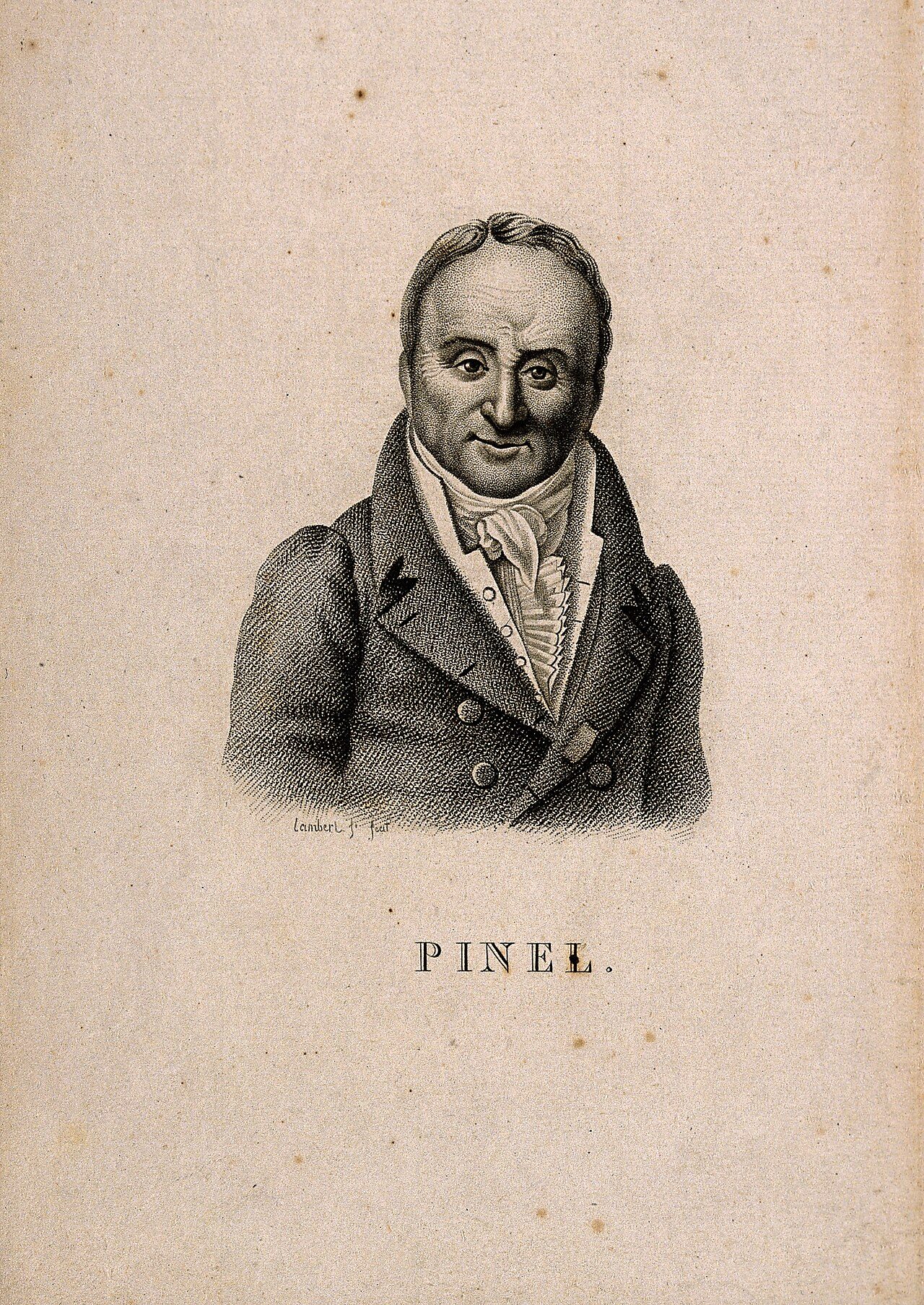
The man later painted as the liberator of the insane was, by the account of two French historians, small, shy and troubled by a painful stammer, with none of the commanding presence his son would one day recommend to asylum doctors2. Philippe Pinel's gift was for watching, and for writing down what he saw.
A provincial in Paris
Pinel was born on 20 April 1745 at Jonquières, near Castres in the south of France, where his father was a doctor. He studied at Toulouse, took his medical degree there in 1773, spent time at Montpellier, and came to Paris in 17782,8. His provincial degree did not let him practise in the capital, so for fifteen years he lived by teaching mathematics, translating (including William Cullen's medical textbook) and editing the Gazette de santé2,8. A friend's mental illness, which ended in his death by suicide, turned Pinel's interest to madness, and from about 1786 he worked at a private maison de santé run by a Monsieur Belhomme in the rue de Charonne2,8.
Bicêtre and the Salpêtrière
The Revolution opened public posts to men like him. On 11 September 1793 Pinel became physician to the infirmaries of Bicêtre, the hospice for poor men south of Paris2. Its ward for insane men was run by its governor, Jean-Baptiste Pussin, and Pinel spent his eighteen months there learning from him. He was candid about it:
I then discovered, that insanity was curable in many instances, by mildness of treatment and attention to the state of the mind exclusively, and when coercion was indispensible, that it might be very effectually applied without corporal indignity.1
Quotation checked against the 1806 text
In a memoir on madness dated 11 December 1794 he praised Pussin's practical skill and called for a public asylum run on these lines; Dora Weiner, who published it, called it a fundamental text of modern psychiatry2,3. In the spring of 1795 he became chief physician of the Salpêtrière, the women's hospice, a post he held for life, and in 1802 he finally secured Pussin's transfer there to run its division for insane women2.
The Treatise
His Nosographie philosophique (1798), a classification of all diseases, made his name8. His Traité médico-philosophique sur l'aliénation mentale (1801; English translation 1806) made it permanent. It described cases in detail, argued that many patients could recover, and set out "moral treatment": management through the patient's mind, feelings and surroundings rather than bleeding and purging alone. It also kept fear, firm discipline and the strait-waistcoat in its repertoire1,7. Pinel set his method against the confident cure rates of fashionable doctors such as Francis Willis, who was said to cure nine patients in ten, and promised to report his own failures:
He who cultivates the science of medicine, as a branch of natural history, pursues a more frank and open system of conduct, nor seeks to conceal the obstacles which he meets with in his course.1
Quotation checked against the 1806 text
The book also recorded patients whose reasoning seemed intact but who were seized by violent impulses, which Pinel called "mania without delirium"1; the later history of that idea is told under monomania and moral insanity. Pinel was elected to the Académie des sciences in 1804 and was a founding member of the Académie de médecine in 1820. He died in Paris on 25 October 1826, aged 818.
The legend and the historians
Historians still disagree about what his reform amounted to. Gladys Swain, who analysed the unchaining myth in 1977, argued that Pinel's real novelty was to see people with mental illness as whole persons whose distress could be understood and eased6. Jan Goldstein's history of French psychiatry treats moral treatment as a lay practice, learned from keepers such as Pussin, that Pinel turned into a claim to medical expertise4. Michel Foucault saw it as a new kind of constraint, in which judgement and guilt replaced chains7. All three start from Pinel's books, which remain the best evidence of how much he owed to the people around him and how carefully he looked.
Key dates
- 1778 Pinel arrives in Paris, where for fifteen years he lives by teaching, translating and medical journalism.
- 11 September 1793 Pinel takes up his post as physician to the infirmaries of Bicêtre, where he meets Jean-Baptiste Pussin.
- 1795 Pinel becomes chief physician of the Salpêtrière, a post he holds for life.
- 1798 Pinel publishes his Nosographie philosophique.
- 1801 Pinel's Traité médico-philosophique sur l'aliénation mentale sets out moral treatment.
- 1809 The second edition of the Traité credits Pussin with abolishing chains at Bicêtre and the Salpêtrière.
Pinel on this site
- Treatment Bloodletting, purging and emetics
- Diagnosis Melancholia
- Theory The four humours
- Essay How words for madness changed
- Diagnosis Mania
- Place Bethlem Hospital ("Bedlam")
- Place Bicêtre and the unchaining
- Place The Salpêtrière
- Essay The rise and fall of the asylum
- Treatment Restraint and the non-restraint movement
- Treatment Moral treatment
- Place The York Retreat
- Diagnosis Monomania
- Essay Can we diagnose the dead?
- Diagnosis Moral insanity
Sources
- Primary source Philippe Pinel, A Treatise on Insanity (trans. D. D. Davis), Sheffield: W. Todd (1806). Quotations checked against this text.
- Scholarship Jack Juchet and Jacques Postel, Le « surveillant » Jean-Baptiste Pussin à la Salpêtrière, Histoire des sciences médicales 30(2) (1996).
- Scholarship Dora B. Weiner, Philippe Pinel's 'Memoir on Madness' of December 11, 1794: a fundamental text of modern psychiatry, American Journal of Psychiatry 149(6) (1992).
- Scholarship Jan Goldstein, Console and Classify: The French Psychiatric Profession in the Nineteenth Century, University of Chicago Press (2001).
- Museum or archive Natasha Ruiz-Gómez, The painter, the psychiatrist and a fashion for hysteria, Wellcome Collection (2020-03-04).
- Wikipedia Gladys Swain, Wikipedia.
- Wikipedia Moral treatment, Wikipedia.
- Wikipedia Philippe Pinel, Wikipedia.
Cross-checked with Wikidata Q311594 and the English Wikipedia article.
Read next
 1790s–1870s · Transformed
Moral treatment
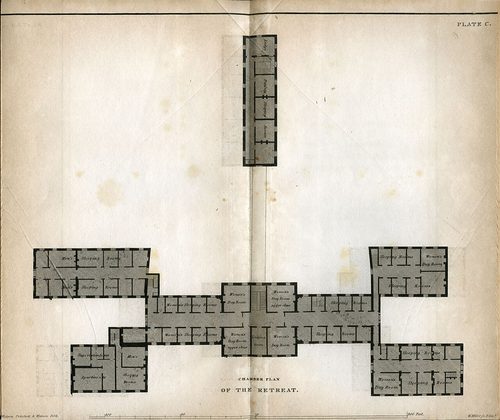
Moral treatment, developed at Bicêtre in Paris and the York Retreat in the 1790s, tried to cure madness through kindness, routine, work and self-control rather than chains and drugs. It shaped a century of asylums.
 1700s–1890s · Transformed
Restraint and the non-restraint movement
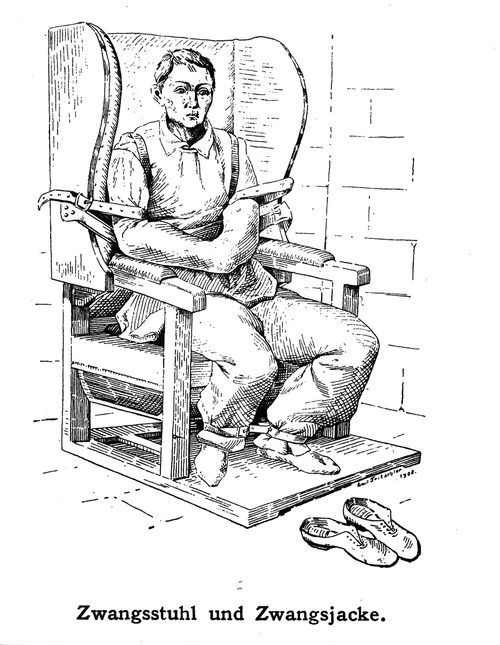
Chains, strait-waistcoats and restraint chairs were the ordinary equipment of asylums until the late 1830s, when Lincoln and then Hanwell abolished them. Britain made non-restraint a doctrine; much of the world did not.
 c. 100 CE–1980
Mania
Mania once meant madness itself: raving, sleepless, sometimes joyful. How the word narrowed from Aretaeus to Kraepelin, and how it became one pole of manic-depressive illness.
 c. 400 BCE–1900s
Melancholia
For two thousand years melancholia meant fear and sorrow without cause, blamed on black bile. How physicians from Aretaeus to Kraepelin defined it, and how it became 'depression'.
 1835–1910s
Moral insanity
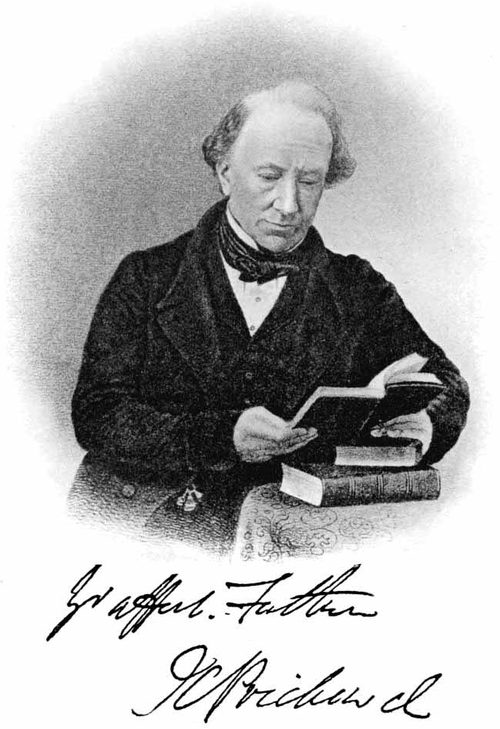
In 1835 J. C. Prichard named a madness of feeling and conduct with reason intact. Moral insanity reached the Old Bailey, provoked a backlash, and fed the later ideas of 'moral imbecility' and psychopathy.
Pages that mention Philippe Pinel
- Diagnosis Mania
- Diagnosis Melancholia
- Diagnosis Monomania
- Diagnosis Moral insanity
- Essay Can we diagnose the dead?
- Essay How words for madness changed
- Essay The rise and fall of the asylum
- Person Franco Basaglia
- Person Jean-Baptiste Pussin
- Person Jean-Martin Charcot
- Person Jean-Étienne Esquirol
- Person William Tuke
- Place Bethlem Hospital ("Bedlam")
- Place Bicêtre and the unchaining
- Place The Salpêtrière
- Place The York Retreat
- Theory The four humours
- Treatment Bloodletting, purging and emetics
- Treatment Moral treatment
- Treatment Restraint and the non-restraint movement