
Diagnosis · 1874–present
Catatonia
Named by Karl Kahlbaum in 1874 as a disease of tension and stupor, catatonia was absorbed into dementia praecox and schizophrenia, then rediscovered as a syndrome that crosses many illnesses.
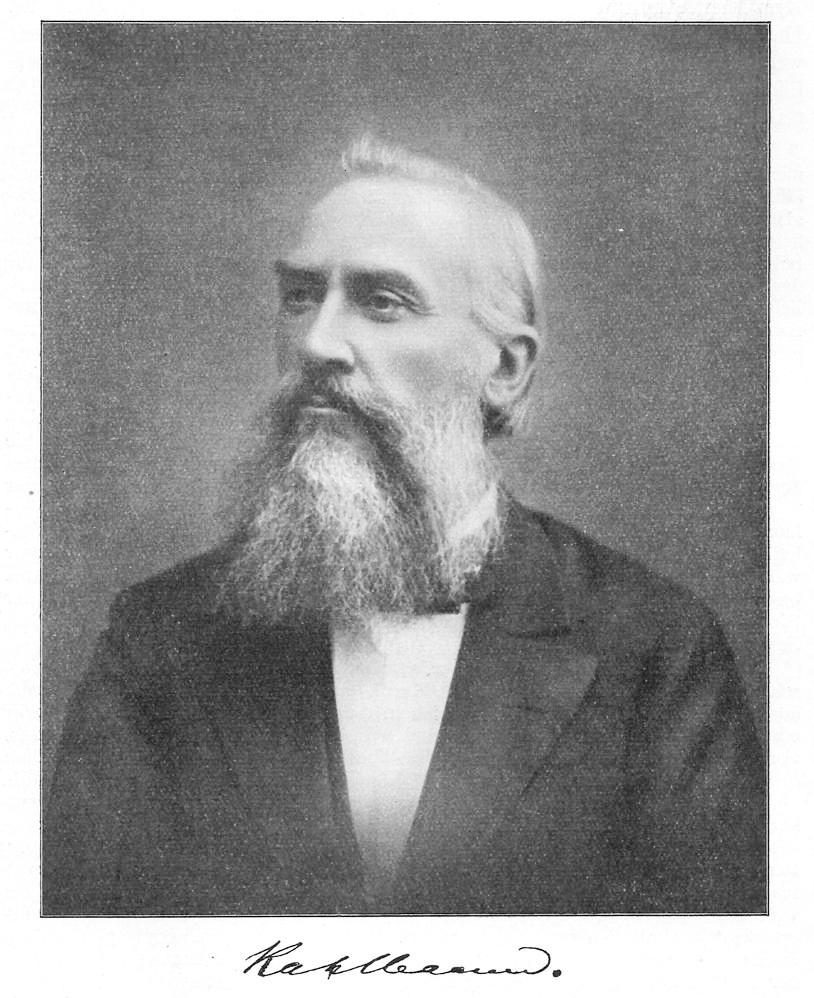
In September 1873 Karl Ludwig Kahlbaum, a psychiatrist at Görlitz in Prussian Silesia, signed the preface to a short book on a condition he called Spannungsirresein, "tension insanity", or catatonia1. Its patients held rigid postures, fell mute, or passed into states of excitement2,3. Kahlbaum believed he had found a new disease, as definite as any in the asylum. A century and a half later the word is still in use, but almost nobody now agrees with him about what it named.
Kahlbaum's disease
Kahlbaum built his book on 26 case histories and listed some 17 motor and psychomotor abnormalities, from rigidity and mutism to stereotyped movements and odd mannerisms3. His definition called catatonia (our translation) "a brain disease with a cyclically changing course, in which the mental symptoms present in turn the picture of melancholy, mania, stupor, confusion and finally dementia", one or more of which might be missing, and in which disturbances of the motor nervous system "with the general character of cramp" were essential symptoms1.
The model was explicit. Kahlbaum said his new disease closely resembled the condition then known as general progressive paralysis, general paralysis of the insane, which also ran through a changing series of mental states tied to a disorder of movement; the difference was that one showed paralysis and the other cramp1. He wanted psychiatry to classify illnesses by their whole course over time, not by the picture on admission3.
Folded into dementia praecox
Emil Kraepelin admired the description and dismantled the disease. From 1899 he treated catatonia as one form of dementia praecox, alongside hebephrenia and paranoid dementia3. In the English translation of his eighth edition he judged Kahlbaum's account "in many respects masterly", then explained why it was both too narrow and too wide:
we may regard the catatonia of Kahlbaum as in the main a form, though peculiar, of dementia praecox.2
Quotation checked against the 1919 text
Kraepelin saw catatonic signs everywhere in his patients. He described "automatic obedience" and "waxy flexibility", in which a patient keeps whatever position the body is placed in, "even although they may be very uncomfortable"2. He also recorded that Kahlbaum had found recovery in a third of cases, against his own figure of about 13 per cent2. At the end of his career he still listed catatonic forms among six subtypes of a disease whose cause, he wrote, remained obscure5.
A subtype of schizophrenia
Kraepelin's authority, and Eugen Bleuler's renaming of dementia praecox as schizophrenia, fixed catatonia as a kind of schizophrenia for most of the twentieth century. The first three editions of the American Diagnostic and Statistical Manual listed it only as a schizophrenia subtype, which later researchers believe led to cases in mood disorders and medical illness being missed or treated wrongly3.
Some observers did look beyond that frame. In 1934 the German psychiatrist Karl Stauder described 27 patients whose catatonia arose with fever and exhaustion and who, untreated, died within days; "lethal" or "malignant" catatonia remains a recognised emergency3.
Rediscovery
The turn came in the 1970s. In 1976 Richard Abrams and Michael Alan Taylor followed 55 patients with catatonia for 14 months: only about a quarter met criteria for schizophrenia, around two-thirds developed mood disorders, mostly mania, and nine had neurological conditions3. Reviews in the same years found catatonia in a wide range of medical illnesses. DSM-IV (1994) added catatonia due to a medical condition and catatonic features in mood disorders; DSM-5 (2013) stopped listing it as a subtype of schizophrenia altogether3. The World Health Organization's ICD-11 went further and gave catatonia its own diagnostic category, whatever condition accompanies it4.
Treatment changed with the concept. Modern reviews describe benzodiazepines as the usual first treatment and electroconvulsive therapy as the next option when they fail3. This is historical description, not advice.
What it maps to now, and why that is uncertain
Unlike most diagnoses on this site, catatonia survives under its own name, so the question is not what it became but who had it. Many patients called catatonic in 1900 would probably still be called catatonic today; the uncertainty lies in the underlying illness. Kahlbaum's own 26 cases, read closely, appear to include people with a variety of psychiatric and medical conditions3, and Kraepelin described his cases within the framework of dementia praecox. Infections, metabolic disorders, drug reactions and autoimmune encephalitis, all now known to cause catatonia, could not be tested for3,7. Any modern relabelling of individual historical patients is guesswork (Can we diagnose the dead?).
Key dates
- 1874 Karl Kahlbaum publishes Die Katatonie oder das Spannungsirresein in Berlin.
- 1899 Kraepelin makes catatonia one of the forms of dementia praecox.
- 1934 Karl Stauder describes 27 cases of 'lethal catatonia' with fever and exhaustion.
- 1976 Abrams and Taylor find that most of 55 catatonic patients have mood disorders, not schizophrenia.
- 2013 DSM-5 stops listing catatonia as a subtype of schizophrenia.
Sources
- Primary source Karl Kahlbaum, Die Katatonie oder das Spannungsirresein: eine klinische Form psychischer Krankheit, Berlin: August Hirschwald (1874).
- Primary source Emil Kraepelin, Dementia Praecox and Paraphrenia (trans. R. Mary Barclay), Edinburgh: E. & S. Livingstone (1919). Quotations checked against this text.
- Scholarship Levente Csihi, Gabor S. Ungvari, Stanley N. Caroff, Gábor Gazdag, First 150 years of catatonia: looking back at its complicated history and forward to the road ahead, World Journal of Psychiatry 14(5) (2024).
- Scholarship Jonathan P. Rogers, Jo Ellen Wilson, Mark A. Oldham, Catatonia in ICD-11, BMC Psychiatry 25 (2025).
- Scholarship Kenneth S. Kendler, Kraepelin's Final Views on Dementia Praecox, Schizophrenia Bulletin 47(3) (2021).
- Scholarship Max Fink, Edward Shorter, Michael Alan Taylor, Catatonia is not schizophrenia: Kraepelin's error and the need to recognize catatonia as an independent syndrome in medical nomenclature, Schizophrenia Bulletin 36(2) (2010).
- Wikipedia Catatonia, Wikipedia.
Cross-checked with Wikidata Q501571 and the English Wikipedia article.
Read next
 1890s–1950s
Dementia praecox
Emil Kraepelin's 'early dementia' of the 1890s: a psychosis of youth he thought led to lasting decline. Contested from the start, it was renamed schizophrenia and reshaped twentieth-century psychiatry.
 1820s–1940s
General paralysis of the insane
The deadliest diagnosis in the Victorian asylum: grandiose delusions, failing speech and paralysis, usually fatal within a few years. In 1913 it was proved to be a late form of syphilis.
 c. 400 BCE–1900s
Melancholia
For two thousand years melancholia meant fear and sorrow without cause, blamed on black bile. How physicians from Aretaeus to Kraepelin defined it, and how it became 'depression'.
 c. 100 CE–1980
Mania
Mania once meant madness itself: raving, sleepless, sometimes joyful. How the word narrowed from Aretaeus to Kraepelin, and how it became one pole of manic-depressive illness.
 1934–1950s · Abandoned
Metrazol convulsive therapy
In 1934 Ladislas Meduna began causing seizures with drugs to treat schizophrenia, first camphor and then cardiazol (Metrazol). Patients dreaded it, and within a decade electricity had replaced the drug.
 Essay · 6 min
Can we diagnose the dead?
Why this site never diagnoses historical figures, and hedges every modern equivalent it gives: the evidence was made for other purposes, diseases change their identities, and each age's diagnoses of the dead reflect its own medicine.