
Diagnosis · 1851–1860s
Drapetomania
A 'disease' invented in 1851 by the Louisiana physician Samuel Cartwright to explain why enslaved people ran away. It was medicalised racism in defence of slavery, and was mocked even in its own day.
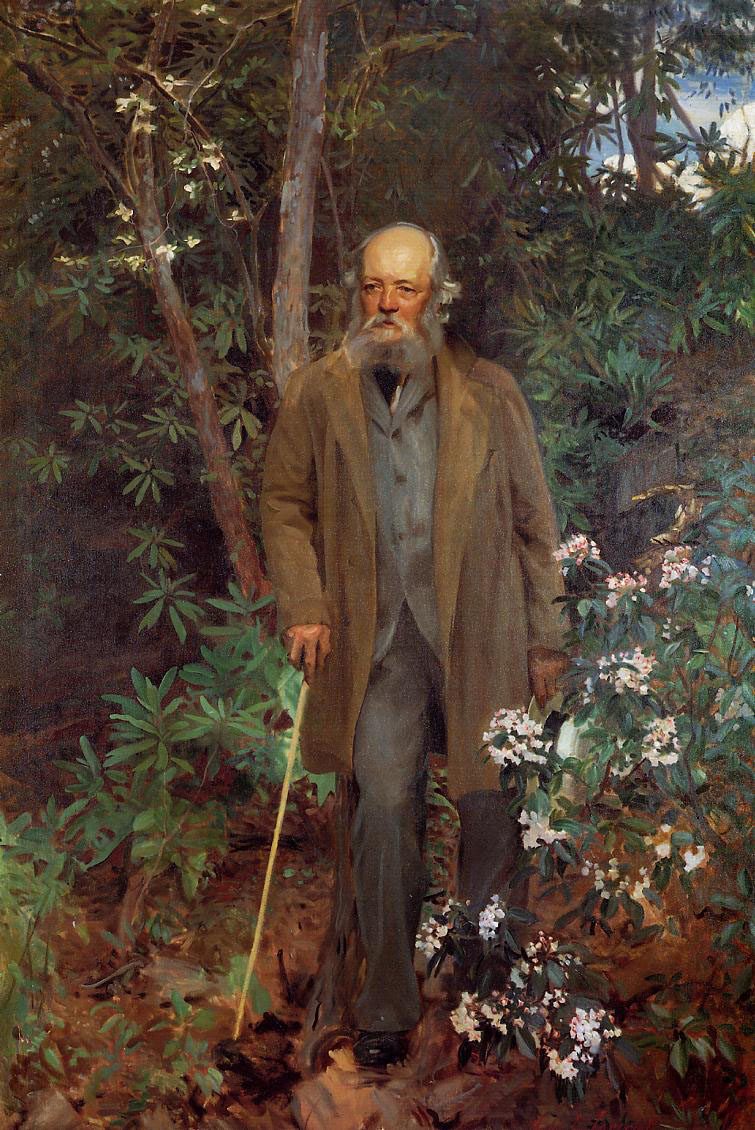
Drapetomania was never an illness. It was a word coined to make the wish for freedom look like a symptom. Its history belongs on a site about the troubled mind because it shows, unusually plainly, how the language of diagnosis can be used to serve power, and how some contemporaries saw through it at once.
A report to the Medical Association of Louisiana
On 12 March 1851 Samuel A. Cartwright, a physician in New Orleans, read a report to the annual meeting of the Medical Association of Louisiana, as chairman of a committee appointed to study the supposed diseases and "physical peculiarities" of the state's Black population. It was printed that May in the New Orleans Medical and Surgical Journal1. Cartwright, born in Virginia in 1793, had practised in Mississippi and Louisiana and was known for his work on cholera; he had married into, and lived within, the slave-holding planter class1,9. The most notorious parts of the report were reprinted in DeBow's Review, a Southern periodical8,9.
Among its "diseases" was one that Cartwright named from the Greek drapetes, a runaway slave, and mania, madness1,8. He opened with a sentence that gives the whole game away:
It is unknown to our medical authorities, although its diagnostic symptom, the absconding from service, is well known to our planters and overseers1
Quotation checked against the 1851 text
What Cartwright claimed
The "symptom" was escape itself. Cartwright argued that the cause of running away was "as much a disease of the mind as any other species of mental alienation, and much more curable"1. He blamed two kinds of enslaver: those who treated enslaved people too familiarly, "as equals", and those who were cruel, starved them or punished them in anger. He justified the arrangement he wanted with a reading of the Bible that cast Black people as destined for submission1.
His "prevention" was a programme of control: enslaved people were to be fed, clothed and housed in families, but forbidden to visit neighbours at night or receive visitors, and any who showed signs of raising themselves "to a level with their master or overseer" were to be punished until they submitted1. When they became "sulky and dissatisfied without cause", he reported, the experience of slaveholders favoured "whipping them out of it" as a preventive measure1. In the same report he invented a second condition, dysaesthesia aethiopica, which turned the resistance of forced labourers, damaged tools and neglected work, into a disease of mind and skin, and claimed it was commonest among free Black people1,9.
Medicine here did not merely reflect the racism of slavery; it supplied it with authority. Cartwright wrote as a scientist, in a professional journal, at a moment when slavery's defenders were under growing pressure from abolitionists5.
Contemporary critics
Cartwright was ridiculed in his own time. While Southern journals reprinted the report, in the North it was widely mocked8; in December 1854 the Buffalo Medical Journal, in New York State, printed an item headed "Dr. Cartwright on 'Drapetomania'"3. The most quoted critic was the landscape architect Frederick Law Olmsted, who travelled through the slave states in 1853 and 18542,8. Writing of enslaved people who escaped even when, by their owners' account, they were well treated, he offered a different explanation:
I should suspect it to be, if it cannot be otherwise accounted for, the natural instinct of freedom in a man2
Quotation checked against the 1856 text
Olmsted then summarised Cartwright's "disease" and his whipping cure with heavy irony2. Later in the book he noted that colonial Virginia newspapers had been full of advertisements for runaway white convict servants, and remarked that drapetomania would seem to have been "more prevalent among the whites" in those days2. He also observed that physicians called the longing for home nostalgia, and that Cartwright's advice to keep enslaved people "comfortable, satisfied and happy" resembled its treatment2.
An afterlife in the dictionaries
The word outlived slavery, emptied of its original meaning. The 1914 third edition of Stedman's Medical Dictionary, a standard American reference, still listed it, defined as "vagabondage, dromomania; an uncontrollable or insane impulsion to wander"4,8. In the twentieth and twenty-first centuries "drapetomania" became shorthand among critics of medicine for diagnosis used as social control. Physicians writing in 2022 used it in the title of an article on scientific racism in modern research and teaching6, and the American Psychiatric Association Foundation describes Cartwright's theory as a false pathology that was never scientifically proven7.
What it maps to now
Most pages on this site ask what an old diagnosis might correspond to today, and why the answer is uncertain. Here the answer is not uncertain. Drapetomania described no illness; the behaviour it named was, in Willoughby's words, a reasoned response to slavery5. What it maps to is a pattern rather than a disorder: the recasting of resistance, grief or protest by an oppressed group as pathology. That pattern has recurred, which is why historians of psychiatry keep returning to Cartwright's "disease" (How words for madness changed, Who got locked up, and why).
Key dates
- 12 March 1851 Samuel Cartwright reads his report on the supposed diseases of enslaved people to the Medical Association of Louisiana.
- May 1851 The report, naming 'drapetomania', is printed in the New Orleans Medical and Surgical Journal.
- December 1854 The Buffalo Medical Journal prints an item headed 'Dr. Cartwright on Drapetomania'.
- 1856 Frederick Law Olmsted ridicules drapetomania in A Journey in the Seaboard Slave States.
- 1914 Stedman's Medical Dictionary still defines drapetomania, now simply as an impulse to wander.
Sources
- Primary source Samuel A. Cartwright, Report on the Diseases and Physical Peculiarities of the Negro Race, New Orleans Medical and Surgical Journal 7 (May 1851), pp. 691–715 (1851-05). Quotations checked against this text.
- Primary source Frederick Law Olmsted, A Journey in the Seaboard Slave States, with Remarks on their Economy, New York: Dix & Edwards (1856). Quotations checked against this text.
- Primary source Dr. Cartwright on 'Drapetomania' (Buffalo Medical Journal and Monthly Review 10(7), pp. 438–442), PubMed Central (bibliographic record) (1854-12).
- Primary source Thomas Lathrop Stedman, Stedman's Medical Dictionary (3rd edition), New York: William Wood (1914).
- Scholarship Christopher D. E. Willoughby, Slavery and Disability Discourse, Black Perspectives (African American Intellectual History Society) (2021-09-16).
- Scholarship Ijeoma Nnodim Opara, Latonya Riddle-Jones, Nakia Allen, Modern Day Drapetomania: Calling Out Scientific Racism, Journal of General Internal Medicine 37(1) (2022).
- Museum or archive American Psychiatric Association Foundation, Dr. Samuel Cartwright (Central State Hospital exhibit), APA Foundation Library & Archives.
- Wikipedia Drapetomania, Wikipedia.
- Wikipedia Samuel A. Cartwright, Wikipedia.
Cross-checked with Wikidata Q2351339 and the English Wikipedia article.
Read next
 1688–1918
Nostalgia
Coined in 1688 for Swiss soldiers sick with longing for home, nostalgia was a diagnosis that army doctors believed could kill. How it rose, spread through armies, and became a mere feeling.
Essay · 6 min
How words for madness changed
From the Latin insania and furor to 'lunatic', 'alienist', 'mental hospital' and 'schizophrenia': why the words for madness kept changing, and why the change usually came from law and institutions rather than discovery.
 Essay · 7 min
Who got locked up, and why
Asylum populations were never a simple sample of the mentally ill. Poverty, family, the Poor Law, sex, migration, race, age and bodily disease all decided who was confined, and historians still argue over how much each counted.
 1883–1970s
Eugenics and psychiatry
Eugenics promised to reduce mental illness by preventing 'unfit' people from having children. How psychiatrists helped build sterilisation laws in the United States and Europe, Buck v. Bell, and the road to the Nazi killing of patients.
 Essay · 6 min
Can we diagnose the dead?
Why this site never diagnoses historical figures, and hedges every modern equivalent it gives: the evidence was made for other purposes, diseases change their identities, and each age's diagnoses of the dead reflect its own medicine.