
Theory · 1883–1970s
Eugenics and psychiatry
Eugenics promised to reduce mental illness by preventing 'unfit' people from having children. How psychiatrists helped build sterilisation laws in the United States and Europe, Buck v. Bell, and the road to the Nazi killing of patients.
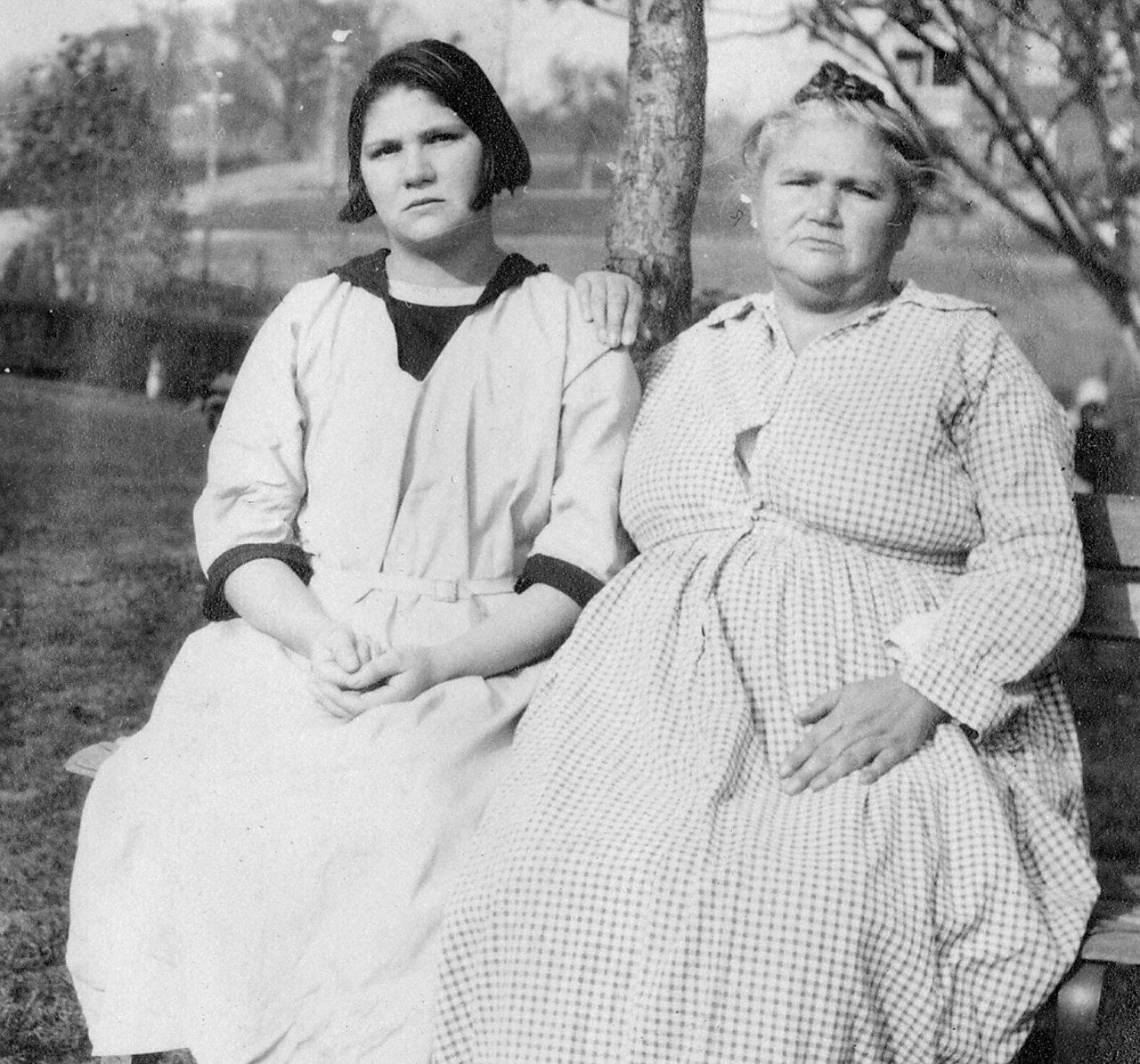
On 2 May 1927 the Supreme Court of the United States decided, by eight votes to one, that the State of Virginia could sterilise Carrie Buck, a young woman held at the State Colony for Epileptics and Feeble Minded in Lynchburg, without her consent. Writing for the majority, Justice Oliver Wendell Holmes compared the operation to compulsory vaccination and ended with a sentence that became notorious2:
It is better for all the world, if instead of waiting to execute degenerate offspring for crime, or to let them starve for their imbecility, society can prevent those who are manifestly unfit from continuing their kind. The principle that sustains compulsory vaccination is broad enough to cover cutting the Fallopian tubes. Three generations of imbeciles are enough.2
Quotation checked against the 1927 text
The case had been arranged by the colony's superintendent, Albert Priddy, as a test of a sterilisation law he had campaigned for and had helped to have drafted. It is the best-known episode in a movement in which psychiatrists and institution doctors were among the most committed participants3.
From degeneration to eugenics
The word "eugenics" was coined by the English polymath Francis Galton in 1883, for "the science of improving stock", from a Greek word meaning "good in stock, hereditarily endowed with noble qualities"1. Galton was mainly interested in encouraging the able to have more children. In psychiatry the idea met an older pessimism. Degeneration theory had taught asylum doctors to see insanity as the visible sign of hereditary decline, and the asylums, crowded with chronic patients, seemed to confirm it4. Eugenics offered a remedy: if mental illness was inherited, it could be reduced by stopping the affected from reproducing.
Psychiatrists supplied much of the supposed evidence. In Munich, Ernst Rüdin, a Swiss-born pupil of Eugen Bleuler at the Burghölzli and later of Emil Kraepelin, published in 1916 a large study of the families of patients with dementia praecox, hoping to show that it followed Mendel's laws4,8. His figures did not fit a simple recessive gene, but he kept his belief in heredity and became the leading figure in German psychiatric genetics, director at the German Institute for Psychiatric Research, and an advocate of sterilisation from as early as 19034,8. In the United States, eugenic family studies claimed to trace insanity, "feeble-mindedness" and crime through generations, and were used to justify sterilisation and marriage laws4.
Sterilisation laws
Indiana passed the first American compulsory sterilisation law in 1907; Washington, California and Connecticut followed in 19097. American laws generally applied to people held in psychiatric hospitals, institutions for people with intellectual disabilities and epilepsy, and prisons11. Under Virginia's law it was the superintendent who decided that an inmate should be sterilised and petitioned for the operation2. Before 1927 sterilisation rates were low everywhere except California7.
Carrie Buck's case shows how such decisions were made. Her foster family had her committed in 1924 after she became pregnant at seventeen; the historian Paul Lombardo later showed that the pregnancy resulted from a sexual assault by a relative of that family3. The colony's experts testified that she, her mother and her baby daughter Vivian were all "feeble-minded"; her court-appointed lawyer was an ally of Priddy's and called no witnesses3. Lombardo later found that Vivian, who died in childhood in 1932, had been on her school's honour roll3,10. Carrie Buck was sterilised on 19 October 1927, and Virginia sterilised about 8,300 more people before its law was repealed in 19743. In all, more than 65,000 people were sterilised under compulsory programmes in 33 American states7.
Other countries passed similar laws, among them Sweden in 1934, whose programme was formally abolished only in 19767. Britain debated the question; the Brock Report of 1934 recommended sterilisation of some disabled people, but its proposals never became law7.
Germany: from sterilisation to killing
The German Law for the Prevention of Hereditarily Diseased Offspring, enacted on 14 July 1933, came into force in January 1934. Its list of supposedly hereditary diseases began with "congenital mental deficiency", schizophrenia, manic-depressive insanity and "hereditary epilepsy", and it applied to the whole population, not only to people in institutions. Cases were decided by "Genetic Health Courts" of a judge and two doctors, and physicians could be fined for failing to report patients11. Rüdin co-wrote the official commentary on the law11. More than 400,000 people were sterilised7,11.
The next step had been argued for in 1920 by the psychiatrist Alfred Hoche and the lawyer Karl Binding, whose book called for permitting the destruction of "life unworthy of life"8,9. In 1939 the regime began killing disabled children, and in the autumn Hitler signed a secret authorisation, backdated to 1 September 1939, for the killing of adult patients6,9. The programme, called T4 after its Berlin address, Tiergartenstraße 4, was run largely by psychiatrists: professors served as assessors who marked patients' registration forms for death, Werner Heyde and then Paul Nitsche directed its medical side, and patients were transferred from their asylums to six killing centres, among them Hadamar5,6,9. By August 1941, when public unease, including protests by Bishop Clemens von Galen, led Hitler to halt the gassing, 70,273 people had been killed in the centres6,9. Killing continued in hospitals until 1945 by starvation and lethal medication6,9. The staff and methods of T4 were afterwards transferred to the extermination camps in occupied Poland6.
Afterwards
Genetics undermined eugenics as surely as history did. As Strous notes, even on the eugenicists' own assumptions, sterilising people with a mental illness could never much reduce its frequency, because the genes involved are carried mostly by people who show no sign of the illness5. In the United States the Supreme Court's decision in Skinner v. Oklahoma (1942) weakened Buck v. Bell without overturning it, and sterilisation laws were repealed state by state; Lombardo, who interviewed Carrie Buck shortly before her death in 1983, concluded that there was little to suggest that she or her daughter had any intellectual disability3. Some T4 doctors were tried and executed after the war, Nitsche among them; Heyde lived under a false name for years and died by suicide before his trial in 19649. In Germany the full reckoning of the psychiatric profession with its role came only decades later.
Key dates
- 1883 Francis Galton coins the word 'eugenics' in Inquiries into Human Faculty.
- 1907 Indiana passes the first compulsory sterilisation law in the United States.
- 1916 Ernst Rüdin publishes his family study of dementia praecox, founding psychiatric genetics in Munich.
- 2 May 1927 The US Supreme Court upholds Virginia's sterilisation law in Buck v. Bell; Carrie Buck is sterilised that October.
- 14 July 1933 Germany enacts the Law for the Prevention of Hereditarily Diseased Offspring; more than 400,000 people are sterilised under it.
- 1 September 1939 Hitler's secret authorisation of the 'euthanasia' programme is backdated to this day.
- August 1941 The central gassing programme (T4) is halted after killing 70,273 patients; killings in institutions continue by other means.
Sources
- Primary source Francis Galton, Inquiries into Human Faculty and Its Development, London: Macmillan (1883). Quotations checked against this text.
- Primary source Oliver Wendell Holmes Jr., Buck v. Bell, 274 U.S. 200 (1927), opinion of the Court, Supreme Court of the United States (Wikisource) (1927-05-02). Quotations checked against this text.
- Reference Nathalie Antonios and Christina Raup, Buck v. Bell (1927), Embryo Project Encyclopedia, Arizona State University (2012).
- Scholarship Sarah Chaney, Sarah Marks and Rebecca Wynter, 'Almost nothing is firmly established': a history of heredity and genetics in mental health science, Wellcome Open Research 9: 23 (2024).
- Scholarship Rael D. Strous, Psychiatry during the Nazi era: ethical lessons for the modern professional, Annals of General Psychiatry 6: 8 (2007).
- Museum or archive Nazi 'Euthanasia' Program, United States Holocaust Memorial Museum, Holocaust Encyclopedia (2026).
- Wikipedia Compulsory sterilization, Wikipedia (2026).
- Wikipedia Ernst Rüdin, Wikipedia (2026).
- Wikipedia Aktion T4, Wikipedia (2026).
- Wikipedia Buck v. Bell, Wikipedia (2026).
- Wikipedia Law for the Prevention of Hereditarily Diseased Offspring, Wikipedia (2026).
Cross-checked with Wikidata Q170480 and the English Wikipedia article.
Read next
 1857–1914
Degeneration theory
From the 1850s many psychiatrists believed that madness was the sign of a family in hereditary decline, worsening with each generation. How Morel's theory spread, what it explained for asylum doctors, and where it led.
 1890s–1950s
Dementia praecox
Emil Kraepelin's 'early dementia' of the 1890s: a psychosis of youth he thought led to lasting decline. Contested from the start, it was renamed schizophrenia and reshaped twentieth-century psychiatry.
 United States · 1947
Willowbrook State School
A New York state institution on Staten Island for people with intellectual disabilities, 1947–1987. Overcrowding, neglect and hepatitis experiments made it a national scandal and a turning point for disability rights.
 Switzerland · 1870
The Burghölzli, Zurich
Zurich's cantonal asylum, opened in 1870 and now the Psychiatric University Hospital. Under Forel and Bleuler it led European psychiatry: schizophrenia was named there and Jung tested Freud's ideas on patients.
 1845–1990
The biological turn
From Griesinger's claim in the 1840s that mental illness is brain disease, through the microscope, the shock therapies and the drug revolution, to DSM-III in 1980: how psychiatry repeatedly turned to the body.
 Essay · 7 min
Who got locked up, and why
Asylum populations were never a simple sample of the mentally ill. Poverty, family, the Poor Law, sex, migration, race, age and bodily disease all decided who was confined, and historians still argue over how much each counted.
Pages that mention Eugenics and psychiatry
- Diagnosis Dementia praecox
- Diagnosis Drapetomania
- Diagnosis Moral insanity
- Essay Who got locked up, and why
- Person Charlotte Perkins Gilman
- Person Emil Kraepelin
- Person Eugen Bleuler
- Person Julius Wagner-Jauregg
- Person Rosemary Kennedy
- Place Hadamar and the Nazi killing of patients
- Place The Burghölzli, Zurich
- Place Willowbrook State School
- Theory Degeneration theory
- Theory The biological turn