
Diagnosis · 1835–1910s
Moral insanity
In 1835 J. C. Prichard named a madness of feeling and conduct with reason intact. Moral insanity reached the Old Bailey, provoked a backlash, and fed the later ideas of 'moral imbecility' and psychopathy.
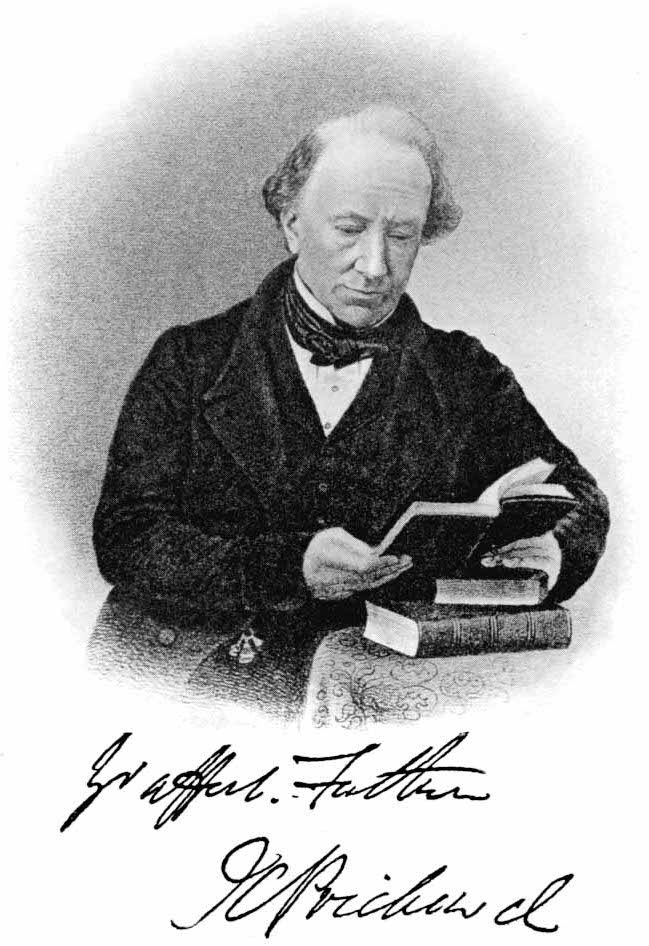
Most people in the early nineteenth century, including most judges, assumed that madness showed itself in the intellect: in delusions, raving, or an inability to reason. The idea that someone could argue coherently, run their affairs and still be mentally disordered in their feelings and conduct was new, unsettling, and for a while extremely influential. Its English name was "moral insanity".
Madness without delusion
The starting point was Philippe Pinel. Working at Bicêtre in the 1790s, he had expected, following John Locke, that madness always involved disordered ideas, and was surprised by what he found2:
I was not a little surprized to find many maniacs who at no period gave evidence of any lesion of the understanding, but who were under the dominion of instinctive and abstract fury, as if the active faculties alone sustained the injury.2
Quotation checked against the 1806 text
Pinel called this manie sans délire, mania without delirium, and his examples were mostly of violent rage2,3. Other writers, including the American physician Benjamin Rush, had written loosely of derangements of the moral sense, but it was the Bristol physician James Cowles Prichard (1786–1848) who made it a formal diagnosis4,6. He sketched the idea in an article for the Cyclopaedia of Practical Medicine in 1833 and set it out in A Treatise on Insanity (1835), which he dedicated to Esquirol1,3:
Moral Insanity, or madness consisting in a morbid perversion of the natural feelings, affections, inclinations, temper, habits, moral dispositions, and natural impulses, without any remarkable disorder or defect of the intellect or knowing and reasoning faculties, and particularly without any insane illusion or hallucination.1
Quotation checked against the 1835 text
"Moral" here meant something close to "emotional" or "of the character", not simply "ethical", a double meaning that confused readers from the start4. Prichard widened Pinel's idea far beyond violence. His moral insanity could be quiet:
There are many individuals living at large, and not entirely separated from society, who are affected in a certain degree with this modification of insanity. They are reputed persons of a singular, wayward, and eccentric character.1
Quotation checked against the 1835 text
His cases included people whose temper, attachments and habits had changed for no evident reason, some of whom later developed a fuller insanity1. He was cautious about using the diagnosis to confine people against their will4.
In the dock
The diagnosis did its most visible work in court. The traditional test, inherited from the seventeenth-century jurist Matthew Hale, required that a defendant pleading insanity be "totally deprived of the use of reason", something any juror could see3. Moral insanity, like the French monomania, said that hidden derangement could coexist with planning and good sense, and that only a specialist could detect it3.
The historian David Jones traces its high point to two trials at the Old Bailey. In 1840 eighteen-year-old Edward Oxford fired pistols at Queen Victoria; John Conolly, interviewing him in Newgate, described "a singular insensibility as regards the affections" and "an apparent incapacity to comprehend moral obligations", and the jury returned the special verdict "not guilty, being insane"3. In 1843 Daniel M'Naghten, who had shot and killed the Prime Minister's secretary, Edward Drummond, was acquitted after similar evidence3. The public reaction was fierce; Queen Victoria wrote to Robert Peel in protest, and a panel of judges set out the restrictive "M'Naghten rules", which made knowledge of right and wrong the test3.
The decisive blow came in 1863. George Victor Townley, tried at Derby for killing his former fiancée, was defended by the specialist Forbes Winslow, who testified that his "moral sense" was "more vitiated than in any man I ever saw". Townley was convicted, then reprieved by the Home Secretary and sent to Bethlem in January 1864, provoking an outcry against doctors who appeared to excuse crime3. Jones argues that the profession then retreated from claims to read hidden states of mind and turned instead to inherited, biological explanations of criminality, in the language of degeneration3.
From moral insanity to moral imbecility
The diagnosis remained in use in Britain and America through the second half of the century, but its meaning shifted. Henry Maudsley treated it as a failure of moral sense, often inherited; Daniel Hack Tuke proposed "inhibitory insanity" for a weakening of the will4. In Germany, Julius Ludwig August Koch proposed in 1891 to replace it with "psychopathic inferiority", a congenital condition described, in principle, without moral judgement, the root of the later word "psychopath"4.
In England the idea passed into law in a new form. The Mental Deficiency Act of 1913 created four categories of "mental defectives", one of them "moral imbeciles": people displaying mental weakness combined with "strong vicious or criminal propensities" on whom punishment had little deterrent effect5. The Act allowed long-term detention in institutions, part of the wider history of eugenics and psychiatry; in the late 1940s the National Council for Civil Liberties found about 50,000 people held under it, some for decades. It was repealed in England and Wales by the Mental Health Act 19595.
What it maps to now, and why that is uncertain
Read today, some of Prichard's case histories, in which a person's temper and conduct changed suddenly, resemble descriptions of mood disorders, while the later career of the term, through "psychopathic inferiority" and "character disorders", leads towards what psychiatry now calls personality disorders1,4. No historian has shown a consistent match, and Whitlock's doubts apply in both directions4. Prichard's category was defined by what was absent, the lack of delusion, rather than by a positive picture, and it took in eccentricity, sudden changes of character and violent outbursts alike1,4. Its later history matters as much as its origin. Through moral imbecility and the 1913 Act, a diagnosis meant to recognise a hidden form of suffering became a legal means of detaining people judged socially deviant, which is a reason to read every modern claim of descent from it with care5.
Key dates
- 1801 Pinel describes 'manie sans délire', madness without any lesion of the understanding.
- 1835 James Cowles Prichard defines 'moral insanity' in A Treatise on Insanity.
- July 1840 Edward Oxford is acquitted at the Old Bailey as insane; John Conolly's evidence draws on Prichard's concept.
- December 1863 George Victor Townley is convicted at Derby despite a defence of moral insanity; his reprieve causes a public outcry.
- 1891 J. L. A. Koch proposes 'psychopathic inferiority' in place of moral insanity.
- 15 August 1913 The Mental Deficiency Act creates the legal category of 'moral imbeciles' in England and Wales.
Sources
- Primary source James Cowles Prichard, A Treatise on Insanity and Other Disorders Affecting the Mind, London: Sherwood, Gilbert, and Piper (1835). Quotations checked against this text.
- Primary source Philippe Pinel, A Treatise on Insanity (trans. D. D. Davis), Sheffield: W. Todd (1806). Quotations checked against this text.
- Scholarship David W. Jones, Moral insanity and psychological disorder: the hybrid roots of psychiatry, History of Psychiatry 28(3) (2017).
- Wikipedia Moral insanity, Wikipedia (2026).
- Wikipedia Mental Deficiency Act 1913, Wikipedia (2026).
- Wikipedia James Cowles Prichard, Wikipedia (2026).
Cross-checked with Wikidata Q955922 and the English Wikipedia article.
Read next
 1810s–1870s
Monomania
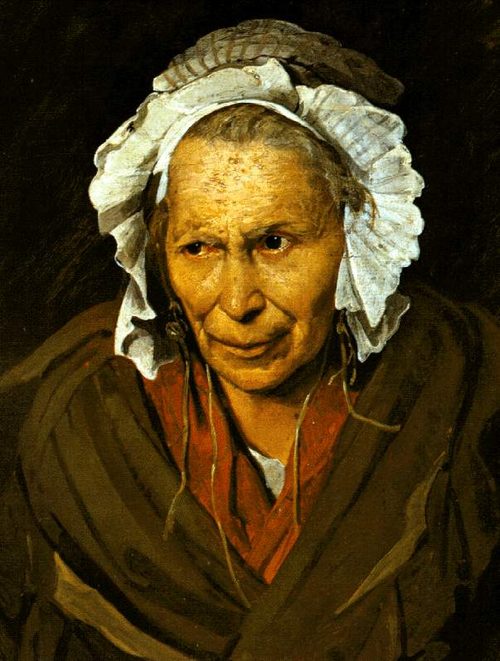
Esquirol's monomania described a mind sound in every way but one: a single fixed idea or irresistible impulse. It made alienists expert witnesses, then fell apart under criticism after 1854.
 c. 100 CE–1980
Mania
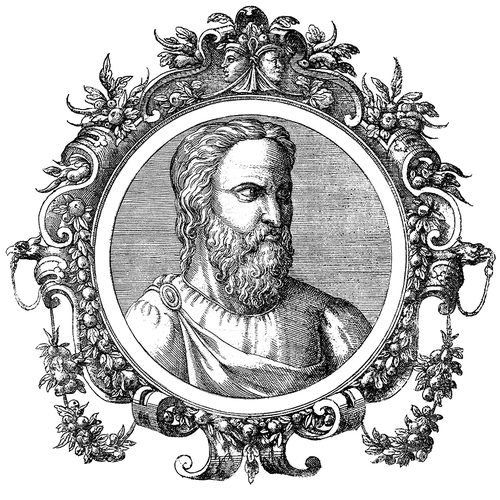
Mania once meant madness itself: raving, sleepless, sometimes joyful. How the word narrowed from Aretaeus to Kraepelin, and how it became one pole of manic-depressive illness.
 1857–1914
Degeneration theory
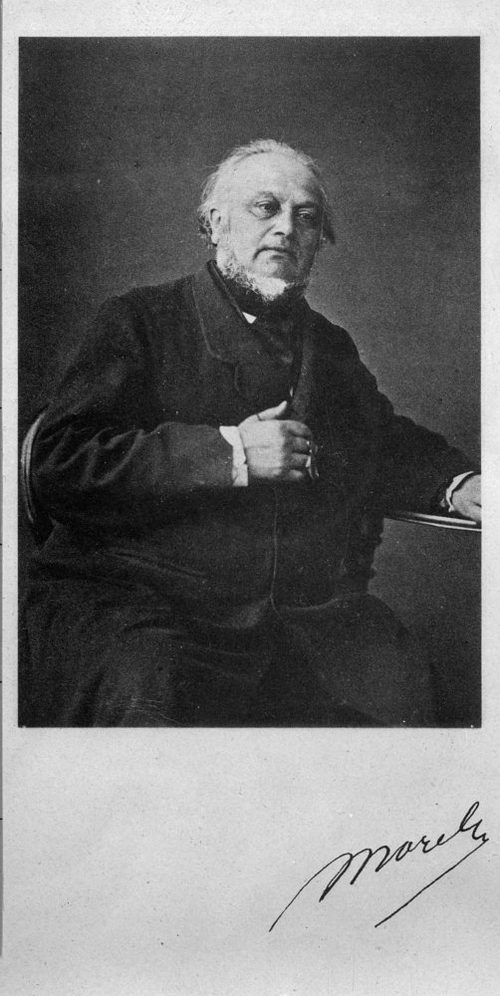
From the 1850s many psychiatrists believed that madness was the sign of a family in hereditary decline, worsening with each generation. How Morel's theory spread, what it explained for asylum doctors, and where it led.
 1883–1970s
Eugenics and psychiatry
Eugenics promised to reduce mental illness by preventing 'unfit' people from having children. How psychiatrists helped build sterilisation laws in the United States and Europe, Buck v. Bell, and the road to the Nazi killing of patients.
Essay · 6 min
How words for madness changed
From the Latin insania and furor to 'lunatic', 'alienist', 'mental hospital' and 'schizophrenia': why the words for madness kept changing, and why the change usually came from law and institutions rather than discovery.