
Diagnosis · 1688–1918
Nostalgia
Coined in 1688 for Swiss soldiers sick with longing for home, nostalgia was a diagnosis that army doctors believed could kill. How it rose, spread through armies, and became a mere feeling.
The word was invented by a student. In 1688 Johannes Hofer, a medical student in his late teens at the University of Basel, needed a learned name for a condition known in German as Heimweh, homesickness. He joined two Greek words, nostos (return home) and algos (pain), and printed his dissertation as De nostalgia oder Heimwehe3,10. For more than two centuries afterwards, physicians treated nostalgia not as a mood but as a disease, and army doctors recorded it as a cause of death.
A Swiss disease
Hofer described people living far from home who suffered high fever, an irregular heartbeat, weakness, stomach pains and melancholy; he located the cause in the mind, in obsessive thinking about one's homeland, and he believed the illness could kill4,10. The best remedy, he thought, was simply to go home5. He saw it above all in the mercenaries whom the Swiss cantons supplied to the armies of Europe, and the condition was soon called mal du Suisse, the Swiss illness4,10.
Other physicians looked for bodily causes. The Zurich naturalist Johann Jakob Scheuchzer suggested in the early eighteenth century that mountain people suffered when they came down to the heavier air of the lowlands4. In 1710 the Basel physician Theodor Zwinger blamed a herdsmen's song, the Kuhreihen (in French, ranz des vaches), whose sound reduced Swiss soldiers serving abroad to prostration and drove some to desert4,9.
Armies on the march
By the late eighteenth century nostalgia had spread from Swiss medicine into the medical writing of France, Britain and their armies, where heavy losses were blamed on it6,11. Doctors disagreed about treatment. Some saw it as a moral weakness bred by idleness and prescribed occupation; one French physician in 1793 recommended frightening and punishing the patient; the English physician William Falconer in 1788 suggested Peruvian bark with opiates, and admitted that in severe cases only a return home would answer6.
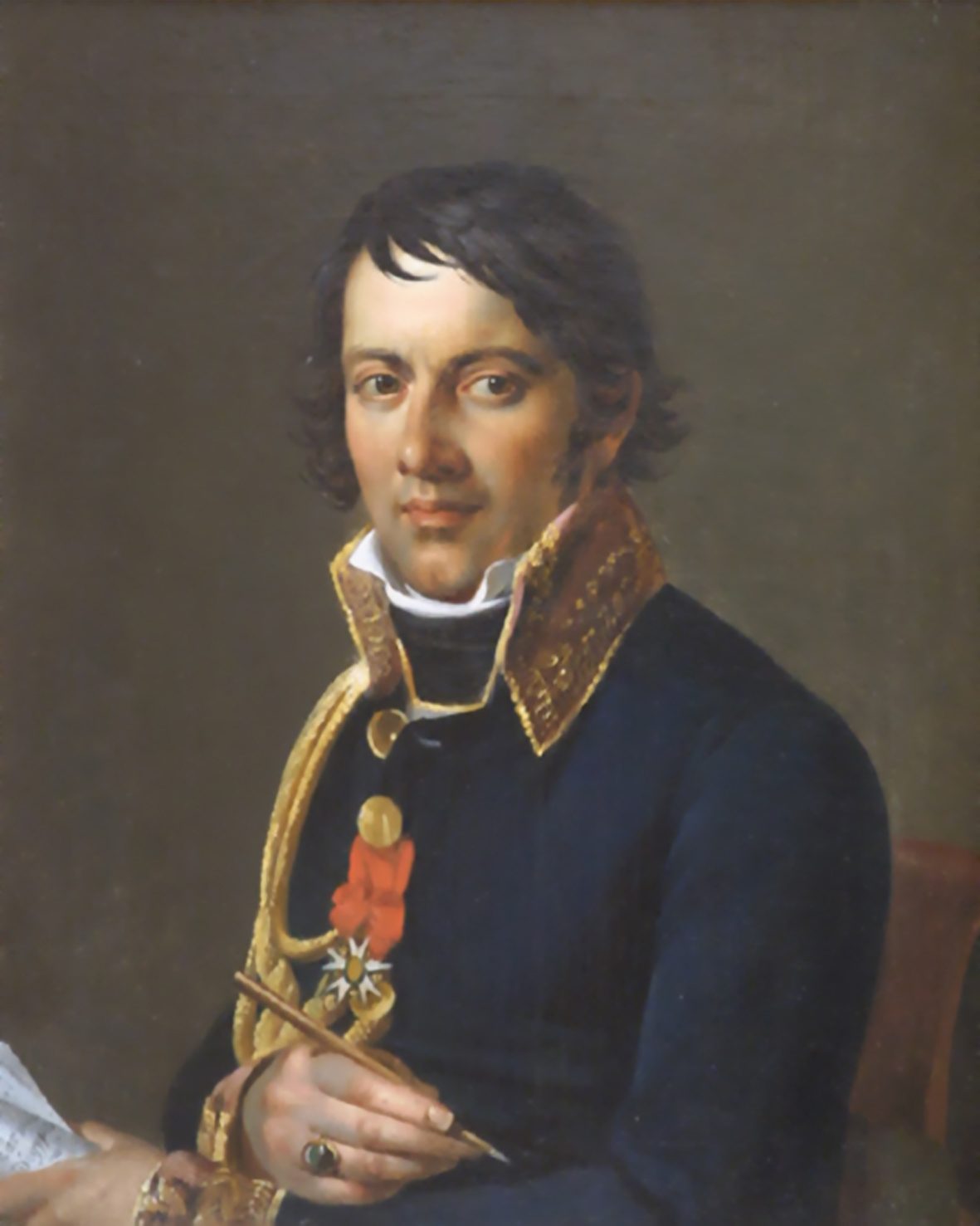
Dominique-Jean Larrey, "first surgeon of the Grand Army" in Napoleon's campaigns of 1812–14, as his title page put it, wrote about nostalgia from long experience of conscripts far from France. He believed it began as a "painful inquietude" in the brain and could progress to organic damage, and he stressed prevention: varied occupations, regular hours, exercise and useful instruction1.
Warlike music, during their repasts, or at their hours of recreation, will contribute much to elevate the spirits of the soldier, and to keep away those gloomy reflections which frequently produce the effects which have been traced above.1
Quotation checked against the 1823 text
The American Civil War
Nostalgia was counted on a large scale in the American Civil War. The Union army's medical history, published in 1888, recorded 5,213 cases and 58 deaths among white soldiers, and 334 cases and 16 deaths among Black soldiers; no comparable figures survive for the Confederacy5. Union surgeon J. Theodore Calhoun argued in 1864 that it was rarer in regiments often in battle and commoner among country recruits than city ones, and blamed inactivity in camp6. Hospitalisation was usual; discharge was reserved for severe cases, and furlough home was the most hoped-for cure5.
Who was thought capable of the disease was itself a political question. In eighteenth-century North America, white physicians widely assumed that enslaved Africans lacked the attachment to home that nostalgia required. At sea, the naval physician Thomas Trotter described a "scorbutic nostalgia", and some deaths of captive Africans were blamed on longing that worsened other illness; in the Civil War, some white doctors claimed that Black soldiers were more prone to nostalgia than white ones. The Oskar Diethelm Library's exhibition on nostalgia argues that these shifting claims served slavery and racial hierarchy (see also drapetomania)8.
Absorbed and forgotten
By the end of the century nostalgia was losing its independence. In Daniel Hack Tuke's Dictionary of Psychological Medicine (1892), the German psychiatrist Albrecht Erlenmeyer still insisted on its reality, though he began by calling it a kind of melancholia:
Nostalgia always represents a combination of psychical and bodily disturbances, and for this reason it must always be defined as disease, and may become the object of medical treatment.2
Quotation checked against the 1892 text
Silas Weir Mitchell, who had served as a Union army doctor, looked back in 1913 on the nostalgia cases of the war as "serious additions to the peril of wounds and disease", a malady "incurable except by discharge"7. By then the diagnosis had all but gone. American military records of the First World War do not use it, although most soldiers were conscripts, and the distress of men at the front was described instead as shell shock7. From the 1920s "nostalgia" drifted to its modern sense: a fond, usually mild, longing for the past7,11.
What it maps to now, and why that is uncertain
Some historians and psychiatrists suggest that soldiers diagnosed with nostalgia would today be described as having depression, anxiety, or an adjustment disorder brought on by separation and hardship5,10. The comparison is uncertain. The old diagnosis assumed a direct path from longing to bodily illness, and its records rarely separate despair from the infections, poor food and exhaustion that killed far more soldiers; Trotter's "scorbutic nostalgia" was bound up with scurvy8. The figures of the Civil War record what army surgeons chose to write down, under a heading that both explained and excused a death. What does carry over is the observation at the centre of Hofer's thesis: that separation from home can make people seriously ill.
Key dates
- 1688 Johannes Hofer's Basel dissertation, De nostalgia oder Heimwehe, names the disease.
- 1710 Theodor Zwinger links Swiss soldiers' homesickness to the herdsmen's song, the Kuhreihen.
- 1768 Rousseau's Dictionnaire de musique repeats the story that the Kuhreihen was banned in Swiss regiments on pain of death.
- 1823 Larrey's Surgical Essays, in English translation, discusses 'the seat and effects of nostalgia' in Napoleon's armies.
- 1888 The Union army's Medical and Surgical History records 5,213 cases of nostalgia among white troops and 334 among Black troops.
Sources
- Primary source Dominique-Jean Larrey, Surgical Essays (trans. John Revere), Baltimore: N. G. Maxwell (1823). Quotations checked against this text.
- Primary source Albrecht Erlenmeyer, Nostalgia, in A Dictionary of Psychological Medicine, vol. 2, ed. Daniel Hack Tuke, London: J. & A. Churchill (1892). Quotations checked against this text.
- Museum or archive Johannes Hofer, Dissertatio medica de nostalgia, oder Heimwehe (catalogue record), Wellcome Collection (1688).
- Museum or archive Alexander Rechsteiner, Homesick for the mountains, Swiss National Museum blog (2019-09-18).
- Scholarship David Anderson, The soldiers who died of homesickness, The Conversation (2016-09-30).
- Museum or archive Nostalgia: curing nostalgia (exhibition), Oskar Diethelm Library, Weill Cornell Medicine.
- Museum or archive Nostalgia: nostalgia's exit (exhibition), Oskar Diethelm Library, Weill Cornell Medicine.
- Museum or archive Nostalgia: nostalgia and its absence in the Americas (exhibition), Oskar Diethelm Library, Weill Cornell Medicine.
- Wikipedia Ranz des Vaches, Wikipedia (2026).
- Wikipedia Nostalgia, Wikipedia (2026).
- Museum or archive Nostalgia: nostalgia as clinical homesickness (exhibition), Oskar Diethelm Library, Weill Cornell Medicine.
Cross-checked with Wikidata Q12151852 and the English Wikipedia article.
Read next
 c. 400 BCE–1900s
Melancholia
For two thousand years melancholia meant fear and sorrow without cause, blamed on black bile. How physicians from Aretaeus to Kraepelin defined it, and how it became 'depression'.
 1914–1922
Shell shock
A soldiers' phrase of 1914–15 that became a medical diagnosis, a pension category and a political scandal, before a War Office committee in 1922 called it 'a gross and costly misnomer'.
 Essay · 7 min
War and the mind: from nostalgia to PTSD
Nostalgia, irritable heart, shell shock, exhaustion, PTSD: each war named soldiers' breakdown anew, and each name was a ruling on cause, and so on who deserved a pension, treatment or punishment.
 1851–1860s
Drapetomania
A 'disease' invented in 1851 by the Louisiana physician Samuel Cartwright to explain why enslaved people ran away. It was medicalised racism in defence of slavery, and was mocked even in its own day.
Essay · 6 min
How words for madness changed
From the Latin insania and furor to 'lunatic', 'alienist', 'mental hospital' and 'schizophrenia': why the words for madness kept changing, and why the change usually came from law and institutions rather than discovery.