
Diagnosis · 1869–1920s
Neurasthenia
George Beard's 'nervous exhaustion' of 1869 blamed modern life for tired, anxious, aching patients. It became the fashionable diagnosis of the 1880s, faded by 1920, and lived on in China.
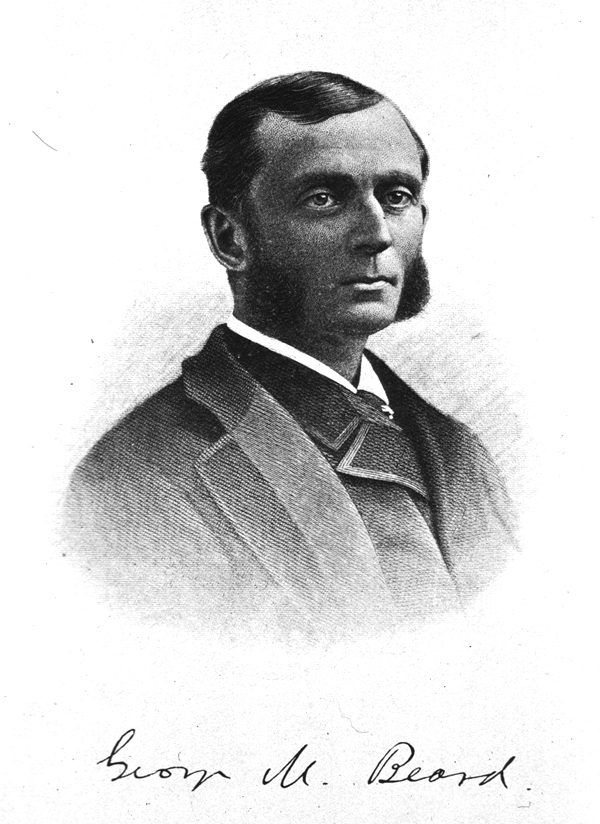
In 1869 two American doctors, working independently, gave a name to a kind of tiredness. Edwin Van Deusen, superintendent of the Michigan Asylum for the Insane at Kalamazoo, described a "distinct form of disease" brought on by overwork, worry and poor nourishment, and noticed it in young farm wives isolated in remote houses. In the same year the New York neurologist George Miller Beard published "Neurasthenia, or nervous exhaustion" in the Boston Medical and Surgical Journal4. The word was not new, but Beard's version caught on, because it offered patients something precious: a respectable, physical explanation for feeling unwell, free of the stigma of insanity4.
A shortage of nerve force
Beard pictured the nervous system as a battery, or a steam engine, with a limited supply of "nerve force". Spend it faster than it could be replenished and the result was exhaustion of the nerves, with an extraordinary range of symptoms: fatigue, headache, insomnia, indigestion, palpitations, neuralgia, low mood, and a long list of fears, from fear of open or closed places to "fear of fears" and "fear of everything"4,7. In American Nervousness (1881) he named the cause:
The chief and primary cause of this development and very rapid increase of nervousness is modern civilization, which is distinguished from the ancient by these five characteristics: steam-power, the periodical press, the telegraph, the sciences, and the mental activity of women.1
Quotation checked against the 1881 text
The theory had a social map built in. Beard located nervousness above all in the Northern and Eastern United States and among "brain-workers", the educated and comfortable classes whose work was done with the mind. Manual workers, immigrants and non-white Americans, he believed, were largely immune, a view the historian Yeonsil Jung reads as part of the period's racial and class anxieties1,4. Beard expected that the microscope and chemistry would one day confirm the disorder in the bodies of patients who died with it4. They never did.
A household word
For about thirty years neurasthenia was among the most popular diagnoses in America and Europe. In Paris, Achille-Adrien Proust and Gilbert Ballet wrote a standard hygiene manual for neurasthenic patients and accepted Beard's view that it was a disease of the most active, "civilised" peoples4. Makers of patent medicines and "electric magnetic" appliances advertised cures for it4. Beard's colleague A. D. Rockwell, editing the posthumous 1888 edition of Beard's treatise, was frank about its convenience:
Neurasthenia is now almost a household word, and, equally with the term malaria, affords to the profession a convenient refuge when perplexed at the recital of a multitude of symptoms seemingly without logical connection or adequate cause.2
Quotation checked against the 1888 text
Treatment followed the theory. Beard and Rockwell championed electrotherapy, the application of mild currents to restore the nerves4,7. For many patients, and especially women, the remedy was rest: the rest cure promoted by the neurologist Silas Weir Mitchell7. In practice the diagnosis divided along gender lines: by the 1890s nervous men were usually called neurasthenic, while nervous women were more often called hysterical, even though, as the physician Morton Prince admitted in 1898, no sharp line could be drawn between the two4. Yet the patient numbers were not one-sided: the New York neurologist Smith Ely Jelliffe reported in 1904 that of the neurasthenic patients he had treated the previous year, 211 were men and 152 women4.
One patient's verdict
The best-known account by a patient was written by Charlotte Perkins Gilman, who in 1887, after years of what she called "a severe and continuous nervous breakdown tending to melancholia", went to Mitchell for treatment3:
This wise man put me to bed and applied the rest cure, to which a still-good physique responded so promptly that he concluded there was nothing much the matter with me, and sent me home with solemn advice to "live as domestic a life as far as possible," to "have but two hours' intellectual life a day," and "never to touch pen, brush, or pencil again" as long as I lived.3
Quotation checked against the 1913 text
Obeying, she wrote, brought her close to "utter mental ruin"; returning to work saved her, and she turned the experience into her story "The Yellow Wall-Paper". She added, on the strength of what she had heard from others, that Mitchell had later changed his treatment of neurasthenia after reading it3.
The passing of neurasthenia
By 1904 the New York neurologist Charles Dana could speak of "The Partial Passing of Neurasthenia", arguing that many cases were early or mild forms of more serious illnesses4. Freud split off an "anxiety neurosis" and dismissed electrotherapy as a pretence7. In the First World War neurasthenia was a common label for what was also called shell shock7. By the 1920s most physicians regarded it as a description of symptoms rather than a disease; Jung cites a count of New York Times mentions falling from 875 in the 1890s to 248 in the 1920s4.
In East Asia the story ran differently. As shenjing shuairuo in China and shinkei-suijaku in Japan, the diagnosis remained in wide use; in the 1970s and 1980s the psychiatrist Tsung-Yi Lin estimated that it was used for perhaps half the world's population, and psychiatrists in Hong Kong and Taiwan used the word with patients while avoiding it in official records6,7. It remained in the WHO's ICD-10 (code F48.0) but has been dropped from ICD-117.
What it maps to now, and why that is uncertain
Many historians and psychiatrists think that a large share of people diagnosed with neurasthenia would today be diagnosed with depression or an anxiety disorder5,7. The comparison is uncertain because Beard's category was deliberately broad, took in symptoms that also occur in physical diseases then poorly understood, and was shaped by social expectation about who could be "nervous". What it did offer was a diagnosis without stigma: an illness of the nerves, not of the mind, which may be why so many patients welcomed it4.
Key dates
- 1869 George Beard publishes 'Neurasthenia, or nervous exhaustion' in the Boston Medical and Surgical Journal; Edwin Van Deusen describes the same condition in Michigan.
- 1881 Beard's American Nervousness blames modern civilisation for the disorder.
- 1887 Charlotte Perkins Gilman undergoes Silas Weir Mitchell's rest cure.
- 1904 Charles L. Dana's address 'The Partial Passing of Neurasthenia' signals its decline.
- 1982 Arthur Kleinman reports that 87 of 100 neurasthenia patients at Hunan Medical College meet criteria for major depression.
Sources
- Primary source George M. Beard, American Nervousness: Its Causes and Consequences, New York: G. P. Putnam's Sons (1881). Quotations checked against this text.
- Primary source George M. Beard, A Practical Treatise on Nervous Exhaustion (Neurasthenia), ed. A. D. Rockwell, New York: E. B. Treat (1888). Quotations checked against this text.
- Primary source Charlotte Perkins Gilman, Why I Wrote The Yellow Wall-Paper, The Forerunner (via Wikisource) (1913-10). Quotations checked against this text.
- Scholarship Yeonsil Jung, 'Our one great national malady': neurasthenia and American imperial and masculine anxiety at the turn of the twentieth century, Korean Journal of Medical History (Uisahak) 30(3) (2021).
- Scholarship Arthur Kleinman, Neurasthenia and depression: a study of somatization and culture in China, Culture, Medicine and Psychiatry 6(2) (1982).
- Scholarship Kelvin Chan, Commercialising everyday distress: neurasthenia and traditional Chinese medicine in colonial Hong Kong, 1950s to 1980s, Medical History 68(1) (2024).
- Wikipedia Neurasthenia, Wikipedia (2026).
Cross-checked with Wikidata Q510236 and the English Wikipedia article.
Read next
 1680s–1980
Hysteria
Named for the womb, hysteria became medicine's catch-all for symptoms it could not explain. Its history from Greek texts to Sydenham, Charcot and Freud, and why it was dropped in 1980.
 1600s–1800s
Hypochondria and the vapours
Before it meant fear of illness, hypochondria was a real disease of the gut and nerves, the male twin of hysteria and, with the vapours, the fashionable 'English malady' of the 1700s.
 1914–1922
Shell shock
A soldiers' phrase of 1914–15 that became a medical diagnosis, a pension category and a political scandal, before a War Office committee in 1922 called it 'a gross and costly misnomer'.
 c. 400 BCE–1900s
Melancholia
For two thousand years melancholia meant fear and sorrow without cause, blamed on black bile. How physicians from Aretaeus to Kraepelin defined it, and how it became 'depression'.