
Person · 4 April 1802 – 17 July 1887
Dorothea Dix
Massachusetts campaigner (1802–1887) whose memorials to legislatures, from 1843, helped found some thirty American asylums; her federal land bill was vetoed in 1854, and she ran the Union's army nurses.
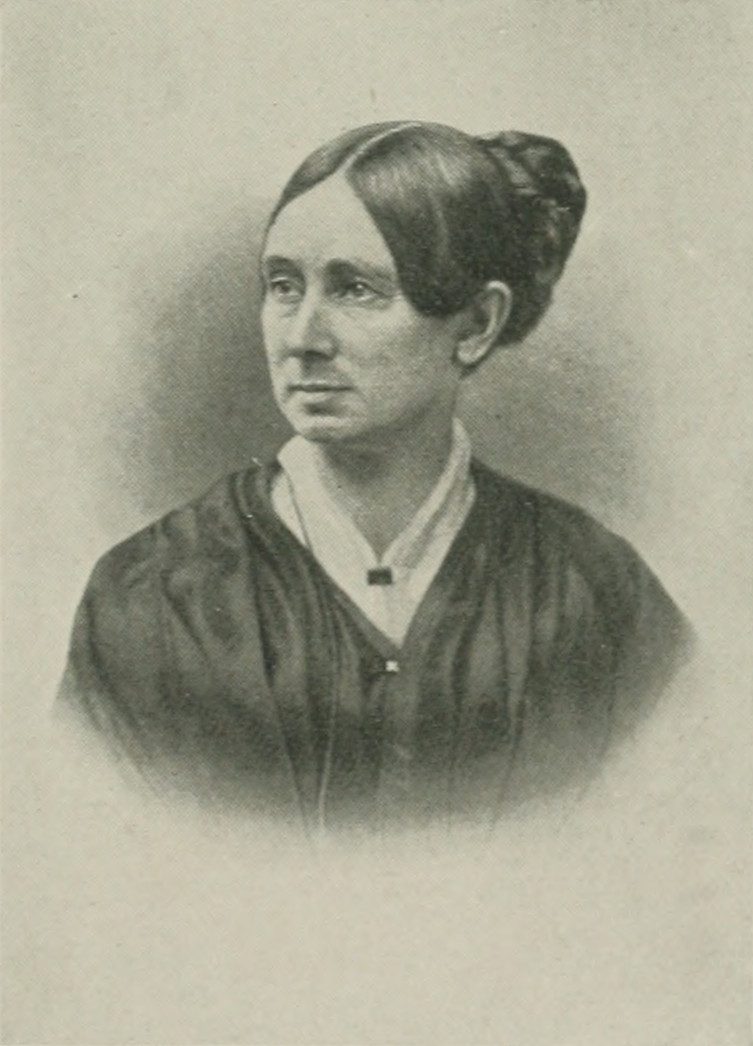
The memorial that Dorothea Dix laid before the Massachusetts legislature in January 1843 is, in places, a gazetteer of suffering, town by town:
Lincoln. A woman in a cage. Medford. One idiotic subject chained, and one in a close stall for 17 years.1
Quotation checked against the 1843 text
She wrote it, she said, against her own sense of what was proper for a woman. She had surrendered, "to calm and deep convictions of duty", her "habitual views of what is womanly and becoming", and hoped that "the memorialist will be speedily forgotten in the memorial"1. She was not forgotten; the method of that document, personal inspection, plain detail and a direct appeal to lawmakers, became the pattern of her life's work.
Teacher, invalid, investigator
Dix was born on 4 April 1802 at Hampden, in what was then the District of Maine, and grew up partly in Boston with her grandmother, after a troubled childhood in a poor household3,4. She ran schools for girls, wrote devotional books and a popular children's book, Conversations on Common Things (1824), which had reached its sixtieth edition by 1869, and repeatedly broke down in health3,6. In 1836 she went to England to recover, and stayed with the Liverpool Quaker family of William Rathbone, among reformers who knew the English asylum movement at first hand6.
Back in Massachusetts, she began in 1841 to teach a Sunday class for women in the East Cambridge jail, where she found mentally ill prisoners held in bare, dark cells alongside criminals. She then spent the better part of two years visiting the jails and almshouses of the state, where towns boarded the poor insane in whatever space was cheapest3,6. Her Memorial of 1843 named places and described what she had seen, while blaming the law, not the keepers, for most of it: prisons were "not constructed in view of being converted into County Hospitals", yet wardens had to take whoever was sent1. The legislature voted to enlarge the state hospital at Worcester6.
The asylum campaign
Dix repeated the method across the country. By 1847, the Britannica later reckoned, she had visited 18 state penitentiaries, 300 county jails and houses of correction, and more than 500 almshouses, from Nova Scotia to the Gulf of Mexico3. Her memorials helped found or enlarge state hospitals in New Jersey, where the Trenton asylum was authorised in 1845, Pennsylvania, North Carolina and many other states; the institutions she built were meant to deliver moral treatment, in buildings like those designed by Thomas Kirkbride (The Kirkbride asylums)3,4,6.
Her boldest plan was federal: a grant of more than twelve million acres of public land, whose sale would endow care for the insane in every state. Congress passed it in 1854. On 3 May 1854 President Franklin Pierce vetoed it, writing that he could not "find any authority in the Constitution for making the Federal Government the great almoner of public charity throughout the United States"2,3. The care of people with mental illness, he insisted, belonged to the states2. Dix went to Europe, where her inquiries into Scottish asylums contributed to the creation of a Scottish lunacy commission in 18576.
Army nurses
In June 1861 the Secretary of War appointed her Superintendent of Army Nurses for the Union4,6. She recruited women by strict rules, preferring the mature and plainly dressed, and appointed more than 3,000 nurses, about 15 per cent of the Union's total4. She insisted that wounded Confederate prisoners be nursed like Union soldiers4,5. But she clashed with army surgeons and relief organisations, distrusted Catholic nursing sisters, and lost most of her authority in 1863; she left the post in 1865 regarding her war work as a failure6.
Last years and legacy
She spent her final years in a suite set aside for her at the New Jersey State Hospital in Trenton, one of the asylums she had fought for, and died there on 17 July 18874,5,6.
Key dates
- 1841 Dix begins visiting the jails and almshouses of Massachusetts to see how insane people are kept.
- January 1843 Dix's Memorial to the Legislature of Massachusetts describes insane people in cages, stalls and chains; the state enlarges its hospital at Worcester.
- 25 March 1845 After Dix's memorial of January 1845, New Jersey passes an act to build a state asylum at Trenton.
- 3 May 1854 President Franklin Pierce vetoes Dix's bill granting federal land to the states for the care of the insane.
- 1857 After Dix's investigations, a lunacy commission is set up to oversee reform in Scotland.
- June 1861 Dix is appointed Superintendent of Army Nurses for the Union.
- 17 July 1887 Dix dies in a suite kept for her at the New Jersey State Hospital in Trenton.
Dix on this site
Sources
- Primary source Dorothea L. Dix, Memorial to the Legislature of Massachusetts, Boston: Munroe & Francis (1843). Quotations checked against this text.
- Primary source Franklin Pierce, Veto Message, May 3, 1854, The American Presidency Project (University of California, Santa Barbara) (1854-05-03).
- Reference Dix, Dorothea Lynde, Encyclopaedia Britannica, 11th edition (Wikisource) (1911).
- Museum or archive Arlisha R. Norwood, Dorothea Dix, National Women's History Museum (2017).
- Official Dorothea Dix, U.S. National Park Service.
- Wikipedia Dorothea Dix, Wikipedia.
- Scholarship Insane asylums: professor explores a 19th-century architectural experiment to cure social ills, Rutgers University News.
Cross-checked with Wikidata Q452469 and the English Wikipedia article.
Read next
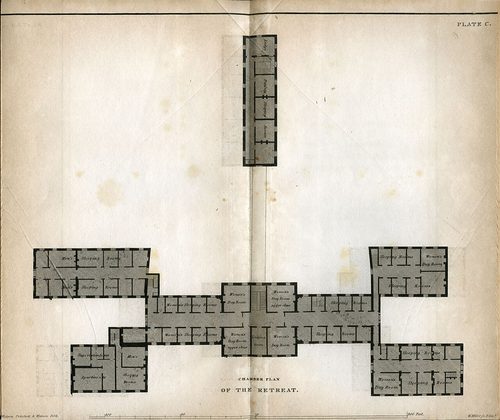 1790s–1870s · Transformed
Moral treatment
Moral treatment, developed at Bicêtre in Paris and the York Retreat in the 1790s, tried to cure madness through kindness, routine, work and self-control rather than chains and drugs. It shaped a century of asylums.
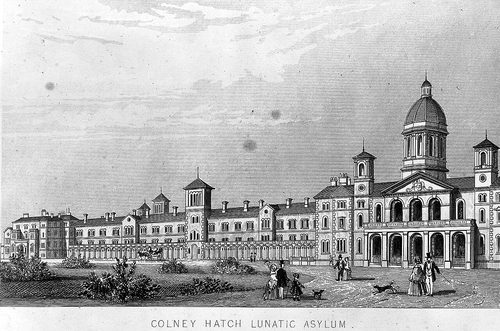 Essay · 7 min
The rise and fall of the asylum
How the public asylum grew from a few small madhouses into hospitals of thousands, and was then closed: an argument that its failures came from its success at taking in the people no other institution would hold.
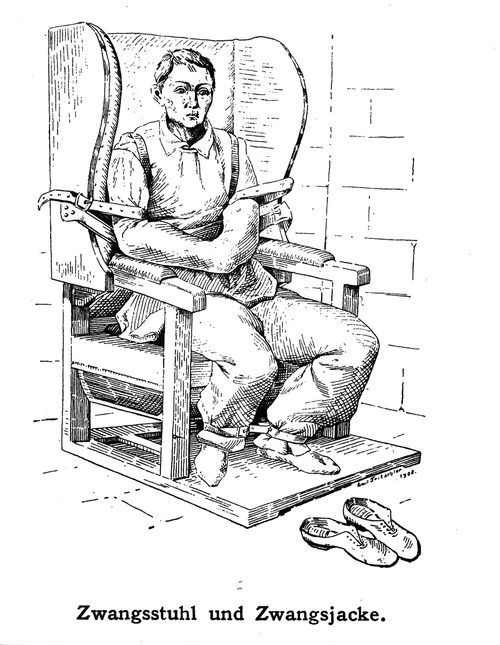 1700s–1890s · Transformed
Restraint and the non-restraint movement
Chains, strait-waistcoats and restraint chairs were the ordinary equipment of asylums until the late 1830s, when Lincoln and then Hanwell abolished them. Britain made non-restraint a doctrine; much of the world did not.
 Essay · 7 min
Who got locked up, and why
Asylum populations were never a simple sample of the mentally ill. Poverty, family, the Poor Law, sex, migration, race, age and bodily disease all decided who was confined, and historians still argue over how much each counted.
 1955–2000 · Transformed
Deinstitutionalisation
From the mid-1950s Western countries emptied their great mental hospitals: US public hospitals fell from about 559,000 patients to under 72,000 in forty years. Whether patients were freed or abandoned is still argued.