
Person · 5 May 1864 – 27 January 1922
Nellie Bly
American journalist (1864–1922) who in 1887 feigned insanity to be committed to the women's asylum on Blackwell's Island, New York, and published what she saw as Ten Days in a Mad-House.
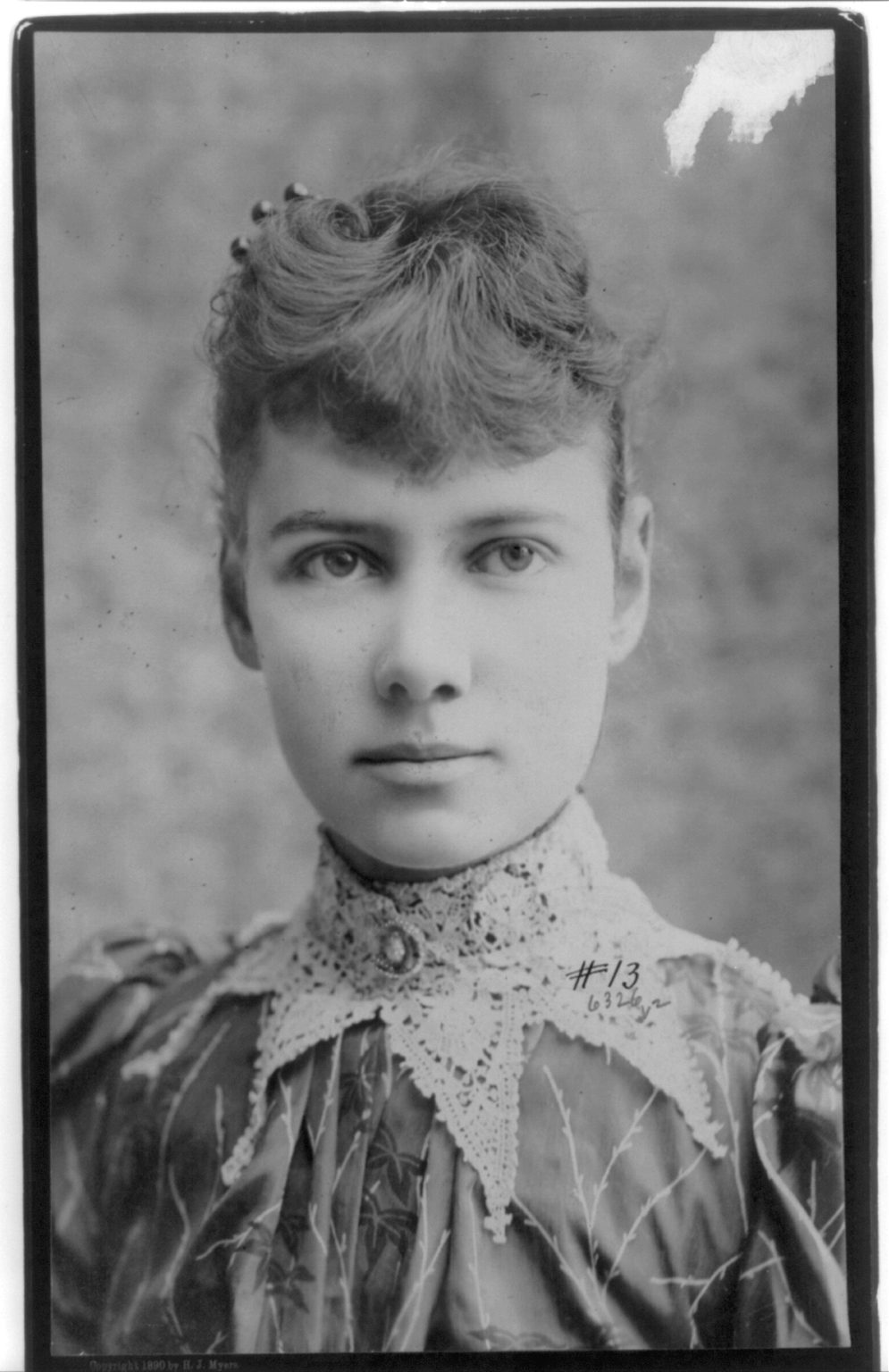
Once inside the women's asylum on Blackwell's Island, the patient registered as "Nellie Brown" stopped pretending. She had spent days acting strangely enough to be examined by a police magistrate and several doctors and certified insane. Now she behaved normally, and found it made no difference:
I talked and acted just as I do in ordinary life. Yet strange to say, the more sanely I talked and acted the crazier I was thought to be by all except one physician, whose kindness and gentle ways I shall not soon forget.1
Quotation checked against the 1887 text
She was Elizabeth Cochrane, a 23-year-old reporter for Joseph Pulitzer's New York World, and her account of ten days inside became one of the founding works of investigative journalism, and one of the most widely read descriptions of a nineteenth-century asylum written from a patient's bed3,5.
From Pittsburgh to the World
She was born Elizabeth Jane Cochran on 5 May 1864 at Cochran's Mills, Pennsylvania; her father, a mill owner and local judge, died when she was six5. In 1885 an angry reply to a Pittsburgh Dispatch column on "what girls are good for" won her a job, and the editor gave her the pen name Nellie Bly, misspelling the title of a Stephen Foster song5. After reporting on women factory workers and from Mexico, she went to New York in 1887, where for months no editor would hire a woman5.
Ten days
On 22 September 1887, by her account, the World asked whether she could get herself committed to the asylum and write about it1. She took a room in a lodging house for women, stayed up all night, behaved so oddly that the other lodgers called the police, and was passed from a court to Bellevue Hospital and then by boat to Blackwell's Island (The asylum on Blackwell's Island)1,5. One of the physicians told her the asylum held 1,600 women1.
What she described was a regime rather than a single cruelty: cold baths, with several women washed in the same water (Hydrotherapy), a cold building, bread that was hard and in places "nothing more than dried dough", spoiled meat, nurses who mocked, threatened and sometimes beat the patients, and long days on hard benches where talking was forbidden1. She was struck by how many of the women seemed to her not insane at all: immigrants who could not make themselves understood, women who were poor or exhausted or simply had nowhere else to go1,5. She believed the regime itself could break them.
The World's lawyer secured her release after ten days. Her articles, beginning on 9 October 1887, caused a sensation and appeared that year as a book5. She left with mixed feelings:
For ten days I had been one of them. Foolishly enough, it seemed intensely selfish to leave them to their sufferings.1
Quotation checked against the 1887 text
What changed
A grand jury summoned Bly to give evidence and visited the island with her. She wrote that the asylum had been warned of the visit, that much had been cleaned and changed, and that some of the patients she had described had been moved, but that the jury's report recommended the changes she had proposed1. In the preface to the book she claimed that, as a result, the city had appropriated "$1,000,000 more per annum than ever before for the care of the insane"1.
Afterwards
Bly became famous. In 1889–90 she went round the world for the World in a little over 72 days, beating the fictional record of Jules Verne's Phileas Fogg3,5. In 1895 she married Robert Seaman, a manufacturer more than forty years her senior; after his death she ran his Iron Clad Manufacturing Company, patented designs of her own and lost the business through fraud by employees and bankruptcy3,5. She reported from the Eastern Front in the First World War and returned to journalism in New York, where she died of pneumonia on 27 January 19225.
Her biographer Brooke Kroeger sees the asylum series as the start of the "stunt" or "detective" reporting of the 1880s and 1890s, which first gave women a way into mainstream journalism4,5. For historians of psychiatry it stands beside Elizabeth Packard's books as testimony from inside, and as a forerunner of later attempts to test psychiatric judgement from the patient's side, such as the Rosenhan study.
Key dates
- 1885 Elizabeth Cochrane begins writing for the Pittsburgh Dispatch as 'Nellie Bly'.
- 1887 A grand jury visits the asylum with Bly; her articles appear as the book Ten Days in a Mad-House.
- September 1887 Asked by the New York World to get herself committed, Bly feigns insanity and is sent to Blackwell's Island.
- 9 October 1887 The World publishes the first part of Bly's account of the women's asylum.
- 25 January 1890 Bly completes a journey around the world in just over 72 days.
- 27 January 1922 Bly dies of pneumonia in New York.
Seaman) on this site
Sources
- Primary source Nellie Bly, Ten Days in a Mad-House, New York: Ian L. Munro (1887). Quotations checked against this text.
- Official Blackwell's Island (Roosevelt Island), New York City, U.S. National Park Service.
- Museum or archive Nellie Bly: a resource guide, Library of Congress.
- Scholarship Brooke Kroeger, Nellie Bly: Daredevil, Reporter, Feminist, New York: Times Books (1994).
- Wikipedia Nellie Bly, Wikipedia.
Cross-checked with Wikidata Q230299 and the English Wikipedia article.
Read next
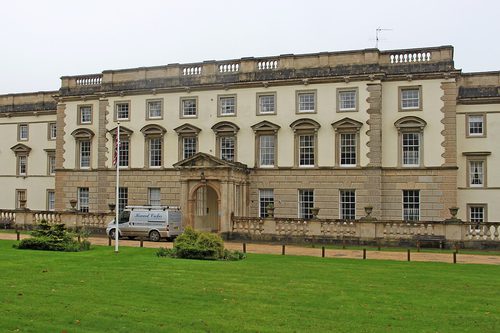 Essay · 8 min
The patients who wrote back
From John Perceval in the 1830s to Clifford Beers in 1908, former patients wrote against the asylum. Their first battle was to be believed at all, and what they won was mostly the right to be heard.
Essay · 7 min
"On being sane in insane places": Rosenhan's study and its challengers
In 1973 David Rosenhan reported that eight sane people were admitted to psychiatric hospitals by claiming to hear voices. The study helped reshape American psychiatry; later research suggests it was not done as described.
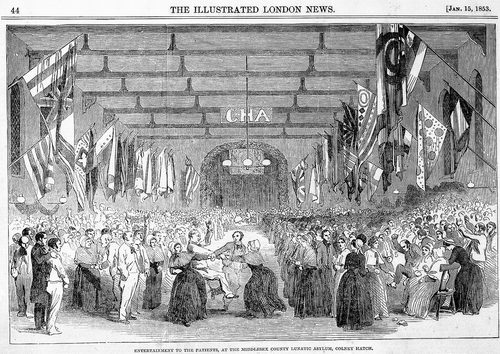 Essay · 7 min
Who got locked up, and why
Asylum populations were never a simple sample of the mentally ill. Poverty, family, the Poor Law, sex, migration, race, age and bodily disease all decided who was confined, and historians still argue over how much each counted.
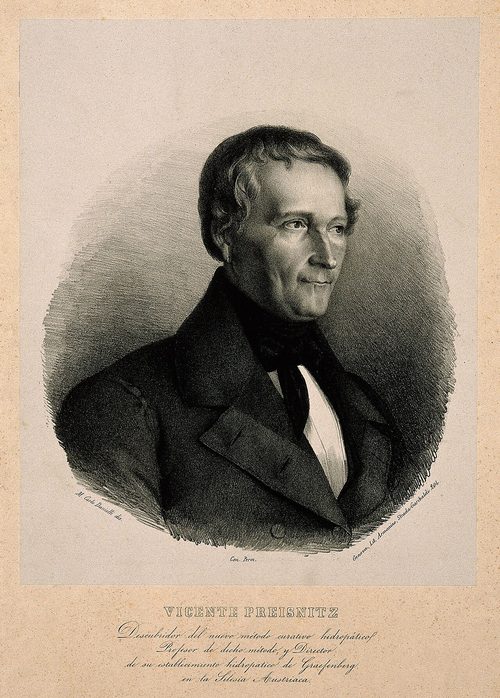 1700s–1950s · Abandoned
Hydrotherapy
Water was one of psychiatry's oldest tools: shock baths and shower baths in the early asylum, wet packs from 1860, and continuous baths lasting hours or days in the early twentieth century, until drugs replaced them.
 Essay · 7 min
The rise and fall of the asylum
How the public asylum grew from a few small madhouses into hospitals of thousands, and was then closed: an argument that its failures came from its success at taking in the people no other institution would hold.