
Place · 1839 – 1894
The asylum on Blackwell's Island
New York City's first public asylum, opened in 1839 on an East River island beside a prison and workhouse; Dickens found it painful in 1842 and Nellie Bly exposed it in 1887. Its Octagon tower survives.
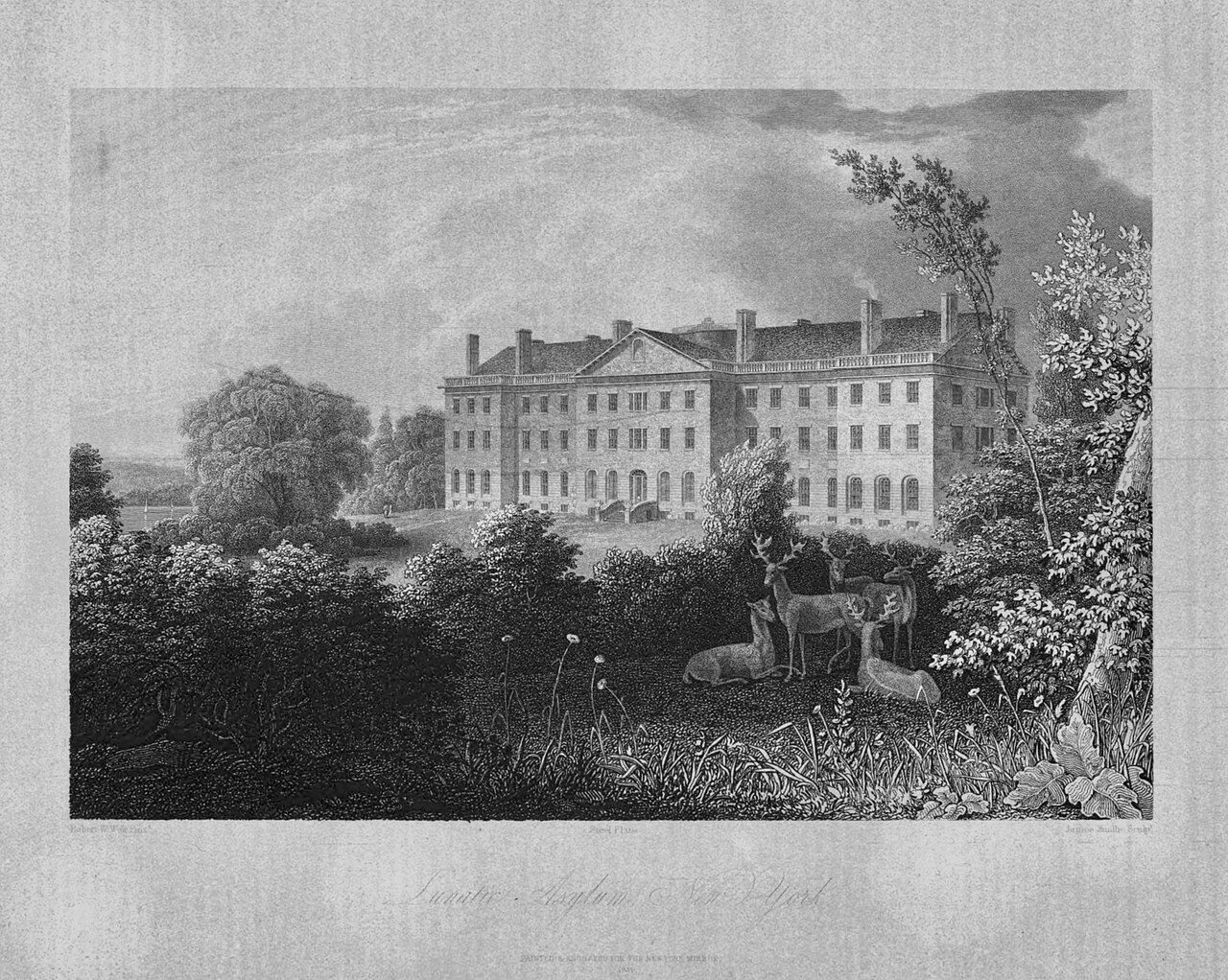
The building pleased Charles Dickens more than anything inside it. Visiting in 1842, he admired its "spacious and elegant staircase" and then described the wards:
everything had a lounging, listless, madhouse air, which was very painful.1
Quotation checked against the 1842 text
He left early, he wrote, and declined to see the section where the most disturbed patients were held1. Forty-five years later another visitor stayed longer, as a patient, and her account made the asylum on Blackwell's Island the most notorious in America.
An island of institutions
New York City bought Blackwell's Island, a narrow strip of land in the East River between Manhattan and Queens, in July 18285. Over the next decades it became the place where the city put the people it wished to keep apart: a penitentiary from the early 1830s, then a workhouse, an almshouse, a smallpox hospital and other hospitals4,5.
The New York City Lunatic Asylum was the city's first public asylum. Alexander Jackson Davis drew up an ambitious plan for it in 1834–35, a large U-shaped building in a "Tuscan" style. The city council halted work over disagreements about the design, and when building resumed in 1837 the plan had been cut to a single wing joined to an octagonal tower. The asylum opened in 18393,4. It was poor from the start. Patients were supervised not by trained attendants but by inmates of the penitentiary next door; the diet was inadequate and scurvy was common; and the wards were overcrowded. A proper staff of nurses and orderlies was not hired until 18503.
Dickens, 1842
Dickens, who placed the asylum on "Long Island", saw the hospital in this early state1. He blamed not the physician in charge, whom he thought competent, but the city's politics, which made posts in the asylum spoils for whichever party was in power:
Will it be believed that the governor of such a house as this, is appointed, and deposed, and changed perpetually, as Parties fluctuate and vary1
Quotation checked against the 1842 text
The asylum grew piecemeal. A second wing was added in 1847–48, and later buildings around it included the "Lodge" and the "Retreat" for patients considered violent3,2. When a separate asylum for men was opened on Ward's Island, further up the river, Blackwell's became the women's asylum, and it remained overcrowded4. In 1879 the wings were raised by a storey and the tower given its mansard dome3.
Nellie Bly, 1887
In the autumn of 1887 the young reporter Nellie Bly, asked by the New York World on 22 September whether she could get herself committed, feigned insanity, was examined by doctors and committed, and spent ten days in the women's asylum. One of the physicians told her it held 1,600 women2. Her articles, published as Ten Days in a Mad-House, described cold baths, spoiled food, rough and abusive nurses, and women she believed were not insane at all, made worse by the regime itself. Of the hours patients were made to sit in silence on hard benches, she asked:
What, excepting torture, would produce insanity quicker than this treatment?2
Quotation checked against the 1887 text
The insane asylum on Blackwell's Island is a human rat-trap. It is easy to get in, but once there it is impossible to get out.2
Quotation checked against the 1887 text
A grand jury visited the island with her. She wrote that much had been tidied before they arrived, but that their report recommended the changes she had proposed, and that the city voted $1,000,000 more a year for the care of the insane2.
From asylum to apartments
In 1894 the patients were transferred to state hospitals on Ward's Island and the buildings became Metropolitan Hospital, a general hospital which treated many patients with tuberculosis3. The island was renamed Welfare Island in 19215. When Metropolitan Hospital moved to Manhattan in the 1950s, the old asylum was left empty; its wings were demolished by 1970, and only the Octagon was saved3,6. It was listed on the National Register of Historic Places in 1972 and designated a New York City landmark in 1976; the island became Roosevelt Island in 19736,5. In 2006 the restored tower reopened as the entrance to a new block of flats6.
Key dates
- 19 July 1828 New York City buys Blackwell's Island in the East River for its prison and charitable institutions.
- 1839 The New York City Lunatic Asylum opens, its octagonal tower joined to a single wing of Alexander Jackson Davis's much larger design.
- 1842 Charles Dickens visits and condemns the asylum's 'lounging, listless, madhouse air'.
- 1887 Nellie Bly has herself committed to the women's asylum and publishes her exposé in the New York World.
- 1894 The remaining patients are moved to Ward's Island and the buildings become Metropolitan Hospital.
- 23 March 1976 The Octagon is designated a New York City landmark.
- April 2006 The restored Octagon reopens as the entrance to a block of flats.
Also on this site
Sources
- Primary source Charles Dickens, American Notes for General Circulation, Paris: Baudry's European Library (1842). Quotations checked against this text.
- Primary source Nellie Bly, Ten Days in a Mad-House, New York: Ian L. Munro (1887). Quotations checked against this text.
- Reference Roosevelt Island Historical Society, The Octagon, Roosevelt Island Historical Society.
- Official National Park Service, Blackwell's Island (Roosevelt Island), New York City, U.S. Department of the Interior (2021-04-05).
- Wikipedia Roosevelt Island, Wikipedia.
- Wikipedia The Octagon (Roosevelt Island), Wikipedia.
Cross-checked with Wikidata Q2887672 and the English Wikipedia article.
Read next
 1790s–1870s · Transformed
Moral treatment
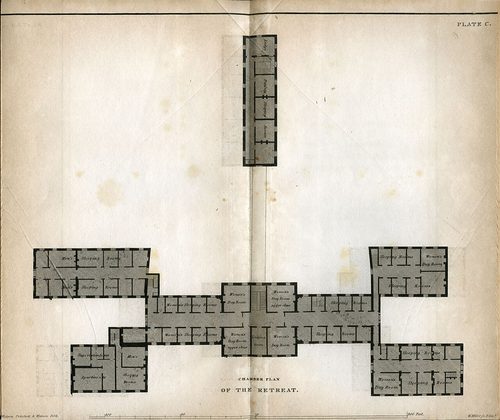
Moral treatment, developed at Bicêtre in Paris and the York Retreat in the 1790s, tried to cure madness through kindness, routine, work and self-control rather than chains and drugs. It shaped a century of asylums.
 Essay · 7 min
Who got locked up, and why
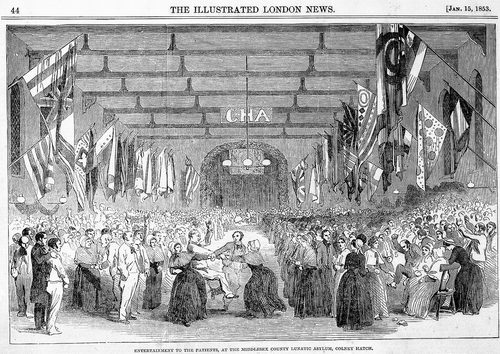
Asylum populations were never a simple sample of the mentally ill. Poverty, family, the Poor Law, sex, migration, race, age and bodily disease all decided who was confined, and historians still argue over how much each counted.
 Essay · 8 min
The patients who wrote back
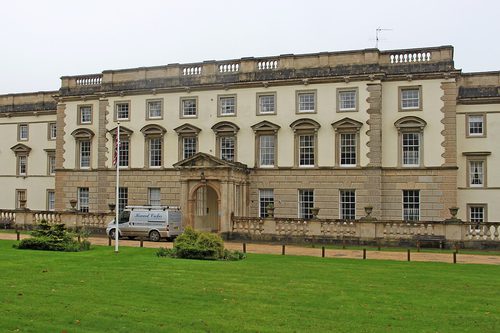
From John Perceval in the 1830s to Clifford Beers in 1908, former patients wrote against the asylum. Their first battle was to be believed at all, and what they won was mostly the right to be heard.
 Essay · 7 min
The rise and fall of the asylum
How the public asylum grew from a few small madhouses into hospitals of thousands, and was then closed: an argument that its failures came from its success at taking in the people no other institution would hold.
 Essay · 8 min
Counting the confined: asylum populations, 1800–2000
Asylum numbers in England and the United States rose for a century and then fell by three-quarters or more. What the official counts measured was how long people stayed, not how many fell ill, as their own compilers warned.