
Person · 3 July 1860 – 17 August 1935
Charlotte Perkins Gilman
American writer and reformer (1860–1935) who underwent Silas Weir Mitchell's rest cure in 1887 and turned it into 'The Yellow Wall-Paper' (1892), the best-known patient's story of nervous medicine.
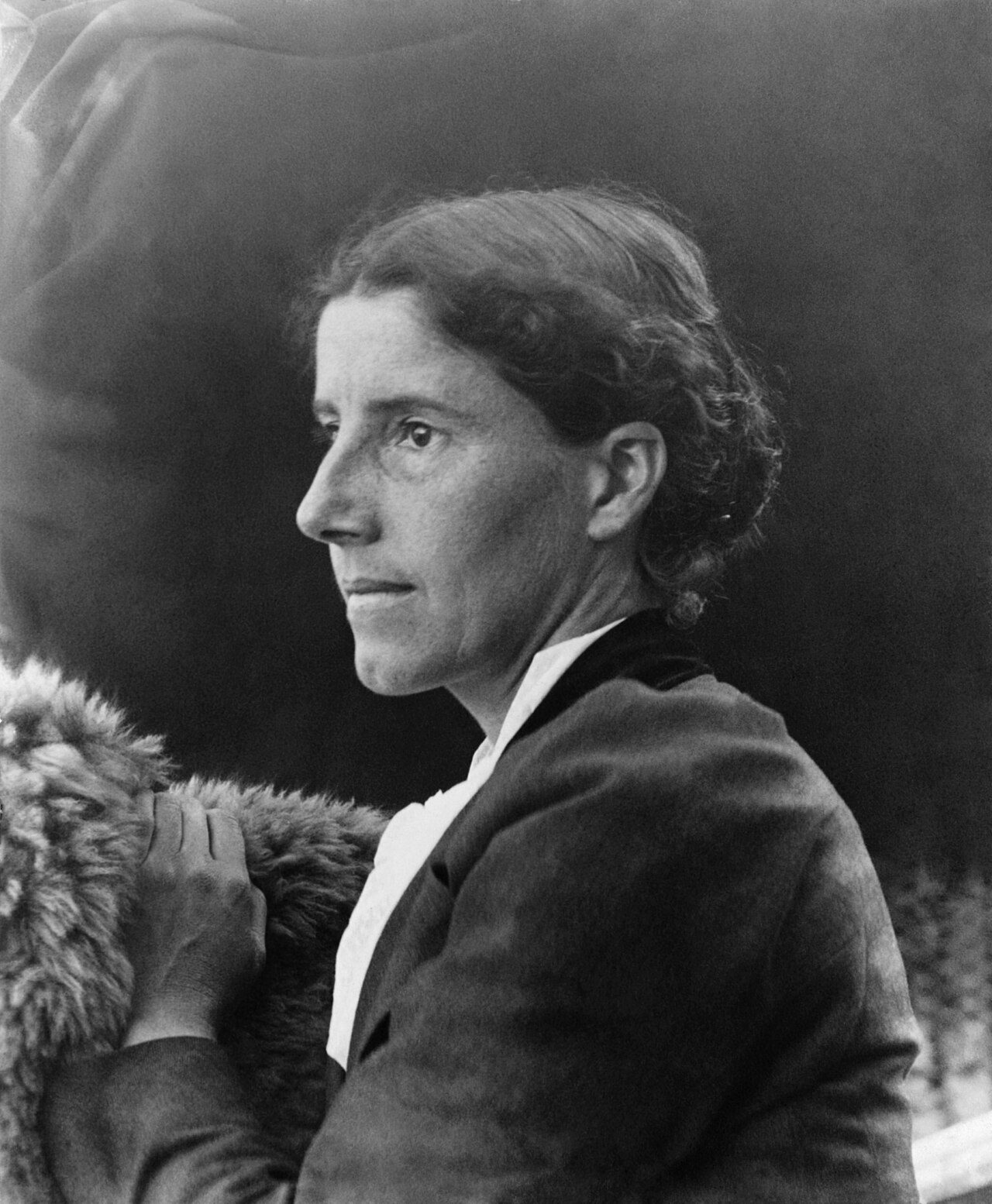
The narrator of "The Yellow Wall-Paper" is a young mother taken to a grand old country house for the summer to recover from what her husband calls "temporary nervous depression". Her husband, a doctor, forbids her to work or write; she writes anyway, in secret, and the reader watches through her journal as she comes to believe that a woman is trapped behind the pattern of the wallpaper in her room2. Early in the story she makes a confession she would not "say to a living soul":
John is a physician, and perhaps—(I would not say it to a living soul, of course, but this is dead paper and a great relief to my mind)—perhaps that is one reason I do not get well faster.2
Quotation checked against the 1892 text
Its author had been through a version of the treatment herself.
Breakdown
Charlotte Anna Perkins was born in Hartford, Connecticut, on 3 July 1860, into the Beecher family of reformers; her father left soon after, and she grew up in poverty, moving almost every year3,6. She studied at the Rhode Island School of Design and in 1884, after first refusing him, married the artist Charles Walter Stetson3. Their daughter Katharine was born on 23 March 1885. Charlotte then sank into a depression that lasted for years, made worse, the National Library of Medicine's exhibition on her suggests, by a marriage that expected her to give up the intellectual and creative life she wanted3,7. Today some of her symptoms might be described as postnatal depression, though that is a modern label for a past experience (Puerperal insanity)7.
In 1887 she went to Philadelphia to Silas Weir Mitchell, the most famous nerve specialist in America, for his rest cure1,3. After about a month he sent her home8, she recalled, with "solemn advice to 'live as domestic a life as far as possible,' to 'have but two hours' intellectual life a day,' and 'never to touch pen, brush, or pencil again' as long as I lived"1,3. She tried to obey for three months and came, she wrote, so close to "the borderline of utter mental ruin" that she "could see over"1. She recovered, in her account, only when she went back to work. In 1888 she separated from her husband and moved with Katharine to Pasadena; they divorced in 18946,7.
The story
She wrote "The Yellow Wall-Paper" in Pasadena in June 18907. William Dean Howells sent it to the Atlantic Monthly, whose editor rejected it, and it appeared in the New England Magazine in January 18924. A Boston physician protested that such a story ought not to be written; another doctor wrote that it was the best description of incipient insanity he had seen1,4. In 1913, in her own magazine, she explained its purpose:
It was not intended to drive people crazy, but to save people from being driven crazy, and it worked.1
Quotation checked against the 1913 text
She also wrote that she had sent Mitchell a copy, that he never acknowledged it, and that she had heard years later that he had changed his treatment of neurasthenia after reading it; that claim rests on her word alone1.
Reformer
Gilman became a nationally known lecturer and writer on the economic dependence of women. Women and Economics (1898) argued that housework and child care should be professionalised and that women should have paid work outside the home; from 1909 to 1916 she wrote and published her own monthly, The Forerunner, and her fiction included the utopian novel Herland (1915)5,6,7. In 1900 she married her cousin Houghton Gilman5,6.
Her reputation now includes what earlier admirers passed over. She was a eugenicist, and her writings combine arguments for women's equality with racist, xenophobic and ableist ideas, among them a 1908 article proposing that Black Americans who were not self-supporting be conscripted into a state labour force (Eugenics and psychiatry)5,7.
After her husband's sudden death she returned to California to be near her daughter. She had been diagnosed with inoperable breast cancer in 1932, and she died by suicide in Pasadena on 17 August 19355,6.
Key dates
- 1884 Charlotte Perkins marries the artist Charles Walter Stetson.
- 23 March 1885 Her daughter Katharine is born; a long depression follows.
- 1887 She is treated with the rest cure by Silas Weir Mitchell in Philadelphia.
- 1888 She separates from her husband and moves to Pasadena, California.
- January 1892 'The Yellow Wall-Paper' appears in the New England Magazine.
- 1898 Women and Economics makes her internationally known.
- October 1913 In her magazine The Forerunner she publishes 'Why I Wrote The Yellow Wall-Paper'.
- 17 August 1935 Gilman dies in Pasadena.
Gilman on this site
Sources
- Primary source Charlotte Perkins Gilman, Why I Wrote The Yellow Wall-Paper (The Forerunner, October 1913), The Forerunner (1913-10). Quotations checked against this text.
- Primary source Charlotte Perkins Stetson (Gilman), The Yellow Wall Paper (Small, Maynard edition of the 1892 New England Magazine story), Boston: Small, Maynard & Co. (1892-01). Quotations checked against this text.
- Museum or archive The Literature of Prescription: Charlotte Perkins Gilman and 'The Yellow Wall-Paper' (The Author's Life), U.S. National Library of Medicine (exhibition).
- Museum or archive The Literature of Prescription: Reading 'The Yellow Wall-Paper', U.S. National Library of Medicine (exhibition).
- Museum or archive The Literature of Prescription: The Author's Legacy, U.S. National Library of Medicine (exhibition).
- Museum or archive Charlotte Perkins Gilman, Connecticut Women's Hall of Fame.
- Wikipedia Charlotte Perkins Gilman, Wikipedia.
- Museum or archive The Literature of Prescription: Charlotte Perkins Gilman and 'The Yellow Wall-Paper' (introduction), U.S. National Library of Medicine (exhibition).
Cross-checked with Wikidata Q287752 and the English Wikipedia article.
Read next
 1869–1920s
Neurasthenia
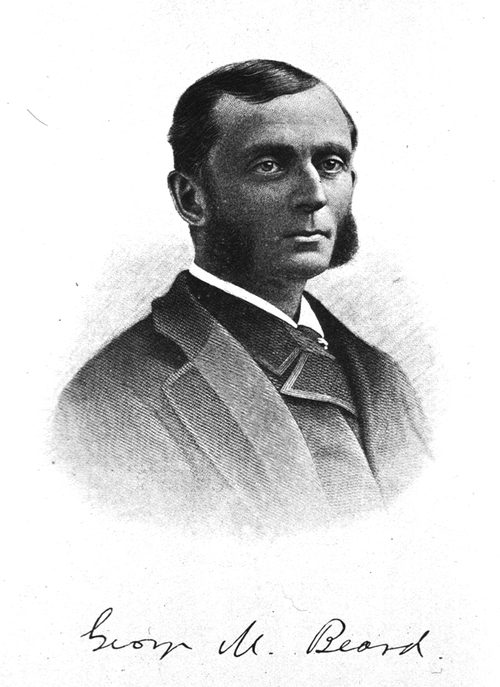
George Beard's 'nervous exhaustion' of 1869 blamed modern life for tired, anxious, aching patients. It became the fashionable diagnosis of the 1880s, faded by 1920, and lived on in China.
 1680s–1980
Hysteria
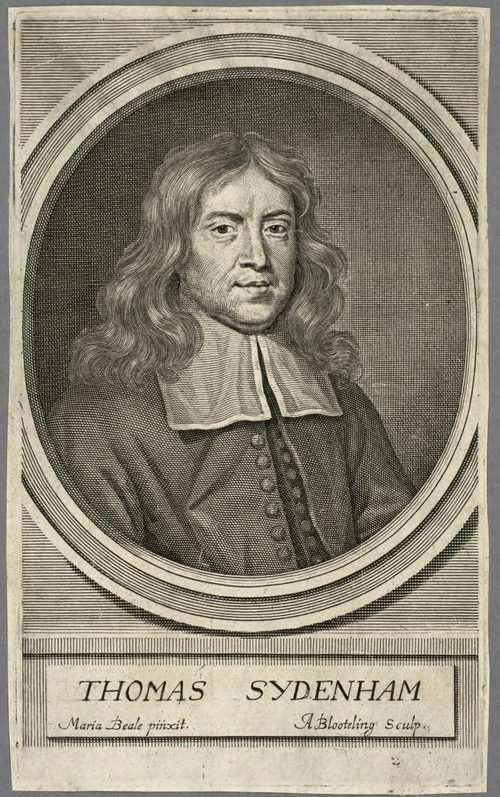
Named for the womb, hysteria became medicine's catch-all for symptoms it could not explain. Its history from Greek texts to Sydenham, Charcot and Freud, and why it was dropped in 1980.
 1820s–1920s
Puerperal insanity
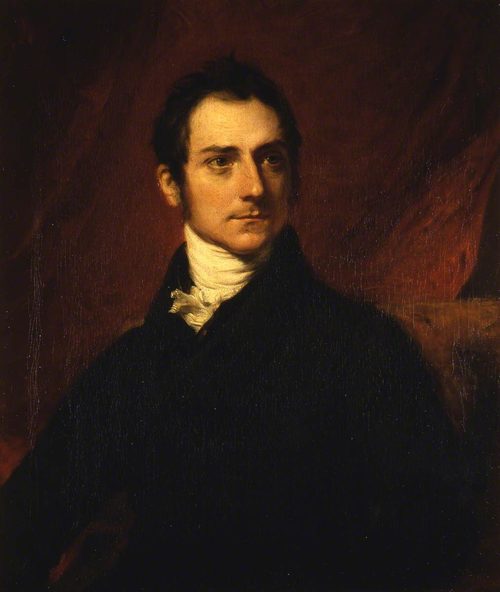
The nineteenth century's name for madness after childbirth: common in asylum admissions, thought highly curable, and central to infanticide trials, until doctors decided it was no special disease at all.
 Essay · 8 min
The patients who wrote back
From John Perceval in the 1830s to Clifford Beers in 1908, former patients wrote against the asylum. Their first battle was to be believed at all, and what they won was mostly the right to be heard.
 1883–1970s
Eugenics and psychiatry
Eugenics promised to reduce mental illness by preventing 'unfit' people from having children. How psychiatrists helped build sterilisation laws in the United States and Europe, Buck v. Bell, and the road to the Nazi killing of patients.