
Person · 8 February 1577 – 25 January 1640
Robert Burton
Oxford scholar and clergyman (1577–1640) who spent his life on The Anatomy of Melancholy (1621), a vast compendium of what was known and believed about melancholy, written, he said, to keep melancholy at bay.
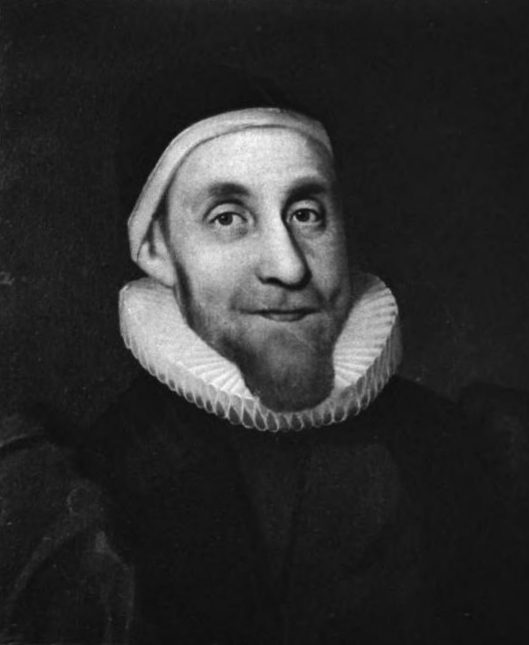
Anthony Wood, the Oxford antiquary who collected memories of Robert Burton from men who had known him, recorded two verdicts. Some thought him "a severe student, a devourer of authors, a melancholy and humorous person"; others remembered a man of "great honesty, plain dealing and charity", whose company was "very merry"1. Both fit the author of The Anatomy of Melancholy, the longest and strangest book ever written about a mental disorder, and one of the most readable.
A life in one college
Burton was born at Lindley in Leicestershire on 8 February 1577 into a family of minor gentry, and went up to Brasenose College, Oxford, in 15933. In 1599 he was elected a student of Christ Church, and he stayed there for the rest of his life1,3. His studies took unusually long, and some biographers have suspected an illness of his own; a "Robart Burton" of twenty was treated for melancholy by the London astrologer-physician Simon Forman in 1597, though the identification cannot be proved3. He took holy orders, became vicar of St Thomas's in the western suburb of Oxford in 1616 and, later, rector of Seagrave in Leicestershire, and from 1624 was librarian of Christ Church1,3. He described the life himself:
I have lived a silent, sedentary, solitary, private life, mihi et musis in the University1
Quotation checked against the 1621 text
The book
The Anatomy appeared in 1621 under the name "Democritus Junior", after the Greek philosopher said to have laughed at human folly and to have dissected animals in search of the seat of black bile1,3. Burton revised it for the rest of his life, through five editions to 1638 and a sixth printed in 1651 from his annotated copy, until it ran to more than half a million words3.
Its plan is strictly scholastic, in three "partitions" divided into sections, members and subsections: the causes and symptoms of melancholy, then its cures, then two great special kinds, love melancholy and religious melancholy1. Its texture is anything but strict. Burton quotes, translates and argues with hundreds of authorities, ancient, medieval and contemporary, on diet, air, sleep, passions, study, poverty, demons and the stars. He gives hypochondriacal or "windy" melancholy a long section of its own, reports the advice of physicians on bloodletting, purging and emetics and even on boring the skull, and weighs the debate over witches, in which he records Johann Weyer among the sceptics1. Telles-Correia and Gama Marques note how hard he worked to bring his sources' many descriptions into a single picture, built around fear and sorrow without cause2.
He insisted that the subject concerned everyone, and that this justified the effort:
Being then a disease so grievous, so common, I know not wherein to do a more general service, and spend my time better, than to prescribe means how to prevent and cure so universal a malady, an epidemical disease, that so often, so much crucifies the body and mind.1
Quotation checked against the 1621 text
His remedies mixed the medicine of the humours, purges, diet, exercise and herbs, with moral and religious counsel, music, friendship and occupation1.
Death and reputation
Burton died in his rooms at Christ Church on 25 January 1640 and was buried in the cathedral two days later; he left money and his large library to the Bodleian and to Christ Church1,3. A rumour among Oxford students, recorded by Wood, held that he had died by suicide so that his death would match the date he had calculated from his horoscope. The editor who reprinted the story found no evidence beyond an "obscure hint" in his epitaph, most biographers have rejected it, and his burial in the cathedral argues against it1,3.
The Anatomy was much borrowed from, by Laurence Sterne among others, and admired by readers from Samuel Johnson to John Keats and William Osler3. For historians of psychiatry it is the fullest map of what an educated Englishman of the 1620s could know and believe about mental suffering. Some modern psychiatrists treat it as an early work on depression; but Burton's melancholy also included fixed false beliefs, love-sickness and religious despair, and the comparison is a loose one (Can we diagnose the dead?)2,3.
Key dates
- 1593 Burton matriculates at Brasenose College, Oxford.
- 1599 Burton is elected a student of Christ Church, Oxford, his home for the rest of his life.
- 1621 The Anatomy of Melancholy, by 'Democritus Junior', is published in Oxford.
- 27 August 1624 Burton becomes librarian of Christ Church.
- 1638 The fifth edition of the Anatomy, the last revised in Burton's lifetime, appears.
- 25 January 1640 Burton dies in his rooms at Christ Church; he leaves books and money to the Bodleian and Christ Church libraries.
- 1651 A sixth edition is printed from Burton's own annotated copy.
Burton on this site
Sources
- Primary source Robert Burton, The Anatomy of Melancholy (with the 'Account of the Author' from Anthony Wood and later antiquaries), Oxford: Henry Cripps (first edition 1621; nineteenth-century edition) (1621). Quotations checked against this text.
- Scholarship Diogo Telles-Correia and João Gama Marques, Melancholia before the twentieth century: fear and sorrow or partial insanity?, Frontiers in Psychology 6 (2015).
- Wikipedia Robert Burton (scholar), Wikipedia.
Cross-checked with Wikidata Q259132 and the English Wikipedia article.
Read next
 c. 400 BCE–1900s
Melancholia
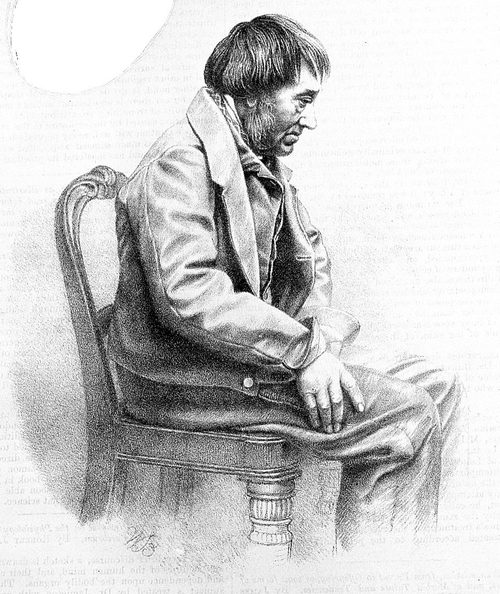
For two thousand years melancholia meant fear and sorrow without cause, blamed on black bile. How physicians from Aretaeus to Kraepelin defined it, and how it became 'depression'.
 1600s–1800s
Hypochondria and the vapours
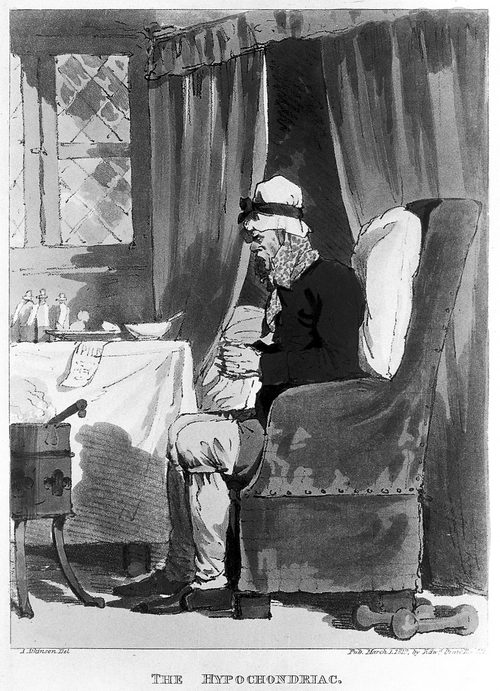
Before it meant fear of illness, hypochondria was a real disease of the gut and nerves, the male twin of hysteria and, with the vapours, the fashionable 'English malady' of the 1700s.
 c. 400 BCE–1800s
The four humours
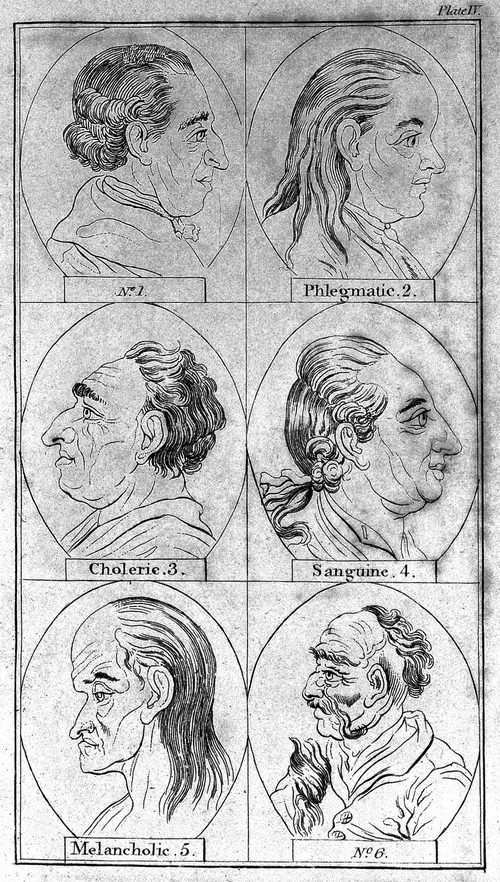
For two thousand years, European and Islamic medicine explained madness and melancholy by four bodily fluids. What the theory claimed about the mind, how it shaped treatment, and how it slowly lost its hold.
 Antiquity–1850s · Abandoned
Bloodletting, purging and emetics
For two thousand years doctors bled, purged and vomited people with mania and melancholy. How depletion worked in theory, how it was done at Bethlem and in Philadelphia, and how it faded in the nineteenth century.
 Mesolithic–17th century · Transformed
Trepanation
Holes cut in living skulls survive from the Stone Age onwards, many of them healed. What the archaeology shows, why the idea that they let out evil spirits is a nineteenth-century guess, and where madness fits in.
 Antiquity–19th century
Demonic possession and its critics
Many cultures have explained fits, voices and despair as the work of spirits. How Europeans argued over possession from Hippocrates to Charcot, and why the story that medicine simply defeated superstition is too simple.