
Diagnosis · c. 400 BCE–1900s
Melancholia
For two thousand years melancholia meant fear and sorrow without cause, blamed on black bile. How physicians from Aretaeus to Kraepelin defined it, and how it became 'depression'.
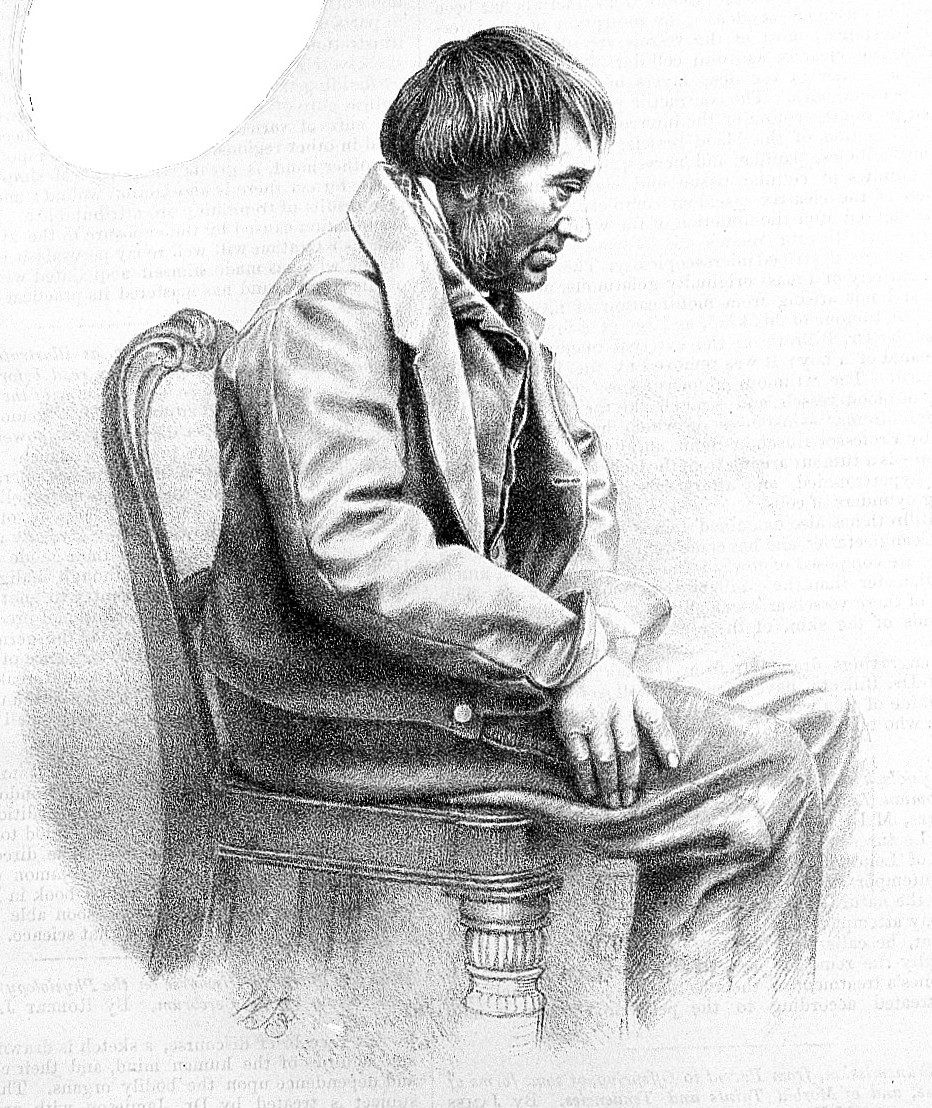
For most of recorded medicine, melancholia was less a single disease than a way of reading a person. A Hippocratic aphorism held that "fears and despondencies, if they last a long time" were its sign, and the name itself (Greek melaina chole, black bile) carried a theory of cause: one of the four humours, in excess, darkening the mind4,7.
Black bile and a fixed idea
The fullest ancient description comes from Aretaeus of Cappadocia, a Greek physician usually placed in the first or second century CE. He defined melancholy as low spirits fixed on a single idea, without fever, and he noticed what later writers would forget for centuries: that it sometimes turned into its opposite, which he called mania1,4.
the patients are dull or stern, dejected or unreasonably torpid, without any manifest cause: such is the commencement of melancholy.1
Quotation checked against the 1856 text
Aretaeus also recorded that some sufferers grew suspicious of poisoning, fled company or "contract a hatred of life", and he blamed black bile rising towards the diaphragm, though he admitted that in some cases there was "neither flatulence nor black bile, but mere anger and grief"1. Galen, in the second century, added the fixed, oddly specific false belief: the patient convinced he had become a snail, reasoning normally on every other subject4. These two strands, sorrow and the single mistaken idea, ran side by side for the next fifteen hundred years.
Burton's anatomy
The great English summa is Robert Burton's The Anatomy of Melancholy, first published at Oxford in 1621 and expanded through several editions. Burton, an Oxford clergyman and scholar, compiled hundreds of authorities, and repeated the common definition: "a kind of dotage without a fever, having for his ordinary companions, fear and sadness, without any apparent occasion"2. He was candid about why he wrote:
I write of melancholy, by being busy to avoid melancholy.2
Quotation checked against the 1621 text
Burton made melancholy almost universal, a condition of fallen humanity as well as a disease, and his cures mixed medicine with moral advice: diet, air, exercise, music, friendship, purges, and the purgative hellebore that physicians had used since antiquity. His final counsel to readers was blunt: "Be not solitary, be not idle"2.
Physicians who accepted the humoral theory treated it accordingly, with diet, purges and bloodletting, purging and emetics to draw off the offending bile, and with travel and diversion for those who could afford them2. When Philippe Pinel abandoned humours for a descriptive scheme in Paris around 1800, melancholia was still one of his four great classes of mental alienation, beside mania, dementia and "idiocy" (the period's term for lifelong intellectual disability)4.
Partial insanity and lypemania
Around 1800 the emphasis shifted. William Cullen in Edinburgh and Pinel in Paris treated melancholia as a "partial insanity", a delusion confined to one subject, and less as a disorder of feeling4,5. Pinel's pupil Jean-Étienne Esquirol found the old word too loose. He split partial insanity into monomania, the expansive form, and "lypemania" (from Greek lype, sorrow), the sad one, and argued that ordinary usage should give the old word up:
The word melancholy, employed in the language of common life to express that habitual state of sadness from which some people suffer, should be left exclusively to moralists and poets, who, in their expressions, are not obliged to employ so much precision as physicians.3
Quotation checked against the 1845 text
The word did not go. Kenneth Kendler, reading twelve authors from the 1780s to the 1880s, shows how the explanation then reversed. In the 1850s Joseph Guislain, and John Bucknill and Daniel Hack Tuke, drew attention to melancholia without delusions; by the 1860s–1880s Wilhelm Griesinger, Henry Maudsley, Richard von Krafft-Ebing and Emil Kraepelin agreed that the disorder was primarily one of mood, and that the delusions grew understandably out of the misery rather than causing it5.
From melancholia to depression
Kraepelin's textbook is where the old diagnosis was absorbed. His sixth edition (1899) created "manic-depressive insanity" but kept the melancholia of later life, "involutional melancholia", apart. Kraepelin then commissioned a follow-up of his own Heidelberg cases; when Dreyfus's 1907 monograph found that the distinctions did not hold, the eighth edition (1913) brought it in6. Meanwhile the physiological metaphor "mental depression" spread through clinical writing and, in the early twentieth century, gradually replaced "melancholia" as the everyday medical term4.
Sigmund Freud's essay "Mourning and Melancholia" (1917) kept the old word for a psychoanalytic argument: that melancholia resembles grief, except that the sufferer cannot clearly identify what has been lost, so the work of mourning goes on unconsciously and becomes pathological8. The term survives today only in a narrow technical sense: in the DSM-IV and DSM-5 classifications, "melancholic features" is a specifier for a severe form of depression marked by loss of pleasure and physical slowing4,7.
What it maps to now, and why that is uncertain
Psychiatrists and historians such as Telles-Correia, Gama Marques and Kendler treat melancholia as the ancestor of modern depression, and many think that a large share of people once called melancholic would today be diagnosed with severe depression4,5. The fit is loose. For most of its history melancholia took in fixed false beliefs on any theme, including Galen's snail; it also took in temperament, genius and religious despair, and Burton's book is as much about the human condition as about illness1,2,4. Case records are sparse before 1800 and were written in a vocabulary that answered different questions from ours. Kendler's account also shows that the modern concept was shaped by theory as well as observation: nineteenth-century writers decided which faculty, judgement or mood, came first, and sorted their patients accordingly5. The twentieth-century treatments that followed, electroconvulsive therapy and the first antidepressants, were aimed at depression in that new sense.
Key dates
- 1621 Robert Burton publishes The Anatomy of Melancholy in Oxford.
- 1838 Esquirol's Des maladies mentales proposes 'lypemania' for the sad form of partial insanity.
- 1899 Kraepelin's sixth edition defines manic-depressive insanity but keeps involutional melancholia separate.
- 1913 Kraepelin's eighth edition folds involutional melancholia into manic-depressive insanity.
- 1917 Freud publishes 'Mourning and Melancholia'.
Sources
- Primary source Aretaeus of Cappadocia, The Extant Works of Aretaeus, the Cappadocian (trans. Francis Adams), London: Sydenham Society (1856). Quotations checked against this text.
- Primary source Robert Burton, The Anatomy of Melancholy, Oxford: Henry Cripps (first edition); Project Gutenberg text (1621). Quotations checked against this text.
- Primary source Jean-Étienne Dominique Esquirol, Mental Maladies: A Treatise on Insanity (trans. E. K. Hunt), Philadelphia: Lea and Blanchard (1845). Quotations checked against this text.
- Scholarship Diogo Telles-Correia and João Gama Marques, Melancholia before the twentieth century: fear and sorrow or partial insanity?, Frontiers in Psychology 6:81 (2015).
- Scholarship Kenneth S. Kendler, The origin of our modern concept of depression: the history of melancholia from 1780–1880. A review, JAMA Psychiatry 77(8) (2020).
- Scholarship Kenneth S. Kendler and Eric J. Engstrom, Dreyfus and the shift of melancholia in Kraepelin's textbooks from an involutional to a manic-depressive illness, Journal of Affective Disorders 271 (2020).
- Wikipedia Melancholia, Wikipedia (2026).
- Wikipedia Mourning and Melancholia, Wikipedia (2026).
Cross-checked with Wikidata Q192077 and the English Wikipedia article.
Read next
 c. 100 CE–1980
Mania
Mania once meant madness itself: raving, sleepless, sometimes joyful. How the word narrowed from Aretaeus to Kraepelin, and how it became one pole of manic-depressive illness.
 c. 400 BCE–1800s
The four humours
For two thousand years, European and Islamic medicine explained madness and melancholy by four bodily fluids. What the theory claimed about the mind, how it shaped treatment, and how it slowly lost its hold.
 1810s–1870s
Monomania
Esquirol's monomania described a mind sound in every way but one: a single fixed idea or irresistible impulse. It made alienists expert witnesses, then fell apart under criticism after 1854.
 1600s–1800s
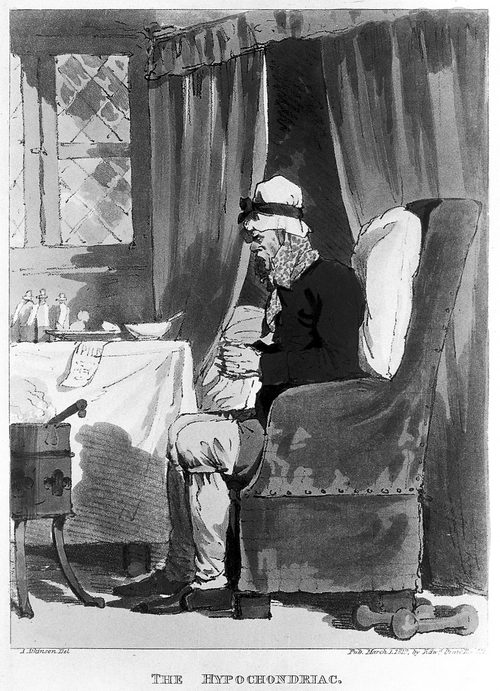
Hypochondria and the vapours
Before it meant fear of illness, hypochondria was a real disease of the gut and nerves, the male twin of hysteria and, with the vapours, the fashionable 'English malady' of the 1700s.
 1952–1970s · Transformed
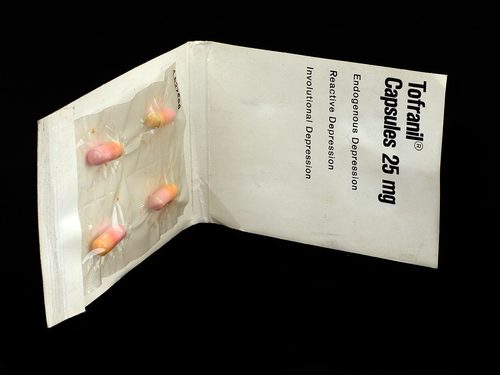
The first antidepressants
Two chance findings of the 1950s, a tuberculosis drug that lifted patients' spirits and a failed antipsychotic tested in a Swiss asylum, gave psychiatry its first antidepressants and a disputed chemical theory.
 Essay · 6 min
Can we diagnose the dead?
Why this site never diagnoses historical figures, and hedges every modern equivalent it gives: the evidence was made for other purposes, diseases change their identities, and each age's diagnoses of the dead reflect its own medicine.
Pages that mention Melancholia
- Diagnosis Catatonia
- Diagnosis Dancing mania
- Diagnosis Hypochondria and the vapours
- Diagnosis Mania
- Diagnosis Monomania
- Diagnosis Neurasthenia
- Diagnosis Nostalgia
- Diagnosis Puerperal insanity
- Essay Can we diagnose the dead?
- Essay How words for madness changed
- Person Clifford Beers
- Person Emil Kraepelin
- Person Jean-Baptiste Pussin
- Person Jean-Étienne Esquirol
- Person Johann Weyer
- Person Philippe Pinel
- Person Robert Burton
- Person Sigmund Freud
- Person William Tuke
- Place The York Retreat
- Theory Demonic possession and its critics
- Theory The four humours
- Treatment Bloodletting, purging and emetics
- Treatment Lithium
- Treatment The first antidepressants
- Treatment The rest cure
- Treatment Trepanation