
Person · 24 March 1732 – 6 December 1822
William Tuke
York tea merchant and Quaker (1732–1822) who, after a Friend died in the York Asylum, led the founding of the Retreat in 1796 and ran it in its early years; his grandson's account of it made 'moral treatment' famous.
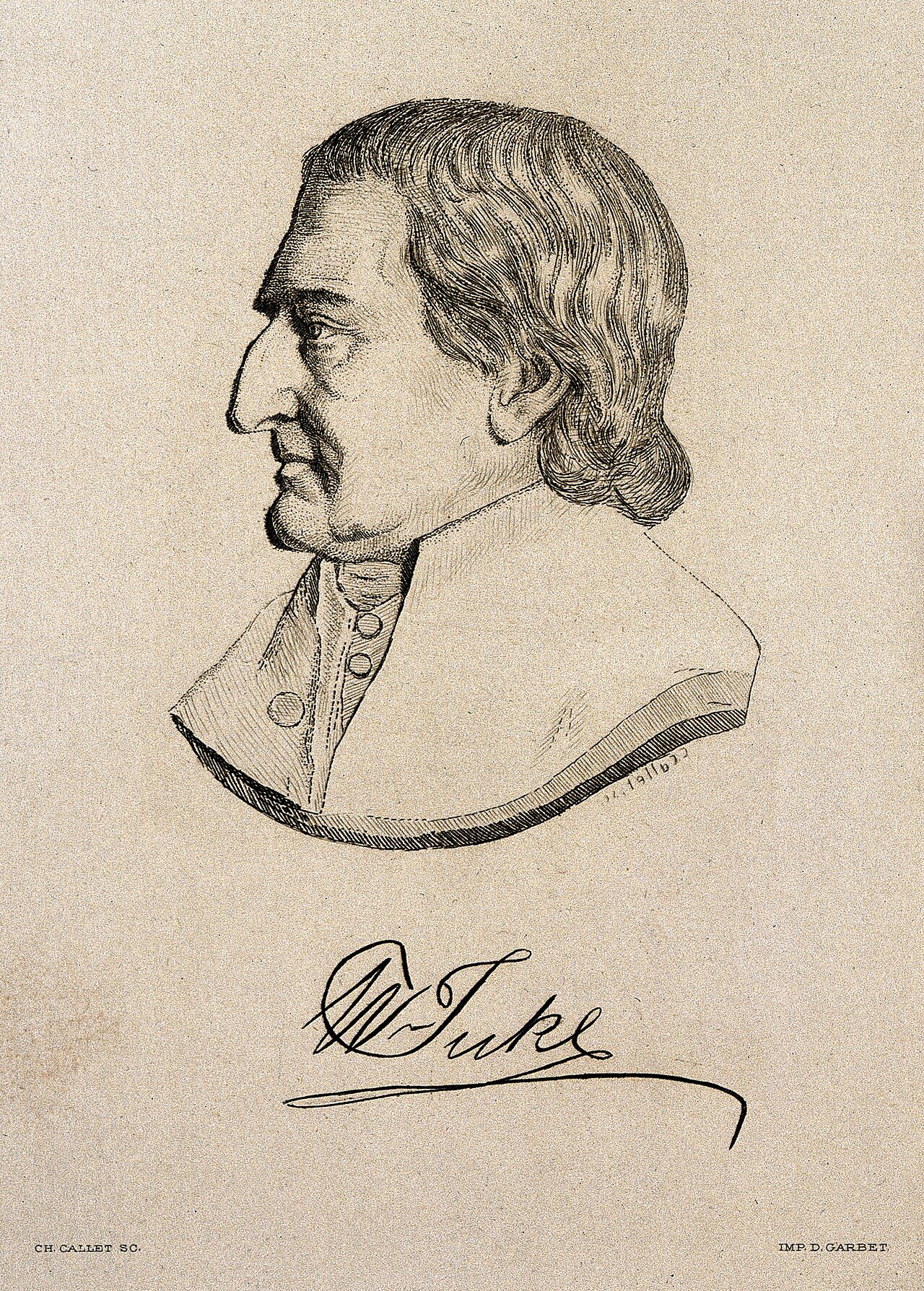
In 1813 Samuel Tuke dedicated his book on the York Retreat, without asking, to his grandfather:
To William Tuke, the first active promoter of the establishment described in the following pages1
Quotation checked against the 1813 text
The dedication goes on to praise exertions "unrelaxed at the advanced age of eighty years"1. William Tuke was a merchant, not a doctor, and he came to the care of the mentally ill late, at about sixty. His contribution was organisation, persistence and a conviction, rooted in his faith, that the Society of Friends could look after its own members better than the public asylum had.
A York merchant
Tuke was born in York on 24 March 1732, the son of a shopkeeper and weaver who died when William was 16. He was apprenticed at 14 to an aunt's wholesale tea business, which he later inherited and built up6. He married twice: Elizabeth Hoyland in 1754, who died after the birth of their fifth child, and Esther Maud in 17656. He was prominent among Friends, serving as clerk of their Yearly Meeting in 1783, and helped found Quaker schools, including a girls' school in Trinity Lane, York, that Esther ran until her death in 17946.
The death that started it
In March 1790 a Quaker widow from Leeds, Hannah Mills, was admitted to the York Lunatic Asylum suffering from melancholy. Friends in York asked to visit her and were refused, on the ground that she was not in a fit state to see strangers; within about six weeks she was dead3,4,1. Samuel Tuke's account dates this to 1791, and many histories follow him, but the asylum's register and recent research put it in 17901,3.
The idea of a Quaker asylum came, according to the York researchers of HERStory.York, from Tuke's daughter Ann; it was William who carried it3. Samuel Tuke described him as a man "whose persevering mind" made him peculiarly fit for the undertaking1. In March 1792, after the Quarterly Meeting at York, he asked Friends to stay and hear a proposal for an establishment "under the government of Friends" for members of every class of property1. Money came slowly; the meetings that followed raised annuities, donations and annual subscriptions, often well short of what was needed, and Tuke served as treasurer1.
Running the Retreat
The Retreat opened on 11 May 1796 and took its first patients the next month. Its first superintendent, Timothy Maud, a retired Quaker medical man, died after little more than two months, and Tuke ran the house himself until George Jepson was appointed1,6. Under Tuke and Jepson the Retreat developed the regime that Samuel Tuke later described: no chains or beatings, regular work, kind but firm attendants, and an appeal to each patient's self-control and wish for esteem, while the strait-waistcoat and seclusion remained for patients thought dangerous1,2. Tuke stayed closely involved until he lost his sight in his eighties6. He died in York on 6 December 18226.
The Tuke family and their reputation
Tuke's real publicist was his grandson. Samuel Tuke's Description of the Retreat (1813) made "moral treatment" familiar in English and turned a small Quaker house into an international model2,5. The family stayed in the field: Samuel's son Daniel Hack Tuke became one of the leading medical authorities on insanity in Victorian Britain6.
Tuke is often paired with Philippe Pinel, though they worked independently and from different starting points, Pinel's medical and Tuke's religious5. Both have been read as liberators and as inventors of a quieter form of control. Michel Foucault argued that the Retreat replaced chains with guilt and self-surveillance; other historians have answered that, whatever its limits, it was more humane than most of what came before5.
Key dates
- 1783 Tuke serves as clerk of the Quakers' Yearly Meeting.
- April 1790 Hannah Mills, a Quaker widow, dies in the York Asylum after Friends are refused permission to visit her.
- March 1792 Tuke proposes a Quaker asylum to Friends after the Quarterly Meeting at York.
- 11 May 1796 The Retreat opens; after its first superintendent dies, Tuke manages it himself for a time.
- 1813 His grandson Samuel Tuke publishes the Description of the Retreat, dedicated to him.
- 6 December 1822 Tuke dies in York, aged 90.
Tuke on this site
Sources
- Primary source Samuel Tuke, Description of the Retreat, an Institution near York, for Insane Persons of the Society of Friends, York: W. Alexander (1813). Quotations checked against this text.
- Scholarship R. H. S. Mindham, The Retreat at York of 1796 – psychiatry in pictures, The British Journal of Psychiatry 218(5) (2021).
- Scholarship HERStory.York, HERStory.York Research: Hannah Mills, HERStory.York (2024).
- Museum or archive Alexandra Medcalf, The York Lunatic Asylum Scandal, Borthwick Institute for Archives, University of York (2014-10-10).
- Wikipedia Moral treatment, Wikipedia.
- Wikipedia William Tuke, Wikipedia.
Cross-checked with Wikidata Q6216521 and the English Wikipedia article.
Read next
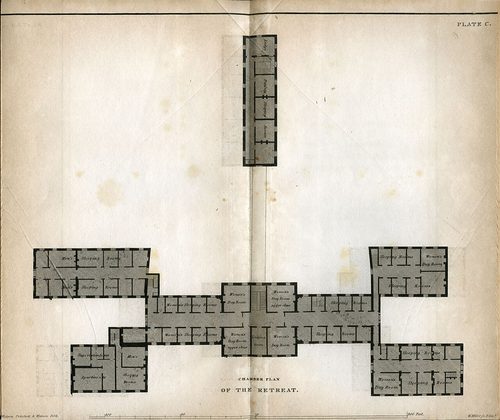 1790s–1870s · Transformed
Moral treatment
Moral treatment, developed at Bicêtre in Paris and the York Retreat in the 1790s, tried to cure madness through kindness, routine, work and self-control rather than chains and drugs. It shaped a century of asylums.
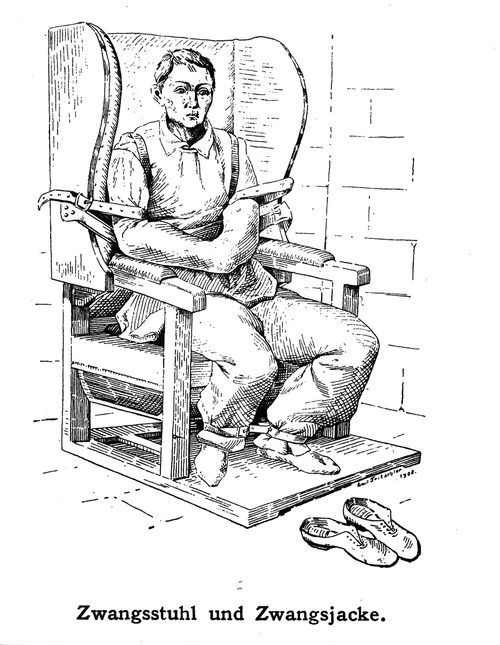 1700s–1890s · Transformed
Restraint and the non-restraint movement
Chains, strait-waistcoats and restraint chairs were the ordinary equipment of asylums until the late 1830s, when Lincoln and then Hanwell abolished them. Britain made non-restraint a doctrine; much of the world did not.
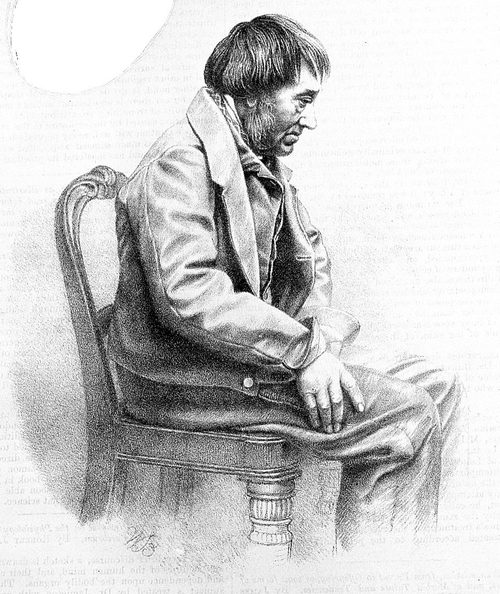 c. 400 BCE–1900s
Melancholia
For two thousand years melancholia meant fear and sorrow without cause, blamed on black bile. How physicians from Aretaeus to Kraepelin defined it, and how it became 'depression'.
 Essay · 7 min
The rise and fall of the asylum
How the public asylum grew from a few small madhouses into hospitals of thousands, and was then closed: an argument that its failures came from its success at taking in the people no other institution would hold.