
Person · 27 May 1794 – 5 March 1866
John Conolly
English physician (1794–1866) who began as a critic of asylums and became their most famous champion, abolishing mechanical restraint at Hanwell in 1839; historians have since questioned how much of the credit was his.
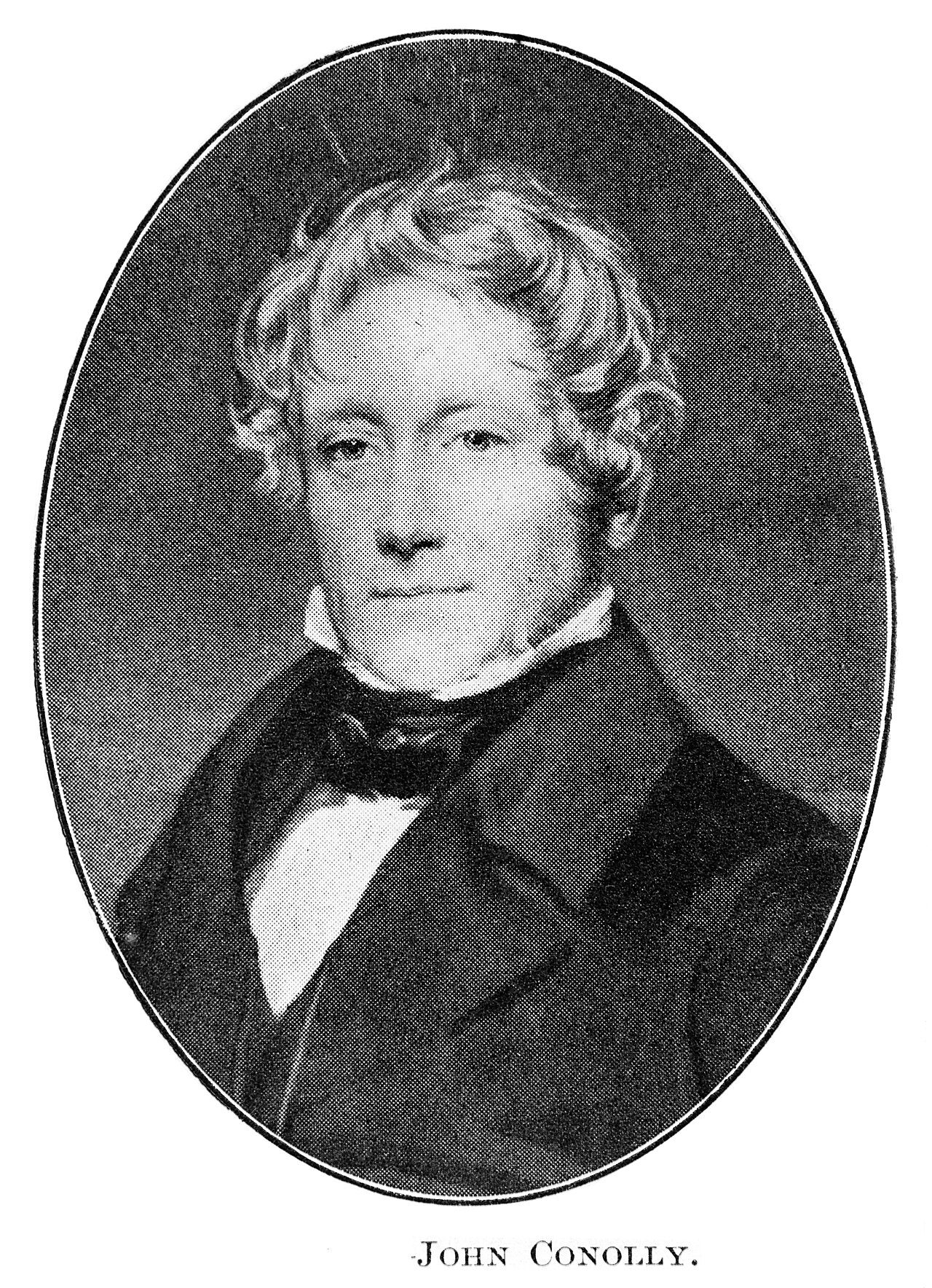
The man who became the face of the Victorian asylum began his career by attacking it. In 1830, as a young professor of medicine in London, John Conolly argued that asylums were good only for the most severely ill, and harmful for most of the people in them:
The crowd of most of our asylums is made up of odd but harmless individuals, not much more absurd than numbers who are at large.1
Quotation checked against the 1830 text
Shut away from ordinary society, he went on, such people lost the daily checks that kept their oddities in bounds:
In an asylum for lunatics, the eccentric man makes little or no effort to correct his eccentricity; nor the irritable man his irritability; and the man of gloom sits in motionless despondency from morning until night1
Quotation checked against the 1830 text
Within a decade he was running one of the largest asylums in England, and he spent the rest of his life defending the institution he had once criticised.
A slow start
Conolly was born on 27 May 1794 at Market Rasen in Lincolnshire, into a family of Irish descent. He spent four years as a lieutenant in the Cambridgeshire Militia and a year in France before turning to medicine, and took his degree at Edinburgh in 18216. He practised in turn at Lewes, Chichester and Stratford-upon-Avon. In 1828 he became professor of the practice of medicine at the new London University, now University College, and published his Inquiry concerning the Indications of Insanity in 1830 before moving to Warwick6. In 1832 he was one of the founders of the Provincial Medical and Surgical Association, which became the British Medical Association6.
Hanwell
In 1839 the Middlesex magistrates appointed him resident physician of their county asylum at Hanwell, which held some 800 patients. Before starting he visited the small Lincoln asylum, where Edward Charlesworth and Robert Gardiner Hill had given up restraint altogether, and talked with both2. He took up residence on 1 June, demanded a daily count of patients under restraint, and from 20 September 1839 no restraint was used at all2. The story is told in more detail on our page on restraint and non-restraint.
For Conolly, restraint was a way of saving staff the trouble of care:
Restraints and neglect may be considered as synonymous; for restraints are merely a general substitute for the thousand attentions required by troublesome patients.2
Quotation checked against the 1856 text
His alternative needed more and better-trained attendants, occupation, and padded rooms for seclusion, which critics called restraint by another name2. The Times and The Lancet backed him, and by 1846 the Lunacy Commission had made non-restraint the national orthodoxy5. He gave up residence at Hanwell in 1844, remaining visiting physician until 18526. His books The Construction and Government of Lunatic Asylums (1847) and The Treatment of the Insane without Mechanical Restraints (1856) set out the system at length; the second was translated into German in 18606,2.
Private practice and reputation
In later life Conolly took private patients at Lawn House, a private asylum of his own at Hanwell6. His daughter Ann married the young psychiatrist Henry Maudsley about two months before Conolly died, at Hanwell, on 5 March 18666.
None of this undid what happened at Hanwell in 1839. In May 2022 English Heritage put up a blue plaque to Conolly and the asylum, the first of its official plaques in Hanwell5.
Key dates
- 1821 Conolly takes his medical degree at Edinburgh.
- 1828 Conolly becomes professor of the practice of medicine at the new London University (University College).
- 1830 His Inquiry concerning the Indications of Insanity criticises the confinement of harmless people in asylums.
- 1 June 1839 Conolly begins as resident physician at the Middlesex County Asylum, Hanwell.
- 20 September 1839 Mechanical restraint ceases to be used at Hanwell.
- 1844 Conolly gives up residence at Hanwell, remaining visiting physician until 1852.
- 1856 He publishes The Treatment of the Insane without Mechanical Restraints.
- 5 March 1866 Conolly dies at Hanwell.
Conolly on this site
Sources
- Primary source John Conolly, An Inquiry concerning the Indications of Insanity, with Suggestions for the Better Protection and Care of the Insane, London: John Taylor (1830). Quotations checked against this text.
- Primary source John Conolly, The Treatment of the Insane without Mechanical Restraints, London: Smith, Elder (1856). Quotations checked against this text.
- Scholarship Jonathan Andrews, Review of Masters of Bedlam (Scull, MacKenzie and Hervey), Reviews in History, Institute of Historical Research (1997-03).
- Scholarship Akihito Suzuki, The politics and ideology of non-restraint: the case of the Hanwell Asylum, Medical History 39(1) (1995).
- Official English Heritage, Dr John Conolly and the former Hanwell Asylum receive English Heritage blue plaque, English Heritage (2022-05-12).
- Wikipedia John Conolly, Wikipedia.
Cross-checked with Wikidata Q122721 and the English Wikipedia article.
Read next
 1700s–1890s · Transformed
Restraint and the non-restraint movement
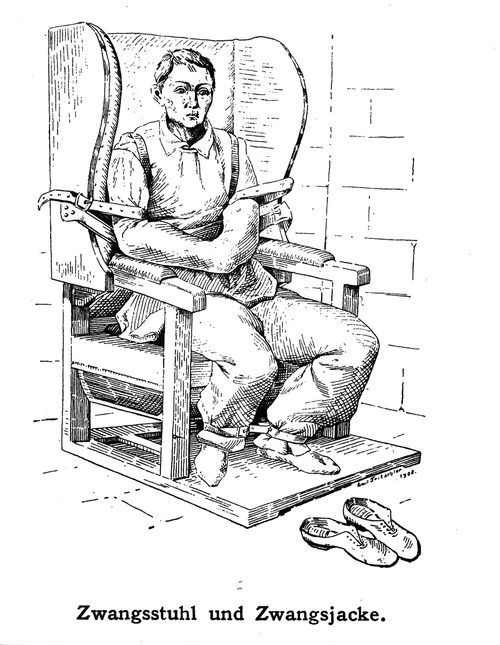
Chains, strait-waistcoats and restraint chairs were the ordinary equipment of asylums until the late 1830s, when Lincoln and then Hanwell abolished them. Britain made non-restraint a doctrine; much of the world did not.
 1790s–1870s · Transformed
Moral treatment
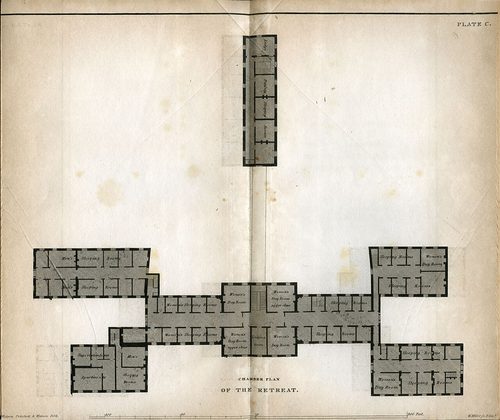
Moral treatment, developed at Bicêtre in Paris and the York Retreat in the 1790s, tried to cure madness through kindness, routine, work and self-control rather than chains and drugs. It shaped a century of asylums.
 1835–1910s
Moral insanity
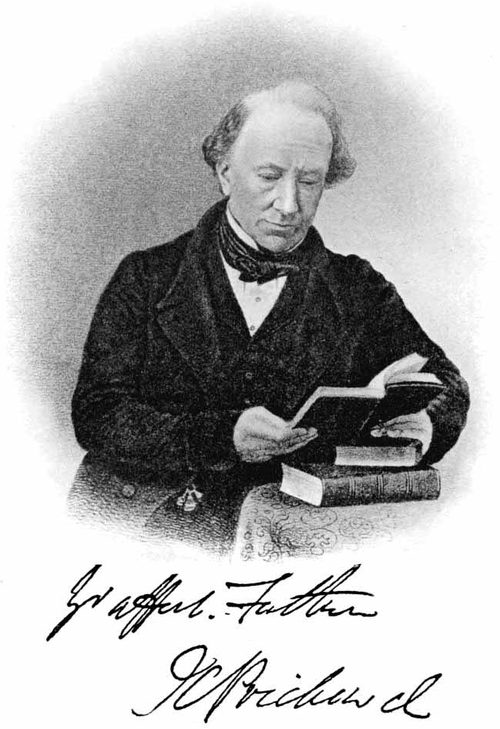
In 1835 J. C. Prichard named a madness of feeling and conduct with reason intact. Moral insanity reached the Old Bailey, provoked a backlash, and fed the later ideas of 'moral imbecility' and psychopathy.
 Essay · 7 min
The rise and fall of the asylum
How the public asylum grew from a few small madhouses into hospitals of thousands, and was then closed: an argument that its failures came from its success at taking in the people no other institution would hold.
 Essay · 7 min
Who got locked up, and why
Asylum populations were never a simple sample of the mentally ill. Poverty, family, the Poor Law, sex, migration, race, age and bodily disease all decided who was confined, and historians still argue over how much each counted.