
Theory · 1796–1850s
Phrenology
Phrenology held that the mind was a set of faculties, each with its own organ in the brain, readable on the skull. Long dismissed as a fad, it also shaped how early asylum reformers thought about madness.
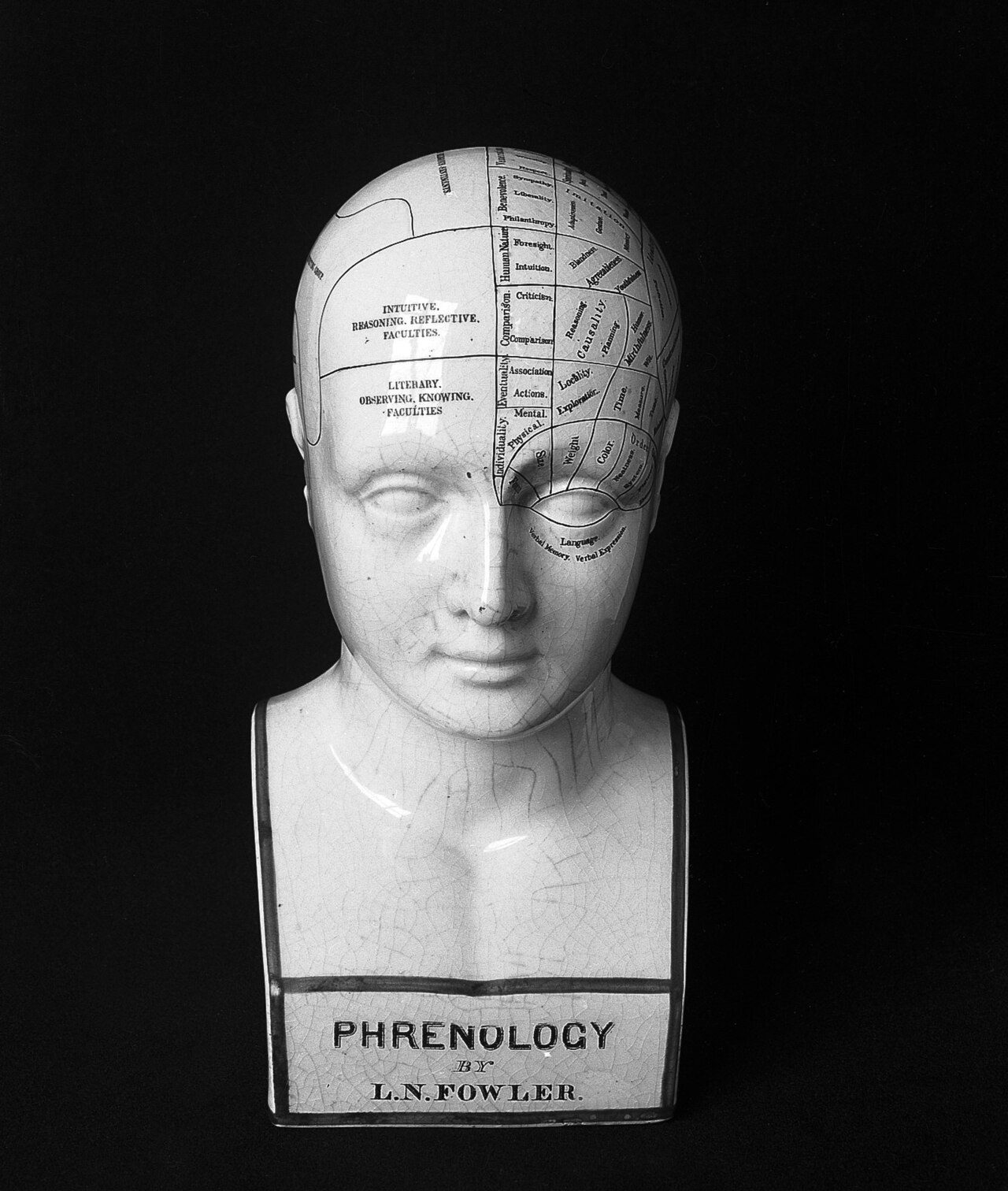
In 1837 the young Scottish doctor William Alexander Francis Browne dedicated his lectures on asylum reform, What Asylums Were, Are, and Ought to Be, to Andrew Combe, in gratitude for "his exposition of the application of phrenology in the treatment of insanity"2. Browne went on to run the Crichton Royal Institution at Dumfries, where he introduced classes, dances and a patients' magazine, and later became a Commissioner in Lunacy for Scotland8. His book, among the most influential arguments for humane asylums in Britain, rested on a theory now remembered mainly for porcelain heads marked out in numbered zones. Phrenology's history in psychiatry is less a story of a fad than of an idea that was wrong in its details and important in its effects.
Gall's organology
Franz Joseph Gall, a German-born physician practising in Vienna, began lecturing at his home there in about 1796 on what he called organology4. His claims were these: the brain is the organ of the mind; the mind is not a single power but a set of distinct faculties, such as the instinct of self-defence, the love of offspring, the sense of colour or the talent for language; each faculty has its own organ in the cerebral cortex; the size of an organ reflects the strength of the faculty; and because the skull grows over the brain, its contours betray the organs beneath4,6. He gathered evidence by studying the skulls of people unusually strong in a single trait, and by dissecting human and animal brains, much of it with his assistant from 1805, Johann Gaspar Spurzheim4. Gall eventually listed twenty-seven faculties4.
Critics heard materialism, fatalism and even atheism in the doctrine, and the Vienna of Emperor Francis II was growing more repressive; Gall left to lecture in the German states and eventually settled in Paris, where he died in 18284,7. Spurzheim broke with him, popularised the name "phrenology" and the practice of reading character from the head, and lectured with great success in Britain in 1814 and 1815 and in the United States, where he died in 18326.
A science for reformers
In Britain the movement's leader was George Combe, an Edinburgh lawyer, whose The Constitution of Man (1828) sold more than 200,000 copies6. The Edinburgh Phrenological Society, founded in 1820, attracted reformers and doctors; in 1826 about a third of its 120 members had a medical background6. Its appeal lay partly in its optimism. If character was a matter of organs that could be exercised or restrained, then education, prisons and asylums could be designed to strengthen the good and quiet the bad. The theory also offered a natural, non-moralising account of insanity at a time when madness was still often treated as a failing of the will.
Phrenology fitted the clinical facts that troubled asylum doctors. Many patients were deranged on one subject and rational on all others, a condition Esquirol called monomania. If the mind were a single indivisible power, that was hard to explain; if it were many faculties, each with its own organ, it was what one would expect. Combe made the point directly1:
Partial insanity, or that state in which one or more faculties of the mind are diseased, without affecting the integrity of the remainder, is known by the name of Monomania1
Quotation checked against the 1830 text
Phrenology in the asylum
Browne's lectures show how the theory shaped practice. He opened with the headings "Derangement a disease of the Brain" and classified insanity by faculties, defining monomania as the "derangement of one or more faculties"2. His argument for treatment followed from his physiology:
Lastly it is proved, that the integrity and health of these powers depend upon the structure of the brain and its coverings2
Quotation checked against the 1837 text
If madness was a bodily disease of the brain, it was not a crime or a sin, and patients were owed medical care; if faculties could be exercised, then occupation, education, amusement and kindness, the tools of moral treatment, would act on the diseased organs themselves. John Conolly, who later abolished mechanical restraint at Hanwell, also used phrenology with his patients6. Phrenological language also fed into later debates on moral insanity, in which a person's moral feelings were thought to be diseased while the intellect stayed sound.
Decline
The physiological case against phrenology came from experiment. In the 1820s Jean-Pierre Flourens removed parts of the brains of pigeons and other animals and found either no loss of function or losses that did not match Gall's map, which suggested that Gall's organs were imaginary6. Satire and the commercial head-reading of travelling lecturers, especially in the United States, where the Fowler brothers ran a profitable publishing and consulting business, made phrenology a byword for credulity6. Some practitioners also used skull measurements to rank human races, lending phrenology to the scientific racism of the period6. By the 1892 Dictionary of Psychological Medicine the "organs" appeared only in inverted commas, "studied through the impressions they are supposed to make on the shape of the cranium"3.
Yet the basic principle returned. In 1861 Paul Broca showed that a patient who had lost the power of speech had a lesion in the left frontal lobe, and localisation of function became a foundation of neurology, though on the evidence of lesions rather than bumps6. In 2018 a team at Oxford tested the phrenologists' specific claim with MRI scans of 5,724 people from the UK Biobank, comparing head shape with measures of the faculties. They found no evidence for it5.
Key dates
- 1796 Franz Joseph Gall begins lecturing in Vienna on the faculties of mind and their organs in the brain.
- 1805 Johann Gaspar Spurzheim becomes Gall's assistant in his anatomical research.
- 1820 The Edinburgh Phrenological Society is founded; by 1826 about a third of its members are medical men.
- 1828 George Combe's The Constitution of Man is published; it sells more than 200,000 copies.
- 1837 W. A. F. Browne's What Asylums Were, Are, and Ought to Be, a phrenological manifesto for asylum reform, is published.
- 1861 Paul Broca links loss of speech to damage in the left frontal lobe, reviving localisation on new evidence.
Sources
- Primary source George Combe, A System of Phrenology (3rd ed.), Edinburgh: John Anderson (1830). Quotations checked against this text.
- Primary source W. A. F. Browne, What Asylums Were, Are, and Ought to Be, Edinburgh: Adam and Charles Black (1837). Quotations checked against this text.
- Primary source Daniel Hack Tuke (ed.), A Dictionary of Psychological Medicine, vol. 2 (entry 'Phrenology'), London: J. and A. Churchill (1892). Quotations checked against this text.
- Scholarship Paul Eling and Stanley Finger, Franz Joseph Gall on God and religion: 'Dieu et cerveau, rien que Dieu et cerveau!', Journal of the History of the Behavioral Sciences 58(3) (2022).
- Scholarship Oiwi Parker Jones, Fidel Alfaro-Almagro and Saad Jbabdi, An empirical, 21st century evaluation of phrenology, Cortex 106: 26–35 (2018).
- Wikipedia Phrenology, Wikipedia (2026).
- Wikipedia Franz Joseph Gall, Wikipedia (2026).
- Reference Jonathon Rutherford, Shining a light on 'what asylums were', The Psychologist (British Psychological Society) (2019-10-15).
Cross-checked with Wikidata Q188584 and the English Wikipedia article.
Read next
 1810s–1870s
Monomania
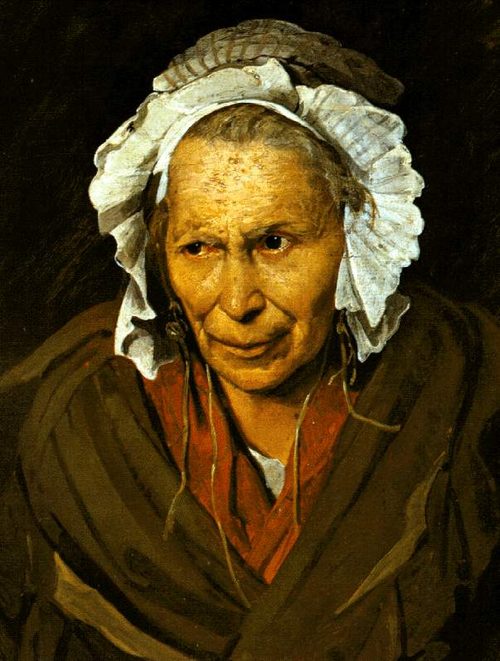
Esquirol's monomania described a mind sound in every way but one: a single fixed idea or irresistible impulse. It made alienists expert witnesses, then fell apart under criticism after 1854.
 1790s–1870s · Transformed
Moral treatment
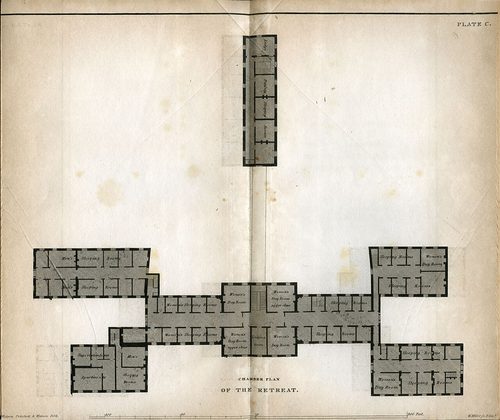
Moral treatment, developed at Bicêtre in Paris and the York Retreat in the 1790s, tried to cure madness through kindness, routine, work and self-control rather than chains and drugs. It shaped a century of asylums.
 1770s–1850s
Animal magnetism and mesmerism
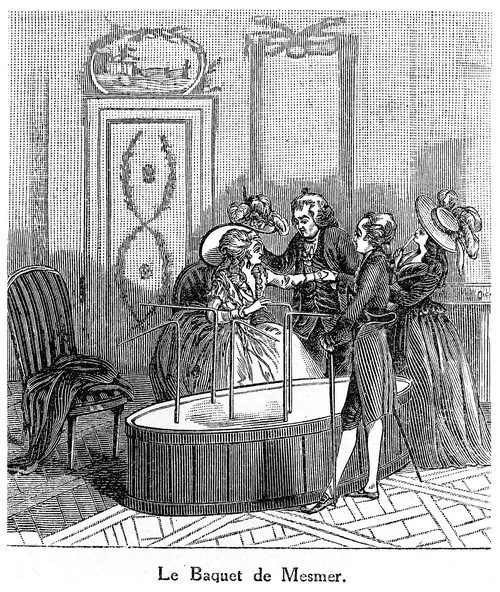
Franz Anton Mesmer claimed an invisible fluid linked all living things and could cure nervous disorders. A royal commission found only imagination at work, but his methods led to hypnotism and the psychology of suggestion.
 1857–1914
Degeneration theory
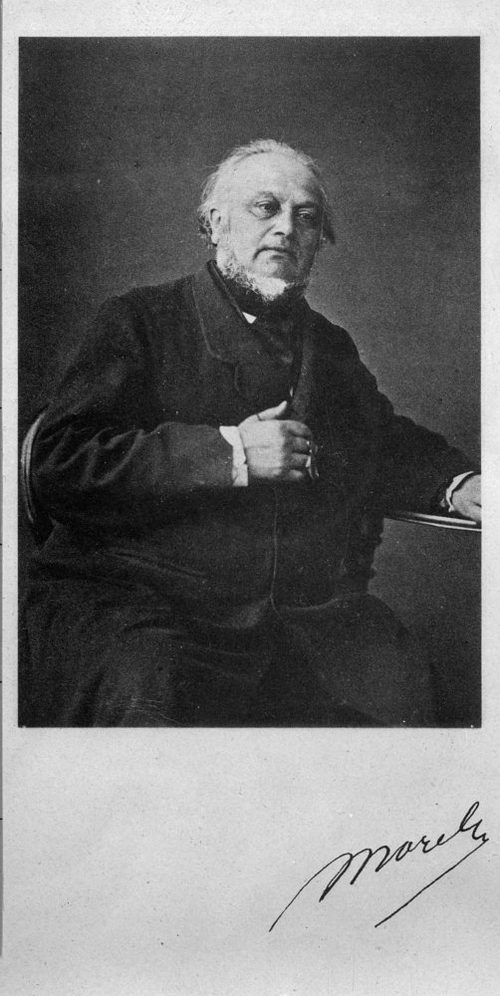
From the 1850s many psychiatrists believed that madness was the sign of a family in hereditary decline, worsening with each generation. How Morel's theory spread, what it explained for asylum doctors, and where it led.
 1845–1990
The biological turn
From Griesinger's claim in the 1840s that mental illness is brain disease, through the microscope, the shock therapies and the drug revolution, to DSM-III in 1980: how psychiatry repeatedly turned to the body.
 1835–1910s
Moral insanity
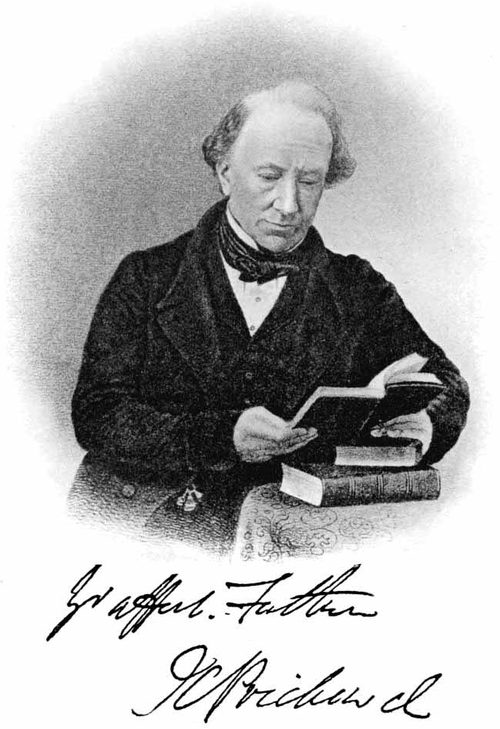
In 1835 J. C. Prichard named a madness of feeling and conduct with reason intact. Moral insanity reached the Old Bailey, provoked a backlash, and fed the later ideas of 'moral imbecility' and psychopathy.