
Person · 3 February 1772 – 12 December 1840
Jean-Étienne Esquirol
Pinel's leading pupil (1772–1840), who taught psychiatry at the Salpêtrière, surveyed France's asylums, defined hallucination and monomania, and shaped the 1838 law that gave every French département an asylum.
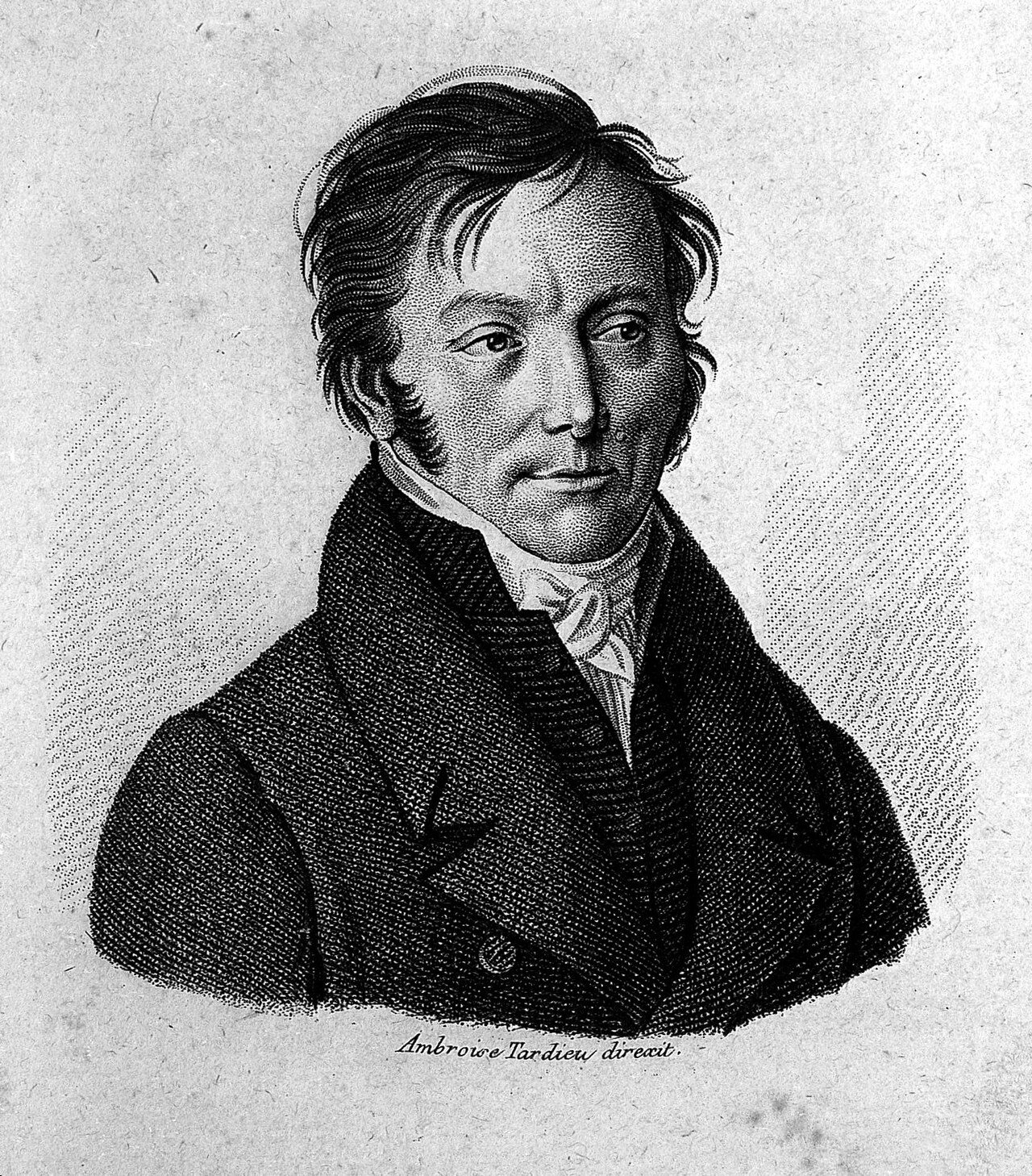
Esquirol opened his great book of 1838 with a modest claim about his method:
I have noticed the symptoms of insanity, and have studied the manners, habits, and wants of the insane, in the midst of whom I have passed my life.1
Quotation checked against the 1845 text
It was true. Few doctors of his generation spent so long among people with mental illness, and none did more to turn Pinel's ideas into a profession, a vocabulary and a national system of asylums.
Pinel's pupil
Jean-Étienne Dominique Esquirol was born in Toulouse on 3 February 1772 and finished his medical training at Montpellier. In 1799 he came to Paris, attached himself to Pinel at the Salpêtrière, and became his favourite pupil6. With Pinel standing security, he opened a private maison de santé in the rue de Buffon in 1801 or 1802, which by 1810 was counted among the best in Paris6. His thesis of 1805 treated the passions as the causes, the symptoms and the means of cure of insanity, the core idea of moral treatment6.
When Jean-Baptiste Pussin, the lay superintendent of the Salpêtrière's women's division, died in April 1811, Pinel proposed Esquirol to replace him. He served for a year as superintendent before being appointed physician to the division2. The change mattered: the asylum was now run by a doctor rather than a self-taught keeper2. Esquirol later put the principle bluntly in 1818: the physician should be, as it were, the life-principle of an asylum, setting everything in motion (our translation)2.
Naming and classifying
From 1817 Esquirol taught a course on mental illness at the Salpêtrière, probably the first formal teaching of the subject in France6. In the same year he gave a precise meaning to an old word:
A person is said to labor under a hallucination, or to be a visionary, who has a thorough conviction of the perception of a sensation, when no external object, suited to excite this sensation, has impressed the senses.1
Quotation checked against the 1845 text
He also separated dementia, a loss of powers a person had once had, from "idiocy", the period's term for an intellectual disability present from birth:
A man in a state of dementia is deprived of advantages which he formerly enjoyed; he was a rich man, who has become poor. The idiot, on the contrary, has always been in a state of want and misery.1
Quotation checked against the 1845 text
His most influential and most disputed coinage was monomania, a madness confined to a single idea or impulse in an otherwise sound mind. It made alienists indispensable in criminal trials, where only an expert could detect it; Jan Goldstein argues that this was part of its appeal3. His collected writings appeared as Des maladies mentales in 1838 and in English in 18451,6.
A national system
Esquirol travelled through France at his own expense in 1810, 1814 and 1817 to see how the insane were kept, and in 1818 he reported to the minister of the interior with a programme of reform6. The programme called for asylums built for the purpose and directed by physicians2,6. He was made an inspector-general of the medical faculties in 1822 and chief physician of the national asylum at Charenton in 18256.
Much of it became law on 30 June 1838. The law on the insane, of which Esquirol was the chief architect, provided for a public asylum in every French département, and the asylum system it created lasted for well over a century6,3. He died in Paris on 12 December 18406.
Key dates
- 1799 Esquirol comes to Paris and studies under Pinel at the Salpêtrière.
- 1805 His thesis treats the passions as causes, symptoms and means of cure of insanity.
- April 1811 After Pussin's death Esquirol takes over the women's insane division at the Salpêtrière, first as superintendent, then as physician.
- 1817 Esquirol begins a course of lectures on mental illness at the Salpêtrière and gives 'hallucination' its modern meaning.
- 1818 Esquirol reports to the minister of the interior on the condition of the insane across France.
- 1825 Esquirol becomes chief physician of the national asylum at Charenton.
- 1838 Esquirol publishes Des maladies mentales, translated into English in 1845.
- 30 June 1838 The French law on the insane, which Esquirol did more than anyone to shape, requires an asylum for every département.
Esquirol on this site
- Treatment Bloodletting, purging and emetics
- Theory Demonic possession and its critics
- Diagnosis Melancholia
- Theory The four humours
- Essay How words for madness changed
- Place Geel and family care
- Place The Salpêtrière
- Treatment Moral treatment
- Treatment Swinging and rotating chairs
- Diagnosis Monomania
- Diagnosis Puerperal insanity
- Diagnosis General paralysis of the insane
Sources
- Primary source Jean-Étienne Dominique Esquirol, Mental Maladies: A Treatise on Insanity (trans. E. K. Hunt), Philadelphia: Lea and Blanchard (1845). Quotations checked against this text.
- Scholarship Jack Juchet and Jacques Postel, Le « surveillant » Jean-Baptiste Pussin à la Salpêtrière, Histoire des sciences médicales 30(2) (1996).
- Scholarship Jan Goldstein, Console and Classify: The French Psychiatric Profession in the Nineteenth Century, University of Chicago Press (2001).
- Scholarship J. M. S. Pearce, The beginnings of humane psychiatry: Pinel and the Tukes, Hektoen International (2020).
- Wikipedia Philippe Pinel, Wikipedia.
- Wikipedia Jean-Étienne Dominique Esquirol, Wikipedia.
Cross-checked with Wikidata Q517981 and the English Wikipedia article.
Read next
 1810s–1870s
Monomania
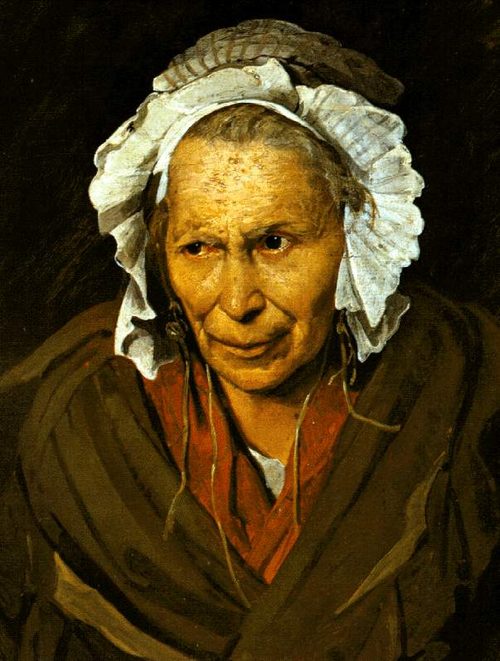
Esquirol's monomania described a mind sound in every way but one: a single fixed idea or irresistible impulse. It made alienists expert witnesses, then fell apart under criticism after 1854.
 1790s–1870s · Transformed
Moral treatment
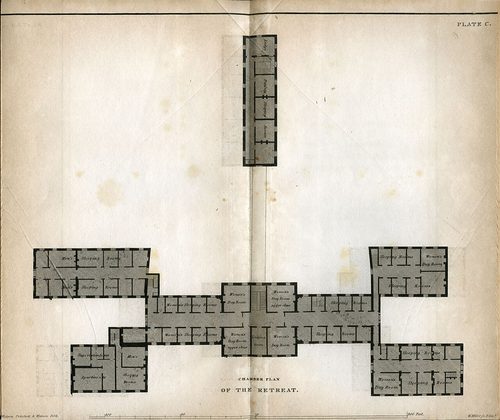
Moral treatment, developed at Bicêtre in Paris and the York Retreat in the 1790s, tried to cure madness through kindness, routine, work and self-control rather than chains and drugs. It shaped a century of asylums.
 c. 400 BCE–1900s
Melancholia
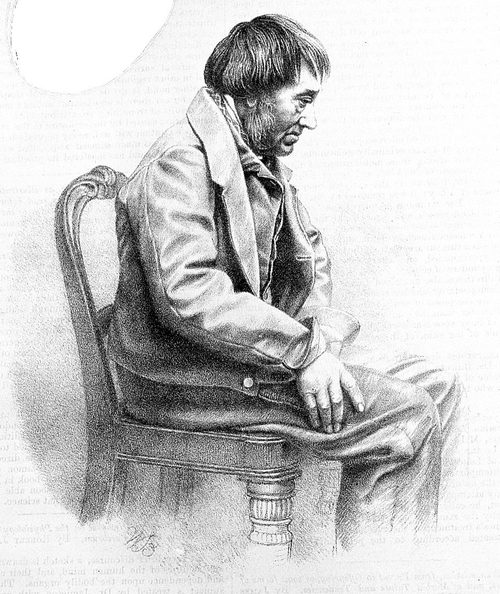
For two thousand years melancholia meant fear and sorrow without cause, blamed on black bile. How physicians from Aretaeus to Kraepelin defined it, and how it became 'depression'.
 c. 100 CE–1980
Mania
Mania once meant madness itself: raving, sleepless, sometimes joyful. How the word narrowed from Aretaeus to Kraepelin, and how it became one pole of manic-depressive illness.
 Essay · 7 min
The rise and fall of the asylum
How the public asylum grew from a few small madhouses into hospitals of thousands, and was then closed: an argument that its failures came from its success at taking in the people no other institution would hold.
Pages that mention Jean-Étienne Esquirol
- Diagnosis General paralysis of the insane
- Diagnosis Melancholia
- Diagnosis Monomania
- Diagnosis Moral insanity
- Diagnosis Puerperal insanity
- Essay How words for madness changed
- Person Jean-Baptiste Pussin
- Person Philippe Pinel
- Place Geel and family care
- Place The Salpêtrière
- Theory Demonic possession and its critics
- Theory Phrenology
- Theory The four humours
- Treatment Bloodletting, purging and emetics
- Treatment Moral treatment
- Treatment Swinging and rotating chairs