
Essay · 1688–1980
War and the mind: from nostalgia to PTSD
Nostalgia, irritable heart, shell shock, exhaustion, PTSD: each war named soldiers' breakdown anew, and each name was a ruling on cause, and so on who deserved a pension, treatment or punishment.
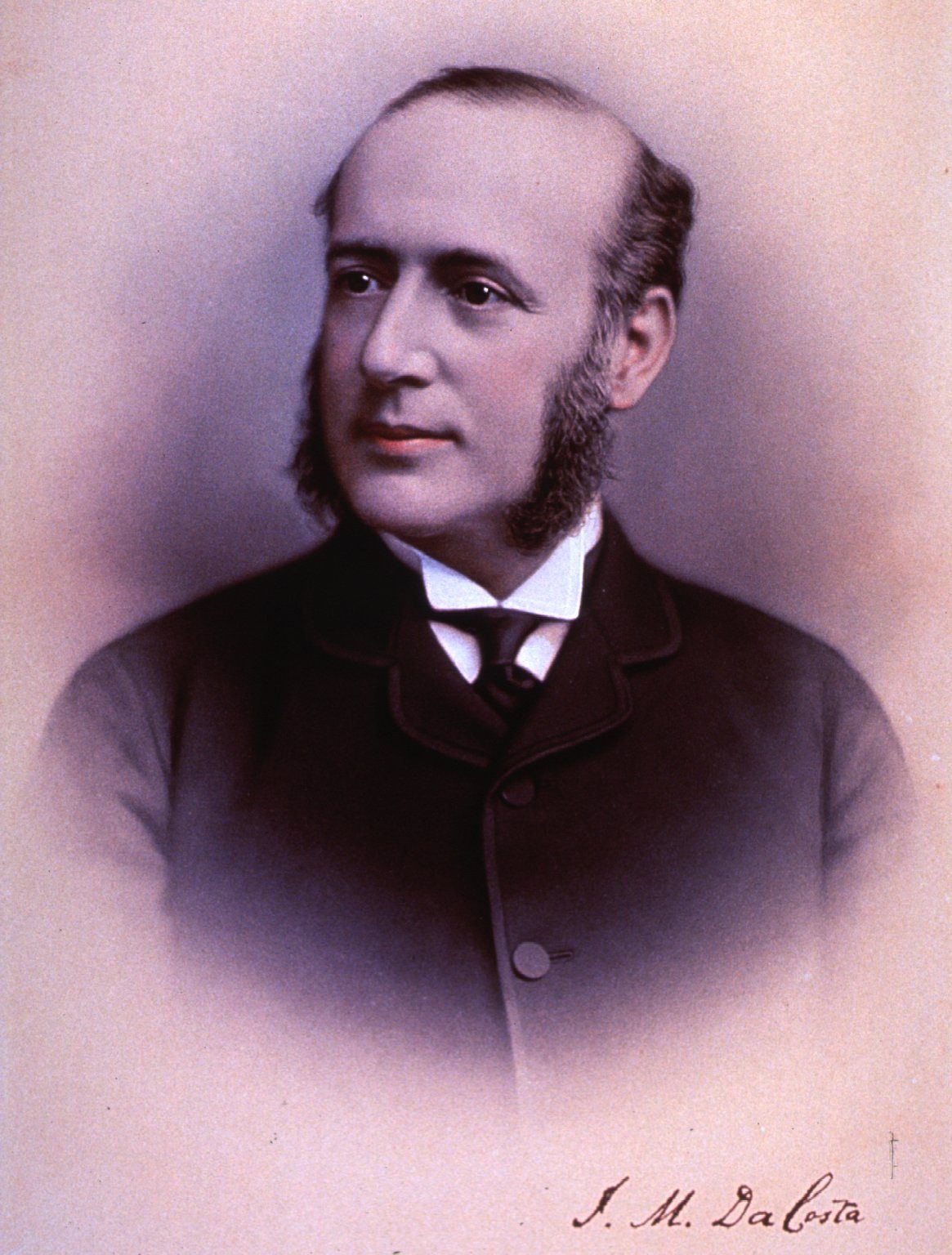
In January 1871 a Philadelphia physician, Jacob Mendez Da Costa, published a study of more than three hundred Union soldiers whose hearts raced and pounded, who were breathless and in pain on exertion, and who could no longer march. He had given the condition its name during the war, and the name had stuck:
to which I gave the name of irritable heart—a name by which the disorder soon became known both within and without the walls of the hospital.2
Quotation checked against the 1871 text
Da Costa looked for the cause in the body: fevers, diarrhoea, and above all hard field service and excessive marching2. Fifty years later doctors would look for it in the shock waves of shells, and a hundred years later in the experience of the war itself. This essay argues that the succession of names for soldiers' breakdown, from nostalgia to post-traumatic stress disorder, was not only medicine slowly finding the truth. Each name was a ruling on cause, and through cause on entitlement: whether a man was wounded or weak, whether he should be treated, pensioned, sent back to the line or shot. Armies needed men, and the names they accepted were shaped by that need as much as by medicine.
Homesickness and the heart
The first military diagnosis of the mind was nostalgia, coined by the Basel medical student Johannes Hofer in 1688 for Swiss mercenaries pining for home1. It had the merit, for armies, of a simple cause and a simple cure: the soldier missed home, and sending him there would heal him. That was also its limit, since an army could not send every homesick man home. In the American Civil War the Union army still counted it, recording 5,213 cases and 58 deaths among white soldiers and 334 cases and 16 deaths among Black soldiers; no figures survive for the Confederacy1.
Da Costa's irritable heart came from the same war and pointed in a different direction. His patients had no disease of the heart that he could find, yet they could not do a soldier's work; he counted fever, bowel disease and exhausting service among the causes, and first drew the army's attention to the disorder in cases seen after the Peninsular campaign of 18622. The condition became known as "soldier's heart" or Da Costa's syndrome8. A physical name, for a disorder that physicians could not explain physically, made it respectable. In the same city Silas Weir Mitchell was treating the war's nerve injuries; the idea that exhausted nerves rather than weak characters lay behind such collapses would shape his later rest cure and the diagnosis of neurasthenia.
The concussion that wasn't
The British phrase "shell shock" made the same move. When Charles Myers described three soldiers in The Lancet in February 1915, with loss of memory, vision, smell and taste, the name implied that the cause was physical: the blast of a shell on the brain3. That mattered because a wound earned a wound stripe and a pension, and a sickness did not. As the war went on, doctors found many men with the same symptoms who had never been near an explosion, and the army restricted the term; the full story is told on our page on shell shock. In Germany and Austria, doctors called it war neurosis, often hysteria, and treated it with painful electric currents, partly to unmask suspected malingerers; in 1920 Julius Wagner-Jauregg was investigated over the methods used in his Vienna clinic, with Sigmund Freud giving an expert opinion.
The cost of the other ruling, weakness rather than wound, could be death. The committee that Lord Southborough chaired after the war looked for "shell shock" in earlier campaigns and found none, and offered an explanation:
we suspect that in former wars a soldier who lost self-control was usually court-martialled and frequently suffered the penalty for the military crime of cowardice or of desertion.4
Quotation checked against the 1922 text
The committee thought cowardice remained a proper military offence, but concluded that "seeming cowardice may be beyond the individual's control", and recommended that expert medical opinion be available at courts martial in future4. Its most quoted verdict, that "shell-shock" had been "a gross and costly misnomer", was partly about money: it recommended that no nervous breakdown, even after an explosion, should count as a battle casualty4.
Exhaustion and the breaking point
When the next war came, the United States Army first tried to keep the problem out. By August 1945 an estimated 1,846,000 men had been rejected for service on psychiatric grounds, 38.2 per cent of all rejections; the army's own historians later thought the criteria too strict6. Screening did not prevent breakdown. There were about 1.1 million admissions to hospital for neuropsychiatric conditions during the war6.
The decisive change was again a change of name. On 26 April 1943, during the final battle for Tunisia, a directive issued by General Omar Bradley's II Corps ordered that all psychiatric casualties be diagnosed in the forward area simply as "exhaustion", and held for treatment near the front7. The army's official history later reflected on the effect:
With this simple change of nomenclature, psychiatric casualties, and also psychiatrists, became almost "respectable."7
Quotation checked against the 1973 text
"Exhaustion", like irritable heart, sounded physical, though few officers confused it with ordinary tiredness7. It brought a new theory with it, expressed in the saying that "everyone has his breaking point"7. Army psychiatrists in the Mediterranean found that by 200 to 240 aggregate days of combat most riflemen who had not been killed or wounded had broken down or become ineffective, and that the men now arriving at the clearing stations were not raw recruits but experienced non-commissioned officers6. Their report, quoted in the army's official history, put it bluntly:
To one who has been "up there" it is obvious that there is no such thing as "getting used to combat." Each moment of it imposes a strain so great that men will break down in direct relation to the intensity and duration of their exposure.6
Quotation checked against the 1966 text
This was a real shift: breakdown was now the expected result of danger, not the sign of a weak constitution. It also served the army. The principles of treatment near the line, with rest and the expectation of return to duty, were designed to save manpower, and the report said so in as many words: prevention could be thought of "only in terms of preventing needless waste of manpower"6. From 1943, between half and seven-tenths of American psychiatric casualties were returned to duty, against 5 per cent early in the North African campaign3.
Vietnam and the diagnosis that came from veterans
After 1945 American psychiatry wrote war into its first diagnostic manual. DSM-I (1952) included "gross stress reaction", for otherwise healthy people overwhelmed by catastrophe or combat, on the assumption that it would pass; DSM-II (1968) dropped it8,3. The timing was unfortunate. Acute psychiatric casualties in Vietnam were comparatively low, about 11.5 per 1,000 men a year, but the trouble came afterwards: Crocq and Crocq estimate that some 700,000 veterans, almost a quarter of those who served between 1964 and 1973, needed some psychological help3. Through the 1970s a "post-Vietnam syndrome" was diagnosed increasingly, and in 1980 the American Psychiatric Association's DSM-III adopted post-traumatic stress disorder, drawing on work with Vietnam veterans, Holocaust survivors, survivors of assault and others3,8.
PTSD differed from its predecessors in where it put the cause. Nostalgia blamed longing, irritable heart the body, shell shock the blast, exhaustion the soldier's finite reserves. PTSD named the traumatic event as the cause, and it grew out of work with veterans after they had left the army, rather than being issued by an army that needed men back3,8. It also gave the condition to civilians: the diagnosis that came from Vietnam applied equally to people who had survived accidents, assault or disaster. The publication of DSM-III itself owed something to a different controversy (see "On being sane in insane places": Rosenhan's study and its challengers).
What the names did
It is tempting to read this history as a single disorder slowly recognised under a series of mistaken names, and to say that the men with nostalgia, irritable heart and shell shock "really" had PTSD. Many historians resist that. The symptoms differed from war to war: palpitations and breathlessness in the 1860s, paralyses, tremors and loss of speech in 1914–18, and the nightmares and intrusive memories that dominate the modern diagnosis2,3. Expectation, culture and the available exits from the battlefield shaped how distress showed itself, and the records were written to decide fitness for duty or pension, not to answer later questions (see Can we diagnose the dead? and How words for madness changed).
What carried over from war to war was the dilemma the names were meant to settle. Every army needed a way to tell the man who could not fight from the man who would not, and every medical label offered an answer that freed some soldiers and condemned others. The army psychiatrists of 1944 were candid that their humane theory of the breaking point was also a theory of how to keep riflemen in the line. Medicine moved, over two centuries, from blaming the soldier's body or character to blaming the war; it rarely escaped the question of what the war still needed from him.
Key dates
- December 1862 J. M. Da Costa reports to the Union army's medical department on the 'irritable heart' he has seen in soldiers in Philadelphia.
- January 1871 Da Costa publishes 'On Irritable Heart', based on more than three hundred soldiers.
- February 1915 Charles Myers describes three soldiers with 'shell shock' in The Lancet.
- 1922 The War Office committee on shell shock concludes that 'seeming cowardice may be beyond the individual's control'.
- 26 April 1943 A directive of the US II Corps under Omar Bradley makes 'exhaustion' the first diagnosis for all psychiatric casualties in the combat zone.
- 1980 Post-traumatic stress disorder enters the American Psychiatric Association's DSM-III.
- 2006 The Armed Forces Act 2006 pardons British and Commonwealth soldiers executed for military offences in 1914–18.
Sources
- Scholarship David Anderson, The soldiers who died of homesickness, The Conversation (2016-09-30).
- Primary source J. M. Da Costa, On Irritable Heart; a Clinical Study of a Form of Functional Cardiac Disorder and its Consequences, American Journal of the Medical Sciences 61 (1871-01). Quotations checked against this text.
- Scholarship Marc-Antoine Crocq, Louis Crocq, From shell shock and war neurosis to posttraumatic stress disorder: a history of psychotraumatology, Dialogues in Clinical Neuroscience 2(1) (2000).
- Primary source War Office Committee (chairman Lord Southborough), Report of the War Office Committee of Enquiry into 'Shell-Shock', London: HMSO (1922). Quotations checked against this text.
- Reference Hundreds of soldiers shot for 'cowardice' to be pardoned (from The Independent), History News Network (2006-08-16).
- Primary source Office of the Surgeon General, US Army Medical Department, Neuropsychiatry in World War II, Volume I: Zone of Interior, Washington: Office of the Surgeon General (1966). Quotations checked against this text.
- Primary source Office of the Surgeon General, US Army Medical Department, Neuropsychiatry in World War II, Volume II: Overseas Theaters, Washington: Office of the Surgeon General (1973). Quotations checked against this text.
- Official History of PTSD in Veterans: Civil War to DSM-5, US Department of Veterans Affairs, National Center for PTSD.
Read next
 1688–1918
Nostalgia
Coined in 1688 for Swiss soldiers sick with longing for home, nostalgia was a diagnosis that army doctors believed could kill. How it rose, spread through armies, and became a mere feeling.
 1914–1922
Shell shock
A soldiers' phrase of 1914–15 that became a medical diagnosis, a pension category and a political scandal, before a War Office committee in 1922 called it 'a gross and costly misnomer'.
 1680s–1980
Hysteria
Named for the womb, hysteria became medicine's catch-all for symptoms it could not explain. Its history from Greek texts to Sydenham, Charcot and Freud, and why it was dropped in 1980.
 1869–1920s
Neurasthenia
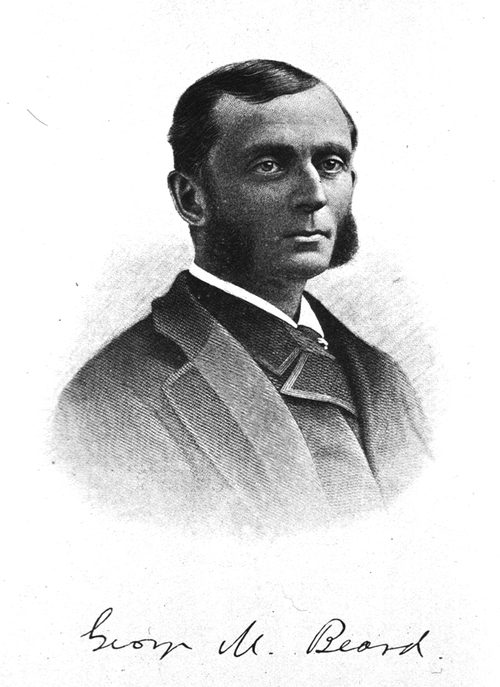
George Beard's 'nervous exhaustion' of 1869 blamed modern life for tired, anxious, aching patients. It became the fashionable diagnosis of the 1880s, faded by 1920, and lived on in China.
 Essay · 6 min
Can we diagnose the dead?
Why this site never diagnoses historical figures, and hedges every modern equivalent it gives: the evidence was made for other purposes, diseases change their identities, and each age's diagnoses of the dead reflect its own medicine.
Essay · 6 min
How words for madness changed
From the Latin insania and furor to 'lunatic', 'alienist', 'mental hospital' and 'schizophrenia': why the words for madness kept changing, and why the change usually came from law and institutions rather than discovery.