
Diagnosis · 1914–1922
Shell shock
A soldiers' phrase of 1914–15 that became a medical diagnosis, a pension category and a political scandal, before a War Office committee in 1922 called it 'a gross and costly misnomer'.
On 14 November 1914, three months into the war, the National Hospital for the Paralysed and Epileptic in Queen Square, London, admitted a soldier with no wound to explain his symptoms. By the end of 1919 it had treated 462 such men3. Across Europe, army doctors met the same thing: soldiers who could not walk, speak, hear or stop shaking, who did not sleep, or who relived the front in nightmares4,2. The British soldiers' name for it was "shell shock".
A soldiers' phrase becomes a diagnosis
The term came from the trenches, and by the winter of 1914–15 it was attached to men whose breakdowns followed shell fire3. In February 1915 the psychologist Charles Myers used it in The Lancet to describe three soldiers treated at Le Touquet in France, and the phrase entered medicine3,4. It implied a cause: the physical concussion of exploding shells on the brain. That mattered. From 1915 the army in France was told to mark cases "W" if the breakdown was due to the enemy, which entitled a man to rank as wounded and wear a wound stripe, and "S", for sickness, if it did not follow an explosion, which carried no stripe and no pension6.
The theory soon failed: a growing proportion of men with the symptoms had never been exposed to shell fire6. French doctors spoke of obusite, German doctors of war neurosis, and many physicians reached for older words: Hysteria, neurasthenia, "functional disorder". At Queen Square, "shell shock" was written as a diagnosis only once in 1915 and 30 times in 1916; doctors there preferred "functional disorder"3.
Numbers and the army's problem
An estimated 80,000 British soldiers were treated as shell-shock cases3. At the Somme in 1916, by one estimate, as many as 40 per cent of casualties were shell-shocked, and the army feared an epidemic of psychiatric casualties it could not afford6. In 1917 doctors were ordered to label suspected cases "NYDN", Not Yet Diagnosed (Nervous), until a specialist had seen them, and the term "shell shock" was restricted3,6. Treatment moved closer to the front, with rest near the line and specialist centres behind it6, following principles of immediacy, proximity and expectation of return to duty that the American psychiatrist Thomas Salmon summarised in 19174.
Treatments ranged from rest, exercises, isolation and persuasion to electricity. At Queen Square faradism, a form of electrical stimulation, was used in 191 of the 462 functional cases; of the 462, the hospital recorded 186 as cured and 212 as improved3. In Germany, Fritz Kaufmann's method combined suggestion, military authority and strong electric current in a single session4.
Craiglockhart and Rivers
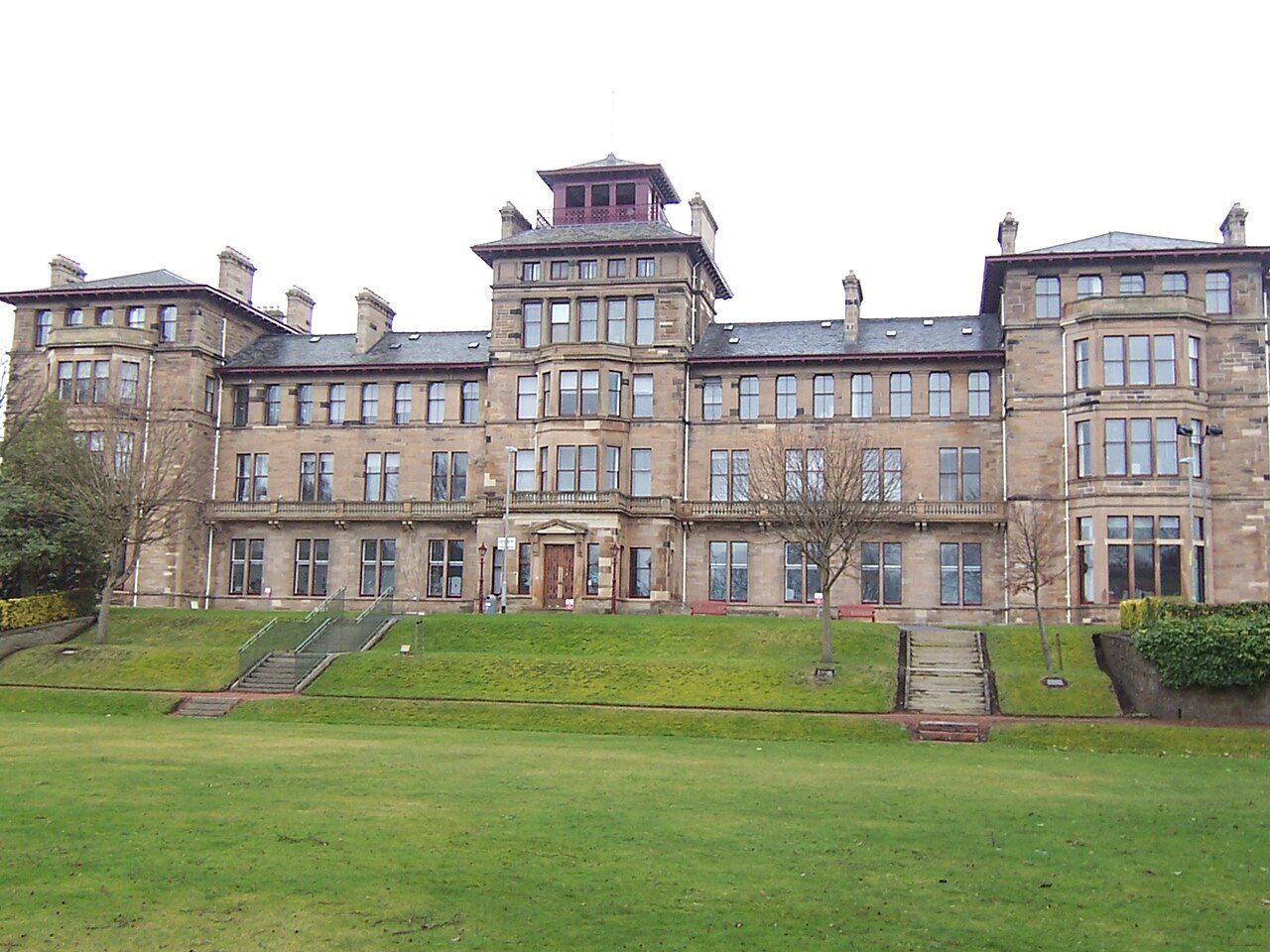
The best-known British treatment centre was Craiglockhart War Hospital near Edinburgh, a former hydropathic hotel, where the poets Siegfried Sassoon and Wilfred Owen were patients6. There the physician W. H. R. Rivers argued that patients were made worse by advice to forget. In a lecture to the Royal Society of Medicine on 4 December 1917 he said that many of their most distressing symptoms were
due to the attempt to banish from the mind distressing memories of warfare or painful affective states which have come into being as the result of their war experience.2
Quotation checked against the 1918 text
Rivers encouraged men to talk about what they had seen and to find a bearable way of thinking about it. One young officer, told everywhere to put the war out of his mind, had "the best night he had had for five months" after they first talked it through2.
Courts martial, pensions and a committee
Some men who broke down were tried for desertion or cowardice. Of 3,080 death sentences passed by British courts martial in the war, 346 were carried out6,4. Not all of the 346 had been convicted of military offences; some were executed for murder. In 2006 Parliament granted a statutory pardon to servicemen executed for military offences such as desertion and cowardice between 4 August 1914 and 11 November 1918, while leaving the convictions themselves in place5.
After the war, pensions for nervous disability became a lasting cost and a political issue. In April 1920 Lord Southborough moved in the House of Lords for an inquiry; the War Office committee he chaired met from September 1920, heard 59 witnesses, and reported in 19221. Its verdict was emphatic:
It is demonstrated that "shell-shock" has been a gross and costly misnomer, and that the term should be eliminated from our nomenclature.1
Quotation checked against the 1922 text
The committee concluded that the war "produced no new nervous disorders", only familiar ones in unusual numbers, and recommended that no case of nervous breakdown, even after a shell explosion, should count as a battle casualty1.
What it maps to now, and why that is uncertain
The usual modern equivalent offered is post-traumatic stress disorder, which entered the American diagnostic manual in 1980 after the Vietnam War4. The match is partial. Many Queen Square patients had paralyses, gait disorders and seizures that would now more often be called functional neurological disorder, and the mixture of symptoms differed between Britain and Germany, which suggests that culture and expectation shaped how distress showed itself3. A minority may have had physical brain injury: studies of modern soldiers exposed to blast have found scarring in the brain that some researchers think could explain part of the original "shell shock"6. Case notes written to decide fitness for duty or pension rarely give the detail needed to choose between these (Can we diagnose the dead?; see also War and the mind: from nostalgia to PTSD).
Key dates
- 14 November 1914 The National Hospital, Queen Square, London admits its first soldier with a 'functional' nervous disorder.
- February 1915 Charles Myers uses the term 'shell shock' in The Lancet, describing three soldiers.
- 1917 British army doctors are told to label suspected cases 'NYDN' (Not Yet Diagnosed, Nervous) pending a specialist's assessment.
- 4 December 1917 W. H. R. Rivers, of Craiglockhart War Hospital, lectures on 'The Repression of War Experience'.
- 28 April 1920 Lord Southborough moves in the House of Lords for an inquiry into shell shock.
- 1922 The War Office Committee calls shell shock 'a gross and costly misnomer'.
- 2006 The Armed Forces Act 2006 pardons servicemen executed for military offences in 1914–18.
Sources
- Primary source War Office Committee (chairman Lord Southborough), Report of the War Office Committee of Enquiry into 'Shell-Shock', London: HMSO (1922). Quotations checked against this text.
- Primary source W. H. R. Rivers, On the Repression of War Experience, The Lancet (Wikisource text) (1918). Quotations checked against this text.
- Scholarship Stefanie Caroline Linden, Edgar Jones, 'Shell shock' revisited: an examination of the case records of the National Hospital in London, Medical History 58(4) (2014).
- Scholarship Marc-Antoine Crocq, Louis Crocq, From shell shock and war neurosis to posttraumatic stress disorder: a history of psychotraumatology, Dialogues in Clinical Neuroscience 2(1) (2000).
- Official UK Parliament, Armed Forces Act 2006, section 359, legislation.gov.uk (2006).
- Wikipedia Shell shock, Wikipedia.
Cross-checked with Wikidata Q15061465 and the English Wikipedia article.
Read next
 Essay · 7 min
War and the mind: from nostalgia to PTSD
Nostalgia, irritable heart, shell shock, exhaustion, PTSD: each war named soldiers' breakdown anew, and each name was a ruling on cause, and so on who deserved a pension, treatment or punishment.
 1680s–1980
Hysteria
Named for the womb, hysteria became medicine's catch-all for symptoms it could not explain. Its history from Greek texts to Sydenham, Charcot and Freud, and why it was dropped in 1980.
 1869–1920s
Neurasthenia
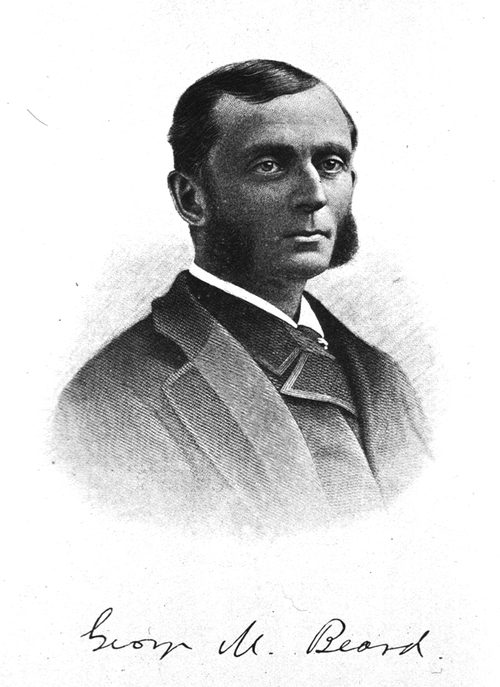
George Beard's 'nervous exhaustion' of 1869 blamed modern life for tired, anxious, aching patients. It became the fashionable diagnosis of the 1880s, faded by 1920, and lived on in China.
 1890s–1980
Psychoanalysis
Freud's theory of the unconscious began as a treatment for hysteria in 1890s Vienna and came to dominate American psychiatry after 1945. Its history, its place in psychiatry, and the long argument over whether it works.
 Essay · 6 min
Can we diagnose the dead?
Why this site never diagnoses historical figures, and hedges every modern equivalent it gives: the evidence was made for other purposes, diseases change their identities, and each age's diagnoses of the dead reflect its own medicine.