
Person · 15 February 1829 – 4 January 1914
Silas Weir Mitchell
Philadelphia neurologist and novelist (1829–1914) who studied Civil War nerve injuries, created the rest cure for 'nervous' women, and in 1894 told asylum doctors that asylum life was deadly to the insane.
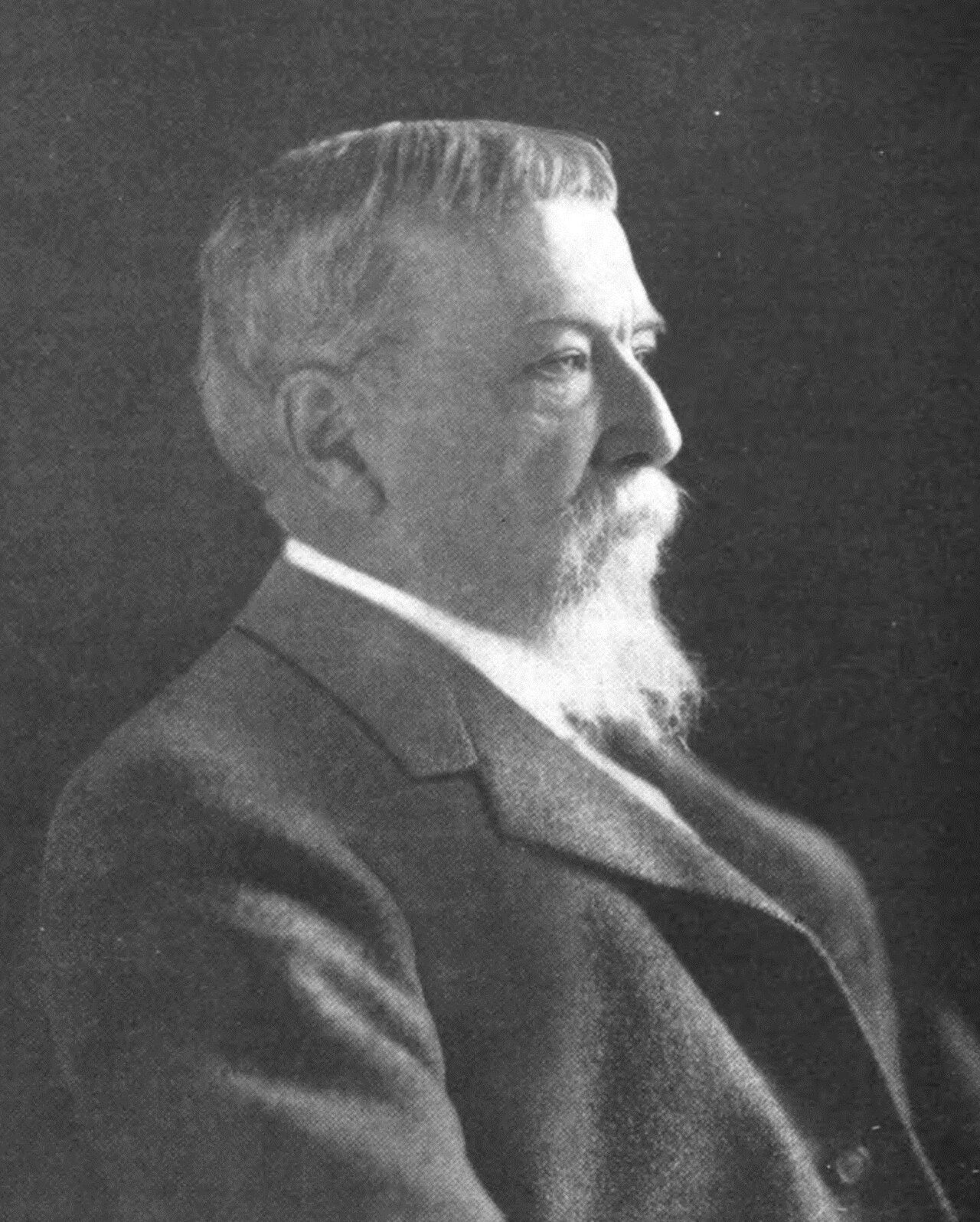
In May 1894 the American Medico-Psychological Association, the asylum superintendents' society founded fifty years earlier, invited the most famous neurologist in the country to address its anniversary meeting in Philadelphia. Silas Weir Mitchell used the occasion to tell them that they had lost touch with medicine, kept poor records, did too little research, and believed in something that was not true2:
Upon my word, I think asylum life is deadly to the insane.2
Quotation checked against the 1894 text
It was an outsider's attack, delivered bluntly to the heirs of Thomas Kirkbride in Kirkbride's own city, and a sign of how far the asylum's claim to cure by its very existence had fallen with the rest of the profession.
Nerves and the Civil War
Mitchell was born in Philadelphia on 15 February 1829, the son of a physician, and took his medical degree at Jefferson Medical College in 18505. He first made his name in physiology, with studies of rattlesnake venom5. The Civil War turned him into a neurologist. At Turner's Lane Hospital in Philadelphia he and his colleagues treated soldiers with gunshot wounds to the nerves, and described the burning pain after nerve injury that he called causalgia and the sensations of amputated limbs that he called "phantom limbs"5. He also wrote fiction from the same experience: "The Case of George Dedlow" (1866), told by a soldier who loses all four limbs, appeared in the Atlantic Monthly5. He came to be regarded as one of the founders of American neurology, and later presided over the American Neurological Association5.
The rest cure
From the 1870s Mitchell treated many "nervous" patients, especially women diagnosed with neurasthenia or hysteria. For them he devised the rest cure, set out in Fat and Blood (1877): weeks in bed, isolation from family, a fattening diet, massage and electrical stimulation, under a nurse who was not a relative1. He believed such patients were physically depleted, but also that invalidism had become a habit sustained by sympathetic relatives, and that the doctor had to break it:
To cure such a case you must morally alter as well as physically amend, and nothing less will answer.1
Quotation checked against the 1885 text
His most famous patient was Charlotte Perkins Gilman, whom he treated in 1887 and sent home with instructions to live "as domestic a life as far as possible" and "never to touch pen, brush, or pencil again"3. Her story "The Yellow Wall-Paper" (1892) was written, she said, against that advice; she sent him a copy, and he never acknowledged it3,4.
Against the asylums
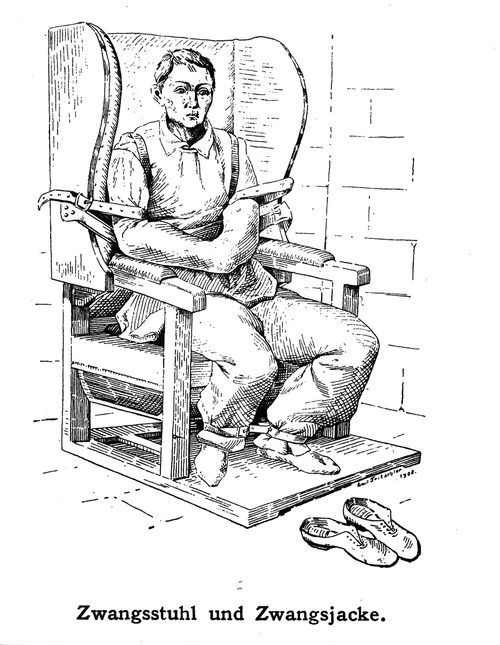
The 1894 address shows another side of him. He accused the superintendents of isolation, of "hospital torpor", of keeping case notes that were useless for science, and of fostering the belief that patients should be sent to asylums early because there was "some mysterious therapeutic influence to be found behind your walls and locked doors"2. He also urged them to give up mechanical restraint entirely, describing it as "a question settled past argument"2. He asked why they did not train their nurses better, and why so many able papers on insanity came from outside the asylums2.
Writer
Mitchell was also a prolific poet and novelist; his historical novel of the American Revolution, Hugh Wynne, Free Quaker (1897), was a best-seller5. He died in Philadelphia on 4 January 19145. In his work the history of psychiatry meets two of its recurring arguments: whether women's distress was being treated or controlled, and whether the asylum cured anyone at all.
Key dates
- 1850 Mitchell takes his medical degree at Jefferson Medical College, Philadelphia.
- 1866 Mitchell's story 'The Case of George Dedlow', about a soldier who has lost all four limbs, appears in the Atlantic Monthly.
- 1877 Mitchell sets out the rest cure in Fat and Blood.
- 1887 Charlotte Perkins Stetson (later Gilman) is treated by Mitchell in Philadelphia.
- 16 May 1894 Mitchell's address to the American Medico-Psychological Association attacks the asylum superintendents.
- 4 January 1914 Mitchell dies in Philadelphia.
Mitchell on this site
Sources
- Primary source S. Weir Mitchell, Fat and Blood: An Essay on the Treatment of Certain Forms of Neurasthenia and Hysteria (4th edition), Philadelphia: J. B. Lippincott (1885). Quotations checked against this text.
- Primary source S. Weir Mitchell, Address before the Fiftieth Annual Meeting of the American Medico-Psychological Association, Philadelphia, May 16th, 1894, Journal of Nervous and Mental Disease 21(7) (1894). Quotations checked against this text.
- Primary source Charlotte Perkins Gilman, Why I Wrote The Yellow Wall-Paper (The Forerunner, October 1913), The Forerunner (1913-10). Quotations checked against this text.
- Museum or archive The Literature of Prescription: Charlotte Perkins Gilman and 'The Yellow Wall-Paper', U.S. National Library of Medicine (exhibition).
- Wikipedia S. Weir Mitchell, Wikipedia.
Cross-checked with Wikidata Q1283916 and the English Wikipedia article.
Read next
 1869–1920s
Neurasthenia
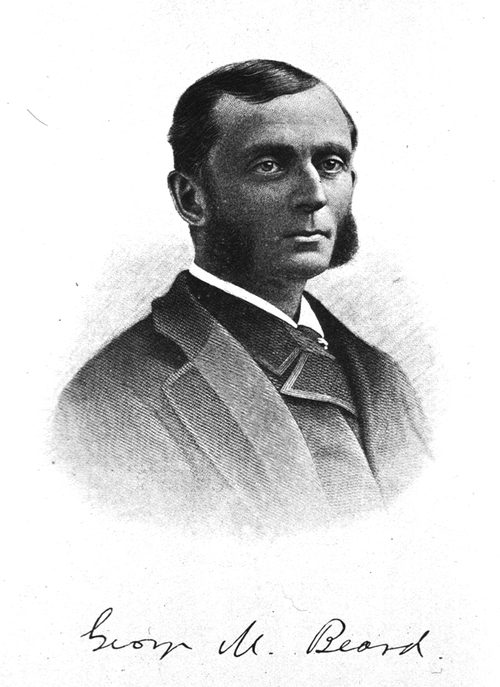
George Beard's 'nervous exhaustion' of 1869 blamed modern life for tired, anxious, aching patients. It became the fashionable diagnosis of the 1880s, faded by 1920, and lived on in China.
 1680s–1980
Hysteria
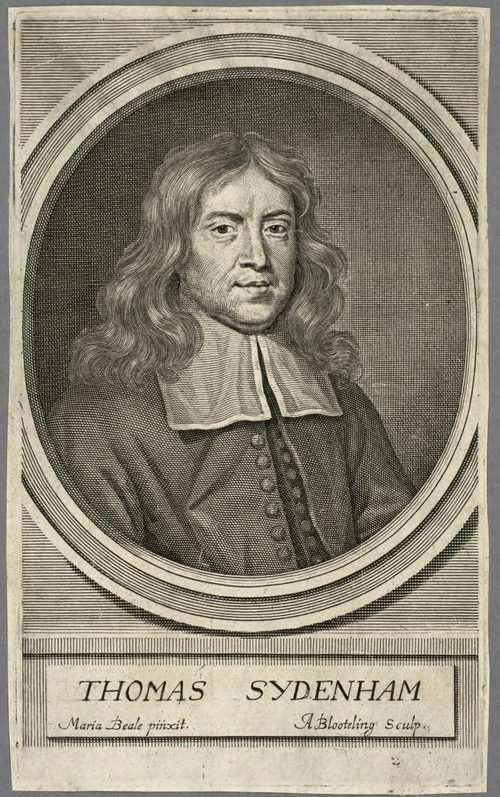
Named for the womb, hysteria became medicine's catch-all for symptoms it could not explain. Its history from Greek texts to Sydenham, Charcot and Freud, and why it was dropped in 1980.
 1688–1918
Nostalgia
Coined in 1688 for Swiss soldiers sick with longing for home, nostalgia was a diagnosis that army doctors believed could kill. How it rose, spread through armies, and became a mere feeling.
 1914–1922
Shell shock
A soldiers' phrase of 1914–15 that became a medical diagnosis, a pension category and a political scandal, before a War Office committee in 1922 called it 'a gross and costly misnomer'.
 1700s–1890s · Transformed
Restraint and the non-restraint movement
Chains, strait-waistcoats and restraint chairs were the ordinary equipment of asylums until the late 1830s, when Lincoln and then Hanwell abolished them. Britain made non-restraint a doctrine; much of the world did not.