
Treatment · 1870s–1920s
The rest cure
Silas Weir Mitchell's rest cure of the 1870s prescribed weeks in bed, isolation, rich feeding, massage and electricity, mostly for women with 'nervous' illness. Charlotte Perkins Gilman's account made it notorious.
The rest cure sounds harmless, even pleasant: a stay in bed, good food, someone to look after you. In the form the Philadelphia neurologist Silas Weir Mitchell made famous in the 1870s, it was something else, a strict regime of enforced idleness and isolation in which the patient surrendered almost every decision to the doctor and the nurse. It was prescribed above all to middle- and upper-class women diagnosed with neurasthenia or hysteria, and it is remembered today largely through one of them, who wrote a story about it4.
From soldiers to "nervous" women
Mitchell's ideas began with men. During the American Civil War he worked as a contract surgeon at Turner's Lane Military Hospital in Philadelphia, treating soldiers with nerve injuries from gunshot wounds, and the regime he developed there of rest, feeding and stimulation became the basis of the later cure. He had a breakdown of his own in 18644. He first described the method in 1873 and set it out fully in Fat and Blood in 18774.
The cure had four main parts: rest in bed, a fattening diet, massage, and electrical stimulation of the muscles. Patients typically stayed in bed for six weeks to two months, were forbidden to read, write or sew, and saw no family or friends4,1. The aim was literal. Mitchell believed that many of his patients were thin, bloodless and exhausted, and that building up "fat and blood" would restore the nerves as well as the body4.
Isolation was not incidental. Mitchell thought the patient's household was part of the illness: relatives who waited on an invalid kept her ill, and had to be removed along with her habits1.
Once separate the patient from the moral and physical surroundings which have become part of her life of sickness, and you will have made a change which will be in itself beneficial and will enormously aid in the treatment which is to follow.1
Quotation checked against the 1885 text
He was frank that the regime was meant to be unpleasant enough to make getting up attractive. For women used to lying down half the day, he wrote, being "bidden to stay in bed a month, and neither to read, write, nor sew, and to have one nurse,—who is not a relative,—" made rest "a rather bitter medicine"1.
A gendered prescription
Mitchell treated men as well as women, but he treated them differently. Nervous men were more often sent west, to ride, hunt and rough it on ranches, and encouraged to write about it; the novelist Owen Wister, sent to Wyoming in 1885, was one5,4. Women were put to bed. Anne Stiles reads the two cures as expressions of the gender roles of their day: activity and self-reliance for men, passivity and domestic obedience for women4.
The rest cure crossed the Atlantic in 1881, when the obstetrician William Smoult Playfair introduced it in London; British doctors often adapted it, adding more drugs or travel abroad4. By Mitchell's death in 1914, Fat and Blood had been translated into four other languages4. Among those who went through it were the reformer Jane Addams in 1882, who missed her books, and, in Britain, Virginia Woolf, who in 1915 was allowed only a few hours of writing a day4.
Charlotte Perkins Gilman
The most famous patient was Charlotte Perkins Gilman, who went to Mitchell in Philadelphia in the spring of 1887, after about three years of what she called a "nervous breakdown tending to melancholia"4,2. In 1913 she described the result:
This wise man put me to bed and applied the rest cure, to which a still-good physique responded so promptly that he concluded there was nothing much the matter with me, and sent me home with solemn advice to "live as domestic a life as far as possible," to "have but two hours' intellectual life a day," and "never to touch pen, brush, or pencil again" as long as I lived.2
Quotation checked against the 1913 text
She obeyed for about three months and came, she wrote, near "the borderline of utter mental ruin"2. She recovered only when she returned to work. Her story "The Yellow Wall-Paper", published in the New England Magazine in January 18923, in which a woman confined to a room by her physician husband slides into madness, was written, she said, "to save people from being driven crazy"2. She sent a copy to the physician, who never acknowledged it; she later heard that he had altered his treatment of neurasthenia after reading it, a claim that rests on her report alone2.
Decline
The rest cure faded in the early twentieth century. Talking treatments, especially psychoanalysis, offered a different account of nervous illness; neurasthenia and hysteria themselves gave way to narrower diagnoses; and by the 1940s critics were calling prolonged bed rest unscientific and harmful4. Stiles notes that its assumptions lingered in other forms, such as routine bed rest in pregnancy4. Its lasting legacy, though, is literary: Gilman turned a treatment designed to silence her into one of the most widely read accounts of a patient's experience written in the nineteenth century.
Key dates
- 1873 Silas Weir Mitchell first describes his rest treatment in print.
- 1877 Mitchell publishes Fat and Blood, the first full account of the rest cure.
- 1881 William Smoult Playfair introduces the rest cure to Britain.
- 1887 Charlotte Perkins Gilman undergoes the rest cure in Philadelphia.
- January 1892 Gilman's story 'The Yellow Wall-Paper' appears in the New England Magazine.
- October 1913 Gilman explains in The Forerunner why she wrote the story.
Sources
- Primary source S. Weir Mitchell, Fat and Blood: An Essay on the Treatment of Certain Forms of Neurasthenia and Hysteria (4th edition), Philadelphia: J. B. Lippincott (1885). Quotations checked against this text.
- Primary source Charlotte Perkins Gilman, Why I Wrote The Yellow Wall-Paper (The Forerunner, October 1913), The Forerunner (1913-10). Quotations checked against this text.
- Primary source Charlotte Perkins Stetson (Gilman), The Yellow Wall Paper (1901 edition, reprinted from the New England Magazine, January 1892), Boston: Small, Maynard & Company (1892-01).
- Scholarship Anne Stiles, The Rest Cure, 1873–1925, BRANCH: Britain, Representation and Nineteenth-Century History (2012).
- Reference Matthew Wills, Go West, You Nervous Men, JSTOR Daily (2019-05-01).
- Wikipedia Bed rest (history section), Wikipedia.
Read next
 1869–1920s
Neurasthenia
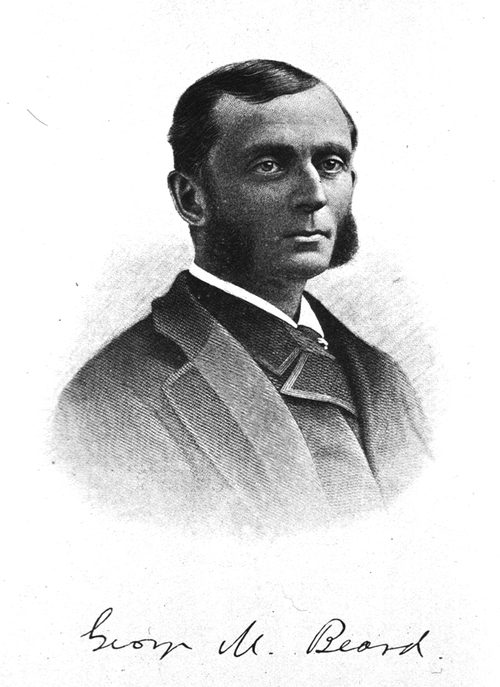
George Beard's 'nervous exhaustion' of 1869 blamed modern life for tired, anxious, aching patients. It became the fashionable diagnosis of the 1880s, faded by 1920, and lived on in China.
 1680s–1980
Hysteria
Named for the womb, hysteria became medicine's catch-all for symptoms it could not explain. Its history from Greek texts to Sydenham, Charcot and Freud, and why it was dropped in 1980.
 c. 400 BCE–1900s
Melancholia
For two thousand years melancholia meant fear and sorrow without cause, blamed on black bile. How physicians from Aretaeus to Kraepelin defined it, and how it became 'depression'.
 1890s–1980
Psychoanalysis
Freud's theory of the unconscious began as a treatment for hysteria in 1890s Vienna and came to dominate American psychiatry after 1945. Its history, its place in psychiatry, and the long argument over whether it works.
 Essay · 8 min
The patients who wrote back
From John Perceval in the 1830s to Clifford Beers in 1908, former patients wrote against the asylum. Their first battle was to be believed at all, and what they won was mostly the right to be heard.
Essay · 6 min
How words for madness changed
From the Latin insania and furor to 'lunatic', 'alienist', 'mental hospital' and 'schizophrenia': why the words for madness kept changing, and why the change usually came from law and institutions rather than discovery.