
Diagnosis · 1820s–1920s
Puerperal insanity
The nineteenth century's name for madness after childbirth: common in asylum admissions, thought highly curable, and central to infanticide trials, until doctors decided it was no special disease at all.
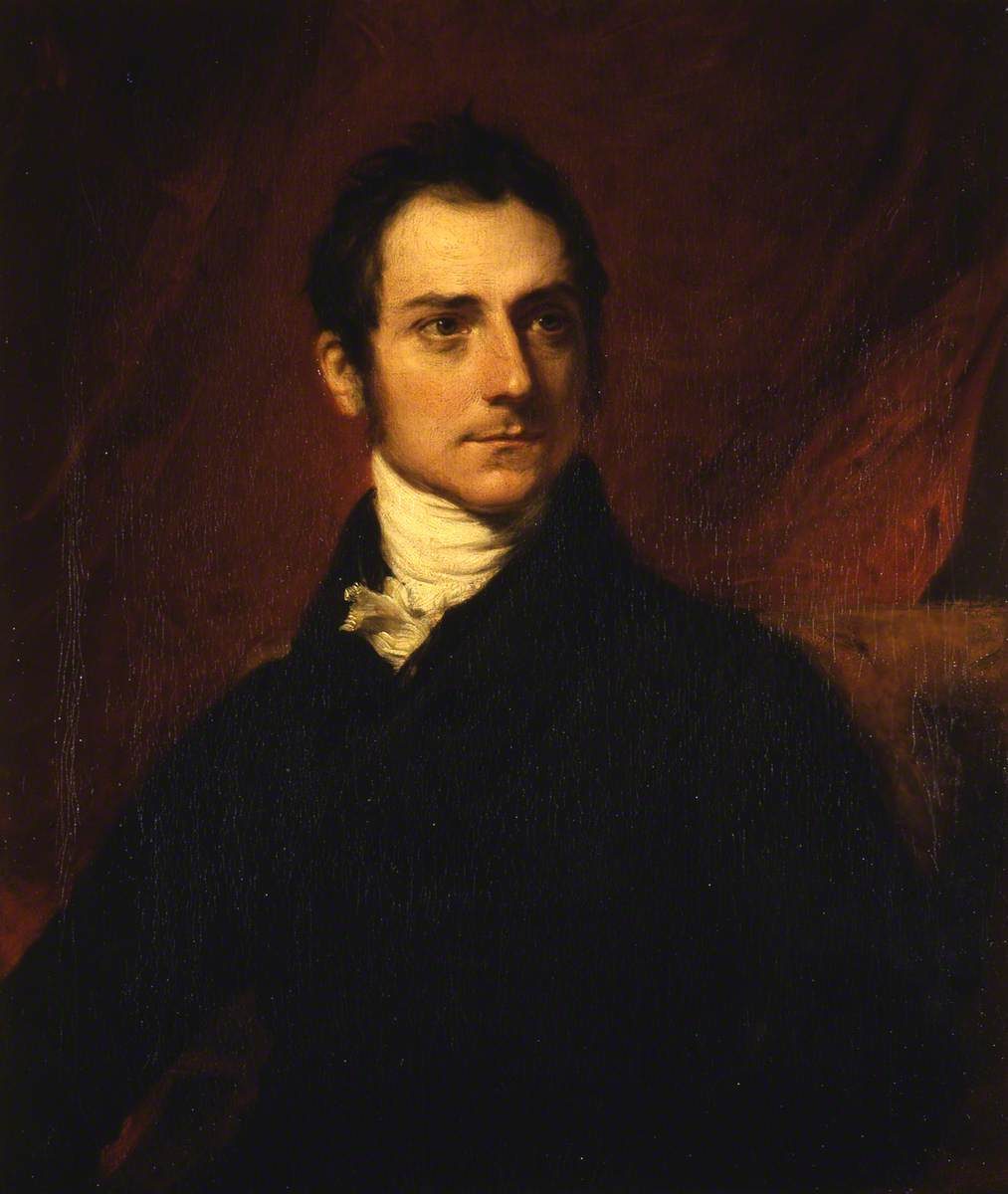
Robert Gooch, a London physician who attended women in childbirth, once sat up through the night with a patient who had been well for ten days after an easy labour. A fire in a nearby shop had alarmed the street. At four in the morning she asked him to look at her head: she had thought, she said, that a glorious light came from her temples and that she was the Virgin Mary1. Gooch gave such cases a name. In 1819 he wrote a paper on "puerperal insanity" that the College of Physicians published in its Transactions, and for the rest of the century it was a diagnosis that drew intense medical attention1,6.
Naming madness after childbirth
Mental disturbance after childbirth had been noted for centuries, but an early systematic study came from Jean-Étienne Esquirol at the Salpêtrière in Paris. Surveying the women there, he found that 52 of 600 had fallen ill after confinement or while nursing, nearly one in twelve, and he followed 92 such patients in detail2,9. His conclusion was simple:
But insanity takes place more frequently after confinement and during lactation, than during pregnancy.2
Quotation checked against the 1845 text
Gooch, writing in England, divided the danger by time rather than by symptom:
there are two periods at which this is chiefly liable to occur, the one soon after delivery, when the body is sustaining the effects of labour, the other several months afterwards, when the body is sustaining the effects of nursing.1
Quotation checked against the 1829 text
In 1858 the Paris physician Louis-Victor Marcé devoted a whole treatise to madness in pregnant women, new mothers and nurses, including its medico-legal side3. The diagnosis covered mania, melancholia, dementia and "delusional insanity"; what united them was timing4.
Causes and cures
Explanations reflected the medicine of the day. Older writers blamed the milk, "diverted from its secretory organs" and doing harm elsewhere in the body; Esquirol asked whether the suppression of milk was the cause of the illness or its effect2. Later writers pointed to exhaustion from frequent pregnancies, to infection and, increasingly, to hereditary predisposition4. Treatment followed: Gooch describes a patient whose head was shaved and from whose scalp ten ounces of blood were drawn by cupping, "without diminishing in the slightest degree her violence and incoherence"; she was also placed with a nurse "accustomed to such patients"1.
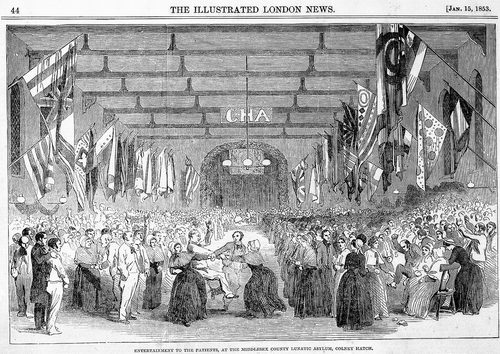
Doctors disagreed about whether these women belonged in the asylum at all. Midwives and obstetricians, who mostly attended wealthier women at home, saw a special condition best treated there; asylum doctors, whose patients were poorer, argued for admission and blamed poverty and neglected health6. The historian Hilary Marland estimates that puerperal cases made up as much as 15 per cent of female asylum admissions in the nineteenth century5.
A hopeful diagnosis, and a legal one
Doctors regarded puerperal insanity as one of the more hopeful diagnoses. Esquirol counted only six deaths among his 92 women, and 55 recoveries1,2. In 1892 Savage put recovery at about 75 per cent, most within nine months4. Gooch warned, however, that the belief that such cases were "never fatal" was wrong: some women died, especially those with a rapid pulse and fever1. Modern readers may suspect that infection after childbirth lay behind some of those deaths.
The diagnosis mattered most in court. In Marland's account, the plea of puerperal insanity was widely used, and widely accepted by judges and juries, when women were tried for killing their infants, both unmarried servants and married mothers worn down by childbearing5. English law kept the idea long after medicine abandoned it: the Infanticide Act 1938 still turns on whether "the balance of her mind was disturbed by reason of her not having fully recovered from the effect of giving birth" or of lactation7.
Why it faded
By the 1890s leading asylum doctors doubted that childbirth caused a distinct illness. Savage opened his dictionary entry bluntly:
There is no special form of insanity which is to be distinguished as puerperal insanity4
Quotation checked against the 1892 text
The women were now said to have ordinary mania, melancholia or "delusional insanity" that happened to begin around childbirth, and hereditary explanations took the lead4,5. Marland argues that the twentieth century became a "Dark Age" for these women: the diagnosis disappeared from textbooks and treatment became harsher and more reliant on drugs5. Classifications swung back and forth; the American manual dropped childbirth-related psychosis in 1980 and partly restored it as a "specifier" in 19949.
What it maps to now, and why that is uncertain
Today's nearest term is postpartum psychosis, which the NHS describes as a serious illness affecting around 1 in 1,000 mothers, usually starting suddenly within the first two weeks, and from which most people make a full recovery with the right treatment8. Researchers increasingly link many cases to bipolar disorder9. It would be tempting to equate the two, but the Victorian category was broader: it took in severe depression months after birth, confusion caused by infection and fever in an era of frequent puerperal sepsis, and illnesses that began in pregnancy. Asylum case notes record behaviour and the doctor's theory, rarely the tests that could tell these apart (Can we diagnose the dead?).
Key dates
- 1819 Esquirol surveys women at the Salpêtrière who became ill after childbirth or while nursing.
- 1819 Robert Gooch writes his paper on puerperal insanity, published by the Royal College of Physicians in its Transactions.
- 1858 Louis-Victor Marcé publishes his Traité de la folie des femmes enceintes in Paris.
- 1892 George Savage writes in Tuke's Dictionary that there is no special form of puerperal insanity.
- 1938 The Infanticide Act for England and Wales ties the offence to a mind disturbed by birth or lactation.
Sources
- Primary source Robert Gooch, An Account of Some of the Most Important Diseases Peculiar to Women, London: John Murray (1829). Quotations checked against this text.
- Primary source Jean-Étienne Dominique Esquirol, Mental Maladies: A Treatise on Insanity (trans. E. K. Hunt), Philadelphia: Lea and Blanchard (1845). Quotations checked against this text.
- Primary source Louis-Victor Marcé, Traité de la folie des femmes enceintes, des nouvelles accouchées et des nourrices, Paris: J.-B. Baillière (1858).
- Primary source George H. Savage; ed. Daniel Hack Tuke, Puerperal Insanity (in A Dictionary of Psychological Medicine, vol. 2), Philadelphia: P. Blakiston, Son & Co. (1892). Quotations checked against this text.
- Scholarship University of Warwick (on Hilary Marland's research), Researcher reveals courts and psychiatrists better understood infanticide 200 years ago, University of Warwick (2003-06-09).
- Scholarship Lara Marks, Review of Hilary Marland, Dangerous Motherhood: Insanity and Childbirth in Victorian Britain (2004), Medical History (2005).
- Official UK Parliament, Infanticide Act 1938, section 1, legislation.gov.uk (1938).
- Official NHS, Postpartum psychosis, nhs.uk.
- Wikipedia Postpartum psychosis, Wikipedia.
Read next
 c. 100 CE–1980
Mania
Mania once meant madness itself: raving, sleepless, sometimes joyful. How the word narrowed from Aretaeus to Kraepelin, and how it became one pole of manic-depressive illness.
 c. 400 BCE–1900s
Melancholia
For two thousand years melancholia meant fear and sorrow without cause, blamed on black bile. How physicians from Aretaeus to Kraepelin defined it, and how it became 'depression'.
 1680s–1980
Hysteria
Named for the womb, hysteria became medicine's catch-all for symptoms it could not explain. Its history from Greek texts to Sydenham, Charcot and Freud, and why it was dropped in 1980.
 Essay · 7 min
Who got locked up, and why
Asylum populations were never a simple sample of the mentally ill. Poverty, family, the Poor Law, sex, migration, race, age and bodily disease all decided who was confined, and historians still argue over how much each counted.
 Essay · 6 min
Can we diagnose the dead?
Why this site never diagnoses historical figures, and hedges every modern equivalent it gives: the evidence was made for other purposes, diseases change their identities, and each age's diagnoses of the dead reflect its own medicine.