
Place · 1784 – 1869
The Narrenturm, Vienna
A five-storey round tower built in 1784 under Joseph II to hold Vienna's mentally ill, used as an asylum until 1869 and since 1971 the home of a museum of pathology.
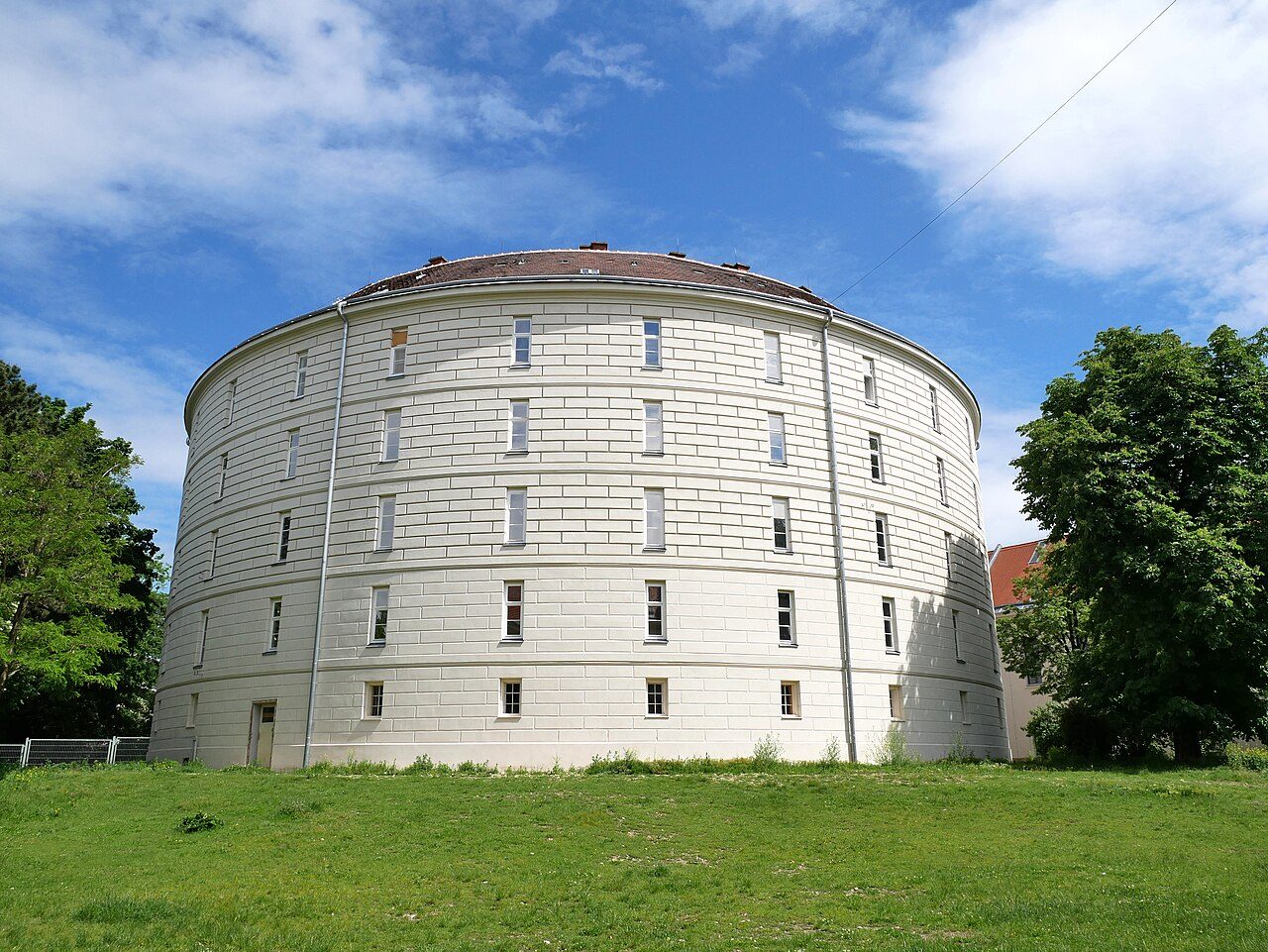
On the old hospital campus in Vienna's ninth district stands a squat, windowed cylinder that Viennese have long called the Guglhupf, after the ring-shaped cake. Built in 1784, the Narrenturm ("fools' tower") is one of the oldest surviving buildings in continental Europe made specifically to house the mentally ill. It held patients for 85 years. Today it holds one of the world's largest collections of anatomical and pathological specimens1,5,4.
An emperor's project
The tower belongs to the reforms of Joseph II, who from 1781 set out to replace Vienna's scattered charitable hospitals with one large General Hospital (Allgemeines Krankenhaus) in the former great poorhouse on the Alser Strasse. A psychiatric section was part of the plan, and Joseph treated the tower as a personal project, paying for it from his private funds1,4. One reason given for it is that he had seen French institutions on his travels; another, that underground cells used by Vienna's Capuchins for their own mentally ill brethren had shocked him5.
Who designed it has never been settled. The court architect Isidore Canevale planned the General Hospital, and the builder Joseph Gerl carried out the work; the medical historian Dieter Jetter credited the hospital's first director, Joseph von Quarin. In 1790 the imperial physician Giovanni Alessandro Brambilla wrote that Joseph had drawn it himself4,3,1.
The round building
The Narrenturm is a ring about 40 metres across and five storeys high, around an inner courtyard split by a central block where the attendants lived. Each storey has 28 cells, 27 on the ground floor because of the entrance, making 139 in all, each about 11 square metres and meant for two people, with a narrow barred window on the outer wall4,5. Iron rings were set into walls and floors so that patients considered violent could be chained4.
The shape has invited theories ever since: a fortress or prison type, a design to draw off "miasmas" like a chimney, an ideal of isolating patients from one another and from their keepers4. What is better documented is that much of it did not work. The heating failed, the drains froze, and there was at first no well, so water had to be carried in4.
Patients and treatment
The first patients arrived in April 1784; 109 people were moved in that month from Vienna's older hospitals4,1. Each floor became a separate ward for men or women, divided by how calm or disturbed they were thought to be. Typically 200 to 250 people lived in the tower4.
Early treatment followed the old humoral medicine of bloodletting, purging and emetics, cupping and purges1. Occupational and art therapy came in from about 1800, and in the late 1830s the old remedies gave way to cold-water treatments of the kind described under hydrotherapy4. Chains were used to fix patients until the 1840s, when the physician Michael Viszánik had the iron rings and grilles removed and replaced them with strait-waistcoats and bed straps; the building made the full English non-restraint system of restraint and the non-restraint movement impossible4. In 1796 a wall was raised around the tower: it gave patients somewhere to walk for the first time and kept out the crowds who gathered on Sundays and holidays to shout at them through the windows4,1.
The hospital's own doctors soon judged the building unsuitable; Johann Peter Frank, the hospital director, called it unhealthy as early as 18014. Between 1784 and 1869 the Vienna asylum recorded about 27,000 admissions; about 42 per cent were discharged as cured and about 28 per cent died there4.
Closure and second life
A new Vienna asylum on the Bründlfeld opened in 1853, but overcrowding meant the tower stayed in use, now for long-stay patients expected not to recover. The provincial government decided to close it in 1866, and the last patients left on 4 June 18694,1,3. The building then served as workshops, stores and lodgings for nurses, doctors and hospital staff2,1.
In 1971 the Federal Pathological-Anatomical Museum moved in. Its collection had been founded in 1796 by Johann Peter Frank and now numbers around 50,000 objects5,4. The tower passed to the University of Vienna in 1988 and the collection to the Natural History Museum on 1 January 2012; after a long restoration it reopened to visitors2,5. One ground-floor cell keeps its original window size and is given over to the building's history as an asylum4.
Key dates
- 1783 Building begins on a round 'madmen's tower' beside Vienna's new General Hospital, on the orders of Emperor Joseph II.
- April 1784 The Narrenturm receives its first patients, moved from older Vienna hospitals.
- 1796 A wall is built round the Narrenturm, giving patients a garden and keeping out curious onlookers.
- 1 August 1853 Vienna's new asylum on the Bründlfeld opens; the Narrenturm is kept for long-stay patients.
- 4 June 1869 The Narrenturm closes as an asylum.
- 1971 The Federal Pathological-Anatomical Museum moves into the Narrenturm.
- 1 January 2012 The collection in the Narrenturm becomes part of Vienna's Natural History Museum.
Also on this site
Sources
- Reference Verena Kaufmann, Die Geschichte des Narrenturms, Teil 1: Zur Entstehung und Nutzung des 'Guglhupfs', Vienna.at (2015-07-17).
- Official University of Vienna, History of the campus, Universität Wien.
- Museum or archive Die Welt der Habsburger, Federal Pathologic-anatomical Museum, habsburger.net.
- Wikipedia Narrenturm, Wikipedia (German).
- Wikipedia Narrenturm (asylum), Wikipedia.
Cross-checked with Wikidata Q873715 and the English Wikipedia article.
Read next
 1700s–1890s · Transformed
Restraint and the non-restraint movement
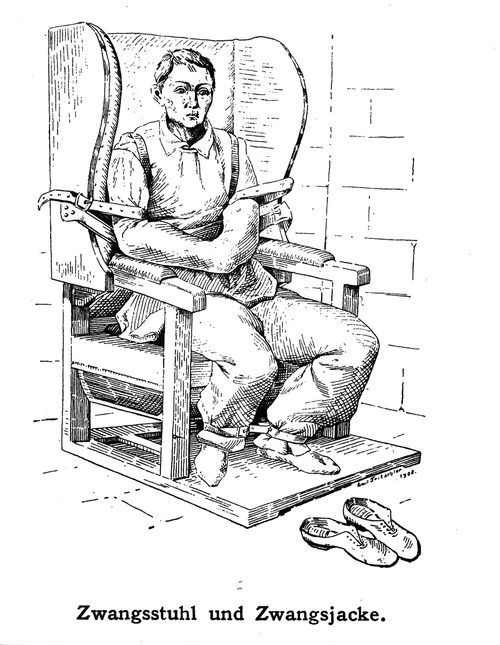
Chains, strait-waistcoats and restraint chairs were the ordinary equipment of asylums until the late 1830s, when Lincoln and then Hanwell abolished them. Britain made non-restraint a doctrine; much of the world did not.
 1700s–1950s · Abandoned
Hydrotherapy
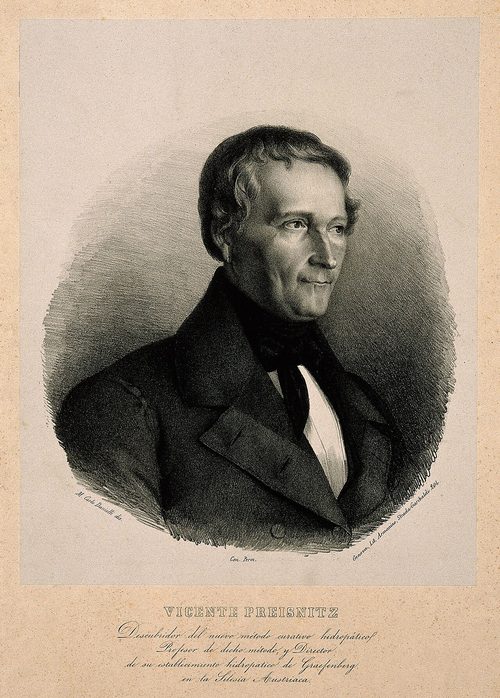
Water was one of psychiatry's oldest tools: shock baths and shower baths in the early asylum, wet packs from 1860, and continuous baths lasting hours or days in the early twentieth century, until drugs replaced them.
 Antiquity–1850s · Abandoned
Bloodletting, purging and emetics
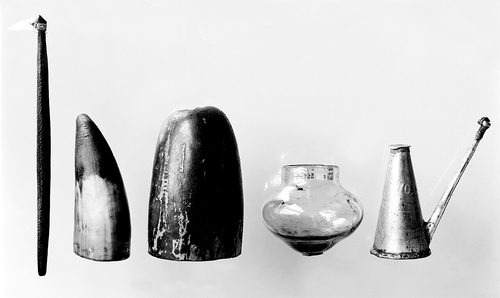
For two thousand years doctors bled, purged and vomited people with mania and melancholy. How depletion worked in theory, how it was done at Bethlem and in Philadelphia, and how it faded in the nineteenth century.
 Essay · 7 min
The rise and fall of the asylum
How the public asylum grew from a few small madhouses into hospitals of thousands, and was then closed: an argument that its failures came from its success at taking in the people no other institution would hold.
 1790s–1870s · Transformed
Moral treatment
Moral treatment, developed at Bicêtre in Paris and the York Retreat in the 1790s, tried to cure madness through kindness, routine, work and self-control rather than chains and drugs. It shaped a century of asylums.