
Place · 1656 – today
The Salpêtrière
A former gunpowder works in Paris that became a vast hospice for poor women, then the place where Pinel, Pussin and Esquirol remade asylum care and Charcot built modern neurology and staged his studies of hysteria.
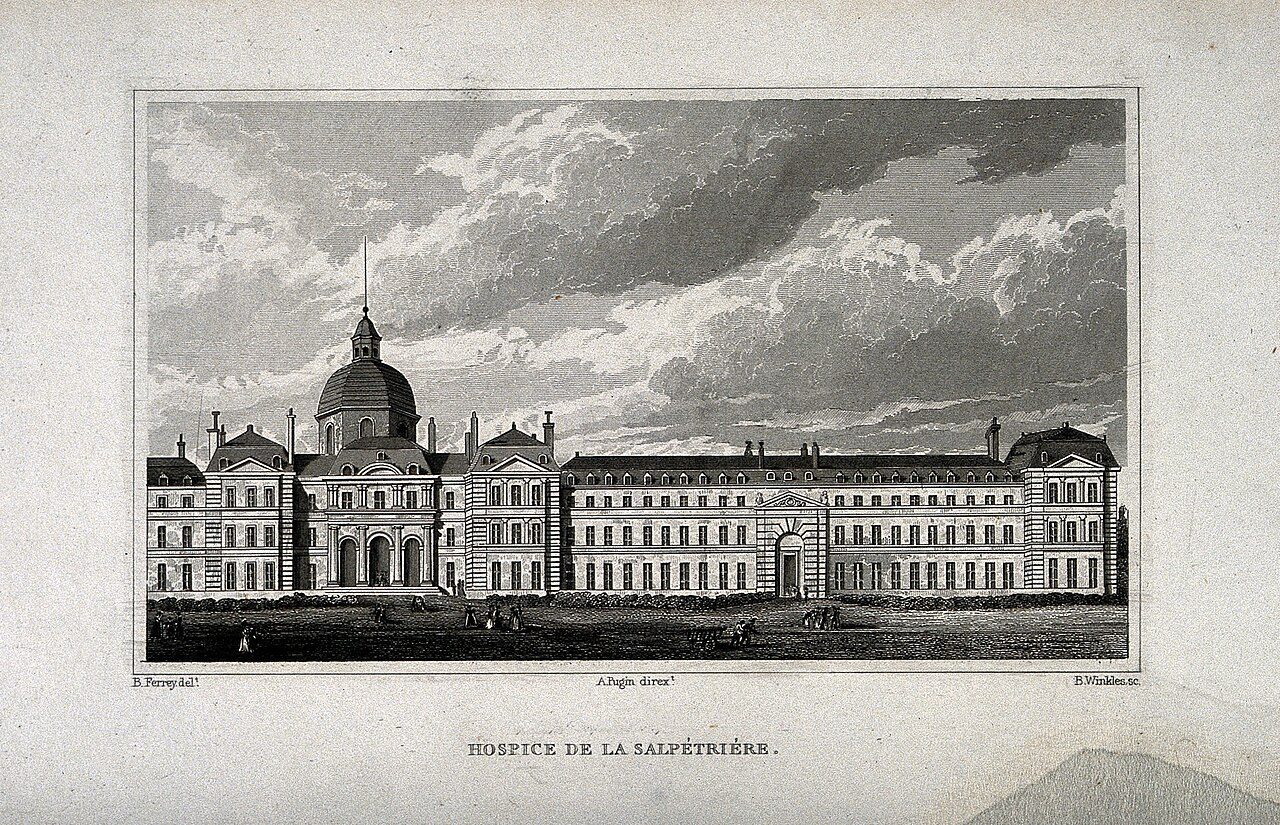
The name records what the site was before it held people: a salpêtrière, a works for saltpetre, the main ingredient of gunpowder, on the left bank of the Seine east of the Latin Quarter9. In April 1656 a royal edict created the Hôpital général of Paris to shut away the city's beggars and put them to work, and the old arsenal became its house for poor women and girls, as Bicêtre was for men7. Over the next century and a half it grew into something like a walled town, with Louis Le Vau and Libéral Bruant's long ranges of buildings and, from about 1675, the domed chapel of Saint-Louis that still dominates the site9.
A town of women
The Salpêtrière was not a hospital in the medical sense. It held elderly women, orphans, women judged to be beggars or of bad character, women with epilepsy and women with mental illness, and from 1684 it had a prison for women9,7. By the eve of the Revolution it was among the largest institutions of its kind in Europe, with room for thousands9. In the September Massacres of 1792 armed crowds entered it and killed about 35 women, most of them from the prison section and many of them under age8.
Pinel, Pussin and the first asylum
Philippe Pinel became chief physician in the spring of 1795 and held the post for the rest of his life. For seven years, though, he had no control over the division for insane women, which was run by the hospice's own staff; in 1798 he complained to the minister that he could not even make exact observations there1. He asked for Jean-Baptiste Pussin, the governor who had managed the insane men at Bicêtre, to be sent to help him. Pussin finally took up his post on 27 March 18021,5.
What followed is what the historians Marcel Gauchet and Gladys Swain called the birth of the asylum in France: a separate division run on moral treatment, with patients classified, fed regularly, kept clean and managed by an authority who knew each of them1. Pinel later described the women's division as it had been before 1802: visited by the curious as an object of mockery, treated harshly at the whim of the servants, some sitting in rags on stone benches, some in chains (our translation)1. The chains were removed under Pussin, as they had been at Bicêtre1.
When Pussin died in April 1811, his post went to Pinel's pupil Jean-Étienne Esquirol, who served a year as superintendent before becoming physician to the division1. From 1817 Esquirol taught a course on mental illness here, probably the first formal teaching of the subject in France9,10.
Charcot's hospital
In 1862 Jean-Martin Charcot became a senior physician at the Salpêtrière. He saw in its thousands of elderly and chronically ill women a collection of nervous diseases that could be followed for years and examined after death. Lecturing in May 1870, he said:
I have never doubted that the Hospital of La Salpêtrière was destined to become, both for the diseases of old age and for many chronic disorders, an incomparable centre of instruction.2
Quotation checked against the 1877 text
Here he and his pupils described multiple sclerosis and amyotrophic lateral sclerosis, and in 1882 a chair of diseases of the nervous system was created for him6. From the 1870s the wards for women with epilepsy and hysteria became the most famous part of the hospital. Charcot used hypnosis, had the stages of the hysterical attack drawn and photographed, and showed patients to audiences of doctors and visitors in his lecture theatre4,6. Sigmund Freud studied with him from October 1885 to February 18866.
Not everyone accepted what was shown. Hippolyte Bernheim, at Nancy, wrote that he could not reproduce the Salpêtrière's three stages of hypnosis in any of his own patients:
I have never been able to induce in any of my cases, the three phases of the Salpêtrière school, and it is not for want of trial.3
Quotation checked against the 1889 text
Bernheim's explanation was suggestion: the patients had learned, by imitation and training, what the doctors expected to see3. Charcot's theory of hysteria was already being questioned when he died in 1893, and his own pupil Joseph Babinski helped dismantle it6.
The Pitié-Salpêtrière
In 1911 the Pitié hospital moved to a site next door, and in 1964 the two were merged9. The Pitié-Salpêtrière is now one of the largest teaching hospitals in Paris and, since 2010, home to the Paris Brain Institute. A statue of Pinel by Ludovic Durand, made in 1885, stands in his memory at the hospital9.
Key dates
- 27 April 1656 A royal edict creates the Hôpital général; the old saltpetre works becomes its house for poor women and girls.
- September 1792 In the September Massacres about 35 women held at the Salpêtrière are killed.
- 1795 Philippe Pinel becomes chief physician of the Salpêtrière, a post he holds for life.
- 27 March 1802 Jean-Baptiste Pussin takes charge of the women's insane division; chains are removed there.
- 1817 Esquirol begins a course of lectures on mental illness at the Salpêtrière.
- 1862 Jean-Martin Charcot becomes a senior physician at the Salpêtrière.
- 1882 A chair of diseases of the nervous system is created for Charcot at the Salpêtrière.
- 1964 The Salpêtrière and the neighbouring Pitié hospital are merged as the Pitié-Salpêtrière.
Also on this site
- Diagnosis Hysteria
- Person Jean-Baptiste Pussin
- Person Philippe Pinel
- Person Jean-Étienne Esquirol
- Theory Animal magnetism and mesmerism
- Essay The rise and fall of the asylum
- Treatment Moral treatment
- Diagnosis Monomania
- Diagnosis Puerperal insanity
- Diagnosis General paralysis of the insane
- Person Jean-Martin Charcot
- Essay Can we diagnose the dead?
- Person Sigmund Freud
- Theory Psychoanalysis
Sources
- Scholarship Jack Juchet and Jacques Postel, Le « surveillant » Jean-Baptiste Pussin à la Salpêtrière, Histoire des sciences médicales 30(2) (1996).
- Primary source Jean-Martin Charcot, Lectures on the Diseases of the Nervous System, delivered at La Salpêtrière, vol. 1 (trans. George Sigerson), London: New Sydenham Society (1877). Quotations checked against this text.
- Primary source Hippolyte Bernheim, Suggestive Therapeutics: A Treatise on the Nature and Uses of Hypnotism (trans. Christian A. Herter), New York: G. P. Putnam's Sons (1889). Quotations checked against this text.
- Museum or archive Natasha Ruiz-Gómez, The painter, the psychiatrist and a fashion for hysteria, Wellcome Collection (2020-03-04).
- Scholarship Jean-Pierre Schuster, Nicolas Hoertel and Frédéric Limosin, The man behind Philippe Pinel: Jean-Baptiste Pussin (1746–1811), The British Journal of Psychiatry 198(3) (2011).
- Reference Alain de Mijolla and others, Charcot, Jean Martin (1825–1893), Encyclopedia.com (International Dictionary of Psychoanalysis and other reference works).
- Wikipedia Hôpital général de Paris, Wikipédia.
- Wikipedia September Massacres, Wikipedia.
- Wikipedia Pitié-Salpêtrière Hospital, Wikipedia.
- Wikipedia Jean-Étienne Dominique Esquirol, Wikipedia.
Cross-checked with Wikidata Q939883 and the English Wikipedia article.
Read next
 1680s–1980
Hysteria
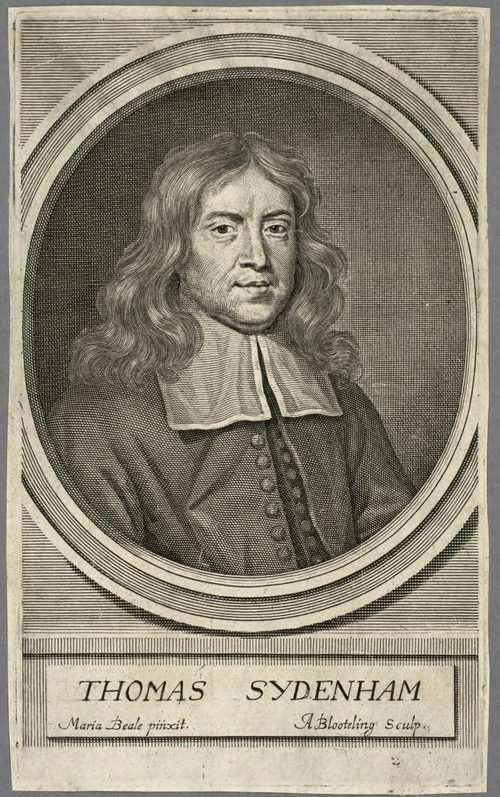
Named for the womb, hysteria became medicine's catch-all for symptoms it could not explain. Its history from Greek texts to Sydenham, Charcot and Freud, and why it was dropped in 1980.
 1790s–1870s · Transformed
Moral treatment
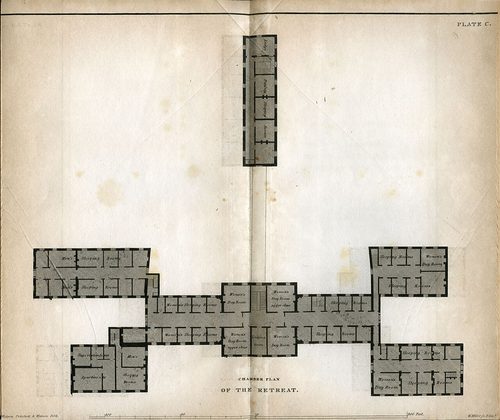
Moral treatment, developed at Bicêtre in Paris and the York Retreat in the 1790s, tried to cure madness through kindness, routine, work and self-control rather than chains and drugs. It shaped a century of asylums.
 1810s–1870s
Monomania
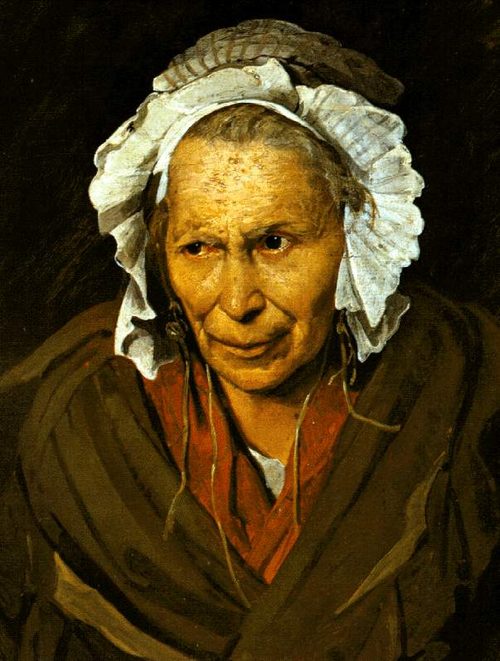
Esquirol's monomania described a mind sound in every way but one: a single fixed idea or irresistible impulse. It made alienists expert witnesses, then fell apart under criticism after 1854.
 1770s–1850s
Animal magnetism and mesmerism
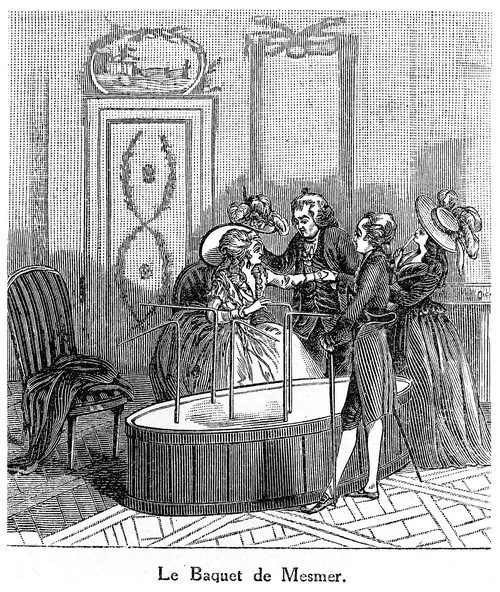
Franz Anton Mesmer claimed an invisible fluid linked all living things and could cure nervous disorders. A royal commission found only imagination at work, but his methods led to hypnotism and the psychology of suggestion.
 1890s–1980
Psychoanalysis
Freud's theory of the unconscious began as a treatment for hysteria in 1890s Vienna and came to dominate American psychiatry after 1945. Its history, its place in psychiatry, and the long argument over whether it works.
 1700s–1890s · Transformed
Restraint and the non-restraint movement
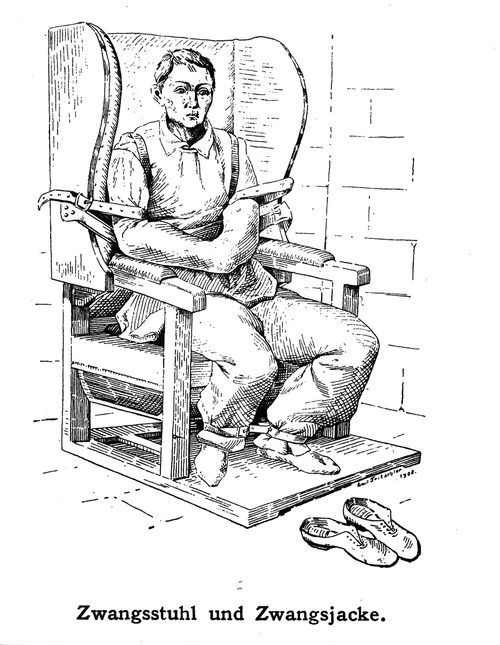
Chains, strait-waistcoats and restraint chairs were the ordinary equipment of asylums until the late 1830s, when Lincoln and then Hanwell abolished them. Britain made non-restraint a doctrine; much of the world did not.
Pages that mention The Salpêtrière
- Diagnosis General paralysis of the insane
- Diagnosis Hysteria
- Diagnosis Monomania
- Diagnosis Puerperal insanity
- Essay Can we diagnose the dead?
- Essay The rise and fall of the asylum
- Person Jean-Baptiste Pussin
- Person Jean-Martin Charcot
- Person Jean-Étienne Esquirol
- Person Philippe Pinel
- Person Sigmund Freud
- Place Bicêtre and the unchaining
- Place The Narrenturm, Vienna
- Theory Animal magnetism and mesmerism
- Theory Demonic possession and its critics
- Theory Psychoanalysis
- Treatment Moral treatment