
Place · 1870 – today
The Burghölzli, Zurich
Zurich's cantonal asylum, opened in 1870 and now the Psychiatric University Hospital. Under Forel and Bleuler it led European psychiatry: schizophrenia was named there and Jung tested Freud's ideas on patients.
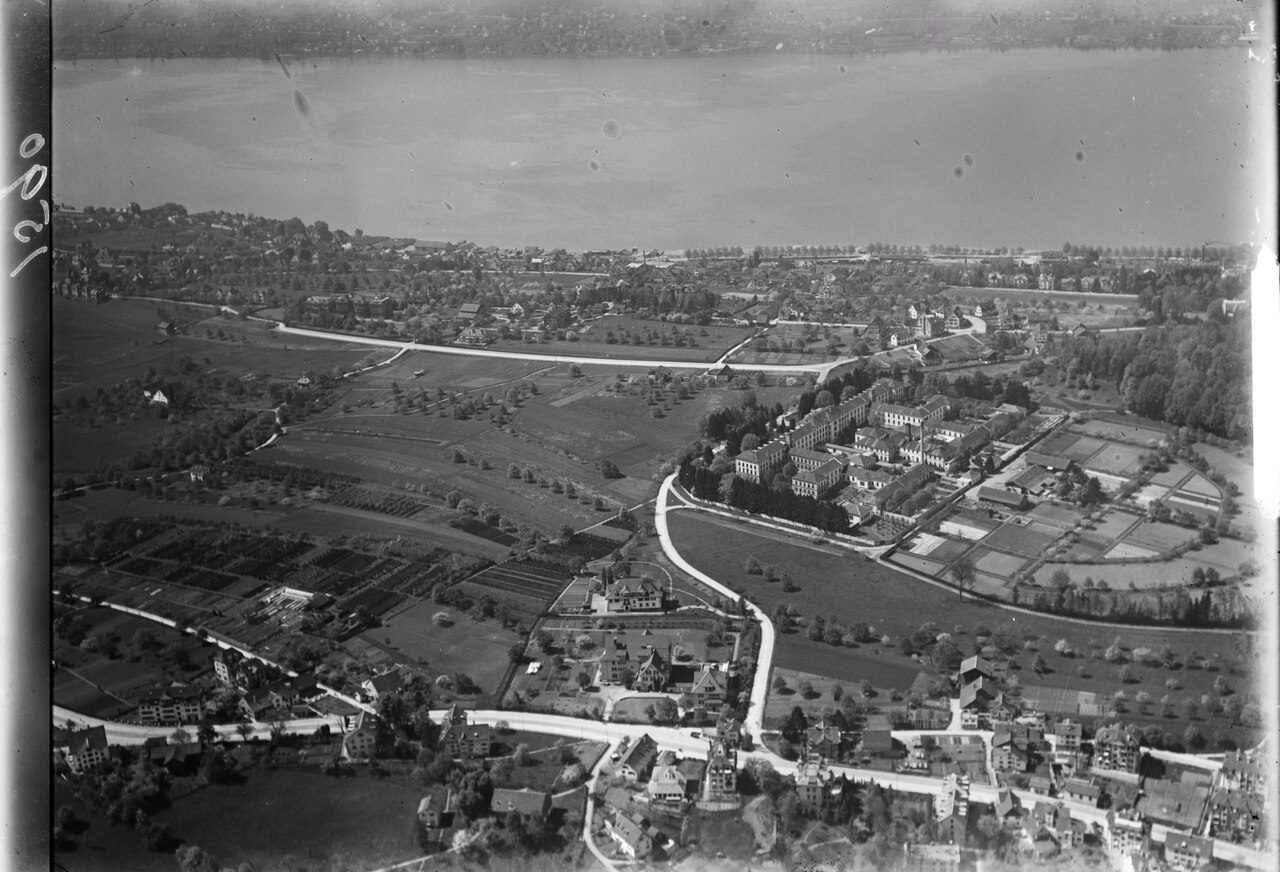
The Burghölzli takes its name from the wooded hill above Lake Zurich where it was built. For half a century after it opened in 1870 it was probably the most influential psychiatric hospital in Europe: the place where schizophrenia got its name, where Freud's ideas were first tried on hospital patients, and where a remarkable number of the twentieth century's psychiatrists trained2,4,6.
Building a model asylum
In the mid-nineteenth century the canton of Zurich kept its mentally ill patients, when it kept them at all, in the crowded wards of the old city hospital; a count in 1851 found fewer than one in ten of those identified in hospital care6. The German physician Wilhelm Griesinger, professor of internal medicine in Zurich from 1860 to 1865, introduced psychiatry into medical teaching there, argued for treating patients without restraint, and helped plan a new asylum3. The cantonal parliament voted to build it in 1864, and the architect Johann Caspar Wolff gave it a monumental, palace-like Neo-Renaissance front6,7. Griesinger died in Berlin in 1868. The building was completed on 4 July 18702,3.
From the start the Burghölzli was both the cantonal asylum and the university's psychiatric clinic, and its director was also professor of psychiatry7. Its first three directors, Bernhard von Gudden, Gustav Huguenin and Eduard Hitzig, were brain scientists who looked for mental illness in the anatomy and physiology of the brain2.
Forel
Auguste Forel, director from 1879 to 1898, made the clinic famous. A neuroanatomist and an authority on ants, he began with two other doctors for some 300 patients2,9. He combined German brain science with the French interest in suggestion, used and taught hypnosis, and campaigned against alcoholism2,4,6.
Bleuler, Jung and schizophrenia
Eugen Bleuler directed the Burghölzli from 1898 to 1927, the years usually called its golden age5,6. In 1908, in a lecture in Berlin, he proposed replacing Emil Kraepelin's term dementia praecox with "schizophrenia", for a splitting of mental functions rather than an inevitable decline, and in 1911 he set out the idea in his monograph on "the group of schizophrenias"4,5.
Bleuler also opened his clinic to psychoanalysis. Between about 1904 and 1913 the Burghölzli was the first hospital anywhere where Freud's theories were tested scientifically and his methods applied to patients2. The young Carl Gustav Jung, who worked there from 1900 to 1909, used word-association experiments to trace hidden emotional "complexes" in patients with psychosis. In the preface to his book on the psychology of dementia praecox, dated Zurich, July 1906, he named the source of his ideas:
My views are no contrivances of a roving fancy, but thoughts which matured … with my venerable chief, Professor Bleuler.1
Quotation checked against the 1909 text
Karl Abraham, Ludwig Binswanger, Hermann Rorschach, Franz Riklin, Abraham Brill and the American psychiatrist Adolf Meyer were among those who trained or worked there2,6. The alliance with Freud did not last. Jung left the Burghölzli in 1909, and Bleuler, who thought dogma harmful to science, left the International Psychoanalytic Association in 1911 and distanced himself from Freud by 1913; the clinic's importance for psychoanalysis faded2,5.
After Bleuler
Bleuler was succeeded by Hans Wolfgang Maier and then by his own son, Manfred Bleuler6. The clinic remained a centre of research. According to a historian's study of patient records reported in 2019, its research department tested dozens of new drugs on patients in the 1970s alone; how that testing was done is still being investigated8. In 1967–68 the walls around the hospital were taken down7. On 6 March 1971 a fire broke out early in the morning; doors were locked and windows barred, the keys could not be found in time, and 28 patients died of smoke inhalation, one of the worst fires in modern Swiss history6,7.
The Burghölzli is now the Psychiatrische Universitätsklinik Zürich, since 2018 an independent public institution of the canton, with adult, old-age and forensic psychiatry7. Many in Zurich still call it by its old name5,7.
Key dates
- 1864 The Zurich cantonal parliament votes to build a new asylum on the Burghölzli hill, planned with the help of Wilhelm Griesinger.
- 4 July 1870 The Burghölzli is completed and opens as Zurich's cantonal asylum and university psychiatric clinic, under Bernhard von Gudden.
- 1879 Auguste Forel becomes director; in nineteen years he makes the clinic internationally known.
- 1898 Eugen Bleuler becomes director, a post he holds until 1927.
- July 1906 Carl Gustav Jung, senior physician under Bleuler, completes The Psychology of Dementia Praecox, applying Freud's ideas to psychosis.
- 1908 Bleuler proposes the name 'schizophrenia' in a lecture in Berlin; his monograph on 'the group of schizophrenias' follows in 1911.
- 6 March 1971 A fire at the clinic kills 28 patients, who could not be reached in time behind locked doors and barred windows.
Also on this site
Sources
- Primary source C. G. Jung, The Psychology of Dementia Praecox (translated by Frederick Peterson and A. A. Brill), New York: Journal of Nervous and Mental Disease Publishing Company (1909). Quotations checked against this text.
- Reference Burghölzli Asylum, International Dictionary of Psychoanalysis, via Encyclopedia.com.
- Reference Griesinger, Wilhelm, Historisches Lexikon der Schweiz.
- Reference Psychisch Kranke, Historisches Lexikon der Schweiz.
- Scholarship Roy Abraham Kallivayalil, The Burgholzli Hospital: Its history and legacy, Indian Journal of Psychiatry 58(2) (2016).
- Wikipedia Burghölzli, Wikipedia.
- Wikipedia Psychiatrische Universitätsklinik Zürich, Wikipedia (German).
- Reference Vast clinical trial undertaken on psychiatric patients in Switzerland, swissinfo.ch (2019).
- Wikipedia Auguste Forel, Wikipedia.
Cross-checked with Wikidata Q577131 and the English Wikipedia article.
Read next
 1890s–1950s
Dementia praecox
Emil Kraepelin's 'early dementia' of the 1890s: a psychosis of youth he thought led to lasting decline. Contested from the start, it was renamed schizophrenia and reshaped twentieth-century psychiatry.
 1890s–1980
Psychoanalysis
Freud's theory of the unconscious began as a treatment for hysteria in 1890s Vienna and came to dominate American psychiatry after 1945. Its history, its place in psychiatry, and the long argument over whether it works.
 1883–1970s
Eugenics and psychiatry
Eugenics promised to reduce mental illness by preventing 'unfit' people from having children. How psychiatrists helped build sterilisation laws in the United States and Europe, Buck v. Bell, and the road to the Nazi killing of patients.
 1952–1970s · Transformed
The first antidepressants
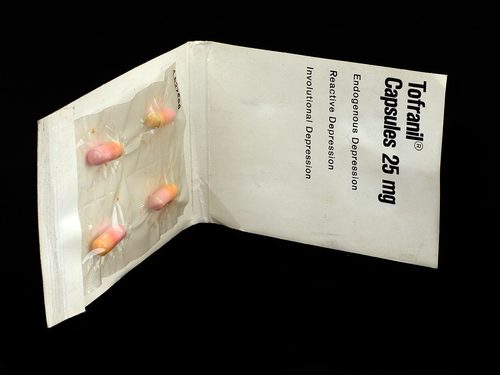
Two chance findings of the 1950s, a tuberculosis drug that lifted patients' spirits and a failed antipsychotic tested in a Swiss asylum, gave psychiatry its first antidepressants and a disputed chemical theory.
 1874–present
Catatonia
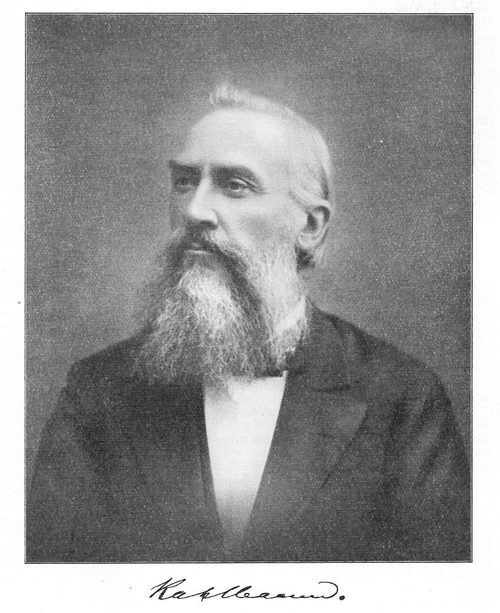
Named by Karl Kahlbaum in 1874 as a disease of tension and stupor, catatonia was absorbed into dementia praecox and schizophrenia, then rediscovered as a syndrome that crosses many illnesses.
 1845–1990
The biological turn
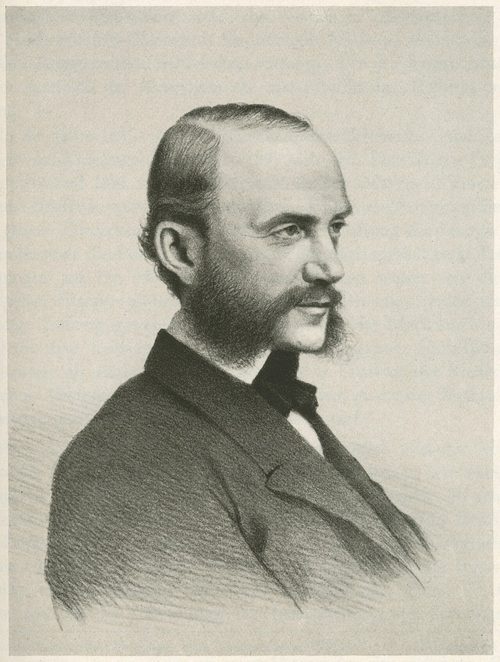
From Griesinger's claim in the 1840s that mental illness is brain disease, through the microscope, the shock therapies and the drug revolution, to DSM-III in 1980: how psychiatry repeatedly turned to the body.