
Person · 29 November 1825 – 16 August 1893
Jean-Martin Charcot
Paris neurologist (1825–1893) who made the Salpêtrière a centre of modern neurology, describing multiple sclerosis and ALS, and whose demonstrations of hysteria and hypnosis drew crowds, critics and the young Freud.
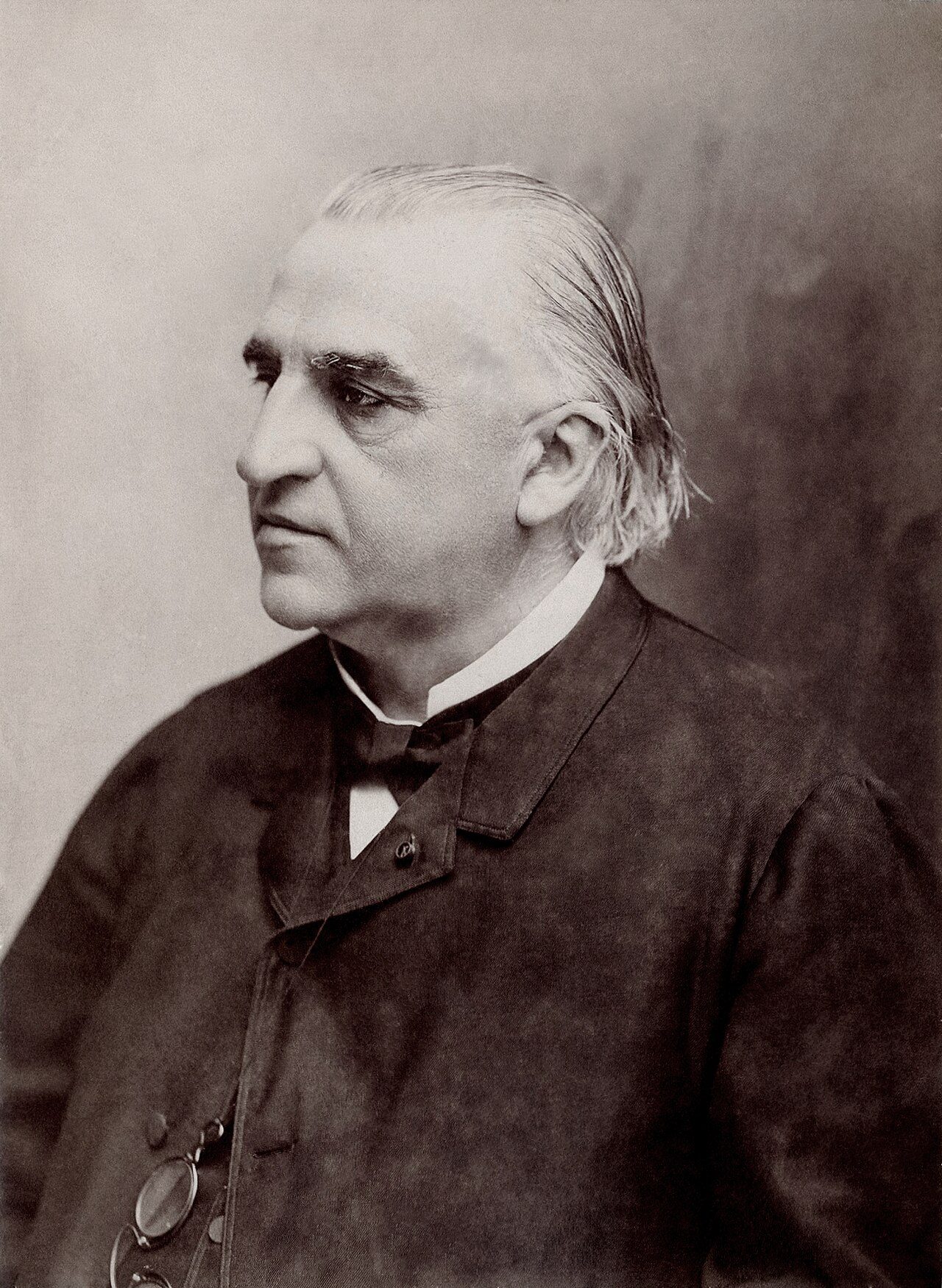
In May 1870 Jean-Martin Charcot told his students what he thought the old women's hospice at the Salpêtrière could become:
I have never doubted that the Hospital of La Salpêtrière was destined to become, both for the diseases of old age and for many chronic disorders, an incomparable centre of instruction.1
Quotation checked against the 1877 text
Within twenty years it was, and Charcot was the most famous physician in Europe. His reputation now rests on two very different achievements: the neurology, which has lasted, and the hysteria, which did not.
Making neurology
Charcot was born in Paris on 29 November 1825, the son of a coachbuilder. He became an intern at the Salpêtrière in 1848, took his doctorate in 1853, and in 1862 returned there as a senior physician4. The hospice held thousands of elderly and chronically ill women, many with diseases of the nervous system, whom Charcot could follow for years and, after their deaths, examine at autopsy. Matching symptoms in life to damage found afterwards, he and his colleagues produced classic descriptions of multiple sclerosis, of amyotrophic lateral sclerosis, and of the joint damage of tabes dorsalis, the "Charcot joint"4,8. With his pupil Pierre Marie he described in 1886 the inherited nerve disorder now known as Charcot–Marie–Tooth disease4.
He became professor of pathological anatomy in 1872, a member of the Académie de médecine in 1873, and in 1882 the holder of a new chair of diseases of the nervous system, created for him4. His lectures were published in English translation from 18771,4.
Hysteria and hypnosis
From the 1870s Charcot turned to the wards for women with epilepsy and hysteria. He treated hysteria as a hereditary disorder of the nervous system, like the diseases he had already mapped, though no lesion could be found5. With Paul Richer he divided the "grand" hysterical attack into regular stages, had them drawn and photographed, and demonstrated patients in his lecture theatre to large audiences5,4. In 1882 he presented to the Académie des sciences an account of hypnosis as a series of states peculiar to hysterical patients4. Against common opinion, he insisted that men could be hysterical too6.
The best known of the women in these demonstrations was Blanche Wittmann, known as the "queen of hysterics". After Charcot's death her attacks ceased; she went on to work in the hospital's radiology laboratory and died in 19137,8. The historian Asti Hustvedt has reconstructed her life and those of two other patients, arguing that their symptoms were rooted in real suffering and trauma, not merely performance7.
Critics and pupils
The challenge came from Nancy. Hippolyte Bernheim, who drew on the experience of a fellow Nancy doctor, Ambroise-Auguste Liébeault, said to have hypnotised more than six thousand people, found the Salpêtrière's stages nowhere among his own patients:
I have never been able to induce in any of my cases, the three phases of the Salpêtrière school, and it is not for want of trial.2
Quotation checked against the 1889 text
The one patient he had seen show them perfectly, he wrote, had spent three years at the Salpêtrière and had learned them by imitation2. Hypnotic phenomena, for Bernheim, were the effects of suggestion, open to almost anyone, not signs of disease2,4.
Among those who came to watch was a young Viennese neurologist, Sigmund Freud, who arrived in Paris on 13 October 1885 and stayed until the end of February 18864. He later named his first son Jean-Martin4. Looking back in 1909, he paid tribute and marked a limit:
The great French observer, whose student I was during the years 1885-86, had no natural bent for creating psychological theories.3
Quotation checked against the 1910 text
Death and reputation
Charcot died suddenly on 16 August 1893, near the Lac des Settons in the Nièvre, of a heart attack4. His theory of hysteria was already in doubt, and in the following decades his own former pupil Joseph Babinski, Pierre Janet's psychology of dissociation and Freud's psychoanalysis took it apart4. His neurology outlived him, and several of the diseases he described still carry his name4,8.
Key dates
- 1853 Charcot takes his medical doctorate in Paris.
- 1862 Charcot becomes a senior physician at the Salpêtrière.
- 1872 Charcot becomes professor of pathological anatomy in the Paris medical faculty.
- 1882 Charcot presents his account of hypnosis to the Académie des sciences; a chair of diseases of the nervous system is created for him.
- 13 October 1885 Sigmund Freud arrives in Paris to study with Charcot, staying until the end of February 1886.
- 1886 Hippolyte Bernheim's book on suggestion challenges the Salpêtrière's account of hypnosis and hysteria.
- 16 August 1893 Charcot dies near the Lac des Settons in the Nièvre.
Charcot on this site
Sources
- Primary source Jean-Martin Charcot, Lectures on the Diseases of the Nervous System, delivered at La Salpêtrière, vol. 1 (trans. George Sigerson), London: New Sydenham Society (1877). Quotations checked against this text.
- Primary source Hippolyte Bernheim, Suggestive Therapeutics: A Treatise on the Nature and Uses of Hypnotism (trans. Christian A. Herter), New York: G. P. Putnam's Sons (1889). Quotations checked against this text.
- Primary source Sigmund Freud, The Origin and Development of Psychoanalysis (trans. Harry W. Chase), American Journal of Psychology 21(2) (1910). Quotations checked against this text.
- Reference Alain de Mijolla and others, Charcot, Jean Martin (1825–1893), Encyclopedia.com (International Dictionary of Psychoanalysis and other reference works).
- Museum or archive Natasha Ruiz-Gómez, The painter, the psychiatrist and a fashion for hysteria, Wellcome Collection (2020-03-04).
- Scholarship Mark S. Micale, Charcot and the idea of hysteria in the male: gender, mental science, and medical diagnosis in late nineteenth-century France, Medical History 34(4) (1990).
- Scholarship Laure Murat, Beyond Nerves (review of Asti Hustvedt, Medical Muses: Hysteria in Nineteenth-Century Paris), The American Scholar (2011-06-03).
- Wikipedia Jean-Martin Charcot, Wikipedia.
Cross-checked with Wikidata Q20710 and the English Wikipedia article.
Read next
 1680s–1980
Hysteria
Named for the womb, hysteria became medicine's catch-all for symptoms it could not explain. Its history from Greek texts to Sydenham, Charcot and Freud, and why it was dropped in 1980.
 1770s–1850s
Animal magnetism and mesmerism
Franz Anton Mesmer claimed an invisible fluid linked all living things and could cure nervous disorders. A royal commission found only imagination at work, but his methods led to hypnotism and the psychology of suggestion.
 1890s–1980
Psychoanalysis
Freud's theory of the unconscious began as a treatment for hysteria in 1890s Vienna and came to dominate American psychiatry after 1945. Its history, its place in psychiatry, and the long argument over whether it works.
 1857–1914
Degeneration theory
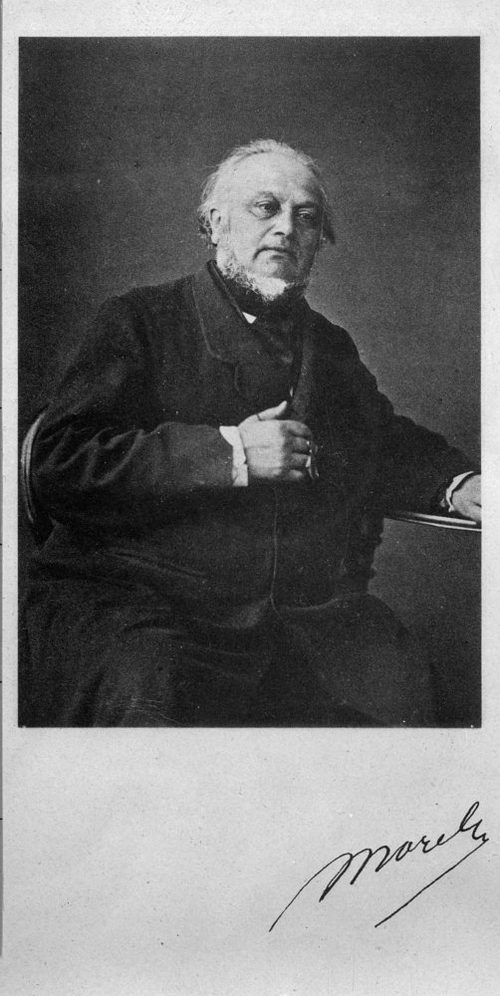
From the 1850s many psychiatrists believed that madness was the sign of a family in hereditary decline, worsening with each generation. How Morel's theory spread, what it explained for asylum doctors, and where it led.
 1914–1922
Shell shock
A soldiers' phrase of 1914–15 that became a medical diagnosis, a pension category and a political scandal, before a War Office committee in 1922 called it 'a gross and costly misnomer'.
 Essay · 6 min
Can we diagnose the dead?
Why this site never diagnoses historical figures, and hedges every modern equivalent it gives: the evidence was made for other purposes, diseases change their identities, and each age's diagnoses of the dead reflect its own medicine.